(Cover by R. M. Mally. Weird Tales, September 1923.)
The Story So Far
A group of five stupid white men explorers have ventured deep into the Brazilian jungle, along the Rio Silencioso, in search of a piece of ancient South American architecture which may hold immense riches. They do find what they’re looking for—and also a good deal more on top of that. The pyramid is “hollow,” and also seemingly abandoned. The only sign from the outside that there might be people here is a seaplane in the river, in working order but also abandoned. The explorers consider this now at least in part a rescue mission, starting with the one living person they find: a pretty young white girl, who does not give her name and who will not or cannot talk with the explorers. The extremely racist and apparently hormone-addled men practically trip over their own dicks in order to please the girl, or to understand her at all, but she makes it clear she’s not to be understood on their terms. The girl uses “Pan’s pipes” to charm the obligatory monster of the story, a giant snake-centipede creature, whose biological origin remains unexplained, although between that and the giant diamond at the center of the pyramid, the “Sunfire” of the title, this is a story that rings as nominally SF rather than fantasy. It could also be considered an early example of horror-comedy, albeit not an effective one. The explorers seem to have gotten this far on sheer idiot luck, since they repeatedly exhibit a lack of professionalism and competency. The question then is, how will they get out of this? Who is the girl, really, and what does she want? Who gives a shit? Certainly not me.
Enhancing Image
I started reading King Solomon’s Mines yesterday and am already about a third into it; it’s a rather short novel, but it’s also addicting. While H. Rider Haggard’s novel is certainly “problematic,” and has gained sort of a reputation for being such, it’s still nowhere near as racist as Sunfire, or indeed many of the “lost race” pulp adventures that Haggard partly inspired. Sunfire really is not unique in any way, compared to other pulp writing of the 1910s and ’20s, except maybe that it infuses more humor than the norm, and also the fact that Stevens was a woman. In fairness, there is a hint of proto-feminism here, although Stevens does little to advance it. While not technically the protagonist, the girl (we find out her name is Enid Widdiup) is the sun around which the rest of the story revolves, and ultimately, once she’s been broken out of her trance, she ends up being more competent and well-spoken than the explorers. Enid in fact turns out to be an aviator, which would make her one of the very first female aviators in history; she’s also an explorer herself, and she had actually come here on the seaplane the men had seen earlier. This is all rather curious, and it would be much more than just a curiosity if Stevens hadn’t waited until damn near the end of the story to tell us. If Sunfire has an major issue, aside from the dump truck’s worth of racism, it’s that it feels generally undercooked, being a novella with a cast of characters that’s mostly unmemorable and interchangeable. I neglect to mention the explorers’ names because they really don’t matter much. Because of the somewhat comedic tone, the stakes get deflated before Stevens can lay on some really juicy weird horror.
There’s also the villain, or rather villainess, named Sifa, who barely figures into things—another example of Stevens presenting us with something that would be curious, but only just that, as it stands. She only appears in the back end of Sunfire and ends up not being much of a threat. I was reading Bobby D.’s review of Sunfire, to see if he might’ve noticed something I did not, although given that his work tends to be focused around H. P. Lovecraft it was not as much about the story itself as I would’ve hoped; but still he said that Stevens’s story borders on being a parody of what was then a dominant form of pulp writing, although unfortunately it doesn’t go far enough. She has some fun with her incompetent “heroes,” but their rampant bigotry is more played for laughs than something that Stevens actually criticizes. Even for someone who was probably on the liberal side circa 1920, white supremacy was less of a threat to the wellbeing of mankind and more of perhaps a nuisance. The explorers are basically the white trio (so minus the fascinating and surprisingly progressively portrayed Umbopa) of King Solomon’s Mines, but without most of those men’s virtues and with their more unsavory characteristics turned up a notch or two. This may have been intentional on Stevens’s part, but then probably not; from the little pulp fiction of the era that I’ve read it’s not unusual for the protagonists to come off as, let’s say flawed to the point of obnoxiousness. Indeed despite being the literary generation to come after the likes of Haggard and Robert Louis Stevenson (who, make no mistake, wrote “popular fiction” and not what was then considered of the “literary” sort), the field that Stevens wrote seemed more stilted and narrow-minded. Even the most acclaimed of the early 20th century pulp writers, namely Edgar Rice Burroughs and A. Merritt, now strike us as semi-literate and offensive. Reading such fiction feels like seeing an ancient fly trapped in amber.
On a positive note, I do like the “author’s note” at the end, in which Stevens treats the characters as if they’re real people, and gives a kind of “where are they now” epilogue that one often sees at the end of the movies that are “based on a true story.” It’s cute.
A Step Farther Out
I’ve read from more than one person that Sunfire is really not where one ought to start with Stevens, which is a shame since it’s the only story of hers that’s eligible for review on this here website. Stevens wrote for the general pulps in the 1910s, before the likes of Weird Tales and other “modern” genre magazines came along, and one does get the sense that she wrote for that earlier market rather than what was then the new generation of pulp fiction. In that sense I feel bad, since I know I’ve been treating her a bit harshly by way of tackling something which she herself seemed to have thought so little of that she let it sit on her desk, or on some shelf, collecting dust for a few years before it was finally published.
(Cover by R. M. Mally. Weird Tales, July-August 1923.)
Who Goes There
Francis Stevens is the androgynous-sounding pseudonym of one Gertrude Bennett, who, for just a handful of years, wrote prolifically for pulp magazines such as Argosy and Adventure, that generation of cheap fiction magazines which preceded the first proper “genre” magazines (in the US, anyway) such as Weird Tales and Amazing Stories. Stevens wrote fiction at a mile a minute for the same reason a lot of authors did in those days: it helped pay the bills. She apparently wrote to help with her ailing mother, although once her mother finally passed on she stopped writing fiction full stop. She was one of the first female pulp/genre writers in American literature, making her one of the true pioneers; but she was (and still is) such an obscure figure that it took many years to verify when she actually died, not helped by the fact that she seemed to vanish off the face of the earth for the last quarter-century of her life. Unfortunately, Stevens’s story is not unusual among pre-New Wave female writers in this field. Sunfire was the last Stevens story published, by a few years, although it wasn’t necessarily the last one she wrote. Somebody, maybe Stevens herself, took it off the shelf, dusted it off, and submitted it to the newfangled Weird Tales, for one last paycheck. The result is a story (it’s really a novella) that feels more in line with pulpy adventure fiction that would’ve been popular in the 1910s than the occult horror and dark fantasy of Weird Tales.
Placing Coordinates
Serialized in the July-August and September issues of Weird Tales. It would not be reprinted in any form until it got a chapbook from Apex International in 1996—73 years after its original pubilication. It would get a more adequate reprint in the Stevens collection The Nightmare and Other Tales of Dark Fantasy. Despite what that title might make you think, I would consider Sunfire to be nominally SF.
Enhancing Image
Five stupid white men have ventured deep into the Brazilian rainforest, along the Rio Silencioso (“the River of Silence”), in search of a mythical island amidst the jungle depths, known as Tata Quarahy, “Fire of the Sun.” The trip had started out with the help of a local guide, named Petro, plus four other locals who go unnamed and who assisted with the boating, as the waters and their environs are indeed treacherous. Prior to the story’s beginning, Petro and the other locals had all died from what amounted to food poisoning, with the adventurers being spared on account of having taken their own separate meals, which is a funny way of saying the white men have only gotten this far because of some ridiculously good luck. The fact that five people have already died from this adventure doesn’t seem to bother the survivors much, probably because the ones who’ve died were non-white. Incidentally, at least in this installment, we don’t encounter a single non-white person within the “screen” of the action, with Petro only occasionally being quoted from beyond the grave. The irony of this story’s flippant treatment of its indigenous characters (or rather, how it keeps said characters totally offscreen via the grim reaper) is that the white men are for the most part interchangeable in character. These fuckers more or less act and talk the same as each other. As a compromise I’ll only be mentioning individual names when it’s needed to make sense of the plot, which paradoxically both is and is not hard to follow.
The adventurers have miraculously come upon the island, which is quite small but which hosts a pyramid, implying the existence of a tribe here. However, since this is a pulp adventure story written in 1920 at the latest, the presence of a pyramid must mean that something malicious is brewing. Indeed, Our Heroes™ find a seaplane on the water, close to the island and still seemingly in working condition, but abandoned. Somebody from the “civilized” world had been here recently, although whether they’re still alive is another question. They suspect, correctly, that if they’re to find answers that they would be inside the pyramid, which, much like with some real-life pyramids (and also Super Mario 64), is a lot bigger on the inside than the outside. A few complications arise, though. The first is that through all their searching outside the pyramid, the only other person they can find is a young white girl, probably in her teens, who either will not or cannot talk to the white men, despite obviously not being native to this dark little corner of the world. The other is a giant monster, somewhere between a snake and a centipede, large enough to kill a man, but which the woman, with the power of Pan’s pipes, is able to hyponotize.
The thing had the general shape of a mighty serpent. But instead of a barrellike body and scaly skin, it was made up of short, fiat segments, sandy yellow in color, every segment graced—or damned—with a pair of frightful talons, daggerpointed, curved, murderous. At times the monstrous, bleached-yellow length seemed to cover half the floor in a veritable pattern of fleeing segments.
This is all haphazardly written, of course, in a way that would have been the norm for pulp fiction of the time but not “literary” fiction. Stevens, like most if not all of her peers, wrote for money, and writing with a paycheck as the first (probably only) incentive does not encourage fine-tuning one’s prose. Oh, it’s quite bad, but that part of the deal is unsurprising. Even the king of the pulpsters, Edgar Rice Burroughs, whom genre writers in the following generation or two treated as a demigod, was by no means a good writer by the metrics of what we now call good writing. If Stevens can be commended for anything it’s what she decides to not write, as opposed to what’s on the page, namely with how she treats the mysterious girl. Whereas we’re stuck with five nigh=interchangeable buffoons for the whole ordeal, the girl Our Heroes™ are determined to rescue (because they find her attractive, and also [they mention this several times explicitly] because she’s white) comes off as an enigma. She saves the adventurers from the giant monster but then basically traps them inside the pyramid. The reader is thus presented with two conflicts: how the adventurers are to get out of this mess, and also what they ought to do with the girl, who seems prone to either helping them or endangering them depending on her mood. There is also the larger mystery of the pyramid, but that’s really secondary.
Readers who are unfamiliar with the low standards of early 20th century pulp prose may survive said prose in a vacuum, but will have a much harder time coping with Sunfire‘s almost cartoonish levels of racism. The racism is almost, for better or worse, very much a staple of that generation of pulp writing, in the days before “science fiction” even came about as a term. I’m still a layman, so I’m not sure why, even by the standards of the time, pulp fiction comes off as especially bigoted, since the literary fiction of the time, while certainly guilty of racism and perhaps most notably antisemitism (ask F. Scott Fitzgerald why he wrote a Jewish caricature in The Great Gatsby), tended to not be nearly this outward with its WASP-y insecurities. The closest I can think of as an explanation is that pulp fiction of the time, having been written to serve the short-term intrigue of people who may not have the time or education to invest in “the good stuff,” emphasizes the exotic, which means Orientalism. Anything outside the Anglosphere is different, which usually means it’s fascinating but in some way defective, if not downright evil. One of the adventurers, when recalling a piece of advice the late Petro had given them, notes that Portuguese, at least in context of Brazilian speakers, is a “simple” language. There’s a “comedic” scene in which, inside the pyramid, two of the adventurers, Sigsbee and Tellifer (the latter nicknamed “TNT”), fall into a dark pit and get covered head to toe in black soot. Sigsbee, with a giggle, says the two of them resemble black people like this, although he doesn’t say “black people.”
This is the kind of material I’m working with.
There Be Spoilers Here
Not only are the adventurers trapped here, and TNT having nearly fallen to his death in a black pit, but the soot on their bodies takes on a much more sinister (and I do have to say genuinely creepy) turn when it’s revealed that that the big prize of the pyramid, what seems to be a huge diamond, is used as a lens, or rather like a big magnifying glass when the sun strikes through the top of the pyramid at a certain angle. Whatever is caught in the black pit when this happens will be burned to a crisp, with only soot left behind as the remains are dumped or perhaps fed to the giant monster. The diamond, the “Sunfire” of the story’s title, is what the adventurers must seek after aside from the girl, but also the thing most liable to kill them. How will they get out of this sticky situation? What is the deal with the girl? Why do I torture myself by reading something so bad?
A Step Farther Out
Well, sometimes you have to read trash in order to better appreciate the gold; or in this case, read a laughably racist and single-minded adventure yarn that the author neglected to publish for a few years.
(Cover by Frank Kelly Freas. Astounding, December 1957.)
The Story So Far
Thorby, once a slave a Jubbulpore, a city where slavery is alive and well, then taken in and educated by a “beggar” named Baslim, has since grown up to become a surprisingly intelligent (albeit not wise) young man. He joined the Free Traders for a time, under the foster care of Captain Krausa and the tyrannical matriarch Grandmother, only for the latter to die and Thorby to leave the Free Traders. A philosophical dialogue with Dr. Mader, the only passenger aboard the Free Trader ship Sisu (also probably my favorite scene in the whole novel, it’s at the end of Part 2), convinces Thorby he had left one kind of slavery only to enter another. After some digging on Krausa’s part a few things come to light for both parties: that Baslim was a colonel in the Terran Hegemony’s space navy, who covertly partook in anti-slavery operations, and that Thorby is not descended from the Free Traders but instead is the son of the presumably deceased former owners of Rudbek and Associates. Thorby’s birth name is Thor Bradley Rudbeck (get it? Thor Bradley? Thorby?), and since his parents are missing or dead that makes him the legal heir to the company, with all its money and influence. Small problem: John Weemsby, an in-law to the Rudbeks, has been in charge of the company for years, with his stepdaughter Leda thus being the heir prior to Thorby’s unexpected reappearance.
Enhancing Image
So, Thorby and Leda are cousins, of a sort; they’re not actually blood-related. Given that Leda is supposed to be only a bit older than Thorby, and given the strange chemistry between them, it must’ve taken Heinlein an exceeding amount of willpower to not indulge in some pseudo-incest. Of course this isn’t even the first time in Citizen of the Galaxy that pseudo-incest (I say “pseudo-” because for my money’s worth I say it’s only the real deal if they’re related enough by blood) is a bullet that Thorby dodges, although, as with Mata on the Sisu earlier in the novel, Thorby’s total lack of interest in sex “saves” him. We know that this is not how most teen (or maybe by the end of the novel he’s in his earlier twenties) boys think, but a) Thorby is not like most teen boys, and b) it’s implicitly accepted as part of the deal when reading a Heinlein juvenile. Actually, as far as the Heinlein juveniles that I’ve read so far go, Citizen of the Galaxy might be the least realistic in that it takes the most breaks from reality, but also it’s the least concerned with hard science. Part of the reason for Heinlein writing these novels in the first place was to teach young readers some facts (or what Heinlein considered facts, which is not the same thing) about space and other things. Some of these novels, despite being aimed at teenagers, border on what we now call hard SF. Citizen of the Galaxy is pretty flaccid loose with its science; if you went in worried about having to deal with numbers and calculations, don’t be, because there are basically none to speak of. Spaceships in this novel go however fast they fucking feel like, and time dilation seems to be a non-issue. Space as we understand it is a non-factor in the characters’ problems, which even for 1957 is pretty soft.
Instead this novel is concerned with other things, like the slave trade, and also, strangely enough, the minutia of running a business. Business majors (the few business majors who have any interest in reading real literature) will get a kick out of the last installment of this book. Citizen of the Galaxy switches gears a few times throughout, from far-future thriller to planetary advneture to, finally, a sort of legal drama. Readers in 1957 were probably not expecting this novel to end up where it does, for better or worse. Truth be told I found it to get a bit worse as it goes along, or rather I think it peaks when Thorby is with “the People” and then gets bogged down from there. Whereas the first two installments gave us some intriguing characters, from the enigmatic Baslim (even if he is clearly a stand-in for Heinlein) to the tough-minded but feeble-bodied Grandmother, the cast of the novel’s latter half is more of a mixed bag. Leda is a curiously hard-nosed young woman and one of Heinlein’s more compelling female characters, in a novel that might actually have his strongest roster of girls/women, but Weemsby is a weak villain—if you can even call him that. He’s obviously not a good person, and also is an opportunistic businessman (but then aren’t they all) who profits off the slave trade, but he never does anything particularly bad onscreen, or… on-page. The back end is chiefly concerned with what is basically a battle of wills (or rather a will, sorry for the pun) between Thorby and Weemsby, which is not as compelling (as least to me) as it sounds. Some readers will get more out of it, but a common gripe with this novel is that the ending is weak, as indeed it is, tapering off as soon as Leda hands over the business to Thorby on a silver platter. The implication is that Thorby and Leda may after all engage in some pseudo-incest, but only after the book has ended, so as to spare young readers’ virgin eyeballs.
Let’s talk about the cheery topic of slavery, and how Heinlein clearly opposes it but also tries to reconcile abolitionism with capitalism. This is heavy subject matter for a novel aimed at young readers, but then again Heinlein was not above covering dark subject matter in some of his previous juveniles. The catastrophe that happens in the back end of Farmer in the Sky might be the single bleakest stretch of writing out of Heinlein’s whole career, and again this is a novel written for high schoolers. With Citizen of the Galaxy the strange thing is more that slavery, which in this spacefaring future has made a big comeback, at least in some societies, is presented as a problem that requires a solution, as opposed to what slavery apologists tend to argue, which is either that slavery is really not that big an issue or that sure, slavery is a big issue, but it’ll inevitably get phased out on its own and we really shouldn’t do anything about it. As with most if not all right-wing beliefs, the defense of slavery, as with the defense of racism, or homophobia or transphobia, is founded on a contradiction or series of contradictions. Slavery apologists, both in Heinlein’s time and today, will very rarely argue that slavery, as it existed in the CSA, should still be around, and they may even be “happy” that it is no longer a thing; but then they’ll say that actually it should have been “left up to the states,” or that the Union (which did have a couple slave states on its side, mind you) should not have fought the CSA over slavery (although the CSA had technically fired the first shot), or even (actually this might be the most common argument) that the Civil War was not about slavery at all but about some other bullshit. So “of course” slavery is bad, but according to apologists it’s not bad enough to abolish.
Heinlein was nothing if not a man of contradictions. He started out as a progressive in the ’30s before shifting farther right, especially upon marrying Virginia, his third and last wife. One of the few things that remained consistent throughout Heinlein’s adult life was his fierce individualism, which also happened to conflict with his lifelong adoration of the military—not just the US military but the idea of the military. He served in the US Navy for five years, albeit during peacetime so it’s not like he saw combat, so he certainly had a rose-tinted view (despite the chronic illness) of such things. He also became increasingly a fierce capitalist, although truth be told he always had a quite cheritable view of capitalism, even from his earliest published stories. One of Heinlein’s more memorable characters is D. D. Harriman, the man who sold the moon, a legendary businessman who is responsible for landing the first people on the moon’s surface, despite being unqualified to go there himself. (No doubt Elon Musk sees himself as a Harriman-like figure, and he’s explicitly and repeatedly paid homage to Heinlein, although for what it’s worth I’m not sure Harriman would have been a screaming antisemite and transphobe, not to mention a cuckold.) Citizen of the Galaxy ends with Thorby, having now claimed what is “rightfully” his, vowing to do what he can to disrupt the slave trade, having already made the order to pull Rudbek and Associates out of it. This now reads as a little overly optimistic. It’s also a bit contrived that Thorby just so happens to have descended from what amounts to royalty; it’s like how Rey starts out as a peasant girl in The Force Awakens but then discovers she’s Palpatine’s granddaughter. We feel cheated somehow because we’ve been denied our working-class hero.
A Step Farther Out
Given its reputation I have to say I was a bit disappointed with Citizen of the Galaxy, as it might not even be my second favorite of the Heinlein juveniles I’ve read (I prefer Between Planets and Farmer in the Sky). I would also have to look into if Heinlein had written it with the hope of a serial run, since it does split pretty neatly into four parts; unfortunately those parts are also rather disjointed. Heinlein’s juvenile’s are beloved among older readers to this day in part because they’re some of his least problematic/uncomfortable works, and while Citizen of the Galaxy does walk a fine line with its subject matter, it does handle it better than many SF novels from the same period; indeed, it handles the issue of slavery and individual freedom better than some of Heinlein’s adult novels. As I’ve gotten older and my politics and reading tastes have shifted I’ve become more conflicted on Heinlein—but then so does everyone who isn’t a moronic sycophant.
(Cover by Frank Kelly Freas. Astounding, November 1957.)
The Story So Far
Thorby is a teen boy with no last name and of unknown heritage who, in the first installment, got sold off to an old beggar named Baslim—the twist being that Baslim is no beggar, but a wise man with far more resources and connections than he lets on. At the end of Part 1, Thorby was separated from Baslim, who died offscreen, having been cornered by the Sargon’s goons and opting to kill himself rather than be interrogated and then executed. Part 2 saw Thorby on a ship, the Sisu, captained by a man named Krausa but really run by Grandmother, the ship’s matriarch and chief officer. Grandmother is quite old, to the point of being bedridden, but she’s quite a bitch, and much of Part 2 is concerned with Thorby adapting to life on the ship but also being caught in the crossfire between Krausa and Grandmother, in a battle of wills. One side wants to keep Thorby onboard as a useful mathematician, Thorby having been given a crash course in maths (as the Brits say) by Baslim, while the other wants Thorby married off to some girl on the ship as soon as possible so that he becomes a proper member of “the People,” that is to say the Free Traders, a cluster of nomadic peoples who roam the stars in the name of freedom and fair trade. Thorby, as is typical for a Heinlein juvenile protagonist, isn’t very interested in girls despite his age, which doesn’t stop him from befriending a younger girl, Mata. The tragic part is that Mata has a crush on Thorby and Thorby can’t just go with any girl, but rather has to marry someone who, like him, was adopted by the ship; for someone who was “adopted” to marry someone who was born on the ship would be taboo. The higher-ups, fearing Thorby might reciprocate Mata’s feelings, decide to ship the latter out.
Enhancing Image
Before getting into the plot of Part 3, let’s talk about what Citizen of the Galaxy is, aside from being a planetary adventure novel aimed at teen boys in the latter half of the ’50s. I’m not sure if Heinlein wrote this novel with the hope of it getting serialized, on top of getting Scribner’s to publish it in book form, but it does read as if intended to be taken in installments; or maybe I’m just saying this before I’ve not yet read it as a book. The thing about Citizen of the Galaxy, which makes it rather unique among Heinlein’s juveniles but also somewhat to its detriment, is that it’s overtly a picaresque novel. For those of you who forgot, a picaresque novel is a kind of narrative, typically comedic, in which a boy or young man goes out to see the world and gets into a series of adventures (or more often misadventures). It was a popular form in 18th and 19th century English literature, probably in no small part because novels in the UK and France were often first published as serials, and the episodic and amorphous structure of the picaresque novel was built well for serialization, in which readers could catch up with their favorite rascal month after month. By the time Heinlein wrote Citizen of the Galaxy the picaresque form had long since fallen out of fashion, I suspect because of the decline of serialized novels in magazines, and also the lack of seriousness associated with the form (I wouldn’t call it a genre). There were still some notable examples around this time, like Saul Bellow’s The Adventures of Augie March and John Barth’s The Sot-Weed Factor, the latter being consciously written as an homage to 18th century picaresque novels like Tom Jones. Citizen of the Galaxy itself pays homage to one of the last of the “classic” picaresque novels, Rudyard Kipling’s 1901 novel Kim.
So we have a novel about one boy’s education and quest for self-discovery, although it’s worth mentioning that up to this point Thorby has not been very active in shaping events in his life. Three quarters into this novel and my major problem, if I had to say I had one, is that Thorby himself is not a very interesting protagonist; but then who the hell is interesting at 16 or 17? When you were in high school you barely fucking qualified as a sentient mammal, let alone as a person. No, instead it’s the people around Thorby, mostly the adults in his life, who draw our interest. In Part 1 we had the walking enigma that was Baslim, as well as the well-meaning old lady Mother Shaum who briefly looks after Thorby before he hops aboard the Sisu. Since then we’ve been left with Captain Krausa, Grandmother, and Dr. Mader, the last acting as an exposition machine but also a viewpoint that would land closest to the reader’s, so that we have someone relatively normal who can explain to both Thorby and us the ways of the Free Traders. Grandmother and Dr. Mader are unusual for Heinlein and especially unusual for genre SF of the time in that they’re strong-willed women who don’t take shit from anyone while also staying bachelorettes (although in Grandmother’s case that’s more because she’s very old and an invalid). But because this is the third installment and the novel’s trajectory is rather spotty, with Heinlein picking up Thorby from one situation and then putting him down in another, Our Hero™ has to be separated from the adults in his life somehow. First thing is that Grandmother dies. This in itself is not unusual, even for a Heinlein juvenile, since if you read enough of these things you start to realize adult characters who play mentor to the teen protagonist tend to not be long for this world; rather it’s how we’re told of Grandmother’s death that’s a bit shocking. The old bitch dies her sleep while the Sisu has docked on the planet Woolamura, but what’s unusual is that we’re told of her death several pages before the characters find out for themselves. Is this dramatic irony? It’s an odd choice from Heinlein, to tell us of a character’s death before it actually happens, but somehow it works.
Grandmother’s death is also convenient because it means Thorby is no longer in danger of getting married to some girl on the ship (and by extension the Sisu) any time soon. This then leads to another problem, though, that being that Krausa discovers that Thorby is, in fact, not descended from the Free Traders; he’s also found, via messages from Baslim as recited by Thorby (the old beggar having conditioned the boy to repeat these messages in specific circumstances), that he is no longer to be foster father to the boy. The Free Traders are super-capitalists, but they’re also “honorable” in that they follow through on a favor (although they call it a “debt”) to the letter. Thorby’s business with the Sisu is reaching its end. It turns out that Thorby is not one of the People, but the lost heir to a goddamn upper-class family, his “true” name being Thor Bradley Rudbek. Truth be told, I’m not keen on this twist, for one because it turns Thorby from just another kid into suddenly a member of the ruling class, albeit someone who is very much open to exploitation. But there’s also with how Heinlein reveals this, which really shows the novel’s episodic structure to its detriment. We feel, by the end, like we’re reading a different novel than what we started with. It’s also in the back end of Part 3 that we’re introduced what seems to be a human antagonist, in the form of John Weemsby, whichm given that we’re more than halfway through the novel at this point, is a bit odd. Between Part 2 and 3 a couple years have apparently passed and Thorby is now at least old enough to have become a guardsman for the Terran Hegemony, while secretly running for an anti-slavery operation. (I think more so than a lot of Heinlein novels, and especially for something published in Astounding, this book really hates slavery. Wonder what the very racist John W. Campbell thought of that.) I do feel it’s during this stretch where the novel loses me a bit, although it does pick up again by the end of the installment.
A Step Farther Out
Three quarters in and I’m not sure I would call Citizen of the Galaxy my favorite Heinlein juvenile so far. The plot is not as cohesive as, say, Between Planets, nor is the conflict as urgent here as in that novel. Thorby is a bit of a cypher, although I understand that’s probably the point given how he’s been railroaded by higher powers up to this point, and indeed this railroading is part of the conflict. Heinlein was working within the constrains of genre SF writing of the period, although he also helped broaden horizons via his deal with Scribner’s. In the ’40s and ’50s he was, while certainly being open to criticism, at the very least a more ambitious storyteller than nearly all of his contemporaries. Citizen of the Galaxy is flawed, but it’s also (so it seems clear to me) one of the most ambitious of Heinlein’s juveniles—even more than the written-for-adults Double Star.
(Cover by Ed Emshwiller. Astounding, October 1957.)
The Story So Far
On the planet Jubbul, in the city of Jubbulpore, a boy is sold at auction. Thorby is a slave, in a distant future where slavery has made a big comeback, of unknown ancestry, but luckily for him his buyer is the beggar Baslim, who takes the boy in as if he were a son. Of course, Baslim only appears to be a beggar, for he turns out to be a very wise and well-connected man, who has a lot more resources than he lets on. Baslim teaches Thorby the ways of acting a beggar, which involves knowing several languages, as well as how to get what you want through morally grey means; but considering Baslim is just one man he provides the boy with a very fine education. Aware that his death is imminent, however, given his connections to the abolutionist movement, Baslim nudges Thorby in the direction of a skipper who commands one of the so-called Free Traders, ships that roam freely throughout the galaxy in the name of pursuing trade, not to mention abolitionist causes. After one of his courier jobs, Thorby finds out that Baslim is dead, having been cornered by police but opted to commit suicide via poison rather than be “shortened.” Eventually Thorby finds one Captain Krausa, of the Sisu, a Free Trader, and he gets smuggled aboard the ship, presumably never to see Jubbul again. This brings us more or less up to speed.
Enhancing Image
A new setting means a new cast of characters, and Heinlein does not disappoint. The Sisu is a much cleaner but more cramped space than Jubbulpore, which means everyone knows everyone else. Despite his education under Baslim, Thorby quickly finds that the social dynamics of the ship are totally out of his realm of expertise. The ship’s crew is like one big foster family, and that’s not even really an exaggeration: everyone has a rank on the ship, but also everyone has familial relations to each other, which can make things confusing. You might outrank someone, but be of lower familial standing. Most of Part 2 of Citizen of the Galaxy is Thorby getting acquainted with his new foster family, namely Captain Krausa, Grandmother Krausa, Jeri Kingsolver, Jeri’s sister Mata, and Dr. Margaret Mader, the only non-relative aboard the ship and a fluent speaker of Expositionese. If you really wanted to you could certainly do a feminist reading of this novel and put together the jigsaw puzzle of how women figure into Thorby’s life, often as guiding authority figures, because there’s a surprising number of them for a Heinlein story. Heinlein had a, let’s say complicated relationship with women: he was by no means a feminist, but at the same time he wrote women in authority positions at a time when this was decidedly uncommon in genre SF. This had some real-world precedent, considering that when Heinlein met Virginia, his third and final wife, she actually outranked him in the military (needless to say she was not in a combat position), and it can hardly be doubted that Virginia would influence her husband in a few ways, not least with her conservative politics.
In the first installment Thorby took shelter with the help of Mother Shaum, after Baslim’s death, and in the second installment he has at least two new women to lord over him, namely Grandmother and Dr. Mader. While Captain Krausa is skipper and at least on paper in charge of the ship, he goes through Grandmother and she is effectively the ship’s matriarch. It would be fair to say that while Captain Krausa ranks top in terms of ship’s rank, Grandmother is the highest ranking member of the ship’s family. There’s kind of a push-pull seesaw effect with the ship’s hierarchy that Thorby has to learn to live with if he wants to at some point become an honorary member of “the People.” When it comes to joining the People and really entering the life of a Free Trader there are a few ways of doing it, such as marrying a member of the People, or being born on a Free Trader ship, or you have exceptions like Baslim who are considered honorary members despite not doing either of the aforementioned things. Thorby is somewhere in his teens, and while he’s not quite ready to be looking for a wife, it’s an idea Grandmother and Captain Krausa put in his head. As is typical of Heinlein’s juvenile protagonists, Thorby is not only ignorant of romance and sex but doesn’t seem to have any initiative with them, which as we all know is a totally realistic mindset for a teen boy to have. (There are teen boys who find that they’re asexual, which is perfectly valid, I’m simply saying that the vast majority of dudes between the ages of fourteen and eighteen are terminally horny scoundrels.) What makes Thorby’s dilemma different from most of his fellow juvenile heroes is that the question of romance/sex comes up in the first place, whereas normally Heinlein (lest he provoke his editor’s wrath) would leave such matters to the wayside.
Another preoccupation of Heinlein’s that normally would stay completely out of his juveniles is the topic of incest, but Citizen of the Galaxy does delve into the topic. Granted that no “real” incest is featured here, something that complicates the prospect of Thorby finding a wife among the People is that he can marry a girl who was taken aboard ship as a foster child, like himself, but he can’t marry someone who was born into it. Mata was born into it, which means she’s one of the girls who would be off limits for Thorby—a problem for Mata, if not Thorby, given that she’s also formed a crush on him. The solution the top brass on the Sisu come up with is to ship Mata out, as they consider it too much a risk for her to stay, even if separating her from her brother is a sadistic choice. Thorby has been so oblivious to Mata’s yearning for him that he has no idea something is amiss until it’s too late, and there’s nothing he can do to get Mata back. Normally Heinlein’s juvenile heroes having a total blind spot for romance does nothing to hinder them in their journeys, but in the case of Thorby it’s played for tragedy. Reading Heinlein’s juveniles in order, one gets the impression that he was gradually becoming frustrated with the restrictions his editor at Scribner’s imposed on him, to the point where Starship Troopers, which was originally meant to be another entry in this series, went off the rails. By 1957 he has been writing these juveniles long enough that he maybe sensed he stood in danger of repeating himself, or slipping into formula. Not only are there little subversions in the plot’s trajectory, but by the end of Part 2 we’re hit with hard questions about slavery and freedom that one would not expect from a novel aimed at teenagers.
A Step Farther Out
The plot loosens up a bit, as this installment serves first and foremost to introduce us to a new setting and group dynamic; but by the end, or about halfway through the novel, it’s become clear that Heinlein has something else in mind than just, say, an SFnal retelling of Kim. Reading Citizen of the Galaxy on an installment-by-installment basis, I would also say Part 2 starts off rather shaky, since it is such a switching of gears after Part 1, but that it ramps up such that I have to say I was genuinely engrossed by the end of this installment. Let’s see where it goes.
(Cover by H. R. Van Dongen. Astounding, September 1957.)
Who Goes There?
The story of how Robert Heinlein came to be one of the most important (and controversial) figures in American science fiction borders on mythology, not helped by the fact that Heinlein came pretty close to not pursuing a career as an SF writer. Born in 1907, in Missouri, Heinlein had a stint in the Navy for five years, during peacetime, although he would be relieved from duty due to chronic illness (such illness would torment him off and on pretty much for the rest of his life), then getting involved in democratic socialist politics in Califonia during the Great Depression. By the time he made his debut in 1939 it was on the eve of his 32nd birthday and he had already, unbeknownst to everyone, written a full novel, although it would go unpublished until after his death. While he was a true believer in SF and enjoyed reading it since before the term “science fiction” was even coined, Heinlein had to be coaxed into writing more by Astounding‘s young new editor at the time, John W. Campbell. Heinlein seemed to doubt the financial viability of writing for a living, let alone writing SF, but Campbell paid on acceptance rather than publication and the paychecks were good, all things considered. In some ways the two men were very different, Campbell being an authoritarian and a puritan while Heinlein was philosophically a libertarian at heart and, it must also be said, a bit of what we used to call a man-whore; but they were undoubtedly intelligent men who managed, if only for a limited time, to bring out the best in each other. This relationship would eventually turn sour, but that’s a story for another time—the point being that Heinlein was here to stay.
Heinlein’s rise to fame in what was admittedly a very insular field at the time was so fast that after only two years of being published he appeared as the guest of honor at the 1941 Worldcon, the last one held before Worldcon went on its World War II hiatus. Early Heinlein still reads well for the most part; not all of those stories were winners (for one I think “Waldo” is overrated and undeserving of its Retro Hugo win), but the best ones showed a talent not quite like anyone else. Heinlein arguably reached the height of his craft when, following the end of World War II, he signed a deal with Scribner’s wherein he would write a “juvenile” SF novel every year or so, aimed at teen boys. These constitute Heinlein’s most universally beloved work, and after reading a few of them I find it easy to see why: they combine plausible (which is not to say always accurate) scientific prompting with a surprising emotional dexterity, not to mention the restrictions Scribner’s imposed on Heinlein mean his worst habits are basically left off the table. Citizen of the Galaxy was one of the last of these juveniles, and is also one of those I’ve not been able to read before.
Placing Coordinates
Citizen of the Galaxy was serialized in Astounding Science Fiction, from September to December 1957, pretty much simultaneously with its book publication. This is one of Heinlein’s most popular juveniles, if Goodreads numbers are anything to go by, so it’s a bit strange to me that aside from an ebook edition it seems to be out of print. The last English paperback release was from Pocket Books, in 2005.
Enhancing Image
The opening stretch of this novel is both simple and not so much, in part because the very beginning is both masterly in its set-up and rather dense. The first line of Citizen of the Galaxy is one of the most famous of any Heinlein novel, with good reason, such that I won’t bother to repeat it here, only to say that Our Hero™ is Thorby, a frail and beaten youth who’s being sold at auction. In the future world (or worlds) of the novel, chattel slavery has apparently made a big comeback; and while some other writers may only have this serve as background flavor, or just as a way to kick off the plot, the topic of chattel slavery indeed seems to be what drives the whole plot. Thorby is an uncivilized young boy with no last name, who has gone through a few owners before, with scars on his back to show for it. He has quite the temper, and understandably has a hard time getting along with adults, seeing as how everyone he has known in his short life thus far has taken advantage of him. That all changes today when Baslim, a beggar with one eye and one leg, buys Thorby at a very low price; but while Baslim claims to be a beggar and looks the part, he soon reveals to Thorby that the act is simply that: an act. Sure, his disabilities are genuine, but Baslim is a lot more resourceful, along with having a lot more resources, than an actual poor man on the street. Having bought Thorby his freedom, Baslim takes the boy as his adopted son and wastes no time in a) teaching Thorby to be at least a bit civilized, and b) teaching him the ways of the “trade.” Thorby, while starting off much worse than other Heinlein juvenile protagonists, starts on an arc similar to those of his brethren in that he receives an education—only here it also involves being a runner for Baslim.
I should probably point out the elephant in the room and say that Heinlein was very much indebted to Rudyard Kipling, and that influence is especially transparent with Citizen of the Galaxy, which aims in part to be a riff on Kipling’s 1901 novel Kim. Now, it’s been a minute since I’ve read Kim, and truth be told when I did read it I found the dialogue a bit too impenetrable at the time, what with Kipling’s use of colloquialisms and cultural references to an India that would now be alien to all of us. Similarly the dialogue in Heinlein’s novel is more colloquial than is the norm for this author, in that while yes, Baslim is very much a mentor figure of the sort that Heinlein was a little too fond of writing, he’s shown to care genuinely about Thorby. Of course, the old man has both personal and political reasons for treating the boy as both a son and a pupil: he’s teaching Thorby to be street-smart, but it helps that Baslim turns out (unsurprisingly) to have anti-slavery connections. Heinlein, before he went off the deep end with later novels like Stranger in a Strange Land and Time Enough for Love, seemed content to present perfectly uncontroversial opinions in his work, especially his juveniles where his editor at Scribner’s would be watching him like a hawk. The previous Heinlein novel to run in Astounding, Double Star, was one of his “adult” novels (it also, incidentally, won him his first Hugo), but it had the unassuming message that racism is bad. Similarly Citizen of the Galaxy has the ice-cold take that chattel slavery is bad. (Of course, given how many politicians in US congress, both now and at the time of this novel’s publication, are Confederacy apologists, maybe it’s not that cold a take.) Mind you that this was written in the midst of Jim Crow and the Voting Rights Act was still a ways off. It may seem a little straightforward now, but the world of this novel is murky enough that I’m not too surprised it was basically marketed as both for teen readers in book form and for adults in Astounding.
But still this is, on top of being a space adventure (we start off on the planet Jubbul, which is clearly taking after a Kipling-esque India of the 19th century), a bildungsroman, or a novel of education. Baslim teaches Thorby to be a citizen of the galaxy in that he teaches Thorby multiple disciplines in a maybe implausibly short amount of time. This feeds into Heinlein’s idea of the competent man, an idea which has long since become a cliche in hard-nosed SF writing and I think justifiably derided in some circles. The idea goes that a man (it’s typically a man) should be a jack of all trades, or have competent (if not expert) knowledge in as many fields of study as he can muster. Heinlein’s competent man should know his multiplication tables, how to cook a meal, how to fish on the high seas, how to trade in the stock market, how to replace a flat tire, how to haggle, and so on. He should be able to name animals as if he were Adam in the garden. As he works with Thorby, though, Baslim seems acutely aware that, being a mentor figure in a Heinlein juvenile, his days are numbered. He not so subtly prepares Thorby for the worst, as if waving a big sign saying “I WILL DIE SOON,” but the boy tries not to take the hint. So, the old man comes up with an idea, which will turn out to be a final job he has for the boy, in which Thorby is to meet one of five contact, doesn’t really matter which one. Baslim, sensing that his death is imminent, basically puts down a bread crumb trail for Thorby wherein the boy meets one Captain Krausa, who, like Baslim, is secretly working against the slave trade in this part of the galaxy.
There Be Spoilers Here
I feel little like covering the back end of this installment, for one because a combination of my recent illness and my prescriptions for said illness have made it such that I’ve been struggling to think straight, truth be told; but also it’s not hard to figure out the roles of Thorby, Baslim, Captain Krausa, and even the bitchy old woman Thorby befriends before he leaves aboard the Sisu at the end. Baslim dies offscreen; he was to be “shortened,” or executed by police, but he had apparently opted to take Socrates’s lead and killed himself via poison before they could torture answers out of him. This is a fun read for the whole family. I would just like to take a moment and say that, going forward, both with this serialized review and generally covering Heinlein going forward, that while I still respect the man a ton, despite his many faults, I cannot stand to be around most of the people who claim to be his fans. It doesn’t help that the most famous of these right-wing Heinlein fans is also the richest man on the planet, a total rube who absorbs and then messily regurgitates every reactionary and outright fascist viewpoint that comes his way as if he were a human sponge. I think you pitiful fucking wastes of human flesh and bone ought to feel ashamed of yourselves—or maybe feel ashamed of something, if not necessarily your own character. Feel ashamed of the fact that nobody in your personal life really wants to spend time with you, because everyone you know at least secretly finds you repulsive. Maybe feel ashamed of the fact that you are one of the reasons why Heinlein is gradually being treated more and more like a black sheep, or that creepy uncle nobody likes to talk about, in SF fandom despite his monumental important. Consider for a moment that I don’t like you and that I would prefer you not keep reading this.
A Step Farther Out
Unfortunately I was not able to give this the deep-read treatment I wanted to, on account of a respiratory infection for close to a week now. Rest assured however that I’ll be good as new and looking forward to the next installment, which I should be able to write more about.
Most importantly, right-wing Heinlein fans can FUCK OFF.
(Cover by Margaret Brundage. Weird Tales, June 1935.)
The Story So Far
There’s a frontier war going on the between the Aquilonians and the Picts, the former trying to expand westward and the latter trying to keep their territory by any means necessary. The Aquilonians have better weapons and fortification, but the Picts in the area have a secret weapon in the sorcerer Zogar Sag, who incidentally is out for revenge against Fort Tuscelan. We follow Balthus, a young Aquilonian warrior set to be at Fort Tuscelan, and Conan, a Cimmerian who is currently working as a mercenary for the Aquilonian government. The first believes that expansion is both possible and good for humanity; the latter does not. As far as Conan’s concerned he’s doing it for the paycheck, but that doesn’t stop him from wanting Zogar Sag’s head on a platter—for the sorcerer’s treacherousness if not to defend the fort. Indeed this Pictish sorcerer has been collecting human heads for the purposes of blood sacrifices.
Regrouping at the fort, Conan assembles a crack team of warriors to cross Black River and take out Zogar Sag on the down-low, so as to hopefully prevent an all-out skermish between the Picts and the fort. It goes about as well as you’d expect: all the men get killed off, either right away or in the sorcerer’s hideout, and Balthus only lives because Conan rescues him. They discover, perhaps too late, that the sorcerer is not fucking around, as he’s able to conjure (among other things) a giant snake and a shadowy beast that stalks the woods. Killing Zogar Sag becomes secondary to making it out of Pict territory alive, but also warning the fort.
Enhancing Image
What began now as an assassination attempt has now turned into a losing battle. Conan expressed doubts that the Aquilonians could hold the frontier earlier, and these doubts are proved valid when Zogar Sag’s forces cross Black River in search of the fort, where they will be sure to give no quarter. It’s here that Conan and Balthus split up, and it’s also here that we’re introduced to our last major character: Slasher, a mangy dog who was orphaned when his settler owners got killed. Depending on your politics Howard might be doing too much to humanize the settlers, despite also thinking that their cause is a fatally misguided one, not helped by the Picts being written as mindless brutes. Still, this is more nuance than one would expect from a pulpy sword-and-sorcery tale with lots of delicious gore that was written in the ’30s. One has to wonder what Howard would’ve done had he lived to contribute to the more “socially aware” Unknown a few years hence.
Howard is not known for his delicateness with language (despite writing a fair amount of poetry), and true enough his writing is often at its best with either dialogue or visceral action. He does, however, sometimes plop a bomb in the reader’s lap in the form of a really juicy passage. He crystalizes what makes Conan special, both in the context of his world (as a future barbarian king), and as a seminal figure in heroic fantasy. There was, to my knowledge, not a single character in the annals of heroic fantasy prior to Conan who stood so boldly against everything “polite society” in Howard’s day stood for, nor illustrated so clearly. Observe:
He felt lonely, in spite of his companion. Conan was as much a part of this wilderness as Balthus was alien to it. The Cimmerian might have spent years among the great cities of the world; he might have walked with the rulers of civilization; he might even achieve his wild whim some day and rule as king of a civilized nation; stranger things had happened. But he was no less a barbarian. He was concerned only with the naked fundamentals of life. The warm intimacies of small, kindly things, the sentiments and delicious trivialities that make up so much of civilized men’s lives were meaningless to him. A wolf was no less a wolf because a whim of chance caused him to run with the watchdogs. Bloodshed and violence and savagery were the natural elements of the life Conan knew; he could not, and would never, understand the little things that are so dear to civilized men and women.
One gripe I have with this story is that Zogar Sag is not a character; he doesn’t really have a personality, nor do anything that immediately distinguishes him from other Conan villains. He’s almost unnecessary for the story to even work, but admittedly how Conan disposes of him does offer the one little ray of light in what is otherwise a gloomy ending. Sure, Conan kills the demon Zogar Sag is linked with (the latter dying at the fort from seemingly nothing), and the sorcerer’s death demoralizes the Picts enough to make them retreat, but it’s a pyrrhic victory. All the men who stood to defend the fort have been killed with a single exception. The loss of the fort is so big that the border will be pushed back. Balthus and Slasher die in battle, fighting off Picts just so the women and children have enough time to evacuate, otherwise there would’ve been no survivors. Conan is literally one of only two survivors by story’s end.
A certain colleague of mine said that when she had first read this story many moons ago that Slasher’s death made her cry. It didn’t get that reaction out of me on either reading, but a) it speaks to Howard’s skills as a storyteller that we can feel for an animal that only shows up in the last quarter of the story, and b) on this second read I did feel sort of overwhelmed by the sheer gloominess of this story’s climax. Not that the Conan series is known for being uplifting (Conan himself is a pessimist and characters, be they heroic or villainous, are likely to meet bad ends), but even by those standards Beyond the Black River stands out as probably the gloomiest in the whole series. We’re told at the end that civilization “is a whim of circumstance,” and curiously this final line is not spoken by Conan but by an unnamed woodsman, who nonetheless shares Conan’s worldview. Appeal-to-nature fallacy aside, Howard seems to be saying that civilization, no matter how great, is only temporary; once it inevitably gives way, barbarism will take its seat on the throne, just as it had done previously.
A Step Farther Out
Beyond the Black River is arguably the best Conan story done by Howard’s pen, but I wouldn’t recommend it as one’s first Conan story. Aside from the genre mixing, this is an especially dark tale that lacks some of what had become hallmarks in the series, like Conan saving a scantily clad damsel in distress, and indeed there’s no romance plot nor any named female characters to speak of. This is not necessarily a bad thing. This was not the last Conan story written or even published in Howard’s lifetime, but it feels like a culimination of what Howard was trying to say with the character. This is the most vivid thesis statement on what Conan represents and what Howard was trying to do with the series. As such I would recommend reading it only after getting at least a few prior Conan stories under your belt; it becomes more rewarding the more you put into it.
And that’s it—my last serial review until 2025. 2024 will be focused on short stories, novellas, and the occasional novel. Reviewing serials takes a certain amount of energy out of me, and as I’m looking for a new job (yes, I’m back on the job hunt), I don’t wanna become fatigued on this blog. I love writing about mostly old-timey SFF and it would be a shame if personal issues got in the way of this specific hobby of mine. This is not my last review for 2023 (there’s one more in the oven), but still it marks the beginning of a hiatus I’m taking from reviewing a mode of fiction.
(Cover by Margaret Brundage. Weird Tales, May 1935.)
Who Goes There?
It’s telling of Robert E. Howard’s skill as well as his productivity that despite committing suicide at the age of thirty (most authors barely get their careers started by thirty these days), he stands out as one of the most influential American fantasists. He got his start when he was a teenager and from then on he never stopped writing, with a truly staggering amount of short fiction and poetry under his belt. (He only wrote two novels, however, one of which doesn’t seem to have been finished at the time of his death.) Howard started several series over his career, the most famous of these being Conan the Cimmerian, or Conan the Barbarian as he’s more popularly known. This one character (who admittedly is rarely ever depicted accurately in media by other hands) would lay the groundwork for sword-and-sorcery fantasy as we tend to recognize it, despite Conan not being Howard’s first attempt at such a character but rather a culmination. God only knows what the field would look like had Howard not died so young.
This will be my last serial review until 2025, and we’re capping things off with a reread. “Beyond the Black River” was one of the first Conan stories I had ever read, and it definitely helped ignite my interest in classic heroic fantasy, not to mention Howard’s writing. Conan himself is a bit of a handyman, taking on different odd jobs between stories, and this is reflected in the stories themselves taking on different subgenres, from straight action fantasy to weird horror. In the case of “Beyond the Black River” we see weird horror being wedded to—of all things—the frontier Western (think less A Fistful of Dollars and more The Last of the Mohicans). Howard really loved Westerns and he actually wrote a fair amount of straight examples of that genre, without fantastical elements.
Placing Coordinates
Serialized in the May and June 1935 issues of Weird Tales, which are on the Archive. It’s in more Conan collections than I can count, honestly, but good news is you don’t have to worry about tracking down a hard copy unlesss you really want to, because it’s on Project Gutenberg.
Enhancing Image
We start, not with Conan but a young Aquilonian settler named Balthus, who is on his way to his fort near Black River. He witnesses a fight between a Pict (a barbarian native to the land on which Balthus’s fort borders) and Conan, who really needs no introduction. Well, maybe a little. Conan is one of the most frequently (and inaccurately) depicted fantasy characters in visual media, and this is no doubt helped by Howard giving us some very juicy descriptions of his physique and demeanor in every story. He’s tanned, has raven-black hair, is built like a brick shithouse, moves “with the dangerous ease of a panther,” and is “too fiercely supple to be a product of civilization.” Conan is a Cimmerian, from a long line of Celtic barbarians, and in this sense he’s not dissimilar from the Pict whom he makes short work of. Balthus and Conan are working for the same side, although unlike the former, who believes in westward expansion, Conan is merely doing it for money, acting as muscle for the Aquilonians.
There’s a frontier war going on between the Picts and the Aquilonians, or more accurately a series of skirmishes. The only thing separating Pict land and Fort Tuscelan is Black River (not the black river as the title would suggest), not to mention woodland. The Aquilonians are a “civilized” people who, in the name of settler colonalism, may have bitten off more than they could chew. Balthus and Conan quickly find that there are far more dangerous things in the forest than Picts, for some animal had nearly ripped off the head of some dead merchant named Tiberias. We’re told of a Pictish sorcerer, Zogar Sag, who had been imprisoned in Fort Tuscelan for theft, but escaped and has since sought his revenge. The men who had originally detained the sorcerer were all killed, with their heads torn off. Zogar Sag lurks in Gwawela, a Pictish village on the other side of Black River. Clearly one side or the other must yield, but so far it’s been a stalemate between the Picts and Aquilonians, which is where Conan comes into play.
Beyond the Black River is a very different kind of story from the last Conan outing I reviewed, The People of the Black Circle, and indeed is quite different from other Conan stories I’ve read. Typically, though the narration is third-person, the perspective tends to be from Conan’s, at least when he’s onscreen. It’s pretty clear from the outset here, though, that Balthus is basically the protagonist of this story, not Conan. Of course, Conan is guaranteed to survive any story he’s in, but the same can’t be said of literally anyone else—including the person the story is really about. Another weird thing is that, to my knowledge, this is the only time Howard injects Western elements into the Conan series, although it’s certainly not the only time he mixed weird fiction with the Western. More specifically Beyond the Black River harks to a subgenre of Western that’s even older than the John Wayne variety—in this case James Fenimore Cooper’s Leatherstocking tales. Even the title would not be out of place in a Western pulp magazine.
Morality in the Conan series tends to lean towards a dark shade of grey, and Conan himself often only does heroic things by virtue of helping people who are not as bad as the opposition. In this case Our Anti-Hero™ gets caught between the settlers, who are rather misguided to put it one way, and Zogar Sag, who is actively malicious. There’s some debate, from a modern left-leaning perspective, if the settlers are sympathetic at all, given that they also indulge in racism against the Picts, and it’s not entirely clear how Howard himself sees them. Something very curious Howard does is he makes both sides of the conflict white, although the Picts (like Conan) are described as “swarthy” and dark-skinned, “but the border men never spoke of them as such.” It’s easy to make parallels, such as between WASPs and white Jews and in the US, or—more likely what Howard intended—between WASPs and the Irish. It’s unclear at what point the Irish started to not count as “off-white” in the US, but clearly anti-Irish discrimination was something experienced within living memory in Howard’s time.
(Conan himself continues to be one of the most entertaining characters in fantasy, in no small part because he’s a bit of a scoundrel. While he is a great warrior and there’s definitely a noble quality about him, he has no qualms with playing sides against each other, or even working for a faction he used to be enemies with if the pay is right. He admits pretty casually to Balthus that he had fought against the Aquilonians some years prior, despite now being on that government’s payroll as a mercenery.)
Beyond the Black River might be the most overt example of Howard’s thesis on the relationship between man and civilization, and it’s a shame he died when he did because had he lived he probably would’ve been able to refine it. Howard was pretty open-minded for a man of his time and place, but he still had his own prejudices, and there’s definitely something questionable going on in the dynamic between the settlers and Picts. I mentioned Cooper’s frontier Westerns before, and now I’m gonna specify the comparison a bit more, perhaps to an uncomfortable degree. Making the Picts white was a clever move, because it softens the blow—that being that this is clearly running parallel to American westward expansion in the 18th and 19th centuries. It’s true that the settlers are not shown in the fondest light (indeed Conan thinks their enterprise foolish), but the Picts—the stand-ins for Native Americans nations—are mindless fiends who probably don’t deserve to keep their land. That Zogar Sag is a ruthless killer who collects human heads and does blood sacrifices arguably plays into certain real-world stereotypes, and not incidentally the settlers call the Picts “savages.”
There Be Spoilers Here
Conan thinks correctly that it’d be better to assassinate Zogar Sag with a small group of warriors than a whole battalion, but it still goes about as well as you’d expect. Also, is it just me or did Howard really have a thing against snakes? Giant snakes show up pretty regularly in his fiction and the halfway point of Beyond the Black River is no exception.
A Step Farther Out
This is not what I would recommend as one’s first Conan story, but for my money it might be the most intriguing of the ones I’ve read; it’s certainly the one that tries hardest to worm its way out of what must’ve already become predictable sword-and-sorcery cliches. In some ways it feels complementary to another Conan story Howard wrote around the same time, “Queen of the Black Coast,” in which Conan takes up piracy and even falls for a pirate queen who’s no less a fearless adventurer than him. There aren’t any notable female characters in Beyond the Black River to my recollection, and actually this is a rare case of Conan not saving a scantily clad damsel—although Balthus fulfills the “damsel” part at the end of this installment. This is more downbeat and not as overtly pulpy as other Conan stories, and its lateness plus its mixing of genres imply that maybe Howard considered branching out with his writing; he was maturing, but unfortunately he would not give himself much more time to do that.
Holger Carlsen is a Danish immigrant of unknown parentage studying engineering in America when World War II breaks out. Returning to his homeland, Holger joins the resistance movement and one night is trapped on a beach facing certain death from the Nazis when an explosion from somewhere sends him into a totally different land. He quickly comes across a horse saddled with equipment fit for a knight, including a shield with three hearts and three lions emblazoned on it. After an encounter with a conniving witch we are introduced to our other members of the party: Hugi, a jolly if brutish dwarf; and Alianora, a maiden who can turn into a swan at will. Holger has two main goals: to find a way to return home and to figure out who he is supposed to be, since clearly he is inhabiting someone else’s body. While his mindset is initially self-centered, Holger soon realizes he has been catapulted into a conflict much larger than himself, between the forces of Law and Chaos, between order and entropy.
Being an agnostic both in faith and in his allegiances at the outset, Holger is tempted by the forces of Chaos who see him as potentially useful—first by the whores of Duke Alfric and then by the sorceress Morgan le Fay, who claims she has the key to Holger’s past. To make matters more complicated, the line between Holger’s own memories and those of his alter ego start to blur. He remembers little bits and pieces of this other self, including a fluency in Latin and something about a sword named Cortana. He suspects that he has entered a parallel world where the mythical exploits of Charlemagne were real, yet there is another piece to the puzzle he has to acquire. If he can uncover his past then maybe he can help defeat the forces of Chaos—but doing so will take the help of a wizard.
Enhancing Image
Some notes:
While the romance between Holger and Alianora is still rather limp (Anderson was never the best at writing women), it does work on a thematic level since Alianora is supposed to be Morgan le Fay’s mirror image, or rather the other way around. You could choose between the chaste and dull but well-meaning girl or you could go with the bad bitch who will probably kill you if you turn her down. Personally I would have to sit down and think about it.
Speaking of which, I was reminded of Jack Williamson’s The Legion of Time, which is in part about resisting fascism even as it takes on the form of a beautiful and feisty woman. The reality that a lot of liberals don’t wanna acknowledge is that fascism can sound tempting. How else can you explain millions of people falling for such a patently destructive ideology? Holger could rule the world with Morgan at his side or he could fight and possibly die on the side of good. Not quite as clean-cut as one would hope, but then this is a story about ultimately rejecting the dark side of human nature.
Harping on the women just a bit more, much is made of the fact that Holger, who while not ugly or a wimp was not a lady’s man back home, now has to dodge female affection like it’s bullets in The Matrix. Multiple women either fall for him or just wanna jump his bones over the course of the story. Obviously this is part of the power fantasy, but Anderson tries rationalizing it by saying that while Holger doessn’t know the man whose body he’s currently in, other people sure as hell recognize him, and this knight of the three hearts and three lions is undoubtedly a big deal in this world.
Aside from the contrivance of Holger suddenly becoming a chick magnet, much of the plot is driven by educated guesses that turn out to be correct. Holger theorizes that the world he’s been thrown into is an alternate Earth where magic is real and the legends of Charlemagne were true, and this theory turns out to be correct. The wizard Martinus later theorizes that Morgan had spirited Holger away to our Earth as an infant, and this also proves correct. What are the odds? Granted, these contrivances are not unusual for old-school high fantasy writing. At least Anderson tries to justify what he’s doing.
This is an early example of an RPG-style party in fantasy writing—not the first, because even The Hobbit precedes it by nearly two decades, but for American fantasy it was certainly prescient. Fantasy heroes before then were typically lone wolves, or in the case of Fafhrd and the Gray Mouser a dynamic duo, but by the time we reach the back end of this story we have Holger, Hugi, Alianora, and the Muslim knight Carahue. Each member fills a certain niche in what should be a well-rounded party. Alianora would no doubt be a white mage.
Carahue himself is a pretty good depiction of a Muslim character, given the circumstances. Holger is suspicious of him at first, not because of his race or religion but because other characters had warned him that such a knight had been looking for the man whom Holger is posing as—for good or ill, nobody could say. Turns out Carahue is buddies with the guy Holger is acting as. We’re told, once Holger regains his memories as Holger Danske, a paladin who fought for Charlemagne, that Holger and Carahue had met in battle and gained each other’s respect. There’s a religious tolerance here that historically has been sorely lacking in the US, and even today there are far too many Christian/Jewish Americans who treat Muslims—at best—like children.
Those reading this story expecting some grand faceoff with Morgan and her army will be disappointed. The climactic battle is with a bunch of “cannibals” and “savages,” as part of the Wild Hunt. Hugi gets mortally wounded in the battle, sadly. What’s strange is that in most narratives this would serve as the end-of-second-act lowest point for our heroes before they get put to the test one last time; but no, this is the final action scene, at least in the serial version. Once Holger finds Cortana all his memories of his former life come back to him and next thing we know we’re in the epilogue. There is an epic final battle between Law and Chaos, but we don’t get to see it.
I remembered Holger converting to Catholicism once he gets returned home in the epilogue, but I did not remember a rather strange remark the narrator makes. The idea is that Holger is a Danish paladin who fought to bring balance to the world, and the narrator says something vague about real-world conflict. “It may be that we shall need Holger Danske again.” This is the late ’40s, mind you; the Cold War was just getting started. I have to assume Anderson is referring to the Cold War here, but I’m more wondering what role Holger could play in this conflict. Anderson was a liberal when he wrote the serial version, but by the time he expanded it into a novel he had turned conservative. That the last sentence is the same in both makes me wonder what Anderson could’ve meant at either time.
A Step Farther Out
Three Hearts and Three Lions was an outlier when it was first serialized in F&SF, and even for Anderson’s body of work it stands out from other fantasy stories of his I’ve read. I had read the novel version first, then went back to the serial, and while both have issues with pacing, I do think the serial version is more tightly woven. Anderson didn’t change shit around for the novel so much as he added stuff on, much of it not strictly necessary. There’s more of a sense of scale with the novel (we get something like an epic final battle, whereas the Wild Hunt is the serial’s climax), but there’s almost a more personal touch to the serial. Here it’s not so much about war between good and evil as it is about one man’s spiritual conflict, between redicovering his true self as a Christian warrior and giving into the temptations of Chaos. I would say it’s a Christian allegory, but the conflict is more text than subtext; it must’ve been strange but also captivating for a largely irreligious audience, though it no doubt appealed to the Catholic (if liberal-minded) Anthony Boucher. Religion being wedded to fantasy was not strictly new even in 1953, as C. S. Lewis had already started his Chronicles of Narnia, but Lewis also hated rationalism, whereas Anderson did not.
With a career spanning over half a century, and with his productivity almost always insanely high, tracking Poul Anderson’s career is sort of like tracking American genre SF in the latter half of the 20th century. Anderson could repeat himself, and not everything he wrote was good, but he was a remarkably versatile writer, being one of the few American writers of the mid-20th century to be about as comfortable writing both science fiction and fantasy, although he wrote sadly too little of the latter. His novels Brain Wave and The Broken Sword were published the same year and you’d probably not think they were written by the same hand. His popularity has waned since his death, as happens with most writers, partly I suspect because publishers (Baen Books and Open Road Media being the main culprits) do not give his best work the treatment they deserve. You’re unlikely to find Anderson in the wild outside of used bookshops.
Aside from The Broken Sword Anderson’s most well-known fantasy is Three Hearts and Three Lions, which was published as a book in 1961 but which ran first as a short serial in The Magazine of Fantasy and Science Fiction. Anthony Boucher and J. Francis McComas explicitly wanted to forego serials for F&SF, but as they explain in the introductory blurb for this serial, they could not fit all of Anderson’s story into one issue—probably more due to problems with scheduling than the raw length of the story. The serial version probably runs about 35,000 words and is thus a novella, hence the magazine version would get a Retro Hugo nomination in that category. The novel version is probably about 50,000 words and, having read both the serial and book versions before, I don’t remember anything revelatory being added. As far as I can tell the serial version has never been reprinted.
Placing Coordinates
It was serialized in the September and October 1953 issues of The Magazine of Fantasy and Science Fiction. The novel version has been printed many times over the years, and currently has ebook and paperback editions from Open Road Media—at least the latter of which I would avoid. Thankfully it’s not hard to find used copies of older editions at reasonable prices, including paperbacks from Baen (hmmm), Ace, and Berkley Medallion.
Enhancing Image
The narrator (who has a name I think but it doesn’t matter) reminisces about a college friend of his who was of a weird sort and to whom a very weird thing had happened. Holger Carlsen is an engineering student and a Dane, with an accent to boot. We’re told that Holger, if not for his foreignness, would be a stereotypical upstanding American boy; he studies hard, doesn’t mess around with girls, and is built like a brick shithouse (he’s an athlete on top of being a good student, how swell). There is one other odd thing about him aside from him being a Dane: he has no clue who his parents are. He had apparently been left on a doorstep in the town of Elsinore, “Hamlet’s old home, you know,” and adopted by the Carlsens. He’s been studying in the US, but once World War II starts and the Nazis occupy Denmark, Holger feels compelled to return to his homeland, foregoing military service and instead joining the Danish resistance movement. That’s right, we have an Antifa hero and we’re only a few pages in, very good start.
An operation goes amiss, however, and one fateful night Holger is trapped on a beach within spitting range of the enemy; but just when he’s about to face certain death he gets taken somewhere else—indeed somewhere completely different from anywhere he could recognize. He’s in clothes he doesn’t remember ever wearing and soon he finds a horse which looks like he had been riding it, with equipment to boot. The most striking of these new items is a shield with three hearts and three lions on it. “The shield was of the conventional heraldic form, about four feet long, and obviously new.” At first glance he thinks he has been transplanted into the past, maybe medieval Britain; certainly he’s no longer in Denmark. His meeting with a strange old woman at her cottage, Mother Gerd, confirms that like Dorothy and her dog he is no longer home. This is clearly not the past of Holger’s Earth because Gerd is able to conjure a demon (to tell Holger what the fuck he ought to do), only the first of many supernatural happenings.
I’m gonna be focusing more on characters and ideas Anderson puts forth since the plot is rather loosey-goosey, and anyway it’s the least interesting (for my money) aspect of the whole thing. Where to start? For one this might be the only time I’ve ever seen in literature (and I’ve read a fair amount) where a character is introduced with an accent, only for them to lose it. This was not done out of carelessness but for a reason I at first couldn’t figure out, and even then Anderson doesn’t explain why Holger loses his accent. The reason might actually be twofold: one is that there are a few characters we’ll meet who have thick accents, and having to deal with a protagonist having an accent on top of that might prove to be too much; and the second is that people talk differently in this new world, opting for pseudo-Elizabethan English. I have my own issues with this. Anderson can be stilted when it comes to dialogue on the best of days, and to his credit he puts more effort here into giving the impression of an alternate medieval world than one would expect from such a young writer, but that also means I sometimes have to reread lines of dialogue.
Speaking of nigh impenetrable accents, we’re soon introduced to Hugi, a jolly and often drunken dwarf who is to serve as Holger’s guide/sidekick in this brave new world. I would probably like Hugi more if not for the fact that his dialogue comes off like trying to read someone’s chicken scratch through beer goggles. And to complete the trifecta of Our Heroes™ we’re met with the obligatory love interest, Alianora, a “swan-may” who can transform between human and swan form at will and is a fetching girl of all of about eighteen years (Holger is ssomewhere in his early 20s so it’s fine). As far as classic high fantasy tropes go we’re ticking off some boxes: we’ve got the muscular hero, the affable dwarf sidekick, the old witch who talks in Expositionese, the boring good girl whom the muscular hero is to win in record time, and so on. Of course these were not tired tropes in 1953, and indeed this was a year before The Lord of the Rings. Robert E. Howard was long dead, Fritz Leiber’s Fafhrd and Gray Mouser series was sort of in limbo, Weird Tales was about to shut down (not for the last time), and while there were a few fantasy magazines active then, none of them were keen on printing heroic fantasy, which makes the publication of Three Hearts and Three Lions in F&SF all the more remarkable.
If people reading Three Hearts and Three Lions nowadays were to find it vanilla and even a bit preachy (this is an overtly Christian narrative, as I’ll explain), it’s partly because of circumstances outside the story’s control. Take for example the fact that the sides in the battle here is not exactly between good and evil, but Law and Chaos. As far as I can tell this is the first example in fantasy writing of such a dynamic and it’ll sound weirdly familiar to fans of Dungeons & Dragons—indeed even people who do not play TTRPGs. What was a novel concept then is now pretty standard. Take, for instance, this explanation of the battle between Law and Chaos:
Humans, except for occasional witches and such-like, were, consciously or unconsciously, on the side of Law; the Middle World, which seemed to include such realms as Faerie, Trollheim, and the Giants, was with Chaos—was, indeed, a creation thereof. Wars among men, like that now being waged between the Saracens and the Holy Empire, were due to Chaos; under Law, all men would live in peace and order, but this was so alien to the Middle Worlders that they were forever working and scheming to prevent it and to extend their own shadowy dominion.
There is one wrench thrown into all this which will throw off most modern readers, and it’s that those on the side of Law believe in the Abrahamic God. Christianity is placed front and center here, but we’re also told practicing Muslims fight on the side of Law, which is… inclusive? Certainly it’s a bit of a head-scratcher for a secular reader like myself. Anderson’s religion (I’m pretty sure he’s a Christian) doesn’t usually pop up in his writing, and indeed many of his characters are professed non-believers; in that sense he’s pretty open-minded for someone of his time and place, in that he thinks non-believers are just as capable of heroism and introspection as their Christian brethren—a mindset I find to be too rare still. Holger himself says he’s an agnostic, which turns out to matter as he does not exactly start off on the side of Law… but I’m getting ahead of myself here.
Another thing that modern readers and fans of anime (the weeaboo scum) will find familiar is the idea of normal Earth person getting spirited away to a secondary fantasy realm. In the wretched and uncultured anime world we call this plot an “isekai,” meaning “another world.” This was actually not a new idea even when Anderson was writing it, but had gone out of fashion by the time of Three Hearts and Three Lions, having not seen serious use since the days of Unknown. Speaking of which, Anderson very deliberately wrote his story such that it could’ve been printed in Unknown had it survived into the ’50s, and more specifically he seems to be taking after L. Sprague de Camp and Fletcher Pratt’s Harold Shea stories. I could be wrong, but I don’t think I am. What’s impressive about Anderson’s story is that he is trying to combine “rationalist” fantasy (like the Harold Shea stories) with a Christian-inflected heroic fantasy narrative. Boucher and McComas call this story “science-fantasy” in their introduction, but in my opinion it’s straight fantasy—albeit with a scientist’s need for reasoning. What Anderson is doing here is pretty ambitious: he’s attempting to marry reasoning with faith, two things that most would say are mutually exclusive.
Does Anderson succeed? I would say basically yes, but at the very least it’s a neat experiment, if also tempered (or anchored, depending on how you look at it) by a straightrfoward fantasy adventure plot. We can talk about the scientific basis for the new world Holger finds himself in, or the Christian symbolism of his being caught in the conflict between Law and Chaos, but this is ultimately still about action and a certain “wow” factor. It works because Anderson, for all his faults with writing characters (including some passive misogyny, as for example all the women in this story being either Madonnas, whores, or too decrepit to be desirable), takes great joy in realizing settings and coming up with ways to put these settings to use. This is, after all, still the guy who wrote the hard-as-nails SF thriller We Have Fed Our Sea (aka The Enemy Stars). And despite its God-fearing demeanor and adherence to the rulebook of genre narrative, this is a youthful and spritely tale, full of what we in the biz call a sense of wonder. Anderson would take a more sprawling and melancholy direction with The Broken Sword, but here he has different goals in mind.
There Be Spoilers Here
I’m gonna hold my tongue and wait to discuss this more in my review of the second installment. All I’ll say right now is that if given the choice between Alianora and Morgan le Fey, I would turn evil and choose the latter in an instant, fate of the world be damned. Imagine turning down a bad bitch like that. Not sure why writers always give the villainess more personality than the “good girl” we’re supposed to side with.
A Step Farther Out
Anderson, who mind you would’ve been all of 25 when he wrote Three Hearts and Three Lions, had ambitions for his short novel that were twofold: he wanted to write a heroic fantasy narrative at a time when that subspecies of fantasy writing had gone nigh extinct (at least in the US), and he wanted to write a “rational” fantasy in the Unknown mode. There is, of course, a third goal here, which was to write fantasy inspired by his Danish heritage. He must’ve been in a certain mood circa 1953, because he wrote his two major fantasies—this and The Broken Sword—in close succession, with the latter being decidedly more melancholy. Maybe it was a kind of homesickness. Anderson was born in the US but was the son of Danish immigrants, and he did live in Denmark for a short time in his childhood. Three Hearts and Three Lions is more of a straight power fantasy and given to old-school heroic fantasy tropes than The Broken Sword (although the power fantasy aspect is tempered by the ending, more on that when we get to it), but it’s still a rip-roaring good time with quite a few novel ideas.
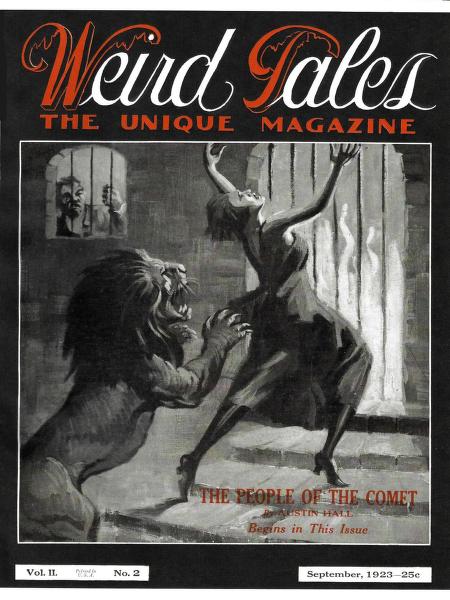
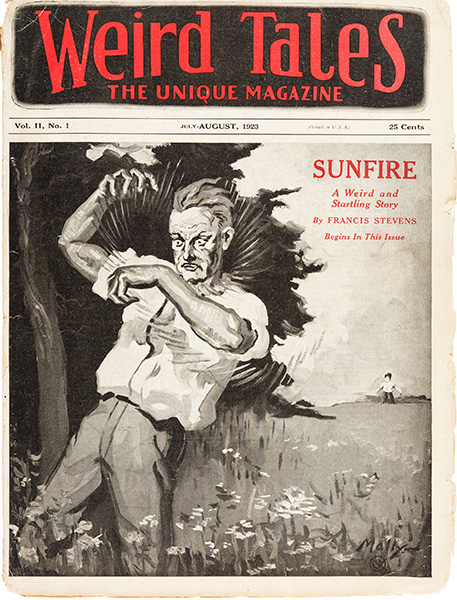

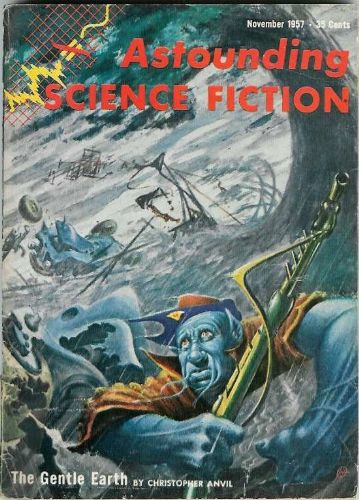


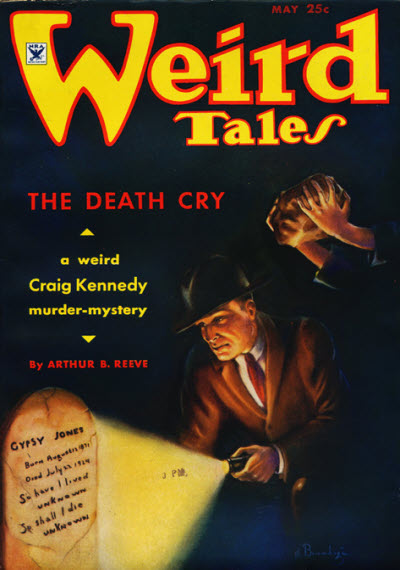
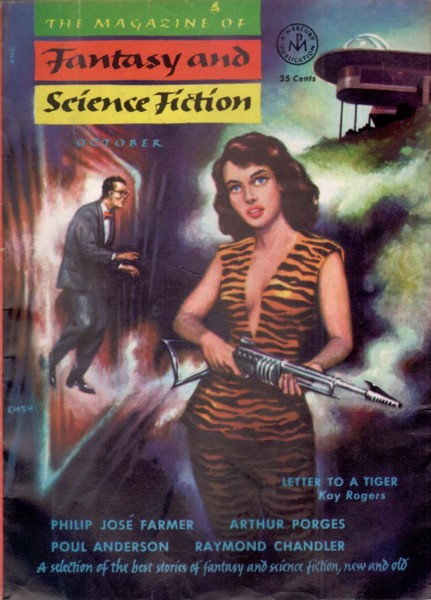
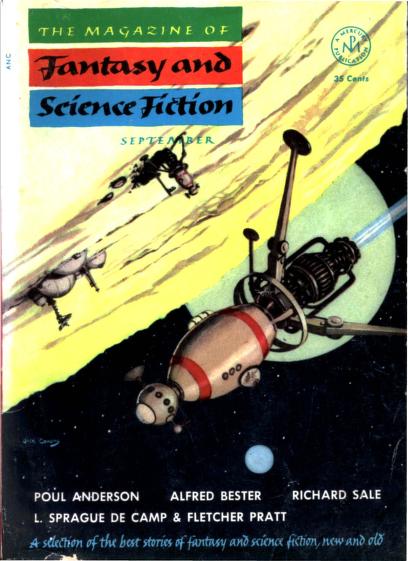
 Science Fiction & Fantasy Remembrance