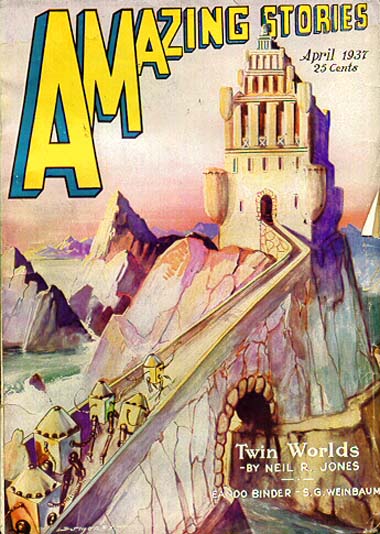
You’re very likely reading this after December 31, 2025, in which case “Happy New Year” is not so relevant.
But still, Happy New Year!
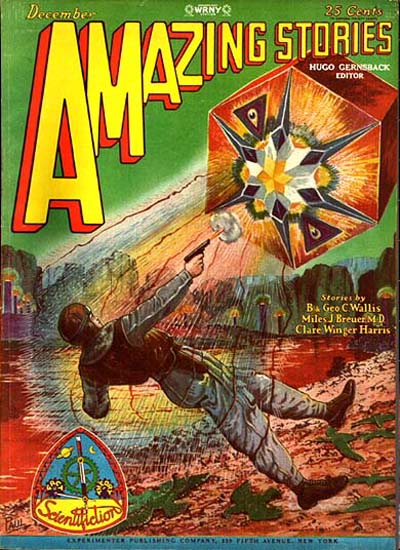
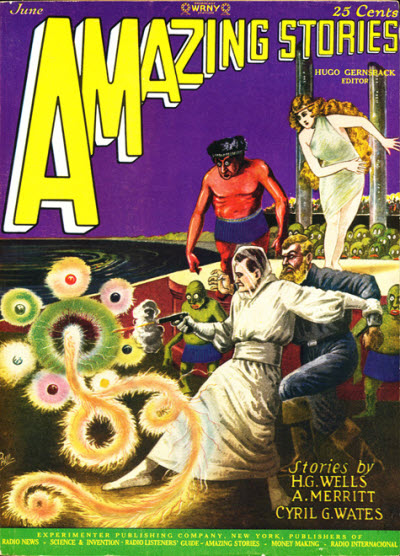
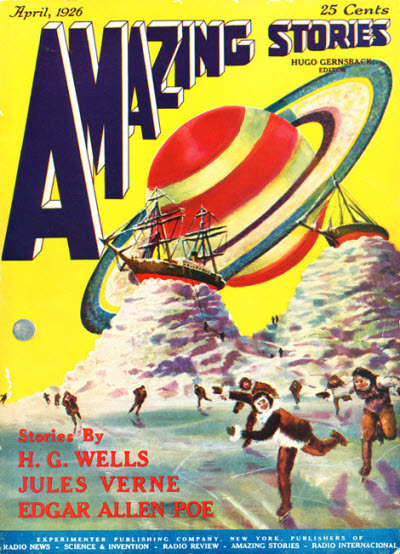
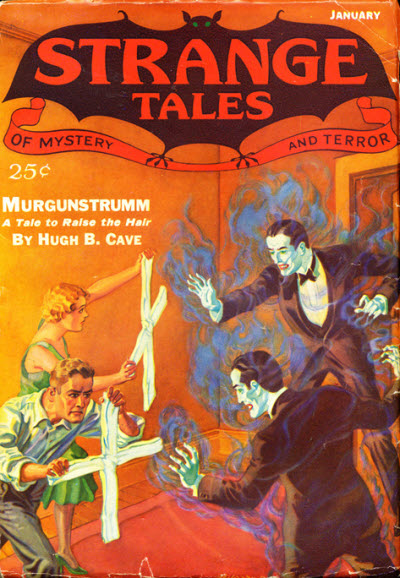
Nancy Kress has had a pretty long career, even just a bit longer than people would think. It’s easy to think of her as one of many authors who came about in the ’80s, and indeed her first novel was published in 1981; but like with William Gibson and Bruce Sterling, she made her debut in the ’70s. “The Earth Dwellers” was her first story, published when she was 28, and it would take some years for her to come into her own as a writer. This is not unusual; if anything it was much weirder at this time to see someone like the late John Varley, who pretty much hit the ground running. Of course, decades later and with multiple Hugos and Nebulas under her belt, it’s easy to see that Kress was wise to hone her craft. Her debut story over here ain’t half bad either, being a short mood piece that feels just a little off-brand for Galaxy under Jim Baen’s editorship. It’s competently constructed, but unfortunately there’s not a whole lot too it either. This is similarly a short and not very demanding review for New Year’s Eve.
Placing Coordinates
First published in the December 1976 issue of Galaxy Science Fiction. It has never been reprinted.
Enhancing Image
Rachel has just said farewell to her daughter Susan, along with Susan’s husband and small child. Susan, at this point in her twenties, went to college to study astrophysics, and now she and her family are on the spaceship Oregon as colonists, heading for Sirius V. It’s a one-way trip, and the trip alone will take 16 years in objective time, while the passengers aboard will be in cold sleep. Rachel and her husband Duncan knew this day was coming, but still these just-past-middle-aged parents are each handling the situation quite differently. The launch of the Oregon itself is anticlimactic, going off without a hitch and without much ceremony, with the “ugly utilitarian structures” of the spacefield around them. They go home together as if they had just sent their girl off to college, and not to a planet where they will never hear from her (or their grandson, it must be said) again. The treatment of space travel in this story is generally ambivalent, although Rachel is biased considering she herself has no interest in it. The topic would’ve appealed to Jim Baen and a certain type of space-colonization-now freak, but Kress’s treatment of it is more as a “necessary” evil than anything. I personally don’t see space travel as necessary, or even desirable, but if I went on a rant about that on a day like this then I’d feel like an asshole.
As for Rachel, she’s an environmentalist of sorts, being concerned with the ailanthus (misspelled in-story as “alianthus”), which unlike in real life has become endangered. Dodderson’s blight, seemingly of Kress’s invention, is threatening the species. “[Rachel] wasn’t usually a Joiner of Causes, but this one was different.” What little we’re told about the world of this future implies that environmental collapse on Earth is perhaps imminent, which really is not much different from how things are going in our world. Something I now appreciate about “The Earth Dwellers” that I did not in the heat of the moment is that this feels like a believable future setting. While published in 1976, it doesn’t have that burnt-out post-hippie stink a lot of ’70s SF has; there are no clear indicators that this was written from the perspective of just four out from the last moon landing. If there’s any indication of when it was written, it’s the sense that the Space Race was winding down and that NASA was at risk of losing funding. This is something quite a few SF people, including Baen and Jerry Pournelle, were concerned about. Whether Kress herself thought much of it at the time is hard to say. At the end of the day this is only nominally an SF story, since this is a character study where technology only plays a peripheral part. Rachel lives in a world that doesn’t seem all that futuristic, and Rachel herself turns inward and retrospective.
Something that’s struck me after having read “The Earth Dwellers” is what could’ve compelled Kress to center a story on a woman who is at least deep in her fifties, given Kress’s age at the time. Kress was about the same age as Susan, and she was also married (her first marriage) at the time, and may or may not have had her first kid by this point. Yet she seems to identify more with Rachel than Susan, the latter coming off as selfish and reckless. Having read my fair share of Kress’s more recent SF, from the ’80s onward, I assumed her sympathizing with middle-aged characters was an indicator of her own age, but it turns out this was a hallmark of hers from the very beginning. Also evident here is a style that borders on purple, but at the very least it’s more pleasant to read than much SF then being written. Kress’s style would fit well in the pages of Asimov’s and F&SF, but we see a rougher and less ambitious version of here in Galaxy.
There Be Spoilers Here
Really not much I can say here, given that there’s hardly even the skeleton of a plot to begin with and “The Earth Dwellers” more stops rather than ends. Like I said, it’s a mood piece.
A Step Farther Out
I have a couple announcements to make regarding this site tomorrow, which sounds vaguely ominous, but it’s really not all that. It’s also the end of the year and naturally I’ve been in a sort of retrospective mood. I like Kress, and I was curious about her no-doubt modest beginnings as a writer. “The Earth Dwellers” is not something I would seek out unless you’re a Kress fan or completionist, but it’s perfectly decent.
(Cover by Joseph Diaz. Clarkesworld, August 2020.)
Who Goes There?
Rebecca Campbell was born and raised in Canada, although last I checked she’s been living in the UK for a minute. Unusually she made her debut with a novel, The Paradise Engine, in 2013, which has not been reprinted as of yet. So far it’s her only full novel, with the rest of her work being short stories and novellas, and she’s been pretty successful in that area. Today’s story was itself expanded into a novella, Arboreality, a couple years later. Campbell is part of a generation of writers who breathed new life into SFF short fiction in the 2010s, when there was an online magazine boom and a healthy market for bringing these stories into physical print. In hindsight this was a bit of a golden age for the field. Even 2020, just five years ago, now strikes me as a healthier publishing environment than what we’re now facing. Well, “An Important Failure” caught my attention because it won the Sturgeon, although curiously it did not get a Hugo or Nebula nomination. My feelings on this story are a bit mixed, which I’ll try to articulate, but I did have to sit on this one for a couple days.
Placing Coordinates
First published in the August 2020 issue of Clarkesworld. It’s been reprinted in The Year’s Best Science Fiction: Volume 2 (ed. Jonathan Strahan), The Best Science Fiction of the Year: Volume 6 (ed. Neil Clarke), and The Year’s Best Science Fiction & Fantasy, 2021 Edition (ed. Rich Horton).
Enhancing Image
“An Important Failure” starts oddly. The opening scene is not really a scene at all, but a little exposition dump about “the Little Ice Age,” so called because in the 17th century there was, in North America, a slight but important overall drop in temperature; this coincided, and indeed may have been caused by, the (mostly unintended) mass deaths of indigenous peoples who came into contact with European settlers. Many of the natives, who were completely defenseless against the diseases the settlers carried with them, died, and when they did they left empty land behind them. The changing of the land itself, the revival of woodlands, will be instrumental to the rest of the story, but this is not apparent at first. Even more seemingly tangential is the mentioning of the famous luthier Antonio Stradivari, who lived in the 17th and early 18th centuries, who crafted instruments (mostly violins) by hand. These instruments were so finely made and so durable that many of them still exist today, naturally in the hands of wealthy collectors. Hand-crafted wood instruments logically require some very fine and aged wood to be chopped and carved, so that the felling of trees is necessary to the production of these instruments. Campbell introduces a key theme, although not the plot, in this opening scene.
I said at the beginning that 2020 already feels like a long time ago, and Campbell agrees. Life in 2020 was itself changing radically, even in ways we may not have considered at the time, and this story is about one of those ways, namely the altering of the landscape. Of course when I say “landscape” I mean the environment of the Vancouver woodlands and little islands, the closest American equivalent I can think of being Oregon and Washington, which hell, are driving distance from Vancouver anyway. The point is that this is a very Canadian story.
I started writing [“An Important Failure’] while watching the bushfires in Australia back in January, and finished it in June, while in lockdown. The world seemed to transform several times in those months, and the story reflects my disorientation. It’s a story about processing change—how we do it, how we fail to do it. It’s also about the giant trees of [British Columbia]—the “Champion Trees” of UBC’s big tree registry. The miraculous old growth they show you on fifth grade field trips to Cathedral Grove, or just off the road between Lake Cowichan and Port Renfrew. They’re vulnerable, of course: logging, poaching, climate change, wildfires. They’re so old, they belong, quite literally, to a different world.
While I’m mixed on the plot (I’ll get to that in a second) and the tone Campbell goes for, I do like how she writes about the setting around her characters, even if I’m not too keen on the characters themselves. I’ve never been to Canada, let alone the region of it Campbell writes about, but (and maybe this is partly because I’ve been reading Robert Frost again recently) I feel as if I could travel to these locations and smell the air, the greenery, the wildlife. (I actually don’t even live close at all to Vancouver, I’m on the wrong coast. I live much closer to Toronto. Oh well.) This is a lovely piece of environmentalist SF, although when I say “SF” I do think speculative fiction is a totally valid label here, rather than science fiction. I say this as someone who’s not fond of “speculative fiction” as a term. We don’t get aliens or time travel here, but rather speculation on how the world might change for a luthier over the span of a couple decades, starting in the 2030s. It’s a near-future story, and wisely Campbell doesn’t pull anything that outlandish, even though we seem now to be living in an outlandish and DeLillo-esque world. The plot itself is also, at its core, pretty straightforward, although the implications and the juicy little details are what really make it worth reading. It doesn’t reinvent the wheel, indeed it reminds me too much of certain other stories I’ve read, but I liked it.
Mason-Chris (the third-person narrator mostly calls him just Mason while some characters call him just Chris) is a luthier-in-training, fittingly somewhere in his twenties at the start of the story, who we’re introduced to as participating in some illicit lumber work. Mason going outside the boundaries of the law, and even once or twice betraying his own sense of morality, for the sake of his art is a personality quirk that will drive the rest of the plot. We then go back a bit to the birth of a girl who would become a very talented violinist, “magnificently named Masami Lucretia Delgado,” who Mason and his boss Eddie meet when she’s a precocious 13-year-old player and something of a charity case. They make her a violin that the government loans to her for three years—only three years. The transient nature of this bothers Mason such that he vows to make a violin for Delgado and give it to her as a present, which she will be able to play for the rest of her life and which in fact will last decades (perhaps centuries) after her death. Crafting such a violin is, of course, easier said than done, especially since Mason is working in the midst of climate catastrophe, deforestation, and certain species of tree being on the verge of extinction. Campbell speculates (I think correctly) that the physical world will continue to change in the decades to come, and not for the better.
I’m conflicted, because I do have a soft spot for stories about artists who dedicate an unreasonable amount of time and effort to their craft, especially if we get to see the downside to that level of dedication, but Mason himself is… not that interesting? It could be that the nigh-omniscience of the narrator means we’re given a bird’s-eye view of the action but not much insight into what these characters are thinking, but despite following this man from his twenties into middle age I never felt like I got to know him much. His obsession with Delgado is also rather inexplicable, and it doesn’t help that we get to know very little about Delgado as well. From the time she was a small child she’s been obsessed with being a violinist, and her physical ailments (she’s described as frail, overall, but with strong hands and shoulders, just right for playing a certain instrument), but she doesn’t seem to have much else going on in her life. She’s shown to have what you might call a one-track mind, and Mason is similarly preoccupied with crafting the “perfect” violin for her, pretty much to the exclusion of everything else. It’s a level of obsession that doesn’t strike me as believable, although it’s possible that the novella expansion fleshes these characters out. Basically, you have probably seen this kind of story before, albeit on a different subject. There’s a rough-hewn melancholy quality that I’ve seen elsewhere, to the point where I can easily imagine “An Important Failure” as appearing in Asimov’s a couple decades earlier.
There Be Spoilers Here
A couple characters I’ve not mentioned until now are Jake, Mason’s brother, and Sophie, Jake’s wife. Sophie makes money from growing weed and other plants, illicitly. There’s a special crop she grows, which she calls Nepenthe, and which I’m trying to remember is a strand of weed or some opioid. It has painkilling properties, which ends up being useful when Mason hurts his shoulder really bad in a lumbering accident. The shoulder never totally heals, but at least the Nepenthe is good. That name, which the reader is likely to forget about, comes back when Mason finally finishes his violin many years down the road. Delgado loves the violin, naturally, but she thinks it should have a name, as if it were a person or an animal. Mason pulls Nepenthe out of his memory, like some near-lost and hazy childhood thing, and hell, that does the job just fine. If Campbell asks the question of whether all this was worth the effort, if partaking in the demolishing of forest and precious trees is worth the creation of a single instrument, she doesn’t do so explicitly, which I have to respect. Mason realizes by the end of it that he is no longer a young man, that Delgado went off, got married, and even had a kid, in all the time that has passed. The world continues to slide downward into a pit of chaos and blackness.
A Step Farther Out
This is a depressing story, if I’m being honest, and I don’t mean that as necessarily a positive or negative criticism, more so that it’s not the kind of story I was in the right mindset for. I’ve been having depressive episodes more frequently than usual as of late, and I admit I had to drag myself (not literally) to the keyboard and write a review here. Depression, as a vibe if not as a mental aberration depicted in-story, is maybe too common in modern SF as it is. Of course, there’s a lot to be gloomy about. I do sort of recommend “An Important Failure,” but be aware going in that it has that special Canadian flavor of doom-and-gloom.
Carol Emshwiller was one of the most acclaimed short-story writers of her generation, made more impressive because she kept doing good work for about half a century, longer than most authors’ careers. She started in the ’50s, at the tail end of the magazine boom, and kept writing, albeit mostly in the realm of short fiction and never too prolifically, until her death in 2019. She likely would’ve still become a favorite of readers from across a few generations even had she not been married to Ed Emshwiller, but that certainly helped, with Ed even illustrating some of her stories. It was one of those rare marriages where you had two very talented artists, and whose works even sometimes fed into each other. Emshwiller (Carol, that is) was also not an SF doctrinaire, but someone who was open to experimenting with genre boundaries from pretty early in her career, so it makes sense that she was one of the few women to appear in Dangerous Visions. Today’s story is itself very much outside the boundaries of SF, although I hesitate to call it horror as well, even though that’s what it is marketed as. “I Live with You” is a short and simple story that doesn’t easily fall into any genre; if it’s horror then it’s by virtue of the uncanny nature of the relationship between the two women at its center. This is a story that’s meant to be taken allegorically, rather than literally.
Placing Coordinates
First published in the March 2005 issue of The Magazine of Fantasy and Science Fiction. It’s been reprinted in The Mammoth Book of Best New Horror 17 (ed. Stephen Jones) and the Emshwiller collections I Live with You and The Collected Stories of Carol Emshwiller Vol. 2.
Enhancing Image
The narrator is a ghost, maybe, or perhaps just unhoused lady who has somehow been living off of table scraps, in a book store for a while and in a department store before that. She’s been hiding for who knows how long, but nobody has caught her yet, and as she says, “I never steal.” At least this was the case before she started hiding in Nora’s house. The narrator looks enough like Nora to be her doppelganger, but the two don’t seem to be related. The only other company at this house is the cat, which Nora doesn’t get along with very well, although the little beast takes much more of a liking to the doppelganger. She spends her time in the attic, when Nora is home, but otherwise she has the whole house to herself. It takes weeks for Nora to figure that someone might be intruding, and even then she doesn’t call the cops, but instead has a deadbolt installed for her bedroom door. Nora is so out of it, so passive in her day-to-day life, that she doesn’t even notice when her doppelganger is just one room over from her. The narrator, partly out of pity for Nora and partly as a means of entertainment for herself, figures it’s time for Nora to get herself a man—or rather for the narrator to get one for her. The more pitiable the better. In stories in which a “normal” person meets their doppelganger, the latter is typically more adventurous or mischievous, if not outright evil, and the same holds true here. The disparity is such, in fact, that Nora comes off as the uncanny one in the pair, rather than the narrator, on account of how empty she is as a person. The narrator schemes to bring a man to Nora’s home because she’s frustrated with how dull Nora is. As the narrator says:
At the book store and grocery store at least things happened all day long. You keep watching the same TV programs. You go off to work. You make enough money (I see the bank statements), but what do you do with it? I want to change your life into something worth watching.
There’s the question, firstly, of why the narrator continues to live with Nora if she finds her so boring, and it’s a question she doesn’t answer in any straightforward fashion. There’s also the question (also never quite answered) of what the narrator is supposed to be and why she’s a dead ringer for Nora. There’s something supernatural going on, maybe, but Emshwiller doesn’t care to give us answers to these questions, if for no other reason than that an explanation might distract from the unusual dynamic between the women. As a rule of thumb, good horror (and “I Live with You” is ostensibly horror) should abstain from explaining or rationalizing the horrors of its world. Certainly from Nora’s perspective this ordeal would count as horror, as it uneases her enough to get deadbolts for her bedroom door—for the inside and then, rather irrationally, for the outside. The real question is, who is really the woman living in the attic? Literally it’s the narrator, but she’s so comfortable living in Nora’s house that it’s Nora who comes off as the one living here as an outsider. The narrator comes and goes as she pleases, taking bits and pieces of Nora’s stuff, although it’s always stuff Nora was unlikely to appreciate in the first place.
Things get more interesting once the two women finally meet face to face, and of course it’s by accident. This is in the midst of the narrator’s scheming to have a guy with a gimp leg, named Willard. It’s possibly the most memorable passage in the whole story, if only because of how neatly it illustrates the contrast between the women. As the narrator says, “I’m wearing your green sweater and your black slacks. We look at each other, my brown eyes to your brown eyes. Only difference is, your hair is pushed back and mine hangs down over my forehead.” Worth mentioning that while “I Live with You” is technically a first-person narrative, the doppelganger refers to “you” as if you were Nora, or rather as if she were talking directly to Nora. The reader is meant to be in the place in this plain, unassuming, seemingly empty-headed woman. In a way it makes sense, because who else could she be talking to? If it has to be told in the first person, then making it border on second-person like this makes sense enough. It also adds a touch of creepiness, since the doppelganger, this unnatural person, is talking directly to us, although she means no harm.
There Be Spoilers Here
The threeway(?) doesn’t exactly go well. Willard comes over under the impression that the woman who wrote him the letter was Nora and not the narrator, a confusion compounded because of the ladies’ identical looks. Nora seems to be taken in, though, after some initial fumbling (quite literally at one point, as the narrator trips her on purpose), and it seems like the two might at least be hitting off for a one-night stand. It’s implied that the narrator is here to watch, except that when things do get steamy she’s disappointed by the lack of spectacle. (Given that Emshwiller would’ve just turned eighty, I’m a bit surprised that sex plays as big a factor in this story as it does.) Nora fumbles for the last time, though, and Willard leaves. The narrator also decides to leave at this time, having left Nora traumatized but also a more mature woman than before. I’m actually not sure how old the two women are supposed to be, certainly old enough that Nora has a house and a job; but despite her assumed age, Nora’s implied to possess a certain innocence which by the end of the story has been taken and replaced with something. Maybe something better, who’s to say? Even for full-grown adults there are events in our lives in which we feel like we’ve been compelled, or maybe pushed or shoved violently, into being one step closer to enlightenment. As with the stories of Theodore Sturgeon and Robert Aickman, whom Emshwiller may have been thinking of, the crossing of the shadow-line is framed as traumatic.
A Step Farther Out
“I Live with You” won the Nebula for Best Short Story that year, which is curious, for one because it’s pretty unassuming, but also this was in the sixth decade of Emshwiller’s career. The fact that she had won her first Nebula just a few years earlier is in itself unusual; authors typically don’t write work this solid this deep into their careers. I unfortunately can’t say I agree with the Nebula win for “I Live with You,” but it is a tightly knit and moody story with a feminist bent. It’s hard to write about something that’s both this self-contained and which more or less already speaks for itself, so the only thing I can really do is recommend you read some Emshwiller, especially since her career coincides with much of genre SF’s history, from the pre-New Wave years into the 21st century.
Here we have one of the most respected Victorian writers, if also perhaps underread to this day, with Mrs. Gaskell. A lot of her work was, even after her dead, accompanied with the byline of “Mrs. Gaskell,” but Elizabeth Gaskell was very much her own woman. She was born in 1810 and was close contemporaries with the likes of George Eliot and the Brontë sisters, to the point of being close friends with Charlotte Brontë and writing the first major biography of her. Gaskell was also an accomplished novelist, in part helped by her friendship with Charles Dickens at a time when Dickens was the most popular author in England. “The Old Nurse’s Story” was itself first published in the Christmas 1852 issue of Household Words, a magazine Dickens was editing at the time. While she’s not as popular now as Eliot or the Brontë sisters nowadays, her novels, especially Cranford, North and South, and the sadly unfinished (on account of Gaskell dying suddenly just before she could write the ending) Wives and Daughters, are very well-liked. Her biography of Charlotte Brontë, whilst now being acknowledged as a biased account, also guarantees her a spot in Victorian literature that will probably always be considered worth remembering.
Gaskell, aside from writing novels about social justice (namely the downtrodden lives of those living in the newly industrial parts of England) and more personal topics, partook in what was becoming a fine tradition among British (and to a lesser extent American) writers: the ghost story. In the years long before Fortnite and even the internet, long before even the horror story got walled off and put in its own genre ghetto, it was quite common for “literary” authors in the Anglosphere to write spooky tales of the supernatural, especially with the intention of them being read aloud at Christmastime. Ya know, for the fun of it. “The Old Nurse’s Story” is a very good example of such a tale, as well as being a Gothic narrative in the most classic sense. While the Gothic novel had waned in both popularity and works being written by the 1820s, the Gothic short story picked up the pieces a couple decades down the road.
Placing Coordinates
First published in 1852 and reprinted in the October 1927 issue of Weird Tales. It’s also been reprinted in The Fontana Book of Great Ghost Stories (ed. Robert Aickman), The Gentlewomen of Evil: An Anthology of Rare Supernatural Stories from the Pens of Victorian Ladies (ed. Peter Haining), Minor Hauntings: Chilling Tales of Spectral Youth (ed. Jen Baker), The Valancourt Book of Victorian Christmas Ghost Stories (ed. Tera Moore), The Penguin Book of Ghost Stories: From Elizabeth Gaskell to Ambrose Bierce (ed. Michael Newton), and the Gaskell collection Curious, If True. Because it’s very old and very public domain, you can find it online easily.
Enhancing Image
Hester, the titular nurse, relates to us (in the position of Rosamond’s children) the story of a particularly strange and traumatic series of events in both their lives. Rosamond, now a grown woman and a mother, was once a child in Hester’s care, at first part of the time and then full-time, following the deaths of both of Rosamond’s parents. Her father died of fever while her mother died shortly after childbirth, to a stillborn baby which would’ve been Rosamond’s younger sibling. (Sounds dramatic, I know, but it would not have been so unusual back in those days.) On her deathbed the mother makes Hester promise to look after the little Rosamond, although really she didn’t have to say anything about that, for “if she had never spoken a word, I would have gone with the little child to the end of the world.” Hester, herself barely an adult at this time, is made to be both Rosamond’s nurse and surrogate mother whilst the two are taken in by the Furnivalls, that is Rosamond’s mother’s relatives. After that slightly convoluted prelude, we find ourselves at Furnivall Manor, the big spooky mansion where the rest of the action is to take place. Given that the framing device sees Hester and Rosamond alive and in good health, we can safely assume that they will come out of these spooky happenings more or less fine, but then we’re not reading this story for the question of if Our Heroines™ will persevere, but rather how. That Hester is also telling us this story in first-person, in a conversational tone, gives the impression that this is a story one should read aloud to an audience, perhaps on the night before Christmas.
(Of course, I say “conservational,” but this is by the standards of mid-Victorian speech, which is more verbose and long-winded than what we’re used to nowadays. Let’s say that Gaskell, in a way not untypical for her time, likes to abuse the semi-colon.)
Furnivall Manor is home to four old farts, namely Grace Furnivall, her maid “and companion” Mrs. Stark, and James and his wife Dorothy. The only exception is Agnes, the one servant in the house who does not have a close relationship with anyone else. As for the current Lord Furnivall, he’s always away from the manor, and I don’t think we ever see him. The west drawing-room is open, but the east drawing-room is locked shut and nobody ever goes in there, for reasons Ms. Furnivall refrains from giving. It doesn’t take long at all for us to find that this mansion has a dark family secret, and we can infer this straight from the fact that Ms. Furnivall had an older sister who died many years ago, from decidedly unnatural circumstances. There’s also eerie organ music that plays in the halls at night, despite there being no one playing the instrument and everyone having gone to bed. Oh yeah, “The Old Nurse’s Story” wastes no time in getting to the good stuff. In fact, despite its length, this is by no means slowly paced, but rather is as long as it is because of Gaskell’s style that she uses here, where there’s no stone left unturned and paragraphs tend to go on for nearly a page at a time. There’s a whole family history delved into here, in a story that’s only about 25 pages, much like in Poe’s “The Fall of the House of Usher.” But whereas “Usher” has to do with a rich family dooming itself via an incestuous streak, the Furnivalls are cursed from a combination of pride and jealousy. Just how exactly these sins play into the ghostly proceedings, we will soon see, for as I said, it’s a question of how the manor is haunted.
For one, we know (or rather are told) that Old Lord Furnivall loved music, both to hear and to play it, and also that he was quite the bastard when he was alive. He apparently mistreated his two daughters, Maude and Grace, although just to what extent we can’t say for sure. We know that the Furnivalls are dominated by pride in their wealth, or at least the appearance of wealth, even in the living relatives, to where James can’t help but look down on his wife Dorothy a bit for having been a farmer’s daughter. Rosamond’s own mother, despite being from a high-born family, had chosen to marry a man of the cloth (I believe it was Anglican, not Catholic, kinda goes without saying), who while virtuous also didn’t make much money. Class figures greatly into “The Old Nurse’s Story,” both thematically and even how it plays a major role in the underlying conflict. This is unsprising, given that Gaskell, like Dickens, was politically progressive, despite being actively religious (specifically she was a Unitarian Christian). The idea that one can be both a practicing Christian and decidedly on the political left may sound far-fetched now, but believe it or not, such strange creatures can occasionally be found in the wild to this day. As for the characters in the story, religion doesn’t play much of a role; but still there’s a palpable class tension between the modest Hester and Rosamond and the rather haughty upper-class Ms. Furnivall and Mrs. Stark. And then there are the ghosts, who are a different matter entirely. There’s Old Lord Furnivall at his organ in the dead of night, and more distressingly there’s a child, slightly younger than Rosamond, who prowls the frosty manor grounds…
(It’s worth mentioning that Hester says winter has hit the manor when it’s only October, which sounds weird, but it’s also worth mentioning that in the northernmost part of England the murderous chill of winter would have set in quite early in the year.)
The first big scare, and the most effective (mostly because it’s something that can happen in real life), is when Rosamond goes missing one day, and it’s both frightfully cold and snowing outside the manor. Hester nearly scares herself to death with fright in trying to find Rosamond, who herself is only rescued thanks to a farmer who lives not too far from the manor, the child nearly frozen to death. Yet strangely Rosamond is not scared of what she found in the snowy outdoors, namely a child who beckons Rosamond to come play with her. The child is obviously a ghost, and is implied not to be leading Rosamond to her death out of malice, but rather out of loneliness, not being fully aware of what she’s doing. It’s unclear if the ghost child is even aware that she’s a ghost. But between the ghost child and the ghost of Old Lord Furnivall, there are a few spirits lurking at the manor that have not yet been laid to rest. Ms. Furnivall has been keeping a secret all these years, and despite being somewhere in her seventies and being deaf enough that she has to use a horn, she’s not too feeble to confess a wrongdoing of the past. Again it’s worth observing that Rosamond is saved by a man of low stature, and that Hester, being merely a nurse-maid, is unequivocally the most heroic figure in the story—which is not to say that all the low-born characters in the are story are virtuous. Gaskell generally sides with the working class, but her view of individual virtue and how it relates to class conflict is more nuanced, as we are about to discover.
There Be Spoilers Here
Back when they were young, Maude and Grace Furnivall were the starlets of the manor and two fine ladies from that part of the country. Old Lord Furnivall wanted nothing less than the best for his daughters, although when I say “the best” I specifically mean the best in terms of status. Only a man with high enough status is deserving of either of these sisters, which doesn’t stop the ladies from having ambitions of their own. There was a time when a “dark foreigner” would visit the manor from abroad once a year, being a talented musician but naturally also one who was not rich. Old Lord Furnivall admired the man’s talent, and also loved to have the foreigner listen to his own playing, but he probably would not have approved of the musician marrying one of his daughters. This didn’t stop the musician from “walking abroad in the woods” (going on walks between man and woman was like going on a date) with each of the sisters at different points. The musician and Maude got married in secret and the musician knocked her up. Maude managed to hide her pregnancy and even to raise her daughter, under the guise that the child was a charity case from some working-class home. But the musician had skipped town, never to return, and Grace was the only other person who knew the secret; so, in a moment of fiery jealousy, she ratted out her sister to their father, who was not pleased. Maude and her child were evicted from the manor, with her later being found under a tree, crazed and nearly frozen to death, her child dead in her arms. Maude died not long after that, and the guilt never left Grace.
Hester coming to the manor with Rosamond reopened a wound that seemed to have nearly healed, or at least would have probably died along with Ms. Furnivall. The climax is theatrical, and if I had a gripe with this story I think the final confrontation is a bit overblown, compared to what came previously, although the very end is haunting. Having confessed to what she had done to Maude, Ms. Furnivall has lifted the curse from the manor and placed all on her own shoulders. There’s peace for everyone else, but not for her. She dies in her bed shortly after, in agony, with the words: “Alas! alas! what is done in youth can never be undone in age! What is done in youth can never be undone in age!” It’s a pretty bleak ending, the only thing preventing it from being a total downer being that Hester and Rosamond come out of the ordeal in one piece. If we can infer from the framing device, Rosamond (although we hear not a word from her adult self) has not repeated the mistakes of her relatives.
A Step Farther Out
I had read this one only yesterday, and part of me wishes I got to sat it on longer. This is a story that requires some retracing of steps and understanding the whole of it in order to better appreciate. The syntax Gaskell uses here also takes some time getting accommodated with, but this is coming from the perspective of someone who hasn’t read that much Victorian literature. While the walls of text and the convoluted family dynamics can be a bit intimidating, I do very much recommend seeking out “The Old Nurse’s Story,” especially if you’re into ghost stories by the likes of Robert Aickman and M. R. James.
(Cover by Stanislaw Fernandes. Omni, October 1987.)
Who Goes There?
Happy Halloween, ghouls and gals!
George R. R. Martin is now one of the most famous American authors alive, but this was not always the case. When he made his professional debut in the early ’70s he was just another post-New Wave writer who wanted desperately to be published in Analog, as he idolized (and still idolizes, really) John W. Campbell. In a bit of a cruel twist of fate, Martin didn’t make his first sale to Analog until right after Campbell’s death, but that didn’t stop him from appearing in that magazine regularly throughout the ’70s and ’80s. Martin started his A Song of Ice and Fire fantasy series in 1996, but prior to that his career was a lot more winding—one might say directionless, but I prefer to think of the first couple decades of his career as showing Martin at his most versatile. He wrote science fiction, fantasy, and horror in more or less equal measure, although he’s admitted to being perhaps a horror writer by instinct. This is easy enough to believe, even for someone who only knows Martin for his big series, considering the monsters, zombies, ghouls, and remorseless killers which populate A Song of Ice and Fire. For better or worse (he has his reactionary/boomer moments), Martin is our biggest connection to an era of genre writing that is long past us, to the point where a lot of current readers have no personal memory of it and no passion to dig up its bones. He’s the one living author I know who has enough clout to make young readers check out the works of Jack Vance.
My experiences with Martin have been a bit mixed over the years, since I have to admit I’m not keen on his big fantasy series from what little I’ve read of it; but at the same time I do like his early SF and horror a lot more. This month has been kind of a wash for me, as far as getting my spooky shit on goes, with movies and also reads, even what I’ve been reviewing here as of late. The good news is that we’re going out on a high note, because “The Pear-Shaped Man” is a darn good tale of paranoia and suspense, being quite effective while also seeing Martin on his best behavior. Understandably it won the Stoker for Best Long Fiction that year, although at maybe 13,000 words it’s not that long.
Placing Coordinates
First published in the October 1987 issue of Omni. It’s been reprinted in The Year’s Best Fantasy: First Annual Collection (ed. Ellen Datlow and Terri Windling), Omni Best Science Fiction Two (ed. Ellen Datlow), The Horror Hall of Fame: The Stoker Winners (ed. Joe R. Landsdale), and the Martin collection Dreamsongs: Volume I.
Enhancing Image
Jessie is freelance book illustrator (the narrator jokes that this is not a “real” job) who’s moved into an apartment recently, and so far everything has been going about as expected. She has a few friends and she gets enough work that she won’t be homeless in a week. There is one problem, though, which has to do with the man who lives in the apartment building’s basement. The man, as far as anyone can tell, does not have a name, for even the tenants who have lived here for years don’t know what it is, despite all of them having interacted with him at some point or other. “All of them, every one, called him the Pear-shaped Man. That was who he was.” He’s a man of unusual proportions, being certainly chubby, but with his torso being (predictabtly) pear-shaped: narrow at the shoulders, yet with a real dump-truck of an ass. His head is described as like a small pear on top of the big pear that is his body. Nobody in the building really likes him, but he’s someone who generally keeps to himself, even with his strange habit of seeming to only eat cheese curls of a specific brand and drink Coke. This would be considered par for the course with YouTubers and Twitch streamers in the current year, but it would’ve been strange back in the days when people cared about balancing one’s diet. The Pear-shaped Man lives right below Jessie and her roommate Angela, but while the latter is chill about the man’s eccentricity, Jessie quickly finds a bone to pick.
“The Pear-Shaped Man” is example of what we would call apartment horror, which sounds specific but actually has some room for a variety of fun (or maybe not-so-fun) times. It could have to do with getting a roommate who turns out to be a psychopath, neighbors who are secretly murderous cultists, neglectful management (as if there’s any other kind), or some combination. Maybe there’s a Lovecraftian monstrosity lurking in the water pipes, or maybe (to take from a certain Lovecraft story) the air conditioning stops working on the worst of days. It’s a kind of horror that could’ve only sprouted in a post-industrial urban society, and the more people are packed together like sardines the better. Apartment horror stands on the diametrically opposite end of the spectrum from rural horror, since whereas rural horror often goes into a sense of isolation and what little human company there is being off, apartment horror tackles terrors that are unique to the urban experience. It’s also an example of another kind of horror story, albeit more a twist on it than a straight example: the tormented-woman story. I wish there was a better name for it, but it’s a very old and proud tradition in the genre, in which you have a woman (it’s usually a woman) of questionable mental stability who finds herself suffering at the hands of an antagonist, sometimes unseen but other times hiding in plain sight. Here, the supposed antagonist tormenting Jessie is a man whom everyone in the building already knows about, and who to all appearances hasn’t done anything except act in a way that doesn’t abide social norms; the worst thing he’s done is be kind of a weirdo.
Now, I say this is a twist on the tradition, because Jessie really ends up being her own worst enemy, to the point of being a Karen. She is clearly in the midst of a psychotic break, but she also acts entitled—not that the people around her are exactly innocent. She repeatedly has dreams about having a weirdly sexual encounter with the Pear-shaped Man, and her obsession gets to the point where she unconsciously paints his features in an illustration, which her boss doesn’t take too kindly. This is the kind of thing one would seek professional help for, but not only does Jessie fail to consider this, but her friends and acquaintances actively choose to make the situation worse once or twice. Martin walks a bit of a tightrope here, because on the one hand Jessie is not the most likable of protagonists, being bitchy, whiny, and something of a Greenwich Village-type hipster, but also she seems to be suffering from some undiagnosed mental illness. She talks with Selby, the apartment manager, in trying to persuade him to dig up the Pear-shaped Man’s lease so that he can be identified, which as Selby’s justified to point out is a big invasion of the man’s privacy; and yet the fact that he doesn’t seem to even have a lease should in itself be concerning, never mind that he only ever pays rent with cash, and single-dollar bills at that. (This feels like a plot point that could’ve only been plausible at least thirty years ago, since nowadays rent is fucking astronomical unless you live in the middle of bum-fuck nowhere.) It doesn’t help that even though he hasn’t done anything, the Pear-shaped Man stood outside watching Jessie’s place for an uncomfortable amount of time on one occasion, and during the few times they interact he wants her to come see his “things.” Nowadays this would be considered stalking and/or harassment.
There’s a sexism angle to “The Pear-Shaped Man” that goes unsaid, which is probably for the best since my experience with Martin has taught me that he can be unreliable on feminist issues. So much the better that Jessie’s plight being elevated by men who by and large don’t take her seriously is kept as subtext, then. Really, what’s impressive about this story, considering Martin’s habits as a writer the pop up now and again, is that’s both subtle in a psychological sense while also building tension at just the right pace. This is a novelette, like I said about 13,000 words, but it feels a bit shorter than that. Early in his career Martin was prone to writing mood pieces, stories in which not much actually happens and there’s a focus on character and vibes, but with “The Pear-Shaped Man” he found a right balance of character and action. Previously I’d only written about Martin early in his career, whereas this story shows someone who is both a seasoned professional and in his element. He can be as gory and erotic as he wants later, with A Song of Ice and Fire, but with his earlier fiction, mostly printed in magazines, he feels the need to restrain himself at least a little bit. The descriptions of the Pear-shaped Man as this grotesque figure, his skin unnaturally pale and his fingers like worms or maggots, spark one’s imagination and may even gross you out a bit, but Martin doesn’t overdo it.
There Be Spoilers Here
Not a negative criticism, but the ending is a very strange one. I was unnerved a bit, but also confused. I don’t even wanna give it away here, both because I’m not entirely sure what happened (it’s clearly meant to be taken as metaphorical rahter than literal, but that doesn’t help much), and because I do recommend this story quite a bit and I think a first-time reader should go into it blind up to a point.
A Step Farther Out
Recently I had read Martin’s Fevre Dream, which is one of his few standalone novels and certainly the most well-known novel of his that isn’t part of that series; and while I enjoyed it, I also kept wishing it was about a hundred pages shorter, with the third act being tightened up massively. Martin, like any writrr with two brain cells to rub together, writes for money, and the horror market in the ’80s called for novels that were unnecessarily large and horizontally challenged. With short fiction, though, one still had the restraints one needed to write something that could be frightening and chilling, sure, but also calculated. I very much recommend “The Pear-shaped Man” as an introduction to George R. R. Martin the horror writer, as opposed to George R. R. Martin the fantasist, assuming you haven’t already read “Sandkings,” which sees Martin in both horror and SF mode. I do love “Sandkings,” by the way.
(Cover by Pete Kuhlhoff. Weird Tales, September 1946.)
Who Goes There?
Born in 1904, Edmond Hamilton was, along with friend and close contemporary Jack Williamson, one of the last of the classic SF pulp writers, and one of the few of that type to survive the raising of standards for SF writing that came about during the World War II years. He tried but failed to strike a business relationship with John W. Campbell, but found Campbell’s criteria to be too exacting and finicky, so he was to appear regularly in just about every genre magazine of the era that Campbell wasn’t editing. In the pre-war years Hamilton was known for his quite literally world-shattering space opera, being one of the pioneers of that subgenre; but whereas E. E. Smith captured readers’ imaginations with his novels, Hamilton stuck to the short story and novella early in his career, and he also deliberately mixed horror elements in with his SF. It shouldn’t be surprising, then, that he had made his debut in Weird Tales, and was maybe the most consistent contributor of “weird-scientific” stories for that magazine. He remained loyal to Weird Tales until it shut down (not for the last time) in 1954. So we have a story today that’s not really horror at all, but rather is SF that could’ve just as well have been published in Startling Stories or Thrilling Wonder Stories at the time. This is also one of those cases where I checked out the story based on the nifty magazine cover it inspired.
Placing Coordinates
First published in the September 1946 issue of Weird Tales. It’s only been reprinted twice, in The Last Man on Earth (ed. Isaac Asimov, Martin H. Greenberg, and Charles G. Waugh) and the Hamilton collection The Best of Edmond Hamilton.
Enhancing Image
As you can guess from the cover, this story involves anthropomorphized animals, or more accurately animals that have been unintentionally uplifted via atom-bomb-induced mutation. Hahl and his comrade S’San, a dog-man and a cat-man respectively, are minding their own business when a star passes over them, passing so close in fact that it crashes in the Crying Stones, an island that is forbidden to the Clans. The Clans are of course communities of different humanoid animals, including dogs, cats, foxes, and even horses. These beast-people are akin to those poor mutilated creatures in The Island of Doctor Moreau; but whereas the beast-folk in that novel are in a state of constant agony, their equivalents in “Day of Judgment” don’t have too bad a life—even barring the nuclear devastation they’ve been born into. Hahl, being a dog, if one that walks on two legs, is curious about this fallen star, going against S’San’s warnings. Naturally the fallen star turns out to be a spaceship that’s landed on the island, home to two humans, a man and a woman. When I reviewed Peter Phillips’s very good (and chilling) “Lost Memory” not long ago I went into some detail about how humankind getting back into contact with one of our robot or animal companions might turn out badly, but this is not so much case with the humans in Hamilton’s story. For one, it’s been long enough since the nuclear holocaust wrecked the world (several dog generations we’re told) that the radiation has long since died down. Also, while the humans are outnumbered, they do have futuristic weapons, whereas the beast-folk have not yet gotten past the stone-and-spear phase. Still, their first meeting is a rough one.
Unfortunately “Day of Judgment” is not very interesting on its own, although it is interesting when taken in the context of a certain strand of SF that proliferated in the years immediately following WWII, that being the tale of nuclear anxiety/depression. I wrote an editorial on this topic some months back, because it’s a topic that informs a great deal of SF published from about 1946 to 1960. There were stories beforehand that speculated on the use of a theoretical nuclear weapon, but following the atomic bombs being dropped on Hiroshima and Nagasaki there came along a new subspecies of SF story, written from an American or at least Allied perspective, about a world in which humanity has disfigured or destroyed itself with atom bombs. There are too many examples to count, but some notable ones include Ray Bradbury’s “There Will Come Soft Rains,” Judith Merrill’s “That Only a Mother,” Theodore Sturgeon’s “Memorial,” A. E. van Vogt’s “Dormant,” and perhaps the ultimate post-nuclear story of the era, Walter M. Miller’s A Canticle for Leibowitz. These are at times melancholy and outright pitch-black stories in tone, and it’s strange to think these are coming from people who were on the winning side. Hamilton himself was a hawk who supported America’s involvement in WWII and later (more regrettably) Vietnam, although he was not the the screaming cold warrior that Robert Heinlein was. Even someone with Hamilton’s politics could see that the proliferation of nuclear weapons would likely be a losing game for everybody. The human couple in “Day of Judgment” have returned from a failed Venus colony, only to find Earth has been bereft of human life for a hot minute now, replaced by intelligent beast-people.
The immediate question is what ought to be done with these humans, as they could well present a threat to the Clans, but the thematic question is whether humanity, in the wake of the nuclear age, deserves a second chance. This is Hamilton, who for how dark he can be at times is not as much a pessimist as his wife (Leigh Brackett), so you can guess.
There Be Spoilers Here
A trial ensues among the clans, with the humans being in a position where they might be executed; of course they won’t be, which is a bit of a shame, since a bleaker ending would’ve elevated this story a bit. I’d like to take a moment to talk about a gripe I have with Trondor, the leader of the horse clan, and his ilk: these fuckers stand on their hind legs, which are hoofed. This simply doesn’t work. Humans are able to walk on two legs because of a lack of a real tail, and more importantly we have feet with flexible toes which are good for keeping ourselves balanced. If someone loses even one toe on one of their feet they find it more difficult to stay balanced when standing, so imagine not having any toes on your feet. I can take cat and dog furries, but I draw the line at horse-people with hooves instead of clawed or fingered toes. Anyway, that was my TED talk.
A Step Farther Out
I would say I’m sorry for the delay, but I didn’t have too much to say about this one and I’m not sure how many cared to hear what I had to say. This is the second time I’ve reviewed Edmond Hamilton and the second time I’ve come away feeling rather indifferent, which sucks because I’ve read enough of his work outside the confines of this site that I know he’s capable of a good deal better. Then again, he wrote a lot, and since he wrote as a way to make a living, he didn’t spend much time on revising his work. He’s a relic from a bygone era, but I don’t mean that in an insulting way.
Kathe Koja started getting professionally published in the late ’80s, as part of a generation of new horror and SF writers, appearing more or less fully formed with her short fiction. It didn’t take long for her to write her debut novel, The Cipher, which I’m actually in the middle of reading as I’m reviewing today’s story. Koja’s fiction is a lot more colloquial and more visceral than the work of close contemporary and fellow Michigander Thomas Ligotti; whereas Ligotti unabashedly owes a debt to Lovecraft, Koja can be considered more in line with the movies of David Cronenberg. The first decade of Koja’s career saw her often mixing horror with SF in a way that still feels novel, if only because there’s also a distinctly ’90s grunge sensibility with her early work. After a hiatus, she switched gears to writing YA and historical fiction, which might go to explain why it’s rather hard to find her stuff in bookstores these days. The Cipher and her third novel, Skin, recently got brought back into print thanks to a certain independent press, but her early work remains sadly obscure. “Reckoning” itself has hints of speculative fiction, but while it’s primarily horror, its top priority is to function as a domestic tragedy.
Placing Coordinates
First published in the July 1990 issue of The Magazine of Fantasy and Science Fiction. It’s only been reprinted once, in the Koja collection Extremities, which itself is very out of print.
Enhancing Image
Drew is a down-on-his-luck artist, or more accurately he’s a bit too lazy and a bit too much of a drunkard for his own good. His relationship with his girlfriend Lucy turns from bad to worse as she dies in a car accident shortly after the two have a major fight. As sadly happens too often in real life, their final interaction is a bitter one, and this combined with Lucy’s death sends Drew into a beer-tinged spiral. Just when it seems like he has a chance to at least get back on his feet professionally, with an art commission, he does everything except work on said commission, including sleeping in his car on the side of the road. With his car parked outside an abandoned shed/garage (it’s not made clear which), Drew has a chance encounter with a woman who reminds him of a certain someone he knows, except she puts her hands on him seemingly with the goal of suffocating him. This ends up not being the case, though, as the woman is Lucy, suddenly alive and well again—except for the fact that her skin is a bit paler than before, and more conspicuously her eyes are now solid silver in color.
But hey, nobody’s perfect.
The reanimated Lucy, aside from looking a bit off, is otherwise the Lucy Drew had known in life. Indeed she and the others who live in the woods here can only be considered zombies by virtue of the fact that these are all people who have died before, and who all similarly have pale skin and the silvery “angel eyes.” Norah, who for all intents and purposes is the leader of the group, talks in fluent Expositionese, explaining to Drew that a) he himself is still very much alive, and b) the undead retain both their memories and personalities from before. These are not raging bloodthirsty monsters, but simply people who have gone through something pretty strange and unexplainable. The only exception is Wesley, the only man of the pack, being stanoffish and “obviously seriously strange,” but this is explained by him being a suicide, and generally he prefers to keep to himself. We’re led to expect at first that Wesley might become the story’s villain, but this is a red herring; he’s barely in it to begin with. The three main characters are Drew, Lucy, and Norah, and even then the crux of the whole story is Drew and Lucy’s complicated relationship. What do you say to someone who used to be the love of your life and who has not only been dead (from your POV) for eight months but someone you remember hurting deeply the last time you two were together?
“Reckoning” is a horror story, but only nominally; it’s not like Koja’s chief goal here is to scare or unnerve the reader. The subject matter is morbid, and in a way this is a story about zombies (although Lucy and the others explicitly don’t call themselves that), but it’s at least as much a love story. Well, it’s not a happy love story, but then how many upbeat love stories worth a damn are there? Drew and Lucy have sex maybe one too many times in such a short span, but in a way I get it. I mentioned that there’s a viseral edge to Koja’s writing, which includes candid descriptions of physical intimacy. Sex for Koja, as with Cronenberg, plays a major role in tandem with the horror, both for the sake of eroticism and also to be juxtaposed with the grimness of the surrounding material. Drew is arguably having sex with a corpse, never mind that Lucy’s angel eyes are uncanny. The eyes themselves apparently give the undead second sight, like in The Dead Zone (oh hey, it’s Cronenberg again, albeit adatping Stephen King), although Lucy and Norah are at odds as to whether these eyes let one see into the future. Believe it or not, of her early stories I would say “Reckoning” is on the tamer end. The eroticism here is pretty vanilla, compared to “Angels in Love,” the last Koja story I wrote about, which does go into fucked-up territory.
I will say that Koja’s style is not for everyone, being rather vulgar and snappy in a way that may have resulted from both the first wave of cyberpunk (already come and gone by the time Koja made her debut) and the incoming grunge era. There’s something about Koja’s early ’90s work that screams flannel and faded jeans. For better or worse, Drew being a fuck-up with no money and no direction in life sort of encapsulates the existential malaise Gen X Americans at this point in time. That Lucy and the others have each other’s company but very little else, living on the fringes of society and afraid to go out amongst “normal” people for fear of being discovered, works as like a collective counterpart to Drew’s individualistic problems. Both the individual and the group are in a rut, a post-Reagan point of post-nut clarity as the Cold War is ending with the US winning over the Soviets and yet nobody being happier for all this.
There Be Spoilers Here
Drew and Lucy’s relationship is tragic, first because of the circumstances of the latter’s death and second because the former is still alive. The bulk of “Reckoning” sees Drew caught between two worlds which happen to exist on the same land, the world of the living and the much smaller world of the undead. At some point, something will have to give: either Drew leaves Lucy and the others behind for the sake of returning to a life that was not a very good one anyway, or he dies. It’s obvious which option Koja will take, although I have to say I’m not keen on how she gets there. Word has gotten around about the not-zombies, and a small gang of young hunters goes looking in the woods, thinking they’ve gotten one when they shoot Drew dead, only to find he does not have the angel eyes they had heard of. I have a question as to what’s supposed to happen with these characters Koja pulled out of thin air, considering they committed a murder and they don’t act too concerned about having done such a thing. I also have to wonder what the hell they could expect to do if they had caught one of the undead. Is there prize money? Would they get it taxidermized? It’s still a person, so I feel like there would be a huge legal problem. These questions are none of Drew’s concern, of course, on account of him being dead at the end—or rather undead. It’s a nicely bittersweet ending, but I feel like Koja could’ve gotten us to this point more elegantly.
A Step Farther Out
This was a decent read, although it doesn’t show Koja at her best. When it comes to reprints of genre stories by women, from the time before the internet or even when the internet was in its infancy, there’s an unmistakable tendency for anthology editors to underrepresent female talent. It can be hard to gauge what’s the really good stuff in advance and do the necessary weeding-out when it comes to women writing SFF up until the past couple decades. In the case of “Reckoning” it’s understandable why it’s only been reprinted once since its initial publication, since there are at least a few Koja stories I recommend reading first.
Some authors see their reputations wither after death, and indeed this is more often than not the case; but there are also authors who have the good fortune to receive a second wind posthumously. Octavia E. Butler was a pretty well-respected writer in her lifetime, but in the years since her untimely death in 2006 she has become one of the select few from the old school to be both widely read and respected among the modern SF readership. This is despite Butler not having written a great deal over the course of her life, going from fairly productive in the ’70s and ’80s to only writing two novels in the ’90s, and then finally just one in the 2000s. She also only wrote little more than half a dozen short stories, just enough to fill a single collection, Bloodchild and Other Stories, which is also padded out with an afterword for each story and a few essays. While Butler wrote very little short fiction, though, she won back-to-back Hugos for it, with “Bloodchild” itself winning her that second Hugo, plus a Nebula. “Bloodchild” is one of the most acclaimed and famous (or infamous) of all “modern” SF stories, being Cronenberg-esque body horror while also being surprisingly melancholy. It is Butler’s “pregnant man” story.
Placing Coordinates
First published in the June 1984 issue of Asimov’s Science Fiction. It’s been reprinted in The Year’s Best Science Fiction, Second Annual Collection (ed. Gardner Dozois), Best Science Fiction of the Year 14 (ed. Terry Carr), The New Hugo Winners (ed. Isaac Asimov and Martin H. Greenberg), Foundations of Fear (ed. David G. Hartwell), The Weird: A Compendium of Strange and Dark Stories (ed. Ann and Jeff VanderMeer), The Big Book of Science Fiction (ed. Ann and Jeff VanderMeer), and of course the Butler collection Bloodchild and Other Stories. Really it’s hard to not have at least one copy of this story on hand if you’re a serious SF reader.
Enhancing Image
I said before that “Bloodchild” is a “pregnant man” story (there were more of those being written back then than you would think), but it’s also a coming-of-age story, about Gan, our narrator, recalling a moment in his life that made him cross the shadow-line from adolescence to adulthood. This is a story about the loss of one’s innocence, which means it’s also about trauma. Gan and the rest of his family are Terran settlers who have come to a planet already host to at least one intelligent race, and now they’re stuck on “the Preserve,” with T’Gatoi, an elder of said intelligent race, being their local symapthizer. The Tlic, a somewhat mammalian but also insectoid (they have more than two arms and lay eggs) race, are the ones in control here. Historically, on Earth, there’s a nasty tendency for the colonizing force to overwhelm and then assimilate the indigenous populace, but this is not always so; in her afterword, Butler explains that she modeled the relations between the Terrans and Tlic off British colonialism in India. The humans here are thoroughly outnumbered and outmatched by their alien hosts, and unlike their real-world counterparts it seems like the Tlic can easily kill or drive out the settlers any day if they wanted to. The two parties thus have reached an agreement wherein the settlers are allowed a swath of land while also serving a specific use for the aliens.
The Tlic are some of the more interesting aliens in SF, in that they meet John W. Campbell’s criteria for an intelligent alien that could think as well as a human but not quite like a human. They’re big, at least as big as adult humans, and live considerably longer, with the nutrients from sterile eggs apparently contributing to slowed aging. They also have no issue with slavery, since they buy and sell Terrans, and back in the day they even split up Terran families for this purpose. (Does this remind you of anything?) They and the Terrans are biologically compatible enough that the latter can serve as hosts for Tlic eggs, which… more on that in a second. In her afterword Butler writes that she had taken inspiration for the Tlic when she was doing research for what eventually became her Xenogenesis trilogy. She looked into the workings of the botfly, which as you might know already is a bug found in the Amazon that lays its eggs in living hosts. The larvae, once ready, break out of the host’s skin, which for humans is a gross but by no means fatal business—unless there’s an infection. The Tlic similarly lay their eggs in living hosts, except it’s much worse here, since whatever has the misfortune of carrying Tlic eggs will die in gory fashion when those eggs hatch. The one gripe I have with how Butler conceived her aliens is that while they’re based on the botfly, it’s not a 1:1 comparison, and there are a few unanswered questions. The botfly is an insect, only yay big, and only lives for a few days, while the Tlic are the size of humans, and live for several decades at a time as opposed to days. How such a species would survive without completely ravaging the ecosystem, I’m not sure.
(Of course, given that humans have been ravaging Earth’s ecosystems for decades, it’s possible that our own species will not survive in the long run, or that much of life on Earth will die before us.)
In a sense the Tlic reflect a certain type of human endeavor, while the human settlers are put in the place of put-upon immigrants or enslaved peoples. Butler looks at the minority of whites living in British India, or indeed South Africa, and wonders what would happen if the tables were turned and the white minority were to be subject to the “colonized” populace’s whims. This is oversimplifying things a great deal, but it does make you wonder how it is that Dutch and British whites could make up not even 10% of South Africa’s population, yet to this day own the vast majority of the land there. Typically a minority demographic is beholden to the whims and prejudices of the majority, hence, despite some progress being made, nearly 30% of the population in the US being beholden to the 72% that’s white. So Gan, despite being part of a colonizing force, is not the one in control. In fact he is next in line in his family for carrying a nice batch of eggs, which makes today’s “delivery” quite the learning experience. Bram Lomas, an adult man, has been made pregnant with Tlic eggs, and the operation to get them out of him before they can kill him is most unpleasant. The delivery, which takes up the middle portion of “Bloodchild,” is undoubtedly the most memorable part, being pretty graphic but also serving a purpose in Gan’s character arc. I’m not gonna quote a whole passage from this section of the story, because I don’t hate you that much, but it’s a lot. It’s also worth mentioning that while a more conventional story might have the delivery as the big climax, Butler makes it so that it’s over and done with by the time we’re in the last third. After all, the delivery is not the point of the whole thing, but rather how the experience sparks an epiphany for Gan.
There Be Spoilers Here
The way this works is that delivering larvae for a human might be fatal if there’s a surrogate willing to take the fall. Doesn’t necessarily have to be a live body to receive the larvae. T’Gatoi gives Gan the thankless job of having to go out and kill one of the livestock, one that must be of suitable size, although he’s never done such a thing before and taking a knife to one of the “achti” (some native animal) would be risky. He opts to take a different kind of risk and gets out the gun that’s been hidden in the family home. Guns were outlawed among the settlers decades ago, but as with real-world countries with strict gun laws, one occasionally does find itself inside. After killing the achti and witnessing the finale of the delivery, Gan is understandably shaken by the whole thing, especially since he’s due to go through the same ordeal himself in the future. The final scene is a confrontation between Gan and T’Gatoi in which the former threatens to kill himself, in order to force his sister to be the one in the family to “give birth.” Ultimately he changes his mind and decides to take up the responsibility, but we’re not sure if his pregnancy has already happened by the time he’s relating this story to us or if it’s still off in the future. It’s a rather abrupt ending, which I’m not sure is exactly a negative criticism, but it kinda took me off-guard to have suddenly reached the end on this rereading. This is a setting you could certainly build a whole novel out of, but Butler is content to keep is contained within a single short story.
A Step Farther Out
Sometimes when I read something for this site, I groan with the realization that I won’t have much to write about, usually when it’s something that’s middle-of-the-road. (Unfortunately there is a lot of middle-of-the-road fiction in the SFF magazines, probably way more even than straight-up bad fiction.) On the one hand, “Bloodchild” is a reread for me, but my memory of it was pretty dim; at the same time I knew going in that there would be quite a bit to talk about, but then this is often the case with Butler. It’s not a personal favorite of mine, because it is, by design, a pretty unpleasant read, but it’s a very well-constructed story. I wish Butler wrote more short fiction, but I’m also not surprised that she didn’t.
(Cover by Len de Lessio. Twilight Zone Magazine, October 1986.)
Who Goes There?
Robert McCammon made his debut in 1978, but didn’t really come to prominence until the latter half of the ’80s, in what was a meteor shower of both novels and short fiction. His longest and most ambitious novel up to that point, 1987’s Swan Song, won him a Stoker, and the next half-decade or so saw a turnout of one novel every year, each one being very well-received. At the beginning, McCammon’s work was decidedly horror, of the Southern Gothic variety (he was born and raised in Alabama), crossed with that rather nostalgic-whimsical style Stephen King became famous for. This mixing of influences arguably reached its climax with Boy’s Life in 1991, which is only nominally horror while at the same time being a mish-mash of several genres. By the time Gone South was published a year later, McCammon had become disillusioned with the horror publishing industry and quit the scene for about a decade, which no doubt hurt his chances at having long-term success, but from his perspective it was a necessary move. “Yellowjacket Summer” is simple, maybe a little too straightforward, but it shows McCammon during a time when he was compulsively writing spooky fiction by the mile. There’s some King in there, undeniably, but also a strong touch of the rural South that’s totally McCammon.
Placing Coordinates
First published in the October 1986 issue of Twilight Zone Magazine. The only notable reprint is in the McCammon collection Blue World and Other Stories, which is in print.
Enhancing Image
Right away something is kinda off with how McCammon tells this story, and it took me a day’s reflection to figure out exactly what it was: it’s the fact that we have a third-person limited narrator who switches perspectives between characters on a dime and without scene breaks. This is a problem for some people with a novel, but with a short story it’s pretty much a deal-breaker as far as technique goes. We’re in Georgia, in the middle of nowhere at some gas station, with a boy named Toby, who (the introductory blurb basically tells us) has a nasty trick up his sleeve. We soon switch perspectives to a family coming by the gas station where Toby’s at: Carla, the mom, plus her two kids, Joe and Trish. Perspective jumps to Carla, then Joe, then back again, all without a pause in the action, which I found distracting. I cross-examined the TZ printing with how it appears in Blue World, because scene or even chapter breaks might be added or removed for a story between its original printing and elsewhere; but no, I guess this is really how McCammon intended the story to be understood. I know this might come off as overemphasizing a certain flaw, but I do think it seriously gets in the way of what is otherwise a perfectly competent horror yarn about what it’s like to be stuck on the side of the road without cell cervice.
Anyway, what McCammon does do well here is evoke a certain time and place, which I’d already figured from reading Boy’s Life. What Stephen King does for New England, McCammon does for the Bible belt. Consider this description of the gas station: “The ancient-looking gas station, its roof covered with kudzu and its bricks bleached yellow by a hundred summer suns, was a beautiful sight, especially since the Voyager’s tank was getting way too low for comfort.” Ignore that obviously the gas station could not have been around for literally a hundred years, it’s the idea that counts. Now, when the family gets there Joe has to go pretty bad, and when you gotta go you gotta go. Right from the beginning we get the impression that Toby is kind of a bastard, but it’s the scene in the bathroom with Joe that we get our first real taste of Toby’s telepathic power over bees—yellowjackets, specifically. Why he has this power or how he got it, don’t know. This is not a story about the why or the how, and it’s not even a story that’s really “about” anything, other than the visceral horror of being confronted with one mean kid and an endless horde of bees. This is not a fun thing to read about, of course, especially if you’re allergic to bee stings. Thankfully Joe survives the encounter, but unfortunately this is just the beginning of the family’s troubles as they move from the gas station (not being able to get gas there), to a nearby cafe, which happens to be eerily deserted.
McCammon doesn’t strike me as someone who’s into giving incisive social commentary (Consider that Swan Song, a novel clocking in at over 800 pages, has a message that boils down to: “Nuclear war is bad.” Well of course it’s bad, Robert.), but if “Yellowjack Summer” is “about” anything, it’s about the maggot-gnawed husk that is rural America, or what used to be the American frontier. In Georgia we have Atlanta as the beacon of what we think of as civilizatuion, but there are pockets in this state (among others) that seem have been frozen solid decades ago, or gotten quietly left behind by the rest of the country. This story takes place in Capshaw, which is a town, but not much of one. Capshaw is one of many places in America which the country at large has long pushed under the kitchen rug, like some old bread crumbs one can’t be bothered to vacuum up.
Consider this:
The town was quiet except for the distant cawing of a crow. It amazed Carla that such a primitive-looking place should exist just seven or eight miles off the main highway. In an age of interstates and rapid travel, it was easy to forget that little hamlets like this still stood on the back roads—and Carla felt like kicking herself in the butt for getting them into this mess.
I should probably take a moment to bring up an obvious influence for this story, which is Jerome Bixby’s “It’s a Good Life.” Had McCammon read the original story as well as seen the Twilight Zone adaptation? Probably. It’s a rock-solid premise: What is a child suddenly got telepathic powers and bent a small town to his will? Toby doesn’t have the world-shattering capabilities of Anthony, but he’s older and more actively sadistic. It becomes clear that one reason why Capshaw is a mostly deserted town is because of Toby, and the few people remaining are too scared to leave. Emma, a rather gaunt woman who works at the cafe, has reached her breaking point by the time Carla arrives, which results in a pretty tense scene. I just wish I cared more. Maybe it’s because of the constantly shifting perspective and the underdeveloped setting, but I found it hard to get invested, even if McCammon has an eye for pacing and this is a smooth read.
There Be Spoilers Here
The good news is that while the yellowjackets do sting a lot, and the chances of getting to real civilization in a van that’s running on E are low, it turns out that evil children are not immune to getting run over with a fucking car. Good to see that child murder wins the day.
A Step Farther Out
Sorry I didn’t have much to say about this one, but sometimes that’s just how it is. I feel like I may have been a bit harsh toward McCammon, but I think it may have to do with his being stronger as a novelist than with short stories. I could be wrong, of course, and it’s possible that “Yellowjacket Summer,” which anyway hasn’t been reprinted much, may just be a relatively weak entry in his vast oeuvre.
I don’t have much to say on today’s author, partly because I’ve not read anything by him until now and partly because there’s not much I can dig up on him. Peter Phillips was an English SF writer, at a time when there weren’t too many of those, and for about a decade he took up writing SF as a side gig, from 1948 to 1958. If he wrote any other fiction, ISFDB makes no mention of it. He also apparently never wrote a novel, which goes some way to explaining his obscurity, since authors who only do short stories (unless you’re Ted Chiang) get kneecapped in the market. There also has never been a collection of Phillips’s short fiction, even though he wrote little enough of it that you could fit it all snuggly into one volume. He quietly stopped writing SF at the end of the ’50s, incidentally when the magazine market was shrinking almost to the point of imploding. He died in 2012. I don’t even know what he looks like. It’s a shame because “Lost Memory,” my first from him, is very good. It’s the kind of hard-knuckled SF with a disturbing tinge of horror that I really like.
Placing Coordinates
First published in the May 1952 issue of Galaxy Science Fiction. There’s no Phillips collection, but it’s been anthologized a fair number of times, including Gateway to Tomorrow (ed. John Carnell), Second Galaxy Reader of Science Fiction (ed. H. L. Gold), Science Fiction Terror Tales (ed. Groff Conklin), The Great SF Stories #14 (ed. Isaac Asimov and Martin H. Greenberg), In Space No One Can Hear You Scream (ed. Hank Davis), and We, Robots (ed. Simon Ings).
Enhancing Image
The action takes place on a planet which is hostile to organic life, it seems, although not to hostile to, say, mechanical beings. Indeed a race of mechanical life has grown here, or rather has produced and adapted itself for the situation. Palil is a robot, and a robot, so he’s like a robot reporter. There’s a storytelling method that often made the rounds in old-timey SF, and which Phillips uses effectively here, which is the reporter-protagonist-narrator. Such an archetype is common at this point, because it’s useful, although it doesn’t strictly follow the rules of “good” storytelling. Palil is the narrator, which means he’s our eyes and ears for how this society of robots operates, and his profession makes him doubly good (and convenient) for the task. The robots are presumably all male, since they don’t reproduce sexually (they probably also don’t have any idea of romance) and the characters in-story all refer to each other by male pronouns. Personally I wish Phillips had gone a step further and made the robots genderless, but this is a quibble at most, so I’m happy to live with it. The robots at the museum have encountered a problem in the form of a crashed ship, which to the reader should clearly be understood as an escape pod for some human or humans; but to the robots this is not clear at all. Palil and the others have no concept of human life, and they associate metal (as opposed to flesh) with life that they treat the ship itself as if it were a living thing.
Get this description of the ship:
He was thirty-five feet tall, a gracefully tapering cylinder. Standing at his head, I could find no sign of exterior vision cells, so I assumed he had some kind of vrulling sense. There seemed to be no exterior markings at all, except the long, shallow grooves dented in his skin by scraping to a stop along the hard surface of our planet.
To “vrull” is a sense the robots have which Phillips never explains, and for all we know it’s something unique to them.
The robots have nonsensical names like Chur-chur and Fiff-fiff, which come to think of it sound like sounds for machine parts grinding and whirring, as in the reptition of machinery. The human visitor, for his part, calls himself Entropy, although it’s unclear if that’s the name of the ship or somehow the man’s own name. This ties into the basis of the conflict: the fact that the robots don’t actually know what it is they’re trying to help. There’s a heavy dose of dramatic irony here, as we know perfectly well that Entropy is a human inside the ship, but Palil and the others don’t know what a “mann” is or what it looks like. They don’t even have the word for it in their lexicon. Aside from telling us what senses they have, we also don’t get really any descriptions of what the robots look like, so there’s a good choice they might not look humanoid at all. Howard Muller’s interior art for “Lost Memory” runs with this possibility and depicts what looks like a nightmarish scene, in which a bunch of weirdly designed robots are operating over a ship, as if the ship itself were the patient.
Observe:
(Interior art by Howard Muller.)
While they’re able to establish communications, and both parties just so happen to speak “Inglish,” but this does little to help Entropy, who’s trapped inside his ship and who can barely even comprehend what is on the outside. (By the way, it’s a nice touch on Phillips’s part that Palil spells certain words unconventionally, as if they were either not in the robots’ dictionary or the spelling has simply changed over time. It’s a bit of extra effort that Phillips didn’t need to put in, but he did.) There’s speculation that the robots are the descendants of machines constructed by a fallen human astronaut or crew who had come to this planet many decades ago, that while the human(s) died (perhaps by suicide), their intelligent robots have succeeded them. Society has taken root and ultimately flourished here—only it’s not a human society. Indeed humanity doesn’t seem to have any place here, not because the robots are hostile, but because they’ve completely forgotten what humanity even is, hence the title. This is like a response to many earlier SF stories about man’s relationship with robots, in which the latter have come to either idolize or vilify their creators, but regardless there’s a lasting connection between the two, like a parent with an unruly child; whereas in “Lost Memory,” the connection has long been severed. Robots, at least on this planet, have no need for those who made them.
There Be Spoilers Here
The Fermi paradox is a famous question that’s served as inspiration for many good SF stories, even though it’s relatively recent, not becoming “a thing” until the ’60s. The paradox is basically that there is a high likelihood that Earth is not the only planet even in the Milky Way to contain intelligent life, and yet after all these decades we’ve yet to make contact with said life. The universe seems to be overwhelmingly a cold dead place. The robots of “Lost Memory” are all but confirmed to have been created by man, but they’re still an intelligent race not native to Earth, and the story itself plays out like a first-contact narrative. But, while he has made contact with the descendants of a group of intelligent machines, Entropy doesn’t live long enough to appreciate this at all. The “doctor” who breaks open the ship inadvertently kills Entropy, and even if he hadn’t done so directly, there’s very little chance of the human surviving long afterward anyway. This is a case where the reader can easily anticipate the ending, and yet despite the ending being practically a foregone conclusion, the inevitability of it only raises one’s anxiety as we get closer to the end.
A Step Farther Out
I mentioned Ted Chiang earlier as kind of a joke, but “Lost Memory” does unintentionally read like both a distant precursor and counterpart to Chiang’s “Exhalation.” Both have to do with mechanical life overcoming (or failing to overcome) entropy, but either way a price must be paid. Humans are totally absent in “Exhalation,” but in “Lost Memory” the robots meet a member of the race that created them—much to the human’s detriment. The ending is perhaps predictable, to the point of being inevitable, but this is a rare case where the ending being easily foreseen does nothing to ease mind’s mind at the impending horror of it. Phillips is pretty obscure and didn’t write much, but I’ll be keeping an eye on him.