You’re very likely reading this after December 31, 2025, in which case “Happy New Year” is not so relevant.
But still, Happy New Year!
Nancy Kress has had a pretty long career, even just a bit longer than people would think. It’s easy to think of her as one of many authors who came about in the ’80s, and indeed her first novel was published in 1981; but like with William Gibson and Bruce Sterling, she made her debut in the ’70s. “The Earth Dwellers” was her first story, published when she was 28, and it would take some years for her to come into her own as a writer. This is not unusual; if anything it was much weirder at this time to see someone like the late John Varley, who pretty much hit the ground running. Of course, decades later and with multiple Hugos and Nebulas under her belt, it’s easy to see that Kress was wise to hone her craft. Her debut story over here ain’t half bad either, being a short mood piece that feels just a little off-brand for Galaxy under Jim Baen’s editorship. It’s competently constructed, but unfortunately there’s not a whole lot too it either. This is similarly a short and not very demanding review for New Year’s Eve.
Placing Coordinates
First published in the December 1976 issue of Galaxy Science Fiction. It has never been reprinted.
Enhancing Image
Rachel has just said farewell to her daughter Susan, along with Susan’s husband and small child. Susan, at this point in her twenties, went to college to study astrophysics, and now she and her family are on the spaceship Oregon as colonists, heading for Sirius V. It’s a one-way trip, and the trip alone will take 16 years in objective time, while the passengers aboard will be in cold sleep. Rachel and her husband Duncan knew this day was coming, but still these just-past-middle-aged parents are each handling the situation quite differently. The launch of the Oregon itself is anticlimactic, going off without a hitch and without much ceremony, with the “ugly utilitarian structures” of the spacefield around them. They go home together as if they had just sent their girl off to college, and not to a planet where they will never hear from her (or their grandson, it must be said) again. The treatment of space travel in this story is generally ambivalent, although Rachel is biased considering she herself has no interest in it. The topic would’ve appealed to Jim Baen and a certain type of space-colonization-now freak, but Kress’s treatment of it is more as a “necessary” evil than anything. I personally don’t see space travel as necessary, or even desirable, but if I went on a rant about that on a day like this then I’d feel like an asshole.
As for Rachel, she’s an environmentalist of sorts, being concerned with the ailanthus (misspelled in-story as “alianthus”), which unlike in real life has become endangered. Dodderson’s blight, seemingly of Kress’s invention, is threatening the species. “[Rachel] wasn’t usually a Joiner of Causes, but this one was different.” What little we’re told about the world of this future implies that environmental collapse on Earth is perhaps imminent, which really is not much different from how things are going in our world. Something I now appreciate about “The Earth Dwellers” that I did not in the heat of the moment is that this feels like a believable future setting. While published in 1976, it doesn’t have that burnt-out post-hippie stink a lot of ’70s SF has; there are no clear indicators that this was written from the perspective of just four out from the last moon landing. If there’s any indication of when it was written, it’s the sense that the Space Race was winding down and that NASA was at risk of losing funding. This is something quite a few SF people, including Baen and Jerry Pournelle, were concerned about. Whether Kress herself thought much of it at the time is hard to say. At the end of the day this is only nominally an SF story, since this is a character study where technology only plays a peripheral part. Rachel lives in a world that doesn’t seem all that futuristic, and Rachel herself turns inward and retrospective.
Something that’s struck me after having read “The Earth Dwellers” is what could’ve compelled Kress to center a story on a woman who is at least deep in her fifties, given Kress’s age at the time. Kress was about the same age as Susan, and she was also married (her first marriage) at the time, and may or may not have had her first kid by this point. Yet she seems to identify more with Rachel than Susan, the latter coming off as selfish and reckless. Having read my fair share of Kress’s more recent SF, from the ’80s onward, I assumed her sympathizing with middle-aged characters was an indicator of her own age, but it turns out this was a hallmark of hers from the very beginning. Also evident here is a style that borders on purple, but at the very least it’s more pleasant to read than much SF then being written. Kress’s style would fit well in the pages of Asimov’s and F&SF, but we see a rougher and less ambitious version of here in Galaxy.
There Be Spoilers Here
Really not much I can say here, given that there’s hardly even the skeleton of a plot to begin with and “The Earth Dwellers” more stops rather than ends. Like I said, it’s a mood piece.
A Step Farther Out
I have a couple announcements to make regarding this site tomorrow, which sounds vaguely ominous, but it’s really not all that. It’s also the end of the year and naturally I’ve been in a sort of retrospective mood. I like Kress, and I was curious about her no-doubt modest beginnings as a writer. “The Earth Dwellers” is not something I would seek out unless you’re a Kress fan or completionist, but it’s perfectly decent.
Jack Vance had one of the longest careers of any SFF writer, from his debut in 1945 to just before his death in 2013. For better or worse, Vance’s interests, along with his technique, didn’t evolve that much over the decades; the man’s work in, say, the ’80s, is recognizably akin to what he wrote in the ’50s. His importance to the field is certainly more dependant on his work as a whole than on any single book or story, even if The Dying Earth is one of the most innovative fantasy “novels” (it’s really a story cycle) of its era. He also wrote a lot, and consistently, to the point where he’s one of those authors I sometimes fall back on for material. But while he was prolific and respected in his time, he doesn’t seem much read today, which is maybe fine by him, since Vance always preferred to keep a low profile. Early in his career there was speculation among fans that he was actually a pseudonym for some other writer, namely Henry Kuttner, and it got to where at least one magazine editor had to dispel these rumors. Vance was indeed a real person, although even in his Hugo-winning memoir, This Is Me, Jack Vance! (or, More Properly, This Is “I”), he doesn’t talk much about his methods as a writer, or indeed much about his personal view of the world. Perhaps the idea is that his stories speak for themselves.
Reading enough of Vance’s work, one can ascertain certain parts of what makes the man tick, and somehow, despite not really being a “fan” of him (I like but have yet to really love any of his work), I’ve read my fair share of Vance. “The Dragon Masters” is a longish novella, just under 30,000 words maybe, which very much falls in line with some other Vance I’ve read, although taken on its own it’s a pretty compelling tale of far-future intrigue and swashbuckling action. Despite what the title would have you think, this is a work of pure science fiction, albeit one taking place on a distant planet wherein humanity has devolved into quasi-barbarism. By the way, if you read this I seriously recommend tracking down the copy of Galaxy it first appeared in, which comes with quite a few illustrations by Jack Gaughan. The interiors for “The Dragon Masters” show some of Gaughan’s best artwork from this period, and maybe singlehandedly earned him a Hugo nomination. I do feel like you lose a little something if you read Vance’s story on its own, which sadly goes for every reprint.
Placing Coordinates
First published in the August 1962 issue of Galaxy Science Fiction. This is one of Vance’s more famous stories, as well as acclaimed (it won a Hugo), so it’s no surprise to see it reprinted many times over the years. “The Dragon Masters” first appeared in book form as one half of an Ace Double, the other half being Vance’s earlier short novel The Five Gold Bands. The most convenient reprint nowadays would be The Dragon Masters and Other Stories, which comes with two of Vance’s strongest novellas, “The Last Castle” and “The Miracle Workers.”
Enhancing Image
Aerlith had, at some point, been colonized by humans, although while the colonization was basically a success, the human settlers are besieged, over and over again, by an advanced alien race called the grephs (now called Basics), who keep human slaves and kill the rest by bombarding their settlements from the air. The grephs are a strange mix of reptilian and insectoid, being vertebrates with scaley armor like reptiles but having more than four limbs and with the mobility of bugs. Of course, like most reptiles, they also lay eggs and spawn many at a time. They’re also big enough that a human can ride on one, which will come in handy for one daring human commander named Kergan Banbeck. Kergan and his troops manage to capture more than a dozen grephs, called “the Revered” by their brainwashed human soldiers. These slaves destroy the ship the grephs had come in on, leaving the settlers once again stranded; but the good news is that they’re able to take advantage of the imprisoned grephs, who serve as ground zero for generations of mutated grephs, hence why they’re called Basics in the present day. With the power of eugenics the humans are able to breed selectively quite a variety of beasts who come to be called dragons. Vance’s descriptions of the different subspecies of dragon are rather sparce, made more vivid by Gaughan’s interiors, so that’s another good reason to read the magazine version. Aerlith is a harsh environment, with long days and a rocky landscape, so naturally its inhabitants are also harsh.
There’s another party here, the sacerdotes, who don’t seem to be indigenous to the planet and who are, while humanoid, only somewhat related to homo sapiens. They’re a nomadic people who quite literally wander the earth, naked except for a torc each wears around their neck, and they’re also fiercely religious. The sacerdotes consider themselves to be both the first and last humanoids in the universe, the “Over-men” who maintain neutrality partly out of a sense of superiority over their human cousins. This becomes a problem in the present day, since Joaz Bandeck, Kergan’s descendant, hears of a sacerdote wandering into his laboratory when it was supposed to be guarded (the guard was taking a nap). Joaz has been studying the movements of the planets in Aerlith’s solar system and has come to the conclusion that, if prior visits from the Basics are any indication, another visit is due soon. Joaz is the head of Bandeck Vale, and despite being a military leader he’s also rather an intellectual, which is the opposite of his rival, Ervis Carcolo of Happy Valley. Ervis is ruthless, but also suffers from a case of Chronic Backstabbing Disorder, almost to the point of stupidity. So you have four parties in this mess, actually: Joaz, Ervis, the Basics, and the sacerdotes. Much of “The Dragon Masters” has to do with the years-long rivalry between Joaz and Ervis, and while neither of these men is all that heroic, Joaz is clearly the protagonist. In typical Vance fashion he’s sort of an anti-hero, but the parties he’s up against are much worse.
I had read this story a few years ago, but could barely remember anything about it. So, a reread was in order. I’m glad I did, although I have to put myself in the mindset of a Galaxy reader in 1962 and not someone who’s read a decent amount of what Vance wrote after this point. Reading too much Vance can give one a sense of déjà vu, since he does like to explore the same themes and character archetypes over and over. His virtues but also his limitations are on full display, albeit in a nicely self-contained novella here. For one, there is a single woman in-story, named Phade (no last name given), a “minstrel-maiden” who basically exists to act anxious about the stuff going on, and also to be a friendly face for Joaz. I mean, it could be a lot worse. There’s also intrigue as to what female sacerdotes might be like, since the only ones the humans have seen in the wild have been male, but nothing much comes of this. Vance also seems to be fixated on the idea that humanity, if gone astray from “civilized” life on Earth, will inevitably revert to a kind of medieval feudalism. The humans on Aerlith have lost touch with Earth to the point where that’s not even what they call it, but rather it’s often referred to as Eden—the sacred place from which humanity sprung. It’s worth mentioning that Vance was politically right-wing, although having read his memoir he doesn’t seem all that religious. This is not a Christian story so much as it’s an example (one of many) of Vance’s thesis that such a society might be the “natural state” of mankind. This is a bit of an odd thesis to have in a story that’s also ultimately about the so-called indominable spirit of man, with Joaz embodying that spirit.
(Interiors by Jack Gaughan.)
Joaz is at a crossroads, because he can’t trust Ervis, the latter being convinced that the warning about the Basics is just a ploy, and at the same time he can’t get the sacerdotes to do anything to help the humans. He even suspects that the sacerdotes, who act unconcerned about the impending Basic threat, are secretly in possession of a super-weapon. He knocks out a sacerdote and dons a disguise as one of them (which yes, means walking about in the buff), but this doesn’t work out. The sacerdotes are not given to violence, but they have a knack for trolling, or playing word games with those trying to interrogate them. Joaz finds this out the hard way. One of my favorite scenes is a lengthy exchange between Joaz and the sacerdote we saw at the beginning of the story, in which getting straight answers out of the latter is like a puzzle for the former. For while the sacerdotes are not given to lying, they’re like an old-school text-based adventure game in that they require weirdly specific lines from the questioner in order to be useful. Vance has a habit (in his more fantasy-tinged works, not the really early stuff) of writing dialogue for his characters such that they sound stately and more than a little theatrical, which at times can be distracting, but that’s not so much a problem here. Anyway, turns out that the sacerdotes have a complex network of tunnels that would give them shelter in the event of attack, but also ways to sneak around the enemy, including a passage that leads to Joaz’s lab. It’s a good thing these nudists aren’t hostile.
While Ervis is functionally the villain of the story (at least for most of it), and is by all accounts a bastard, he’s not totally without redeeming qualities. Joaz has a friend in Phade, so similarly Ervis has a shoulder to lean on in the form of Bast Givven, his right-hand man and one of the titular dragon-masters (it has a hyphen in-story but not in the title, how strange). Bast is the Horatio to Ervis’s Hamlet, in that he doesn’t seem to exist outside of Ervis’s role in the story, but he also functions as the straight man to Ervis’s theatrical antics. Happy Valley would pose more of a threat to Bandeck Vale, except it’s not as well-armed and, frankly, it suffers from subpar leadership. It also doesn’t help that by the time Ervis realizes the Basics really are invading, it’s too late to make amends with Joaz. Fighting the Basics would’ve been easier, and presumably the story would’ve been a bit shorter, if the human forces were able to unite for longer than literally a day. It’s a good that these characters are a step above cardboard, because we do need something to anchor us while so much shit happens in the span of almost ninety magazine pages. (That number is rather deceptive, though, since I would say at least a dozen pages are dedicated to Gaughan’s interiors.) Vance could’ve reasonable expanded this into a full novel, given how many variations of dragon and human slave there are (so many that Vance barely has time to describe them all), but the plot itself is worth novella-length. By modern standards especially this would come as compressed almost to the point of fitting on the head of a pin, but then it doesn’t overstay its welcome.
There Be Spoilers Here
The back end of “The Dragon Masters” is a clusterfuck, truth be told, in that I felt like I was almost being read a transcript for a session of Dungeons & Dragons or Warhammer 40,000. (Of course, you have to remember Vance was a big influence on the former.) The idea is that victory against the Basics is hardfought, and rather bittersweet. Joaz takes Ervis prisoner and decides to have him executed immediately, although it’s not a decision he makes happily or in haste. So yes, Ervis gets killed off-screen at the very end, which I can’t help but feel is anti-climactic. As tleast Joaz spares Bast, and even appoints him as the new leader of Happy Valley. Even so, the battle and the aftermath have taken at least somewhat of a toll on Joaz, who now has to help rebuild with the others. We’re left wondering if what the sacerdotes are right and that the humans on Aerlith are some of the last of their kind in the whole universe, or if there really is an Eden they can return to someday. Vance ran several series, but “The Dragon Masters” is a one-off, which means we never really get an answer—not that we need one. Some other writers would’ve taken the wealth of material here and at least turned it into a full novel, but Vance was content with what he wrote.
A Step Farther Out
Merry Christmas, by the way.
It’s been a while, or at least it feels like it’s been a while by my standards. I’m way behind on reviews, and for no particular reason except that I’ve felt lethargic as of late with both reading and writing. I keep getting into these slumps and I’m not really sure how to get out. On the bright side, taking longer than usual does make sense with reviewing “The Dragon Masters,” given its length, quality, and reputation. When it comes to Vance I generally like him best when he writes novellas, although the best of his short stories are about on par with those. Not big on his novels unless you count The Dying Earth, which I don’t. But “The Dragon Masters” is long, dense, baroque but not too baroque, and filled with action and intrigue. I gotta say, though, I do prefer “The Miracle Workers.”
(Cover by Richard and Wendy Peni. Galaxy, October 1975.)
The Story So Far
Allen Carpentier has died, which turns out to be only the beginning of his suffering. He’s in Hell now, or Infernoland as he calls it, at first stuck in a little bottle like he were a genie before being released by a fat balding guy named Benito. Benito what? You’ll see. Now, Benito has been in Hell for a long time, and seems to know a way to get out. To where? Who’s to say. He’s to act as the Virgil to Allen’s Dante, and after all, Infernoland does seem to be modeled after Dante Alighieri’s vision of Hell. Funnily enough, the only way to get out of Hell and possibly into Heaven (or at least purgatory) is to go down, through each circle, each being stranger and more torturous than the last. For a while Allen has a hard time believe he’s in the real Hell and not some simulacrum; after all, he’s an SF writer and a rational man, not one given to superstition. But if Infernoland is a prank, or some sado-masochistic theme park, it’s extremely elaborate. “The Builders” have put a lot of work into it. Of course, it’d probably be easier just to take the whole setting as supernatural than to try some mental gymnastics, but that’s where some of the humor comes in—this being kind of a dark comedy. People have gone to Hell for all kind of reasons, not all of them seemingly reasonable. Niven and Pournelle get a lot of mileage out of depicting kinds of people they don’t like (mostly, but not always, people with left-wing bents) suffering in Hell, although the suffering itself is not always so bad either. There are a few times where they get more specific about whom they’ve thrown into Hell, although not too specific if the person was still alive in 1975. There’s a pretty memorable scene where Kurt Vonnegut (not named, but it’s very clearly meant to be him) is locked up in a big tomb, much to Allen’s annoyance.
Of course, it isn’t just Allen and Benito stuck together on this voyage, since their party does grow some, if also only temporarily. In an episode where the gang builds a glider, they get the help of Corbett, who was a pilot in life, and later they also recruit Billy the Kid—or at least a guy who claims to be Billy the Kid. Eventually they lose Corbett when he loses his nerve and decides to trudge his way back up to one of the higher circles. The thing is that nobody can die in Hell, on account of already being dead, and even though you may suffer incredibly gruesome torment that would have killed a normal person, you’ll not only live but heal in record time. So, this must be the real deal, then. Not helping is that aside from people populating Hell there are also black-skinned demons, a beast with an impossibly long tail named Midos, and a fishman named Geryon. Allen can barely bring himself to trust Benito as well, since the man knows a bit too much and acts more than a little off, like Allen is supposed to know who he is—or, more specificially, like Benito is some infamous figure from history.
Enhancing Image
We’re in the last stretch of Inferno, and it’s actually the shortest, which makes me think there’s more in the book version than what made it into the serial. I’m starting to think that yeah, there had to be some stuff cut out, because this feels stripped down within an inch of its life. Overall it feels more like the skeleton of a novel than the full picture, but I do have to say I like the bones on this thing enough. Then again, I’m not sure how much you can add to it and I’m even less sure why Niven and Pournelle felt compelled to return to it a few decades later. Something genre writers, both old and young, should learn is that more often than not, you should leave a good story well enough alone. Quit while you’re ahead.
It doesn’t take much time at all for Billy the Kid to quite literally get carried out of the novel, which in a world where nobody can die if I guess one way to do it. Just yoink a character out and put them in a location that’s virtually unreachable, it’s kinda like killing them off but not exactly. The party disintegrates rather quickly thereafter, since some World War II guys are all too happy (by that I mean outraged) to tell Allen he’s been traveling with Benito Mussolini this whole time. Yes, that Benito Mussolini. It really isn’t a shocker at all if you’ve been reading along and have not been living under a rock since the time of the pharaohs. I do genuinely have to wonder if the authors intended this to be a big reveal or if it’s meant to be like a joke, because I found it straining on my suspension of disbelief that Allen never figured it out for himself when it should’ve taken him maybe a few minutes. Also it sure is convenient that every historical figure we’d met up to this point where not know who Mussolini is, although that doesn’t go to explain why nobody who lived in a post-WWII world pointed out (or at least more strongly than merely hinted) that Benito looks and sounds familiar. It’s a contrived twist while also being laid on pretty thick, although maybe it was not so thick for readers in 1975. The reveal now feels demeaningly obvious, but given what Americans were allowed to learn in high schools in the days before the internet it’s possible that Mussolini was a semi-obscure figure for those not much interested in politics.
Well, anyway, Allen does what any reasonable person who’s confronted with the so-called father fascism: he chucks him into a goddamn fiery pit. Benito doesn’t even resist Allen turning on him, as if he expected and maybe even wanted this to happen. Of course, nobody can die here, which includes Benito, and you bet we’ll be seeing him again before the end. I do think the decision to make Benito Mussolini a pretty flawed but ultimately heroic character is certainly a choice. The former dictator, who was an avowed atheist in life, seems to have caught a second wind of Catholicism in Hell, and it seems to be an earnest religious awakening. The idea is that if Hell is meant to be punishment, then someone can choose to either better themself admist the horror or wallow in their sins until the end of time, and Benito has chosen the former. Niven and Pournelle are clearly trying to make an example of Benito, as to the potential of Hell’s cleansing flames, although they don’t go so far as to, say, rehabilitate Hitler or Stalin, who are mentioned but (for better or worse) never seen in-story. If Inferno were published as a new novel today it would probably cause a minor stir on social media and in SF fandom, what with how it handles real-life people; but in 1975, if it stirred any controversy then I’ve yet to find evidence of such a thing happening. I have to admit I like the audaciousness of such a move, even if it’s wrongheaded (and it probably is).
Eventually Allen and Benito do reunite, and despite having a good reason to wanna have a go at Allen’s neck, Benito’s pretty understanding about the whole thing. If for much of the novel we were stuck with Benito in the throws of religious mania, then this last stretch sees him having sunk into a depression. Speaking of religious mania, I mentioned that Kurt Vonnegut is one of the few then-living people featured in Hell. For those who think what the authors did with Vonnegut was really petty, just be aware that L. Ron Hubbard gets treated so much worse that it’s almost incomparable. As we reach the final circle of Hell and are about to meet Lucifer himself, Hubbard (again, not named, but context clues make it obvious) makes a cameo as a strange and disfigured monster which shambles around. For some reason Niven and Pournelle have a real bone to pick with people who create “false” religions, or who found religions chiefly for the purpose of making money off of gullible would-be followers.
The ending of Inferno is a bit of an anticlimax, although this seems to be by design, after the increasingly horrific bodily harm Allen has gone through. The iced-over lake, the final area, is relatively easy to traverse, and Lucifer, in the brief time he appears, seems like a chill guy. He only has a couple lines, but he does hit Allen with an epiphany about the purpose of Hell. There’s been a running debate among Christians for centuries as to the purpose of Hell, whether punishment in Hell is eternal or temporary, and so on. The authors here reach a compromise of sorts: Hell is eternal if you choose to stay there. Most of the people stuck in Hell are there either because they refuse to admit to their sins or because they see their punishment as appropriate. There have been at least a handful of people who’ve been escorted out of Hell thanks to Benito, so God knows how many others must have voyaged out over the eons. Benito has chosen to stay in Hell up to now because, well, he’s Benito Mussolini. (I think it needs be mentioned that Niven and Pournelle, while arguing that of course fascism is bad, also downplay just how instrumental a role Mussolini played in the world political climate unto the present day.) Allen convinces Benito that his time in Hell is finally up and that he can go on without him, for ironically, given that his goal this whole time has been to escape Hell, Allen chooses ultimately to stay. The ending is really abrupt, to the point where I’m convinced there’s more to it in the book version, but there’s a passing of the torch between Allen and Benito, the former taking the latter’s place.
A Step Farther Out
I remember years ago trying to read The Mote in God’s Eye, which is supposed to be the best of the Niven-Pournelle collaborations, and even after a couple false starts I couldn’t through it much. Mind you this was years ago, I’ve changed quite a bit as a reader, but I remember it being a rather stuffy and conservative (in a bad way) novel. I did not have such an issue with Inferno, although even in its book form it’s still less than half the length of The Mote in God’s Eye. Cut out the language and the most violent of the gore and you have something that could’ve appeared in Unknown a few decades earlier, since Inferno is essentially a fantasy novel, but with an evident SFnal bent to it that gives one the impression that its authors (or at least one of them, since Niven has occasionally written fantasy) are more accustomed to writing science fiction. It’s a detour for both its authors that more or less works, assuming you’re not too bothered by the humor and the fact that Inferno almost reads like fanfiction.
Harlan Ellison has a complicated legacy, and we can say “legacy” confidently now, given that he died in 2018. Ellison is one of the most (in)famous American genre writers of the 20th century, for his writing but especially for his personality, which was a double-edged sword in that being the kind of person he was got him TV interviews and even his own segment on the Syfy Channel back in the day, but also got him into hot water repeatedly. He also garnered a lot of criticism and jokes with his mishandling of The Last Dangerous Visions, which only saw publication in kind of a neutered Swiss-cheesed state years after his death. This doesn’t matter too much, because for all the criticism, he’s still one of the most important short-story writers of the past fifty or sixty years. The run he had from 1965 to 1975 alone would probably have permanently secured his status, but he also continued to write some great short fiction even well into the ’90s. He rejected the term “science fiction” and didn’t consider himself to be a “sci-fi” writer, which in a way is fair since much of his work falls into fantasy and/or horror rather than SF. If anything “The Region Between” is an outlier, for being (almost) pure SF and also for being pretty long by Ellison’s standards. Still, despite clocking in at about eighty magazine pages, that page count is deceptive, since its publication in Galaxy is littered with illustrations and “calligraphy,” which is to say typographical experiments.
Let’s talk about the gimmick behind “The Region Between,” or rather the gimmick behind what made Ellison write it in the first place. There was an anthology book called Five Fates, in which five authors are given the same page-and-a-half prologue (probably written by Keith Laumer), about a schmuck in the future named William Bailey who at the beginning is at the Euthanasia Center, having opted for assisted suicide. Why he does this and what happens after he supposedly dies is left up the imaginations of Laumer, Ellison, Frank Herbert, Poul Anderson, and Gordon R. Dickson. Most of these stories were published in different magazines as standalone works in advance of the book’s publication. As such, you can read “The Region Between” on its own just fine.
Placing Coordinates
First published in the March 1970 issue of Galaxy Science Fiction. Aside from Five Fates it’s also been reprinted in The Mammoth Book of Extreme Science Fiction (ed. Mike Ashley) and the Ellison collections Angry Candy and The Top of the Volcano: The Award-Winning Stories of Harlan Ellison. Despite placing first in the Locus poll that year, as well as getting Hugo and Nebula nominations, it hasn’t been reprinted much, although the magazine version is arguably the best way to read it.
Enhancing Image
Bailey is dead, to begin with—only not quite. While William Bailey’s body may have perished in the Euthanasia Center, his soul went to a totally different place, or rather was snatched out of his body at the decisive moment, by an alien being called “the Succubus.” This is a bit of an odd choice for a name, since the Succubus is supposed to be male, but the idea is that this alien is a “soul-recruiter,” someone who takes the souls of beings deemed to have certain abilities that would be useful to the highest bidder. We’ve read about bodies getting snatched before, but now there’s soul-snatching, which as the Succubus points out is its own kind of graverobbing. Of course, Bailey was about to die anyway, so his consciousness getting spared and sent into someone else’s body shouldn’t make him too unhappy—or at least that’s the idea. Over the past sixty years the Succubus has cultivated unique ways of farming souls from several intelligent races, under the guise of having blessed these races with “gifts.” One alien race has started what amounts to a death cult while another had been given proof of the afterlife. As for humans, they got Euthanasia Centers, a neat and painless method for ending one’s life. These are intelligent beings who willingly risk or give up their own lives, and in doing so unwittingly provide “prime” souls for the Succubus’s trade. This is the shortened version, as the worldbuilding here is pretty densely packed. We’re introduced to a universe with an SFnal rationale for the existence of the soul, which is typically reserved for the realm of religion, if not fantasy. Ellison, who was a vocal atheist, didn’t actually believe in some spiritual afterlife, so this metaphysics is him showing off more than anything.
The plot of “The Region Between” is rather simple, although you wouldn’t think it from the combination of shifting perspectives and how Ellison plays with the text itself, to a degree that must’ve been mind-blowing for Galaxy readers in 1970. It also must’ve been a nightmare to print. To accommodate the strange typography, the text here is single- rather than double-column, which means there are fewer words per page right from the get-go, but this also makes it easier for full-page illustrations courtesy of Jack Gaughan. As for Bailey, “He was fired by hatred for the Succubus, inveigled by thoughts of destroying him and his feeder-lines, wonderstruck with being the only one—the only one!—who had ever thought of revenge.” Upon becoming pure soul, Bailey becomes pretty much omniscient, being quickly gifted (or maybe cursed) of knowledge of the past from all corners of the universe. In the decades that the Succubus has been essentially conning all these races for their souls, nobody has resisted him. It’s a bit contrived, because I do find that hard to believe, but it works fine. Of course the theme of rebelling against authority is a bit of a recurring one for Ellison, most famously in “‘Repent, Harlequin!’ Said the Ticktockman.” This anti-authoritarian streak isn’t so much a political move (although Ellison was left-leaning), but rather it more comes from Ellison’s temperament. He was someone who really didn’t like to take orders, and so it shouldn’t be surprising that he supported the New Wave, as a way to revitalized what had risked becoming a stale and safe field. Bailey, a sad fuck with a failed marriage and some war-induced PTSD behind him, is about as thorny as your typical Ellison protagonist, but then the role he plays here is less conventional.
“The Region Between” might be Ellison’s most New Wave-y story on a formal level, in that he plays with everything from how chapters are numbered to how Bailey communicates with the aliens whose bodies he inhabits and even how flashbacks are communicated to the reader. There is a good deal of what you might call fuckery on the page, which I imagine would be fun to play with if you had a physical copy of the magazine in your hands, turning it sideways and upside down to read some of these passages. This is showmanship of a sort one sees very rarely, even in modern short SF writing, not that it’s the kind of thing you wanna see done too often. (One reason I distrust audiobooks, aside from their passive nature, is that they don’t give you the idea of how text might look on the page. There are cases, albeit not too often, where the formation of the words themselves can only be understood if one were to read them.) The plot, with Bailey jumping across a couple bodies on different planets, most memorably Pinkh, a soldier taking part in a manufactured war between religious factions, is more classic sci-fi compared to how the plot is conveyed. This is by no means Ellison’s darkest or most graphic story, even up to this point, although there’s some profanity and mentioning of sex. There’s also a cosmic scale and an allegorical element to it that makes me think it might’ve been a precursor to Ellison’s more famous “The Deathbird,” which is one of my favorites of his. Bailey on his own is not too interesting a character, but then he’s not the focus for much of it, and ultimately the story is about something almost unimaginably larger than him. This is a novella (it’s only about 20,000 words, if I had to guess) about the universe as we know it.
There Be Spoilers Here
At one point Bailey gets put in the body of what seems to be a microscopic organism, this being the last major episode before the Succubus puts him in storage—for the time being. The good news, for Succubus, is that he’s able to figure out that something is off with Bailey, who’s been manipulating his hosts, but unfortunately for the Succubus, and indeed the universe as we know it, reawakening Bailey “one hundred thousand eternities later” is a mistake. He has let the evil genie out of the bottle, so the speak. By the end of this story, after having inhabited many bodies and “lived” apparently for millennia, Bailey has ascended to godhood, or more accurately to the position of a demiurge—a makeshift, destructive god. This is explained in the story’s last and more mind-bending typographical experiment, which I’ll just show here. You have to see it for yourself:
Yeah, imagine seeing this at the time. This is like something you’d see in House of Leaves thirty years later. It’s showy, but the circular shape of the passage quite literally illustrates (according to Ellison) the circular nature of the universe. The universe had started, at some point, with a cause or perhaps even a maker. Out for revenge while also wanting to put himself out of his misery at last, Bailey uses the means at his disposal and ends the universe, killing himself (his soul) in the process. Typically bleak for Ellison, but again I find it curious as a maybe unintended precursor to “The Deathbird,” which also involves death on a cosmic scale. Ellison didn’t believe in the God of Abraham, though he was raised Jewish, but he at least found the idea of such a God dying or going insane to be one worth exploring. Some atheists will say, maybe well-intentioned or maybe not, that it’d be nice if there was such a God as in the Bible, but Ellison supposes we’re lucky to live in a universe where God has seemingly gone silent.
A Step Farther Out
Sorry for the delay. I had read “The Region Between” several days ago, but unfortunately I had also been sick for about four days there, despite which I still had to go to work. I could hardly do a damn thing, except ironically go to work, on account of the person who would normally cover for me also being sick. Be sure to wash your hands and get your necessary shots as flu season is upon us, is maybe the lesson here. But also, Ellison’s story is a hard one to write about; indeed it’s one of those stories where the best way to go about it is simply to read it for yourself, especially if you’re already familiar with his work. I also recommend tracking down the magazine version since it comes with Jack Gaughan’s illustrations.
Niven and Pournelle had similar temperaments and politics, but their career trajectories were a fair bit different. Larry Niven emerged as arguably the best new hard SF writer of the ’60s, after being discovered by Frederik Pohl, winning a Hugo for his story “Neutron Star” and appearing in Dangerous Visions. Despite being just the kind of writer John W. Campbell would want, at least on paper, Niven stuck to Pohl’s magazines, and even appeared several times in F&SF. Niven’s biggest contribution to SF is undoubtedly his Known Space universe, in which mankind inhabits the galaxy alongside several intelligent alien races, most famously the Kzinti, a warmongering catlike race that are technically also canonical to the Star Trek universe. Niven’s most famous novel, Ringworld, also won a Hugo (and a Nebula), and served as an influence on the Halo franchise. (The titular halos are basically like Niven’s ringworld, but smaller and serving a different function.) Jerry Pournelle took a bit longer to go pro than Niven, despite being a few years older. He had been active as a fan since at least the early ’60s, but didn’t appear professionally in the field until 1971, just in time to have his first stuff bought by Campbell’s before the latter’s passing. Pournelle has his own ambitious universe, called the CoDominium universe, involving a future history that very much takes after those by Robert Heinlein and Poul Anderson. Eventually Pournelle stuck more to writing nonfiction rather than fiction, although he still collaborated with Niven sometimes, with their novels often being bestsellers.
At the time that Inferno was published, it came between two of Niven and Pournelle’s biggest successes, those being The Mote in God’s Eye (set in the CoDominium universe) and the massive standalone Lucifer’s Hammer. Despite being much shorter than these novels, Inferno is considerably more obscure, maybe because it’s harder to get a read on in terms of its genre. It’s been labeled at different times as SF and/or fantasy, being serialized in Galaxy (granted that Galaxy occasionally published fantasy) and with Jim Baen himself calling it SF, but with other sources calling it a fantasy novel. So, let’s call it science-fantasy. Obviously this is a riff on Dante’s The Divine Comedy (says someone who has not read The Divine Comedy yet), but also with a heavy metatextual element. Contemporary reviewers in the genre magazines also ignored Inferno, inexplicably, which didn’t stop it from getting Hugo and Nebula nominations.
Placing Coordinates
Inferno was serialized in Galaxy, August to October 1975. It was published in book form the following year, supposedly expanded although I can’t imagine by much. It seems to still be in print.
Enhancing Image
Allen Carpentier is dead, to begin with. Allen (I’m gonna be calling him by his first rather than last name) has died, in what has to be one of the more embarrassing ways someone can die. In life he was a bestselling (although not that respected) science fiction author, and the first scene he recounts is that at some unspecified science fiction convention. By the way, his real last name is Carpenter, but he added the i so as to appear more distinctive on book covers, although even in his internal monologue he refers to himself as Carpentier. Well, he was an author, and historically there’ve been a lot of hijinks at conventions like these, some more innocuous than others. Allen takes part in a bet, or you could say it’s a drinking game. He’s to finish a fifth of rum while sitting on an opened window sill, some eight stories above ground level. Not only does he fail the bet, falling to his death, but nobody even sees him do so, since the crowd got distracted by Isaac Asimov (I’m not kidding) entering the scene and naturally hogging all the attention. That Asimov is depicted as an egomaniac is accurate enough, although his penchant for sexual harassment (something which at this point was kind of an open secret) goes unmentioned.
For a while Allen finds himself miraculously conscious but without any of his senses. He is somehow nowhere at no particular point in time, but soon he really wakes up to find himself in the Vestibule, in Hell. Well, it’s supposed to be like Hell, although Allen is not convinced that it’s the real deal. He would be totally lost if not for the help of a fat, balding, middle-aged, and “Mediterranean” man who simply calls himself Benito. Both Allen and Benito are very much aware of Dante’s epic poem, although Allen is irreligious while Benito seems to be some flavor of zealous Christian, and as such they have very different interpretations of the situation. Benito thinks that they’re really in Hell, of course, as modeled after Dante’s version of it, whereas Allen thinks they’re in a man-made reproduction of said version, which he decides to call Infernoland. Allen takes on the position of Dante (the self-insert character, not the author) while Benito takes on the role of Virgil. This implies a couple things: that Allen is himself a self-insert for the authors, and that Benito, like Virgil, is a real historical figure. I’m gonna hold off on saying it outright, but who Benito is supposed to be has to be this novel’s most poorly kept secret. It’s apparently supposed to be a twist, but I’ve seen at least one reviewer casually give that away. It’s not hard to figure out, though, and knowing the answer makes Benito’s interactions with other characters, along with the authors’ implicit view of him, a lot more… let’s say awkward. I have some thoughts.
Similarly to Allen thinking of Infernoland as like a theme park, the novel itself feels like a darkly funny theme park ride, rather than a serious novel. Actually, from what I can tell, it seems like people who’ve read Inferno have a bad habit of taking it a little too seriously. More understandably your enjoyment of this novel will depend on a) your sense of humor, and b) how much you can tolerate Niven and Pournelle’s “I just wanna grill, for God’s sake!” conservatism. Just like how the real Dante used his epic poem to rag on people and historical figures he didn’t like, Niven and Pournelle use the setting of their novel as a pretext for taking potshots at certain types of people, and even occasionally named individuals. Granted that I’m only a third in so far, I was expecting worse. Some of the authors’ targets are what you’d expect from a couple of right-wingers (there’s a scene where they poke fun at treehuggers), but their targets aren’t always people on the so-called left (scene with said treehugger also depicts a real estate yuppie type just as unflatteringly). The people that Allen and Benito find in Infernoland are not necessarily “bad” people either, but often people who simply indulged in one of the deadly sins too much. While in the circle for gluttons they meet Jan Petri, whom Allen was friends with in life, Petri having died suddenly some years before. Petri is a decent guy, except he’s also one of those people who’s neurotic about dieting, which, as Benito (if I remember right) points out, is its own kind of gluttony. There’s also the first circle of Infernoland the two men go through, which the inhabitants see as purgatory, and indeed it’s not half bad an existence. The first circle includes people who died without having heard of The Word™, as well as unbaptized children. Allen is understandably disturbed by all this, but he’s also of the mind that really these people are robotic doubles of real people.
At this point, Inferno could be considered fantasy but as envisioned by writers who normally write science fiction. Allen writes (or wrote) SF, and being a rationalist he tries to find a non-supernatural explanation for Infernoland—even if the explanations he comes up with may as well be magical. He thinks of Infernoland as an incredibly ambitious theme park, one not made for entertainment but for the sadistic pleasure of “the Builders.” Allen doesn’t seem to believe in the God of Abraham, but rather he finds it easier to believe that Infernoland was made by a kind of demiurge, or a team of human-hating demigods. The absurdity of Allen trying to find a “natural” explanation for Infernoland when a supernatural explanation would do just as well says something about the religious stances of the authors, although it’s a bit complicated. Pournelle was a practicing Catholic while Niven is an atheist, but both men took a materialist stance on things, with Pournelle (as far as I can tell) keeping his religious beliefs walled off from his nonfiction writing. It’s worth mentioning that Pournelle, along with being friends with Niven, was also good friends with H. Beam Piper, who was also an outspoken atheist. Of course, science fiction has a long history of authors who are, if not agnostic or atheistic outright, prone to keeping their religious leanings on the sidelines when it comes to their work. Obviously there are some notable exceptions, but the idea that one need not be a Catholic or even a Christian to “get” Inferno.
There Be Spoilers Here
The back end of this installment is basically a quest, in which Allen and Benito try to build a glider from scraps that they might fly a high rim wall, by which they might be able to escape Hell. Assuming there’s anything “outside” the wall. How this will turn out, we don’t know—or at least Allen doesn’t know. We can safely guess the glider will not work, because we still have two installments to go. This is like when a movie tries tricking you into thinking it’s about to end, but you’re watching it on streaming or home video so you can look at the time stamp and know it’s LYING. At least the making of the glider, including Benito conning a not very smart desk worker (there is, of course, bureaucracy in Hell), is fun.
A Step Farther Out
I’ve seen some pretty mixed opinions on Inferno, but I’m enjoying it so far. Not sure why Niven and Pournelle felt it necessary to write a sequel thirty-odd years later, given that this feels like very much a standalone. While the setting is big, there’s also only so much you can do with it, at least with these two particular characters. You can only do the “sci-fi author doesn’t believe he’s in a fantasy world” routine for so long. For a comedy, which Inferno more or less is, you don’t wanna overdo a joke. I can see why the book version’s only about 240 pages, compared to the behemoths that came before and after it, since it’s meant to be more lightweight.
A short and sweet review forecast for this month, partly because I’m running behind on my writing a bit and so am pressed for time, but also because I don’t have a particular theme in mind here. Of course, if you thought I was gonna take a break from reviewing spooky fiction altogether after last month, you’d be mistaken, as both of the short stories due for November are horror pieces. We’re still deep in autumn, after all, and honestly my thirst for spooky shit has not been quenched.
Another thing I just randomly decided to throw in there is that both of the serials are novels written in collaboration, by authors who gained a good deal of acclaim and presumably money from working together. In one case there’s decades-long besties Larry Niven and the late Jerry Pournelle, who shared similar politics and also writing philosophies. There’s also the husband-wife duo of Henry Kuttner and C. L. Moore, perennial favorites on this site, who wrote most of their novels together, although for decades Fury has been erroneously credited to just Kuttner.
We’ve got one story from the 1850s (the oldest I will have reviewed thus far), two from the 1940s, two from the 1970s, and one from the 2000s.
For the serials:
Inferno by Larry Niven and Jerry Pournelle. Serialized in Galaxy Science Fiction, August to October 1975. Niven had quickly established himself as one of the major hard SF writers by the end of the ’60s, but Pournelle had a longer road to success, first being active as a fan and then not writing his first stories and articles professionally till he was deep in his thirties. In the ’70s and ’80s Niven and Pournelle wrote several successful novels in collaboration.
Fury by Henry Kuttner and C. L. Moore. Serialized in Astounding Science Fiction, May to July 1947. Kuttner and Moore wrote so much, both together and each solo, that they resorted to a few pseudonyms, one of them being Lawrence O’Donnell. Fury takes place in the same universe as the earlier Kuttner-Moore story “Clash by Night.” Despite Fury historically being credited to Kuttner alone, Moore claimed years later to having been a minor collaborator.
For the novellas:
“Against the Fall of Night” by Arthur C. Clarke. From the November 1948 issue of Startling Stories. Clarke is one of the most famous SF writers ever, to the point that by the ’60s he had become, along with Isaac Asimov and Robert Heinlein, a media personality. He collaborated with Stanley Kubrick on the script for 2001: A Space Odyssey whilst writing the novel version parallel to it.
“The Region Between” by Harlan Ellison. From the March 1970 issue of Galaxy Science Fiction. Ellison is similarly a pretty famous (if more controversial) figure, being just as notorious for his real-life antics and combative nature as for his writing. This novella, one of Ellison’s longest stories, works as a standalone but was commissioned as part of a series which features the same main character.
For the short stories:
“The Old Nurse’s Story” by Elizabeth Gaskell. From the October 1927 issue of Weird Tales. First published in 1852. Now here’s a name you probably didn’t see coming. For someone who gained notoriety as one of the finest novelists of the mid-Victorian period, as well as being Charlotte Brontë’s first major biographer, Gaskell also wrote a fair amount of supernatural fiction.
“I Live with You” by Carol Emshwiller. From the March 2005 issue of The Magazine of Fantasy and Science Fiction. By this point Carol had outlived her late husband, Ed Emshwiller, by over a decade, but she had long since made a name for herself. The last Emshwiller story I wrote about was from the late ’50s, but nearly half a century later we still find her seemingly in her prime.
I don’t have much to say on today’s author, partly because I’ve not read anything by him until now and partly because there’s not much I can dig up on him. Peter Phillips was an English SF writer, at a time when there weren’t too many of those, and for about a decade he took up writing SF as a side gig, from 1948 to 1958. If he wrote any other fiction, ISFDB makes no mention of it. He also apparently never wrote a novel, which goes some way to explaining his obscurity, since authors who only do short stories (unless you’re Ted Chiang) get kneecapped in the market. There also has never been a collection of Phillips’s short fiction, even though he wrote little enough of it that you could fit it all snuggly into one volume. He quietly stopped writing SF at the end of the ’50s, incidentally when the magazine market was shrinking almost to the point of imploding. He died in 2012. I don’t even know what he looks like. It’s a shame because “Lost Memory,” my first from him, is very good. It’s the kind of hard-knuckled SF with a disturbing tinge of horror that I really like.
Placing Coordinates
First published in the May 1952 issue of Galaxy Science Fiction. There’s no Phillips collection, but it’s been anthologized a fair number of times, including Gateway to Tomorrow (ed. John Carnell), Second Galaxy Reader of Science Fiction (ed. H. L. Gold), Science Fiction Terror Tales (ed. Groff Conklin), The Great SF Stories #14 (ed. Isaac Asimov and Martin H. Greenberg), In Space No One Can Hear You Scream (ed. Hank Davis), and We, Robots (ed. Simon Ings).
Enhancing Image
The action takes place on a planet which is hostile to organic life, it seems, although not to hostile to, say, mechanical beings. Indeed a race of mechanical life has grown here, or rather has produced and adapted itself for the situation. Palil is a robot, and a robot, so he’s like a robot reporter. There’s a storytelling method that often made the rounds in old-timey SF, and which Phillips uses effectively here, which is the reporter-protagonist-narrator. Such an archetype is common at this point, because it’s useful, although it doesn’t strictly follow the rules of “good” storytelling. Palil is the narrator, which means he’s our eyes and ears for how this society of robots operates, and his profession makes him doubly good (and convenient) for the task. The robots are presumably all male, since they don’t reproduce sexually (they probably also don’t have any idea of romance) and the characters in-story all refer to each other by male pronouns. Personally I wish Phillips had gone a step further and made the robots genderless, but this is a quibble at most, so I’m happy to live with it. The robots at the museum have encountered a problem in the form of a crashed ship, which to the reader should clearly be understood as an escape pod for some human or humans; but to the robots this is not clear at all. Palil and the others have no concept of human life, and they associate metal (as opposed to flesh) with life that they treat the ship itself as if it were a living thing.
Get this description of the ship:
He was thirty-five feet tall, a gracefully tapering cylinder. Standing at his head, I could find no sign of exterior vision cells, so I assumed he had some kind of vrulling sense. There seemed to be no exterior markings at all, except the long, shallow grooves dented in his skin by scraping to a stop along the hard surface of our planet.
To “vrull” is a sense the robots have which Phillips never explains, and for all we know it’s something unique to them.
The robots have nonsensical names like Chur-chur and Fiff-fiff, which come to think of it sound like sounds for machine parts grinding and whirring, as in the reptition of machinery. The human visitor, for his part, calls himself Entropy, although it’s unclear if that’s the name of the ship or somehow the man’s own name. This ties into the basis of the conflict: the fact that the robots don’t actually know what it is they’re trying to help. There’s a heavy dose of dramatic irony here, as we know perfectly well that Entropy is a human inside the ship, but Palil and the others don’t know what a “mann” is or what it looks like. They don’t even have the word for it in their lexicon. Aside from telling us what senses they have, we also don’t get really any descriptions of what the robots look like, so there’s a good choice they might not look humanoid at all. Howard Muller’s interior art for “Lost Memory” runs with this possibility and depicts what looks like a nightmarish scene, in which a bunch of weirdly designed robots are operating over a ship, as if the ship itself were the patient.
Observe:
(Interior art by Howard Muller.)
While they’re able to establish communications, and both parties just so happen to speak “Inglish,” but this does little to help Entropy, who’s trapped inside his ship and who can barely even comprehend what is on the outside. (By the way, it’s a nice touch on Phillips’s part that Palil spells certain words unconventionally, as if they were either not in the robots’ dictionary or the spelling has simply changed over time. It’s a bit of extra effort that Phillips didn’t need to put in, but he did.) There’s speculation that the robots are the descendants of machines constructed by a fallen human astronaut or crew who had come to this planet many decades ago, that while the human(s) died (perhaps by suicide), their intelligent robots have succeeded them. Society has taken root and ultimately flourished here—only it’s not a human society. Indeed humanity doesn’t seem to have any place here, not because the robots are hostile, but because they’ve completely forgotten what humanity even is, hence the title. This is like a response to many earlier SF stories about man’s relationship with robots, in which the latter have come to either idolize or vilify their creators, but regardless there’s a lasting connection between the two, like a parent with an unruly child; whereas in “Lost Memory,” the connection has long been severed. Robots, at least on this planet, have no need for those who made them.
There Be Spoilers Here
The Fermi paradox is a famous question that’s served as inspiration for many good SF stories, even though it’s relatively recent, not becoming “a thing” until the ’60s. The paradox is basically that there is a high likelihood that Earth is not the only planet even in the Milky Way to contain intelligent life, and yet after all these decades we’ve yet to make contact with said life. The universe seems to be overwhelmingly a cold dead place. The robots of “Lost Memory” are all but confirmed to have been created by man, but they’re still an intelligent race not native to Earth, and the story itself plays out like a first-contact narrative. But, while he has made contact with the descendants of a group of intelligent machines, Entropy doesn’t live long enough to appreciate this at all. The “doctor” who breaks open the ship inadvertently kills Entropy, and even if he hadn’t done so directly, there’s very little chance of the human surviving long afterward anyway. This is a case where the reader can easily anticipate the ending, and yet despite the ending being practically a foregone conclusion, the inevitability of it only raises one’s anxiety as we get closer to the end.
A Step Farther Out
I mentioned Ted Chiang earlier as kind of a joke, but “Lost Memory” does unintentionally read like both a distant precursor and counterpart to Chiang’s “Exhalation.” Both have to do with mechanical life overcoming (or failing to overcome) entropy, but either way a price must be paid. Humans are totally absent in “Exhalation,” but in “Lost Memory” the robots meet a member of the race that created them—much to the human’s detriment. The ending is perhaps predictable, to the point of being inevitable, but this is a rare case where the ending being easily foreseen does nothing to ease mind’s mind at the impending horror of it. Phillips is pretty obscure and didn’t write much, but I’ll be keeping an eye on him.
Life on Borthan is harsh, probably only marginally less so now compared to hundreds of years ago, when the human settlers came to this planet. Over a period of generations, the settlers constructed a religious creed, called the Covenant, which forbids “selfbaring” and general selfishness, to the point where even referring to oneself in the first-person singular is considered even worse than someone saying “fuck,” “shit,” or “cunt” in public today. This becomes a bit of a problem for Kinnall Darival, theoretically next in line to be septarch of Salla but in practice a nomad who has voyaged to Manneran in the name of settling down: ya know, finding a wife, getting a steady job, that sort of thing. He finds a wife in Loimel, a relative of Halum, Kinnall’s bondsister, who physically resembles Halum to an eerie extent but who otherwise has nothing in common with her. Their marriage is a cold one that soon turns into both parties regularly having affairs, which is not as bad a deal as it sounds; after all, marriage in Borthan is something more often done as a political maneuver than out of love. For some years, life in Manneran goes smoothly for Kinnall, but then of course something has to happen, or else this would be quite a short story.
Through having a connection with the local bureaucracy, Kinnall meets Schweiz, an Earthman who’s come to Borthan on business, and indeed it’s not every day someone from Earth comes to this borderline inhospitable backwater. Kinnall and Schweiz quickly form a bond, which is solidified when the latter procures a “potion” hiterto unknown to Borthan’s people, although this potion turns out to be a mind-altering drug that exchanges the perspectives of those using it. Schweiz convinces Kinnall to take a leap of faith and totally give in to the selfbaring the drug grants. It’s a psychedelic experience, pretty “far out” as the hippies would’ve said at the time, and it flips a switch in Kinnall’s brain seemingly in an instant. Whereas there was some resentment towards the Covenant before (namely that, being bondsiblings, Kinnall is prohibited from having sex with Halum), now it has become a full-on rebellion in Kinnall’s heart. What’s more is that there are others in Manneran who share similar sentiments, such that Kinnall will play a role in this new movement.
Enhancing Image
I hope you weren’t expecting to become attached to Loimel (in fairness, you probably weren’t), because she does not appear in this final installment at all. All we get is a couple mentions. After everything goes to shit and Kinnall gets captured, Loimel has nothing to say to him, as if she had forgotten they were even married in the first place. As for Halum, she makes her final appearance when Kinnall shares the drug with her, although Kinnall had to be convinced to do this, seeing it as a bad idea—a hunch that’s proven to be correct. As if beholden to one of those self-fulfilling prophecies, Kinnall’s reluctance to share the drug with Halum (his concern mainly coming from the fact that he knows she’ll find out about his massive crush on her) only leads her to push for sharing it harder. The experience is so traumatic, however, that Halum opts to commit suicide in a rather odd fashion. It’s been clear up to this point that Halum’s death has haunted Kinnall the whole time he’s been writing this memoir of his, although I have to admit that even with such a dramatic event finally delivered, it didn’t hit me much at all. We don’t get to know Halum very well, and even when she and Kinnall have their mutual drug trip she’s revealed to be basically a virginal angel of a human being. So, of the only two women to feature prominently in the narrative, one walks out of the story by the time the third act comes around, while the other is unable to cope with the awesome new drug her bondbrother is now peddling. One is emotionally distant for no particular reason while the other turns out to be emotionally fragile. Somehow I don’t think this would’ve won points with feminists, although compared to some of Silverberg’s other novels from this period A Time of Changes‘s misogyny is mild.
It would be easy to say this is a novel about how selfishness is a virtue, or about how greed, for lack of a better word, is good, but really it’s a novel about how emotionally connecting with people is, if not strictly necessary for human survival, something that would make living a lot more bearable. The need for human connection is a theme that recurs in Silverberg’s strongest novels from that period where he was supposedly at the height of his powers, see The Man in the Maze, Dying Inside, and “To See the Invisible Man,” a theme so persistent that he seemed to have an obsession with it. Why? I don’t know, I haven’t really looked into why Silverberg had this idea stuck in his head for years on end, despite reading essays, editorials, introductions to other people’s books, interviews, and so on. As with Yasujirō Ozu, who returned to the same basic elements in his later movies with somewhat varying degrees of success, Silverberg did similarly with his writing during the late ’60s and early ’70s, which might explain how he was able to write so many novels and short stories—a level of productivity only topped by his output in the mid-to-late ’50s, although nobody talks about that stretch of his career nowadays. He also tended towards the same character archetypes, because I would be hard-pressed to find anything that distinguishes Kinnall from most of Silverberg’s other protagonists, who likewise all share some qualities with the same person—that, it only stands to reason, being Silverberg himself. Once Kinnall tries and fails to convert Stirron to the drug cult and sits in prison, possibly awaiting execution (or maybe not, Kinnall is vague on what his punishment is to be), I feel like I’m saying farewell to yet another Silverberg surrogate.
By the way, I would bet a kidney (not one of my kidneys, somebody else’s) that Silverberg had read Aldous Huxley’s “The Doors of Perception” and thought it would be neat to turn Huxley’s thesis into a novel. In fairness to Huxley, he wrote that famous essay in the ’50s, and Huxley, it must be said, is a more likable narrator than Kinnall. All the same, considering the SF readership in 1971 must’ve been at least 25% hippie, I think those folks would’ve liked A Time of Changes.
A Step Farther Out
This must be the fifth or sixth Silverberg novel from the late ’60s and early ’70s that I’ve read, and if I were to rank them it would probably land smack dab in the middle. It didn’t offend me like Up the Line did, and Silverberg put more effort (it seems to me) into A Time of Changes than Across a Billion Years and To Live Again. Silverberg wrote these novels at a feverish pace, probably with little in the way of revising. These novels share more or less all the same problems, although some are more severely afflicted than others. (It’d be a hard task to overstate how creepy and misogynistic Up the Line is.) Similarly, the misogyny that permeates A Time of Changes holds it back, but it’s also a novel that reads as being very of its time. Why SFWA members felt it deserved the Nebula more than The Lathe of Heaven, a novel that still mostly holds up to scrutiny (its function as baby’s introduction to Taoism reeks a bit of New Age hippie bullshit, but it’s quite bearable), I’m not sure. Silverberg had written better at this time, but the problem is that I’m not sure if any of his novels (barring possibly Dying Inside) from this period were deserving of any major awards.
Kinnall Darival is writing his memoir, or maybe a confession to his crimes, as he sits in hiding, with the authorities weeks or maybe hours from capturing him. Kinnall has committed a blasphemy in his culture, a society dominated by a religious code called the Covenant, in that he has taken to be selfish, even using first-person singular pronouns. Brothan is a cutthroat planet, settled by a group of humans centuries ago, the humans in questions being basically Puritans IN SPAAAAAAAACE. Selfishness is considered taboo among Kinnall’s people, which includes revealing one’s inner emotions and turmoil to others, with the exception of one’s bondsiblings. Kinnall has (or had) a healthy relationship with Noim, his bondbrother, but he has a strong pseudo-incestuous crush on Halum, his bondsister, which is a problem since bondsiblings are forbidden from having romantic/sexual relations. This tension in their relationship lacks closure, on account of Halum being dead by the time Kinnall is telling us his story. There was another and arguably bigger problem for Kinnall, which is that when he was quite young his father, the septarch of Salla, died unexpectedly in a hunting accident, which made Stirron, Kinnall’s brother, next in line for the throne. Being presumably the person to succeed Stirron and thus the person most likely to be killed, and also not wanting the throne for himself that much, Kinnall does what any of us would do: he goes into exile.
Mind you that I’m recapping the first installment’s plot in chronological order, but Kinnall/Silverberg does not relate this shit to us as such; rather Kinnall’s memoir jumps all over the place chronologically, although the broad strokes of its trajectory are still linear. We know in advance that Halum dies and that Kinnall with meet a man from Earth named Schweiz who introduces him to a certain “potion” which alters his consciousness. Upon leaving his home province of Salla, Kinnall uses nepotism to nab a job as a day laborer, then ditching that for a sailing stint. (There is mention of some modern tech like cars and boats, but Borthan is more or less a medieval futurist landscape, like what Jack Vance was fond of writing about.) At this point there are ripples of discontent in Kinnall’s mind, against his culture’s staunch anti-individualism and the fact that he can’t bust a nut in the one girl he actually likes (a lot of Kinnall’s internal conflict boils down to sexual angst, which for some reason was the norm for Silverberg protagonists), but the dam is about the burst outright.
Enhancing Image
The second installment is primarily concerned with two relationships Kinnall forms at this point in his life, now in exile and living rather comfortably in Manneran. He quickly takes a liking to Loimel, who is either Halum’s cousin or half-sister (depending on which story you wanna belive), and is a dead ringer for her to the point where Kinnall confuses her for Halum at first. Kinnall makes no secret to us, and seems to all but say as such to Loimel herself, that he courts and then married Loimel simply because of the strong family resemblance, regardless of whatever personality Loimel herself has. This turns out to be just as well, since Loimel is shown (at least from Kinnall’s perspective) to be a totally cold-hearted and aloof woman. The result is that Kinnall knows every facet of Halum’s personality but is unable to have a physically intimate relationship with her, while Loimel is physically available but not emotionally. Is this irony? It’s hard to gauge how much of Loimel’s coldness toward Kinnall is true to how she is normally and how much it’s Kinnall projecting, since even when he’s having sex with Halum’s lookalike he’s unable to get to know Loimel as a person. Their marriage is a loveless one, although this is far from unusual in the culture of this world; on the contrary, that Kinnall and Loimel both start having affairs behind each other’s backs is considered business as usual for marriages here. I can’t tell if Silverberg is trying to make a comment on something, but it’s worth mentioning that his first marriage didn’t end until some years after A Time of Changes was published. Just as important, and perhaps unintended on Silverberg’s part, is that we don’t get to know either of the female main characters very well, despite how much Kinnall adores Halum. The men in A Time of Changes are at least knowable to some extent, but their female counterparts come off as slightly less human. I’m tempted to say this boils down to Silverberg (at least at this point in his career) just not being very good at writing women.
Then there’s Schweiz, a visitor from Earth who meets Kinnall through some bureaucratic maneuvering (reminder that Kinnall uses nepotism and charm to live comfortably like he does at this point in the story), who we heard about at the very beginning of the novel, but are only now being introduced to properly. Schweiz is described as being rather physically similar to how Silverberg was at this time, complete with the male pattern baldness, and in terms of personality he could also be said to overlap with Silverberg. This creates a bit of a problem with characterization, since Kinnall is already clearly a self-insert for Silverberg, the result being you have two Silverberg-esque characters in a room together, which sounds like a bad time if you’re not a neurotic compulsively heterosexual white man. We do get at least one good scene out of this, which is indeed the turning point in the novel. You see that Kinnall and Schweiz quickly befriend each other (maybe a little too quickly) and they soon reach that “let’s do drugs together” phase of every healthy relationship, be it platonic or romantic. (Oh what, you don’t try out mind-altering substances with your friends? For shame.) The nifty drug Schweiz brings to the table turns out to be a kind of empathy drug, in which the two participants swap perspectives and not only share each other’s personalities but their memories as well. In the span of what seems like only a few minutes you can get an impression of someone’s whole life story, and vice versa. This is so indicative of when the novel was written (the late ’60s and early ’70s, the age of the hippies) that it hurts. It’s funny because I always imagine Silverberg as one of those squares, like Jack Kerouac, who may dabble in heavy drinking and light drug use, but who seems more content to surround himself with people who are more daring and perhaps more interesting. If anything dates this novel, aside from its gender politics, it’s the optimistic view on hallucinogens.
Of course, I’m not one to talk, as I did weed regularly for a bit until a couple years ago. (Honestly the worst thing about weed, aside from the hunger and dry mouth, is that there’s a 50/50 chance you’ll feel as if you’re being sent off to meet your maker. You’ll either feel at peace with the world or you’ll be scared shitless of some impending doom which does not exist.) Needless to say this mind-altering drug breaks the dam open for Kinnall’s discontent with his society’s restrictions.
A Step Farther Out
I liked this installment more than the first by a good margin, mostly because the plot has settled in by this point and the reader is not being as barraged with backstory that hinders the pacing. I have to also admit I don’t mind Kinnall as much by now, although I would still hesitate to say I like him. It’s also a problem that Kinnall and Schweiz both feel like Silverberg’s self-inserts, and also that their friendship develops in seemingly record-time. When P. Schuyler Miller reviewed A Time of Changes he mentioned that the serial version was a “condensation” of the book, although I’ve not seen any other sources that say the book version is an expansion, and also comparing page counts between the magazine and book versions they seem to clock in at about the same length. Still, I’m cautiously optimistic about where Silverberg takes this story for its final installment, since I’m at least liking it more than most of the other novels of his from this era that I’ve read. We’ll just have to wait and see.
Robert Silverberg celebrated his 90th birthday this past January, making him one of the last living authors to have been active at least adjacent with the New Wave in the late ’60s. Not only that, but Silverberg had made his writing debut a whole decade earlier, and if you look through certain magazine issues in the early ’50s you might find a teenaged Silverberg in the letters section. He has his faults, but there are few people who’ve been more dedicated to the field for as long a span of time. Even as he announced his retirement from writing fiction about a decade ago, Silverberg still gets involved with fandom events and even writes editorials for Asimov’s Science Fiction to this day. The late ’60s and early ’70s are when SF historians consider Silverberg to have reached his artistic stride, which if I’m being honest is a claim I’ve found to be a little overexaggerated. Certainly the quantity of Silverberg’s output at this point can’t be denied, but the quality of his work from this period is a good deal more hit-or-miss than I’ve been led to believe. A Time of Changes was the only Silverberg novel from this period to win a major SF award; it won the Nebula, beating out Ursula K. Le Guin’s The Lathe of Heaven. Is that victory deserved? Hmmm.
Placing Coordinates
Serialized in Galaxy Science Fiction, March to May-June 1971. It was released in June of that year by Doubleday. I’m not sure if it’s in print in the US at this moment, but there’s an ebook edition from Open Road Media and a paperback from Gollancz.
Enhancing Image
Generations ago the planet Borthan was discovered by spacefaring humanity and thus colonized, although it’s a hostile environment with harsh weather and, like Earth, a great deal of water on its surface. The settlers, who were basically like Vikings, eventually forgot their history, the result being that human culture on Borthan has devolved into a kind of medieval futurism. You’ve got lords and barons and the like, complete with a peasant class, but more importantly this is a society that is so rooted in selflessness that it’s taboo even to use first-person singular pronouns in conversation. Everyone is supposed to look out for everyone else, to the detriment of the individual. This is important context to get out of the way first, because otherwise you might think the setting is more or less your typical Tolkien-esque fantasy realm. There are bits of modern tech, such as automobiles, but technology plays little role in the story. A Time of Changes is ostensibly SF, but it’s actually closer to being science-fantasy along the lines of The Book of the New Sun, to the point where I wonder if Gene Wolfe had taken some inspiration from Silverberg’s novel. To put it another way, it’s the kind of setting Jack Vance was fond of inventing, in which you have what is basically a medieval fantasy world but with an SFnal twist.
Of course, another thing A Time of Changes has with Wolfe’s series is the characterization of its narrator, the anti-hero Kinnall Darival, as what we’re reading turns out to be Kinnall’s memoir—or maybe it’d be more accurate to call it a bit of confessional writing. In a few reviews I’ve written before I’ve taken issue with what are depressingly common fallacies when it comes to writing first-person narration, which is why I’ve not been a fan of it myself on the occasion I’ve been able to write fiction. There are too many questions that can be potentially raised when dealing with a first-person narrator, of the sort that would distract from the reading experience; but thankfully Silverberg gives us a pretty clear reason up front as to why he wrote the novel in this way. Not only is Kinnall writing a tell-all account of his apparent rise to becoming a rebellious figure, but he writes in first-person specifically as a middle finger to his society’s aversion to the concept of selfhood. Kinnall is kind of a selfish asshole with some psychosexual hang-ups, but at least he doesn’t try to make excuses for some questionable past behavior. I mean a big part of Kinnall’s personal trauma is the fact that he clearly wanted to have a romantic/sexual relationship with Halum, his bondsister, only that Halum died years ago, tragically young.
Right, so the people of this world do not have familial relations in the traditional sense. You don’t have a pair of loving parents to whom you’re related to blood, and you also potentially two sets of siblings: blood-related siblings and bondsiblings. Everyone has bondbrothers and bondsisters, who are basically step-siblings. So Kinnall has some pseudo-incestuous feelings for Halum, and even if she were still alive this is something he’s unlikely to confess to her. There’s also Noim, Kinnall’s bondbrother, who proves useful in getting him out of the country when the political climate becomes risky. To make a long story short, Kinnall is son to the prime septarch of Salla, one of Borthan’s provinces. (I just realized it’s called a “septarch” because there are other monarchic figures who share rule of the province.) The problem is that Kinnall has a blood brother, Stirron, who becomes septarch instead of Kinnall. Mind you that the brothers are very young when this all happens, as the septarch dies unexpectedly during a hunting expedition. Now, if you know anything about the history of monarchy as form of government then you know it can be perilous to be king/queen/whatever and have siblings waiting in the wings; or, just as perilously, you might be the sibling in question. It becomes clear that Stirron is overburdened with being prime septarch (which is to say the one the other septarchs have to get approval from) of Salla, and yet Kinnall resents the structure of this society too much to become a leader of it.
The result is a picaresque, of sorts. Kinnall gets the hell out of Dodge and becomes a day laborer in another land, for a time, before becoming a sailor by the end of this installment. Something odd about A Time of Changes is that while its plot trajectory is broadly in chronological order, Kinnall can’t help but allude to future events and characters that haven’t come along yet, such as Schweiz, an Earthman whom Kinnall befriends, and whom we hear about way before we actually meet him. We hear about Kinnall being introduced to a mind-altering “potion” that Schweiz gives him way before this event happens in-story. Characters are mentioned as having died while they’re still alive in Kinnall’s recollection of them. As such, I can already tell that this is a hard novel to spoil. The unusual structure and diction can be explained by the fact that Kinnall’s never written a book before, let alone a first-person narrative, and so he’s still new to this whole confession-writing ordeal. Still, it’s awkward, not helped by Kinnall himself being a thorny character in the way that Silverberg’s protagonists tend to be. I’m gonna be brutally honest and say that maybe with a few exceptions Silverberg’s protagonists all more or less act and think the same way, which is to say they’re dreary and neurotic heterosexuals with both high sex drives and psychosexual angst. They’re also very male. Granted that the objectifying of women here is not as bad as in some of Silverberg’s other novels, one still finds a few cases of “she breasted boobily.”
There Be Spoilers Here
I dunno.
A Step Farther Out
As has happened to me almost every time when reading a Silverberg novel from this era, my feelings are mixed. It took me two days to read this installment when really it should’ve only taken one, and part of my slowness is that there are sequences I find way more engaging than others; or, to put it another way, there are sequences where Silverberg strains my patience. At least far it’s doing better than, say, Up the Line, or Across a Billion Years, which are novels that make bad impressions early on and do little to nothing to fix things. Some of Silverberg’s bad habits (namely his tendency to sexualize every female character he introduces) are on display, but as of yet there’s nothing too egregious. I think the more pressing issue is that despite being one-third into the novel now, I feel as if the plot has only barely just started kicking into gear. The pacing is “deliberate,” which is to say it’s slow, and given this is a short novel it’s a slowness that Silverberg really can’t afford. But he’s gonna make us wait.
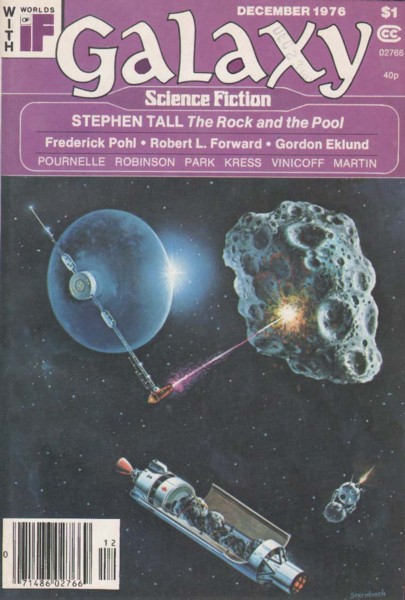
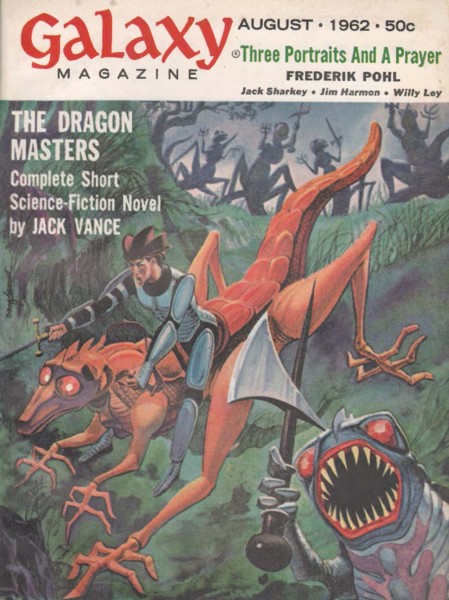
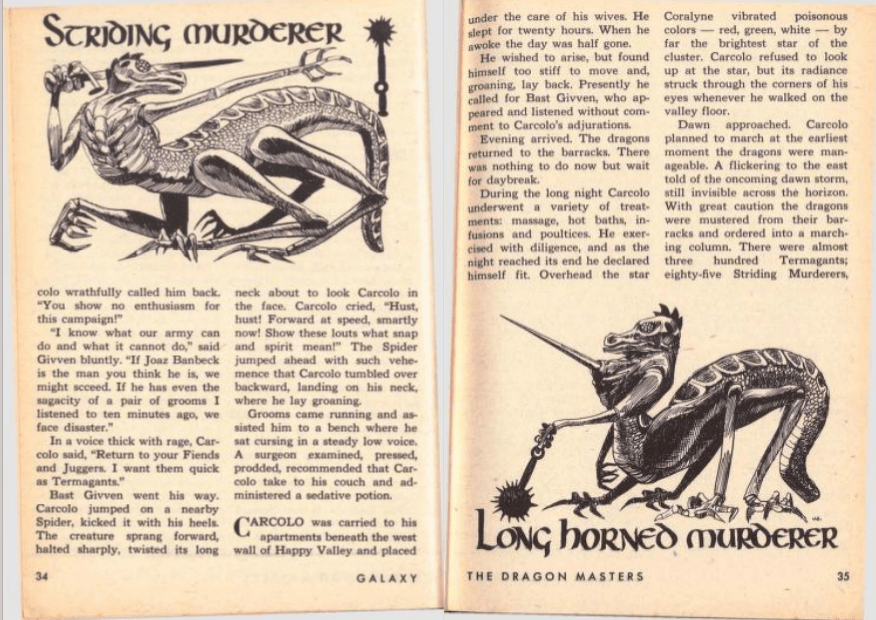
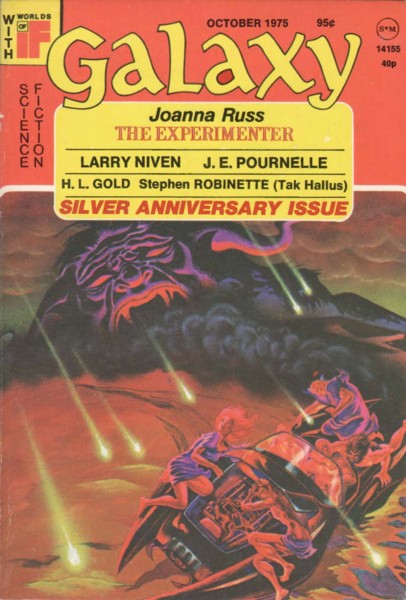
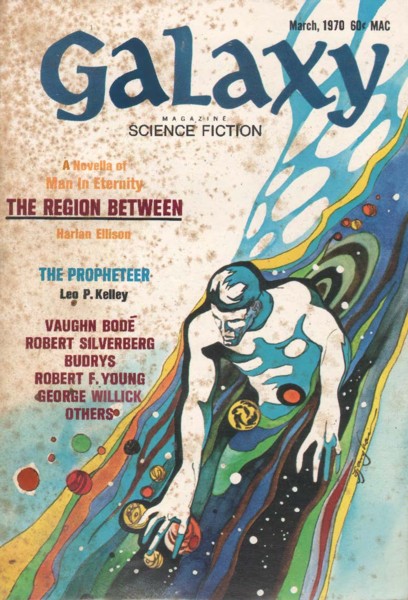
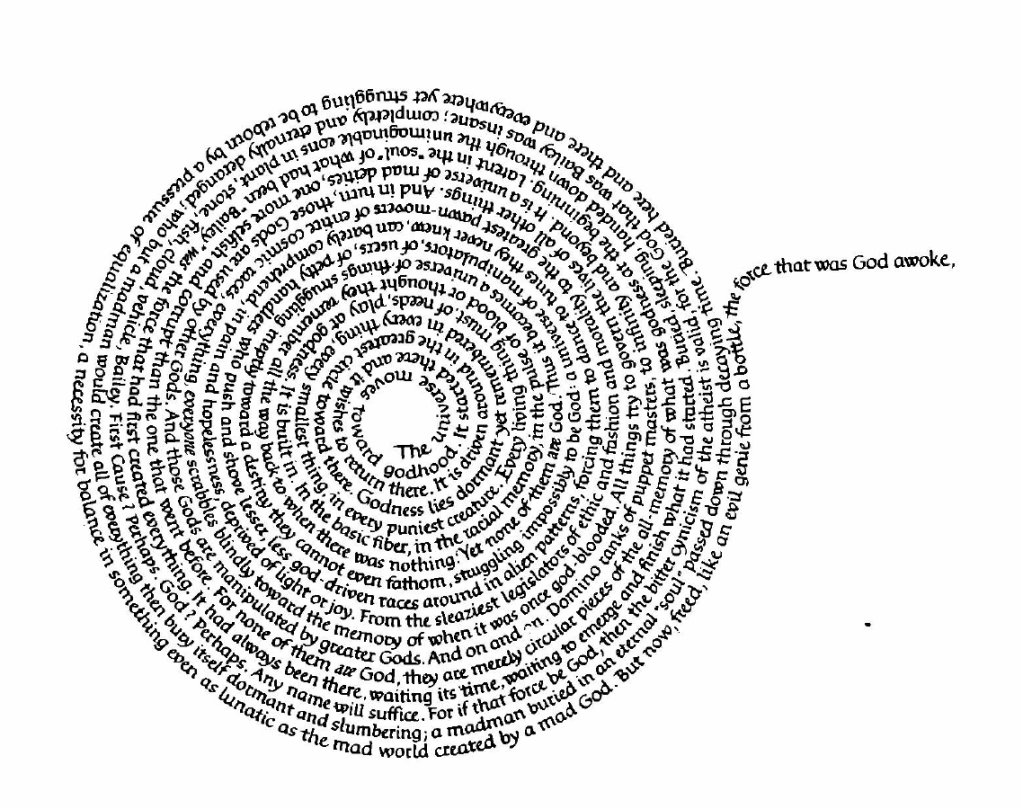


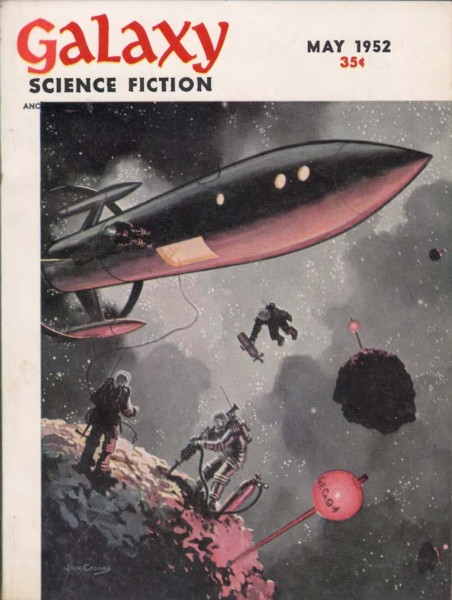



 Science Fiction & Fantasy Remembrance