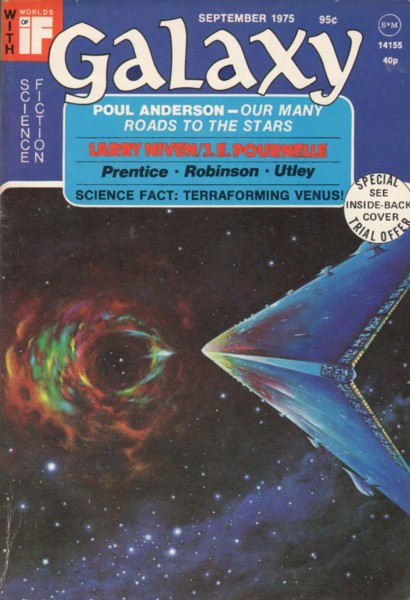
The Story So Far
Allen Carpentier was once a bestselling if not very respected science fiction writer, but in the world of the living he recently became a mesh of blood and bones on pavement. At a sci-fi convention he decided to impress some fans by doing a drinking challenging on a window sill, only for Isaac Asimov to come in at the last second and steal his thunder. Even if Asimov had not done what he did best, Allen still would’ve fallen to his death, in what is perhaps one of the more embarrassing ways a person can go. Almost without skipping a beat, Allen regains consciousness, soon finding himself in the Vestibule of what he comes to call Infernoland. The good news (or maybe not so good) is that he has company in this strange room, in the form of Benito, a fat balding man with a weird accent and an even weirder sense of zealotry that the agnostic Allen finds suspicious. Still, Benito has been here for a hot minute, and he’s come up with a plan for how the two of them might get out of Hell—for of course it is Hell as Benito understands it. This place is modeled after Dante Alighieri’s The Divine Comedy, and with Benito as the Virgil to Allen’s Dante, the two of them set out to escape Hell by going straight through it, ever downward, circle after circle. One of the problems here is that Allen, being a committed rationalist, isn’t even convinced that he is in Hell, but rather thinks this is all an extremely elaborate (and far-fetched) science-fictional scenario.
Benito theorizes that Hell is one giant funnel, with the end of it being at the bottom. This sound simple, except that Allen and Benito have go through the circles of Hell, each one more painful (and weirder) than the last. So we have a start point and an end point, with a simple goal, the result being that this is a quest narrative. Allen, who doesn’t done anything particularly bad in his life, must find a way out of Hell while also figuring out why Hell (or Infernoland) is the way that it is. He meets one or two friends along the way, as in people who had died and been sent to Hell for seemingly minor infractions. We also meet a variety of cartoon characters, from food diet freaks to anti-nuclear activisits—so, in other words, the kinds of people a couple of right-wing authors wouldn’t like. It’s more complicated than that, not least because while these people the authors don’t like are being tortured, the torturing itself seems wildly disproportionate with what wrongs these people committed, and Allen himself points this out. As he says, in what has to be the most memorable line in the whole novel (if only because it gets repeated more than once, like a mantra): “We’re in the hands of infinite power and infinite sadism.” Not that there aren’t sympathetic characters in Hell, and Allen is not left alone with Benito all the time, namely that the two acquire the help of Corbett in building a glider. Unfortunately the glider doesn’t work out, so walking it is, then.
Enhancing Image
We’ve come to the scene in Inferno that’s probably the most (in)famous, in that it comes up as a first example of Niven and Pournelle’s biases, but it’s also an encapsulation of the novel’s leaning on bitchy SF fandom hijinks. At some point Kurt Vonnegut died in-story and got sent to Hell, although unlike every other character we’ve met so far he specifically gets special treatment, being locked up in a big monument, like he was one of the pharaohs. A sentence, one of Vonnegut’s most famous lines, is quoted ad nauseum, “SO IT GOES.” It nearly drives Allen crazy, both from the realization that he himself really is dead and in Hell, and also that Vonnegut, a fellow SF writer whom he didn’t like, has this big tomb dedicated to him in Hell. Vonnegut is not named, but it’s very clearly meant to be him. Real-life figures who appear in Inferno are generally people who’d been dead in Niven and Pournelle’s world for a good minute, whereas Vonnegut was very much alive still; but at some point after Allen went over to the other side, so did he. On the one hand, they clearly have a bone to pick with the man (as Allen says, ““If you must know, I was writing better than Vonnegut ever did before I left high school!”), but as Benito and Corbett point out, there’s also some palpable jealousy, which may or may not be reflective of the authors. Vonnegut had become a highly respected literary figure by the ’70s, and while Niven and Pournelle would write a few bestselling novels, they never even came close to that level of acclaim and acceptance.
Now, one can go on a whole tangent about Kurt Vonnegut, his troubled relationship with SF, and also his outspoken atheism and leftist viewpoint, with how Niven and Pournelle would find all of those objectionable. But I’m not going to. Okay, maybe a little bit. I kinda have to, since I did read a lot of Vonnegut in high school and college, and he’s one of those authors who played a big role in my formative years as an avid reader, even if I don’t read him much nowadays. Keep in mind that a few of Vonnegut’s early stories appeared in the very magazine Inferno was serialized in, and also that while he tried distancing himself from SF as a literary ghetto, this didn’t stop him from appearing in Again, Dangerous Visions. To a seasoned reader who hopefully has read their fair share of “classic” literature, not just classic SF but the likes of Faulkner and George Eliot, Vonnegut can now come off as maybe too simplistic and cloying, both in his style and how he tries to boil complex morality down to simple statements. Along with John Steinbeck he’s probably the first openly leftist fiction author a young American reader would encounter. Of course, in Inferno it’s less about Vonnegut’s politics and more his mocking of religion.
Anyway, we do meet a couple other historical figures in this installment, including a guy who claims to be Billy the Kid. The big revelation Allen has, aside from already being dead, is that nobody in Hell can die again. For better or worse. You can be put through all kinds of hideous and bloody torture, even having your skin and meat literally melted off your bones, and you will still come out of it alive; not only that, but you’ll heal so rapidly that you won’t even get to taste the sweet release of death temporarily. Allen’s party does grow over the course of this installment, although Corbett leaves and starts crawling his way back to a higher circle in Hell. You can’t really blame him, since going through this shit means, among other things, wading through a swamp of burning hot blood and being stalked by Geryon, a mythological fishman with webbed hands and feet. There are some humanoid creatures in Hell that are decidedly not human, including literal demons (black-skinned as opposed to red-skinned, though), which are scary, sure, but which also poke holes in Allen’s theorizing about “the Builders” and Hell being one giant theme park. I wanna mention that while being rather tame at first, Inferno by this point has gotten more graphic and unforgiving in its depiction of Hell. There’s gore that’s described in stomach-churning detail, and there’s even (unusually for magazine SF at the time) some pretty salty language, including a “fuck” or two. I thought at first that maybe the magazine version of Inferno is censored compared to the book version, but this doesn’t seem to be the case.
A Step Farther Out
You could definitely pick apart this novel, especially from a modern left-leaning perspective, but I think it’s fun! I’m willing to forgive right-wing tendencies in art if a) it achieves its goals as art, and b) there was clear thought put into it. It would be hypocritical for me to say I still love reading Yukio Mishima and Rudyard Kipling while also trashing Niven and Pournelle’s grudge against people who are really into health foods. If the novel were not entertaining and occasionally thought-provoking, things would be different. There is good right-wing art and there is bad right-wing art, although we’ve gotten so much of the latter, corresponding with the former shrinking, in recent years, that it’s easy to say all right-wing art is bad. This is understandable, especially since it seems like with a few hand-picked exceptions we simply don’t have any good right-wing artists anymore. Inferno really does feel like a novel from a different era, in that it is dated, but also it’s unserious in a way that most science-fantasy novels dare not be nowadays, or so it seems to me. I could be biased.
See you next time.
 Science Fiction & Fantasy Remembrance