(Cover by Vincent Di Fate. Analog, February 1988.)
The Story So Far
The Cay Habitat was constructed a few decades ago to house a race of special humans—ones that were made to work in zero gravity indefinitely, since such conditions are awkward for normal humans. With a second set of arms for legs, the quaddies are considered the property of GalacTech, who’re also the employers of Leo Graf, Our Hero™. Leo has a problem: How do you teach a group of people about exploitation when said people exist as slave labor? It’s a question that for better or worse will have to go unanswered, because word gets through that an anti-gravity device has not only been invented but deemed ready for market sale, thus rendering the quaddies obsolete. Of course this raises another problem: What do you do with outdated tech when the tech is people? At best GalacTech will have the quaddies sterilized and shipped off to a barracks—at worst have them terminated with extreme prejudice. If the quaddies can’t be allowed to live out their lives peacefully under GalacTech jurisdiction then the only solution is to get out of said jurisdiction—and then comes an idea.
The Habitat is small, when taken in its essentials; it was made to house a thousand quaddies and little more than that. If broken down, the Habitat could be made to piggyback on an interstellar ship as flies through the wormhole near Rodeo. What at first sounds like a moral problem then becomes an engineering problem. The quaddies are very young (the oldest are barely out of their teens), but the best of them, along with some help from sympathetic humans, could make the scheme a success. Sure, the other end of the wormhole falls under a different planet’s jurisdication, but they’ll cross that bridge when they get there.
Enhancing Image
Sorry this is a day late. Forces beyond my control kept me in a bind yesterday such that I couldn’t write this post in time. Oh well.
I’m not sure if I would get this same feeling if I read it all at once, but I’ve become less interested in Falling Free with each successive installment, and the big reason for this is that Bujold gives us a memorable premise and a memorable setting to go with it, but there also has to be a plot here. For the record, there’s a difference between conflict and plot; you could have a character-driven narrative that’s rife with conflict, but very little actually happens. We start with both external and internal conflict here. We have the conflict between Leo and Van Atta, Leo and Dr. Yei, Dr. Yei and the quaddies, Leo and the quaddies, and of course Leo conflicting with his own interests. A great deal is implied about what had led to the quaddies being created. We only learn about Dr. Cay through second-hand sources, since Cay died a year before the story’s beginning, but what we do learn about him is not flattering. Yei, Cay’s successor, is implied to be in conflict with herself, since she was hired basically to make the quaddies docile whilst being well aware of their slave status, but for most of the novel she has a “just doing my job” mentality that eventually gives way to guilt.
Bujold introduces us to some engrossing character conflicts, but they start taking a backseat as the plot starts being funneled into what amounts to a race against the clock. Van Atta was never a layered character (he is, I have to say, disappointingly one-dimensional), but his role gets eroded to the point where he becomes a walking plot device—a threat that Our Heroes™ have to evade, since he can’t be reasoned with. Since we’re never allowed into Dr. Yei’s head our ability to perceive her inner conflict is limited, and her redemption at the end in incapacitating Van Atta long enough to let the Habitat enter the wormhole is boiled down to a single action. The recurring problem with this novel as it progresses is that it starts out as rather chatty, with a lot of room for character depth, but rather than elaborate on that we’re instead forced down a corridor wherein characters, who once were well-defined and intelligent, are boiled down to their actions. Tony, who is the first quaddie we see, all but stops being a character after the first installment; now admittedly part of this is because he gets put on a bus, figuratively speaking, but when we do meet up with him again he is reduced to something Our Heroes™ have to rescue.
What’s frustrating is that, at least going by Theodore Sturgeon’s definition of what makes a good science fiction story, Falling Free is good SF. Paraphrasing Sturgeon here, a good SF story is a human story with a human problem that must be solved in a human way, but which hinges on a scientific aspect. In Falling Free we’re given a premise which (at least with existing technology) can only be made possible in a science-fictional universe; but at the same time sounds logical enough that it could happen. We’re given a problem centered around human rights and this problem is resolved in a human way, albeit with a dose of that old-school hard SF hardheadedness. There comes a point, however, when Bujold’s economy of style turns against her and the novel, which starts out as seemingly open-ended, turns into a series of Things Happening™. I can see what people mean when they say this is minor Bujold, despite the Nebula win. I would be less disappointed if the novel’s opening stretch wasn’t so promising.
Oh, and the romance between Leo and Silver is both unnecessary and unconvincing, never mind that Silver is half Leo’s age.
A Step Farther Out
I’m unsure how to feel about this novel, although having finished it I can say its winning the Nebula is totally baffling. Was there really no better choice that year? C. J. Cherryh’s Cyteen won the Hugo that year, and while I haven’t read it I have this hunch it would’ve at least been the more fitting winner; but to make things more baffling Cyteen wasn’t even nominated for the Nebula! What were people on back in the day? It’s shit like this that my borderline zoomer brain struggles to comprehend. I’m also not sure if Bujold wrote Falling Free with serialization in mind or if maybe her agent recommended it, but I don’t think the serial model works great for her. Admittedly there’s a reason serialization has basically become extinct, because a) not many people read magazine anymore, and b) it incentivizes a certain type of writing that puts higher priority on plot than character. Looking at this novel as a whole, I’m mixed. Getting kinda tired of serials.
Edgar Pangborn is an author I discovered only this year who is quickly looking to become a favorite of mine. Sure, part of that is because Pangborn seems, in some ways, to be a successor to Clifford Simak in his pastoralism and gentle sentimentalism, but there are also some striking differences; I’m pretty sure Simak would not have written Davy, for one. But still, they’re kindred spirits in that they were, uncharacteristically for genre SF of the time, driven by empathy and a need for peace among men. The atrocities of World War II inspired Simak’s anti-war stance, and the same can probably be said for Pangborn, although with the latter there’s also this palpable fear of nuclear annihiliation—not from the Soviets, but that someone on either side could send humanity into oblivion. Davy, and the other stories set in that universe (a loose series that consumed most of Pangborn’s fiction output after 1960), explores the line humanity must tow, between despair and hope. His 1954 novel A Mirror for Observers similarly asks, in rather Christian allegorical terms, if humanity can be saved.
“Angel’s Egg” was not Pangborn’s first published work of fiction, but it was his SFF debut. For a while I thought this was my first Pangborn short story, but actually I had previously read “The Golden Horn,” which then became part of Davy. Close enough. By the time Pangborn started writing SFF he was already in his forties, and reading “Angel’s Egg” you might get the impression it was written by someone twenty years older and in the twilight of his career; I don’t mean this in a bad way. Pangborn is one of those writers who seemed to be fully formed in his craft right out the gate, and he’s also of a perpetually melancholy sort. He was never that popular, but was and is respected enough by those who’ve read him to have been deserving recipient of the Cordwainer Smith Rediscovery Award.
Placing Coordinates
First published in the June 1951 issue of Galaxy Science Fiction, which is on the Archive. It was then reprinted in Invaders of Earth (ed. Groff Conklin), A Century of Science Fiction (ed. Damon Knight), The Arbor House Treasury of Modern Science Fiction (ed. Robert Silverberg and Martin H. Greenberg), The Great SF Stories Volume 13, 1951 (ed. Isaac Asimov and Martin H. Greenberg), and the collection Good Neighbors and Other Strangers. If you wanna read “Angel’s Egg” for free and without having to deal with legal grey areas, you can! It’s on Project Gutenberg.
Enhancing Image
Starting off with not a criticism of the story per se, but the introductory blurb for this is not one of H. L. Gold’s better pieces of writing. It gives the false impression that we’re in for something comedic, perhaps with a dose of social commentary, which I would say is Robert Sheckley-esque except Sheckley would not debut for another year. There’s a bit of social commentary in “Angel’s Egg,” but it is most certainly not a comedy. I sometimes wonder if authors have any say in the blurbs editors write for their stories in magazines, and I have to assume no because I struggle to believe Pangborn had approved of Gold’s crassness with what is a very tender story.
Anyway, we start with a framing narrative in which we’re informed that David Bannerman, the protagonist, has died. Like with Charles Foster Kane we’re introduced to our main character as he has already exited the world of the living, with the ensuing narrative looking backwards and trying to make sense of the last days of the man’s life. Bannerman is (or was) a middle-aged academic who lives a lonely and uncomplicated existence. He has no close family. He never married. “For the last twelve summers he occupied a small cottage on a back road about twenty-five miles from [the] city, and had few visitors.” The closest he has to human company is Steele, a nearby farmer. An injury obtained during World War I, which as happens sometimes only got worse over the years, prohibits Bannerman from physically strenuous activities. It’s easy to forget this once we get caught up in the narrative, but two things are made apparent at the beginning: a) that Bannerman is a war veteran, and b) that despite having served his country he was apparently accused of being a commie sympathizer during what was, in 1951, the ongoing Red Scare, hence the framing device.
Now, it’s at this point that I feel compelled to bring up the ways in which Pangborn might’ve projected himself onto Bannerman, or rather how there’s a hint of autobiography in the latter. For one, the two were both lifelong bachelors, but their dipositions are also pretty similar. It was brought to my attention through Rich Horton’s review of A Mirror for Observers that Pangborn might’ve been gay, although we don’t have any hard evidence to prove this. At the risk of playing armchair psychologist, I do think it’s very likely that Pangborn was gay, and also that he probably never got to be in a fulfilling romantic relationship. There’s an entrenched loneliness in “Angel’s Egg” and A Mirror for Observers (not to mention the frankly odd way in which relations between men and women are written in Davy) that suggests the queer, although obviously I’m biased on that front. I know I’m getting a little ahead of myself here, but bear with me.
One day Camilla, a grumpy old hen on Bannerman’s land, lays a batch of unfertilized eggs—only one of these eggs could not have not have come naturally from the hen, because it does not resemble any egg of any animal Bannerman can think of. “It was a deep blue, transparent, with flecks of inner light that made me think of the first stars in a clear evening.” And there’s something inside. A few days later the egg hatches, and it’s here that we’re introduced to the “angel” of the title, which is of course an alien. The angel resembles a small girl, and is humanoid enough in appearance, except this alien also resembles a bird in that she’s mostly covered in feathers. It’s at this point that the average human would be awe-struck, or even driven to a mental institution, but Bannerman is pretty chill with what turn out to be alien visitors. Why not? It’s not like he has to explain this to anyone. He is one lonely man who lives with his dog Judy, some chickens, and the open air. Never mind Bannerman also considers himself a “naturalist,” and is thus taken to questions of how the angels work.
Worth mentioning is that we never learn what the aliens call themselves; they’re called angels in-story because that’s what Bannerman calls them. No doubt there’s something of the Christian allegory at play here, which must’ve been unusual for what was, even in the early ’50s, a mostly agnostic genre SF readership. Was Pangborn himself a Christian? Maybe. At least by the time he wrote Davy he seemed to take an ambivalent stance on organized religion, and after all one doessn’t have to be Christian to find worth or usefulness in the Christian allegorical mode. I mean Shakespeare wrote Measure for Measure but I seriously doubt the guy who wrote Macbeth was a regular churchgoer. This religious undercurrent might’ve also made Gold uncomfortable with the story, despite him obviously being fond of it, and indeed it reads like something that doesn’t wholly fit in with any publication of the time—not even Galaxy, which cast a pretty wide net in the early ’50s. The angels being telepathic (hence they’re being able to communicate with Bannerman and even the animals) made me sigh and also wonder if maybe Pangborn had submitted it to Astounding, but maybe John W. Campbell also didn’t know what to make of it.
Camilla dies. She was already up there in years, but the angel had decided to carry out what one might call assisted suicide. Normally in this situation the alien killing some farm animal would be a harbinger for greater horrors to come, but Bannerman and Pangborn make it very clear that this was not a killing done out of malice or ignorance, but mercy. “She was old. She wanted a flock of chicks, and I couldn’t stay with her. So I—so I saved her life,” says the angel, or rather projects it into Bannerman’s mind. Immediately it sounds strange, to “save” Camilla’s life, because on the surface that’s not what happened. What does the angel mean by “saved,” anyway? Being that the alien is called an angel, we’re obviously supposed to take it as saving someone in the Christian sense—made stranger because this is a chicken we’re talking about, and presumably chickens don’t have souls. There is, however, a second meaning to the word that we’ll discover soon enough. The mystery raised turns out to be not threatening but rather philosophical. The angel and her kin taking up residence on Bannerman’s land could lead to horror or hijinks, but Pangborn doesn’t go with either of those options.
A few things to note before I get into the real conflict of the story, which I’d rather discuss in the spoilers section than here: The angel rapidly maturing, physically, leads to a remark or two from Bannerman that might discomfort the modern reader. Also, the angel is basically a nude human woman but mostly covered in feathers (although her chest is not), which is depicted in a David Stone interior, and this must’ve been pretty racy for readers of the time. Because this is an epistolary narrative we’re stuck in Bannerman’s head except for the framing device, and while I’m not exactly a fan of the epistolary mode (because I’m not terribly interested in reading people’s letters), it makes sense here. Pangborn must’ve considered writing a simple first-person narration, but realized that could not work given the ending, not to mention that the pacing is such that we’re drip-fed information through journal entries. It’s a bit of a long novelette, but except for the very end (which I’ll get to) I think it’s well-paced.
There Be Spoilers Here
Much of the story is concerned with facing death, and in the case of Bannerman it’s being given the choice of either dying naturally or giving up his life for something much greater than himself. Earlier the angel had “saved” Camilla, and later does the same for Judy. Being saved, for the angels, means giving up one’s physical body to have one’s memories pooled into a collective consciousness—like if you were to upload your memories to a computer hard drive. Indeed when reading it I thought that had Pangborn lived and written “Angel’s Egg” some three decades later it could very feasibly be appropriated for a cyberpunk context. The thing is, the angel wasn’t born in the egg; rather the egg is an artificial construct, made to store the angel for a time while it was having its mind pumped with generations—literally millions of years—of information, from not just angels but other walks of life. The angels are benign race, but they were not born that way, nor did they become virtuous overnight. Mistakes were made, and the angels are keenly aware that humans now have the means to destroy themselves—to undo civilization in virtually an instant.
Pangborn asks two questions here that have concerned believers for centuries and theologians especially. Can we, as a species, be saved? And also, What is to become of us after we die? Once the body expires, does the human personality persist? Does our spiritual existence continue after death? To be clear, the “total recall” the angel proposes, of Bannerman allowing his memories to be absorbed into the greater consciousness, is not a way of cheating death. Once Bannerman dies he himself will no longer be conscious, and he will not be aware of how his memories may be used thereafter. Of course the angels will not force Bannerman into this. “Recall cannot begin unless the subject is willing or unresisting; to them, that has to mean willing, for any being with intellect enough to make a considered choice.” Total recall is a process that takes several days, in which the person recalling will lose, gradually, their memories, starting at their earliest and moving up to the present, as which point they’ll die, peacefully. This is not suicide. I’m not sure how each Christian sect treats suicide, but my understanding is that the Roman Catholic Church considers suicide a mortal sin. You could be a serial rapist or ax murderer and still be saved if you jump through the necessary hoops, but if you give in to despair and take your own life then your soul is forfeit. There is, however, a difference between taking one’s own life and giving it up. Bannerman is an educated man and a decent man, and the angels consider it a service to both them and humanity if he were to accept the call and give up his life for them.
Back to the Christian allegory. Bannerman has to make the choice between living out the rest of his life as a normal man and sacrificing himself for the good of mankind, and he chooses the latter. Surely it must’ve occurred to Jesus, maybe during those days when he took off for the desert by himself, that it wasn’t too late to turn back—that he could reject his call to save mankind and live like a normal man. But then what would be the cost? “Angel’s Egg” is a powerful narrative, only slightly dampened by the unnecessary coda at the end so as to close out the framing device, because it’s concerned with questions that don’t necessarily apply to believers. I’m not a believer myself, but I’m still at times preoccupied with man’s spiritual destiny—whether the human race deserves to persist. Bannerman trusting the angels and giving up his life is an act of sheer faith. The moral seriousness of it would’ve been most unusual for the time, and that it’s more than a little sentimental does nothing to detract from the bittersweetness nor the power of Bannerman’s final journal entries.
A Step Farther Out
“Angel’s Egg” reads like the work of a veteran at the height of his powers, and while Pangborn had written fiction before, his sudden appearance in the SFF field with this story must’ve come as a shock for some. Here we have a writer who seemingly came out of the womb fully formed, with a vision that can’t quite be easily categorized, nor can it fall comfortably into any one niche. While the framing device and the angels’ psi powers betray the story’s age, it otherwise holds up strongly as a thoughtful allegory and a tale of first contact. Pangborn’s preoccupation with humanity’s capacity for destruction will rear its head in longer works, but it’s memorably put forth here, for the first time, in a story that’s emblematic of the revolution (a seismic change in literary standards for the field that arguably rivals the New Wave) that was happening in genre SF in the early ’50s. It’s a treasure.
Leo Graf has been assigned to the Cay Habitat, orbiting the planet Rodeo, as a safety instructor, his students being an artificially created race of people known as quaddies—people with four arms and no legs. The first of these quaddies were born out of test tubes a couple decades ago in order to work in deep space permanently, since zero gravity presents a problem for normal humans. Leo has to deal with Bruce Van Atta, consummate asshole, former student, and now his supervisor; Dr. Sondra Yei, a psychologist who has been working to “socialize” the quaddies; and of course the quaddies themselves, the oldest of whom are barely out of their teens. GalacTech, Leo’s employer and the company behind the Cay Project, have no qualms with creating a race of people for slave labor (the quaddies are not considered human) that they can then legally murder if deemed necessary.
Quaddies Tony and Claire conspire with their close friend Silver to leave the Habitat, and it almost works—only a mix-up results in them almost being taken to Rodeo in what would amount to a metal coffin; thankfully they find refuge in a warehouse station orbiting the planet, but unluckily Tony gets injured in an encounter with a security guard. Tony gets taken to a hospital on Rodeo, Claire nearly commits suicide after being separated from her partner, and Silver is traumatized from a drug-addled interrogation led by Van Atta. To make matters worse, Leo hears through the grapevine that an anti-gravity device has not only been patented but is now market-ready, meaning the quaddies are about to become obsolete. What do you do with outdated tech when that tech is people? The only options given are sterilization or outright extermination. The only way the quaddies can get out of this is to escape.
Enhancing Image
My initial concern about Leo becoming metaphorically a white savior for the quaddies has mostly subsided, because it becomes clear quick enough that even with his ingenuity, Leo can’t save the day by himself. Even the assistance of a couple sympathetic humans like (now former) pilot Ti Gulik, much of the work necessary to convert the Habitat into a colony ship must fall into the hands of the quaddies; and why not, they’re supposed to live on it regardless of who’s in charge. Taking apart the Habitat and putting it back together is a bit of a cracked idea, but it’s the best Leo and company can come up with. After all, if they can’t reason with the higher-ups at GalacTech then the next best thing would be to get out of that company’s reach. Space is unbelievably vast, such that no government or company would have infinite reach, and anyway the quaddies were made to live in space indefinitely. Thus Part 3 is largely concerned with cutting off Van Atta and other GalacTech people as Our Heroes™ work out their plan.
I hate to inform you that you’ve just been punk’d, because I’m not really gonna be reviewing Part 3 here. For one I don’t have a lot to say about it, but also I’ve been more weary than usual about reviewing novel serials—not this novel’s fault, it’s pretty good so far, it’s more that I’ve gotten to thinking about the weird nature of serialization and how modern readers basically don’t even know what a serial would look like. I sure as shit didn’t know until just a few years ago, when I started getting into reading scans of old genre magazines. I remember distinctly the first serial I read front to back was Clifford Simak’s Time Quarry, AKA Time and Again, and it was a fundamentally different experience than if I had read the same novel in book form. I would ssay this is something only the most recent generation of SFF readers would know, but even by 1987, when Falling Free began its serial run, serialization in the industry was becoming increasingly old-fashioned. Indeed it was one of the last novels to win a major SFF award to have first appeared in serial form.
There are two major schools of throught with regards to reading a serial: you either read each installment as it comes out or you wait for the serial to finish so you can read all installments in close succession. Now, the way I’ve been reading installments for my reviews does not really fall into either camp, although naturally it falls closer to reading each installment as it comes out, since I take a few days after finishing one to continue to the next. This, of course, is not how you normally read novels; maybe you take a day off when in the middle of one but generally you (and by “you” I mean I) go at it every day, be it 30 or 50 pages at a time. Incidentally an average installment in Analog would run about 40 to 75 book pages, closer to 20 to 50 in Weird Tales. Thing is, taking your time between installments can give the at-times false impression that what you’re reading is longer than it is; you may even experience some fatigue with a novel that, when in book form, is not long at all, especially by modern standards.
Sometimes when tackling a serial I experience such fatigue, and I have to admit that Part 3 of Falling Free was the most recent case. There are a few plausible reasons for this. We’ve now reached the point where the action has picked up and there will be no stopping it, such that character development has been put to the wayside. It’s a bit of an ensemble, but there’s a sizable gap between the characters who matter and those who only exist to push the plot forward. Strange as it is to say, but if anything I wish this novel was longer and that it meandered more; or rather I wish it took more time to ponder the many questions that would arise from its premise. Also, while the love triangle between Leo, Silver, and Ti being a fake-out (the latter two always seeing each other more as friends with benefits) is an amusing subversion of our expectations, I’m less amused by Leo’s crush on Silver. The age gap is an issue, but also we really don’t need romantic tension like that in a narrative where interpersonal drama is already ripe enough. I would probably be feeling less weary if I was reading this as a book, hence what I had said earlier about the differences between the forms.
A Step Farther Out
I can guess as to how this novel will end, but I’m still curious. Again I’m surprised this won the Nebula, because it doesn’t strike me as a novel a fellow writer would like; rather it strikes me as a crowd-pleaser. Then again the SFWA have previously given the Nebula to novels like Rendezvous with Rama that don’t have much merit as pure literature but which function more as adventure fiction of an old-fashioned sort. (I love Rendezvous with Rama, I’m just saying that even for 1973 it must’ve struck people as retrograde.) Similarly there’s almost a pre-New Wave pureness to Falling Free that, except for some sex stuff, could paint it as having been published close to thirty years earlier than it was. What stops it from feeling too old-fashioned is that while Bujold is not a prose poet, she is undoubtedly a humane writer, and that honestly might be more important.
(Cover by William Timmins. Astounding, March 1943.)
Who Goes There?
Henry Kuttner and C. L. Moore each started out as talented writers by themselves, both of them first appearing in Weird Tales and indeed they began as writers of weird fiction. Kuttner was younger, less refined, more cheeky, but also more productive; he employed so many pseudonyms that even Jack Vance was suspected of being a Kuttner pseudonym early in his career. Moore was never that prolific on her own, but what fiction she put out really caught people’s attention, with its poetry, its tonal intensity, and its psychological depth. During World War II, after the two had gotten married, John W. Campbell needed a few authors to fill the pages of Astounding and Unknown while a good portion of his stable went off to support the war effort, and Kuttner and Moore were up to the challenge. From 1942 to 1946, a truly absurd amount of work from the two, both separately and in collaboration, appeared across several magazines, but most notably in Astounding. Naturally, because they wrote more than their own names could carry, they employed new pseudonyms.
“Clash by Night” is one of many stories the two wrote in a white heat, during those war years, this one being first published under Lawrence O’Donnell, which is typically considered a Moore-leaning name. It’s appropriate because “Clash by Night” is a somber, lyrical, rather ponderous novella that stands as a very early example of military SF but which does not fall into what would later be a lot of tropes of the subgenre. It’s imperfect, but it’s conceptually lively and prescient in its own way. Initially a standalone, it would be set in the same universe as the novel Fury, which returns to the misty underwater world of the Keeps—dome-covered colonies on a swampy Venus (not anachronistic in 1943) in the distant future.
Placing Coordinates
First published in the March 1943 issue of Astounding Science Fiction, which is on the Archive. It was then reprinted in The Astounding Science Fiction Anthology (ed. John W. Campbell), The Great SF Stories Volume 5, 1943 (ed. Isaac Asimov and Martin H. Greenberg), and, as always, Two-Handed Engine: The Selected Stories of Henry Kuttner and C. L. Moore. It speaks to both the quality and quantity of their output in the ’40s that the Asimov/Greenberg volume contains FIVE stories by Kuttner and/or Moore. I would say that’s a bit much, but they had enough firepower for five writers.
Enhancing Image
The average writer would’ve plopped us right into the action, which would’ve been serviceable enough, certainly nothing inherently wrong with that, but Kuttner and Moore are very much above average. We’re instead given a fictional introduction, as if it were a foreword to a history on the Keeps, with the narrator even telling us that the protagonist, Brian Scott, may not have even existed, so long ago were the exploits of the Free Companies. I know I’m just throwing these names at you, so let me give you some context. The Keeps are underwater city-states—dome structures that are kept away from the cloudy and toxic surface of the planet Venus. As was typical of the time, Venus is not only habitable but teeming with life, being home to volcanic islands and swampy forests, not to mention a vast undersea world. The Keeps, like in feudal Japan, or China prior to the unification, are perpetually at war with each other—not for ideological reasons but for resources. “It is fairly well known that only one factor saved the Keeps from annihilating one another—the gentlemen’s agreement that left war to the warriors, and allowed the undersea cities to develop their science and social cultures.” Rather than fight each other with their own armies, the Keeps hire the Free Companies, which are mercenary groups—bands of outsiders who are not native to Venus and who have no patriotic bone to pick.
The story is set in the far future, but is framed as being told from an even more distant future point; Brian Scott, had he been alive in the first place, would’ve been dead for centuries by the time of the introduction. Indeed we’re told upfront that the Free Companies have been defunct for ages, and this fatalism will permeate the rest of the narrative; we’re also about to find out, however, that this foregone conclusion for the mercenaries is not necessarily a bad thing. A little word of warning first: I’m always a little weirded out when a character in a story has my name. I think that applies to a lot of people. It doesn’t help that Scott is also my dad’s name, so it’s like Our Hero™ here is some amalgamation. To make matters worse, Scott (the character) has a similar disposition to me, as we’ll see: he’s not fond of thinking, and yet he can’t help it, just as he’s not fond of talking and yet when he gets going he waxes philosophical. Even when we first meet him it’s clear that blue (depression, yet also eroticism) is his color. He’s a captain of the Doonemen, one of the Free Companies, and he’s enjoying some off-time when he’s called in by his superior, Cine Rhys, to serve as mentor for a young patriot of Montana Keep (all the Keeps, at least the ones we see, are named after American states), Norman Kane.
The novella is frontloaded with exposition, which normally would be a problem, but I would argue this opening stretch is the best part, since the plot itself is—let’s not say threadbare, but the backstory is more intriguing than the story proper. I can see why Kuttner and Moore would later return to this setting; there’s a lot of room for elaboration. The good news of this future is that humans have colonized Venus and Mars; the bad news is that Earth has apparently been turned into a hollow shell of a planet, following nuclear catastrophe on a planet-wide scale, referred to here rather uncannily as “the Holocaust.” (It had been known internationally since the ’30s that the Nazis were violently persecuting Jews and other minority groups deemed as undesirable, but it would not be until a few years after “Clash by Night” was written that we would know the sheer lengths to which the Nazis would go to eradicate these groups. Allied forces had not yet discovered the death camps.) As a sign of collective guilt, the Keep-dwellers keep signs reminding them of the destroyed home of their ancestors, and the one taboo never to be broken among Free Companions is the use of nuclear weapons. You might’ve also guessed this was written following the dropping of the atomic bomb, but it’s one of those preemptive tales of nuclear fear.
One more thing to establish here, because it plays into Scott’s ensuing relationship with Norman’s sister Ilene and it’s also rather curious to note from a modern perspective. The Free Companions are, not strictly speaking, monogamous; for them it’s customary to have to something of an open marriage, here called a “free-marriage,” in which the partners, since they’re separated for long stretches due to the Free Companions’ travels, are not prohibited from having squeezes on the side. Unusual to read about this not only from a story published in 1943 but one published in Astounding, a publication that was famously puritanical. The love triangle between Scott, his wife Jeana, and Ilene is erotically charged. Ilene herself is an interesting character in concept who sadly goes underutilized, as she considers herself a hedonist—someone who devotes her life to seeking pleasure. Norman and Ilene seem to be opposites but they also might be two sides of the same coin, since Norman wants to join the Doonemen for reasons that appear to be frivolous while Ilene is, by her own admission, given to frivolous ventures all the time. They both contrast with Scott, who is self-serious but also at this point becoming sick of his job as a gun for hire.
Now, I should probably bring up here that the story quotes Rudyard Kipling a couple times—it might be the first American genre SF story to quote Kipling, although I could be wrong about that. It’s a move that anticipates Robert Heinlein and Poul Anderson doing the same some years later; what’s different is that unlike Kipling, Heinlein, and Anderson, Kuttner and Moore as far as I can tell were not warmongers. Indeed the quotes do not refer to the virtuousness of battle but to the passing of an age, which makes sense because Kipling lamented the decline of the British empire following World War I and “Clash by Night” is about the twilight hours of the age of the Free Companies. We know in advance these mercenaries won’t be around much longer and Scott himself is keenly aware that the Keeps, once they get over their petty squabbles and unify, will not longer need people like him. War, in the story, is framed as a necessary evil—a stepping stone for a civilization that will at some point no longer need it. Even the phrase “clash by night” refers to the futility and blindness of battle—the fog of war. Thus the upcoming battle between the Free Companions of Montana Keep and Virginia Keep looks to be one last job for Scott.
There Be Spoilers Here
”Clash by Night” runs into a bit of a problem with the plotting, because at some point, naturally, we have to put the moody writing aside and get to the military action. A question you may have asked by now is, “How do the Free Companies fight each other if it’s impractical to fight on land?” By sea, of course! Battleships, submarines, and “flitterboats” which are smaller vessels. An engine failure on one such flitterboat sends Scott and Norman on a detour, and for a stretch the story it becomes something that wouldn’t be out of place in Planet Stories; it also becomes less interesting, in my opinion. I’ve said this before, but sometimes my bias against action writing rears its head. The back end of “Clash by Night” is a planetary adventure followed by a naval battle, and neither gripped me all that much. I get the impression that someone out there, who’s more into pulpy adventure writing, would like the back half more than I did. I just feel like it’s a 20,000-word novella that could’ve been cut down to a novelette. I heard from someone that this is essentially a Moore story, and I have to sort of disagree because I can see Kuttner’s knack for action prose here.
A Step Farther Out
I liked it, I just wish I had more to say. I had been hyping up this particular story in my head for a few months now; it had been on my radar for review for that long. I wouldn’t call the payoff underwhelming, because this would’ve been pretty memorable especially if you were reading it in 1943 and not used to SF about soldiers. It would’ve been written in 1942, so after the Pearl Harbor attack, and following that there were plenty of pro-war stories about (explicitly or subliminally) about letting the Germans or Japanese have it. This is a different type of war narrative and I’m not sure what Kuttner and Moore were responding to here exactly. I would recommend it, but if you’ve never read Kuttner and Moore together than I first recommend checking out “Mimsy Were the Borogoves,” “The Twonky,” “Vintage Season,” and for a more overlooked gem, “A Wild Surmise.” I just hope I can get out of this funk I’ve been in so that I can enjoy writing more.
(Jeannette Ng’s fiery acceptance speech for the John W. Campbell Award for Best New Writer, now the Astounding Award. Worldcon, 2019.)
It’s been two months since my last editorial here. I like to think it’s because the last one I wrote was such a fun time that I felt I could rest on my laurels for October. The reality is that I was in the midst of a horrible mental spiral for much of October, and actually a good deal of November so far. I’ve gotten better! At least well enough that I feel I can do this again, which is all well because I’ve had an itch to write about this particular topic for a minute now. It’s something that’s been gnawing at me, but I didn’t wanna jump into it in a white heat for fear of coming off as reactionary. As a disclaimer I want you to know that I’m pretty decidedly left-leaning. I used to be a royal shithead, both politically and just as a person, up to just a couple years ago, but I’ve been working since then to right some past wrongs. This month’s editorial is coming from someone who loves genre fiction and, perhaps more unwisely, the Hugo Awards in a way. Investing in discussing the Hugos is sort of like investing in a spider-themed restaurant.
The Hugos are of course like just about any award, in that they exist as a form of congratulations combined with exposure. Just as people become more interested (supposedly) in a movie if it won the Oscar for Best Picture, so the same might apply to a novel that has a “HUGO AWARD WINNER” sticker slapped on the cover. The Hugos are like the Oscars for genre fiction—except not really; rather it’s more accurate to say the Nebulas are the Oscars for genre fiction. What separates the Hugos from the Oscars or the Grammys or whatever the fuck is that the Hugos are voted on by fans and not necessarily industry people (although it’s possible to be both, as you know). If you buy a membership for a year’s Worldcon then you get voting privileges, regardless of whether you’re actually attending the convention. (That reminds me, I should buy my membership for next year’s Worldcon.) The result is that the voting process for Hugos is, by default, far more democratic than for a lot of other awards; but then there’s perhaps the biggest consequence of this, which is that the Hugos are also notoriously fannish.
I’m trying to remember who said this, but it goes something like, “E. E. Smith was considered a living legend in SF circles, and was a total unknown outside of that.” Of course, even avid SF readers under the age of, say, forty, probably have no clue who Smith is, but the point is that there’s sometimess a gulf between what’s popular among the SF readership and what’s popular with the general public. Ask a random person—better yet, ask someone who claims to be an avid reader—what the Hugo is and they’re unlikely to give an answer. Filmmakers, rather infamously, almost never attend the Hugos, even if they’re expected to win (for Best Dramatic Presentation), because most filmmakers simply don’t care about the Hugos. (It doesn’t help that the Best Dramatic Presentation Hugo is looking to be split up YET AGAIN.) An ironic aspect of all this is that even voters don’t seem keen on acknowledging award’s fannish nature, because the fan categories this is relevant to me so throw me a fucking bone here have seen consistently low voter turnout. I’m not even gonna get into fandom politics here, which is another thing that separates the Hugos from most other awards.
However, I do need to talk about a specific category and in doing so I do have to bring up fandom politics nominally, if only for the sake of drawing comparisons. I have nothing against the examples cited per se. The Hugo for Best Related Work started out as the Hugo for Best Non-Fiction Book, and that initial name was straightforward enough if also a little contentious. I’m not sure if it’s fair to compare a biography with an art book, for example, and we could certainly argue over how broad an umbrella “non-fiction” is. However, the works that were in the running for this category were at least slightly comparable with each other; at the very least they existed in the same fucking medium. This would change in 2010 when the award was retitled to Best Related Work (it had been first retitled to Best Related Book, but this is not as big a change), which turned out to have radical (and I would argue disastrous) implications going forward.
In 2010 the nominees were all books; in 2011 you had four books plus one podcast. Now, I don’t think Writing Excuses counts as a fancast since it’s run by professional writers, but it is certainly not a book. Writing Excuses would win the Hugo for Best Related Work in 2013, beating out four books. Now riddle me this, Batman: How would you go about comparing a podcast with a book? How would you be able to say you prefer a podcast over a book, or vice versa? It’d be like if I said I prefer The Moon Is a Harsh Mistress over Ziggy Stardust; the two cannot be compared, despite both being SF, because they’re like athletes in completely different sports. As a voter, how are you supposed to give preference between an author podcast and a fantasy art book? THEY HAVE PRACTICALLY NOTHING TO DO WITH EACH OTHER. Sorry, I’m getting carried away and we’re only just getting started, because Best Related Work would soon snowball into a horrible Frankenstein monster—a hodgepodge of wildly disparate works that have naught but the vaguest notion of genre relevance in common.
So 2014. Kameron Hurley’s “‘We Have Always Fought’: Challenging the ‘Women, Cattle and Slaves’ Narrative” is probably a very good article, but it’s also just that—a single article. Beating out three books and a podcast. Hurley also won the Hugo for Best Fan Writer that year (fair enough), so I’m not sure if this second win was necessary; more importantly, I’m not convinced one can pick between (checks notes) an essay, three books, and a podcast. I’m not even gonna dig deep into 2015 and 2016 since a) there was no winner chosen, and b) due to fandom politics it’s pretty obvious the voting had been massively skewed towards—let’s say sources of ill repute. I’ll only say that for 2015 we have three books and two essays, then for 2016 we have three essays and two books. That these nominees were pretty much all shoved down voters’ throats by the same two or three publishers who had an agenda in mind is sort of beside the point, but it does illustrate the insular nature of the Hugos, especially for a category like Best Related Work where only enthusiasts are likely to care enough.
Things go back to “normal” for a couple years, but then there’s 2019. This is a fun one, and by that I mean I would love to show the list of nominees to a small Victorian child because it would probably send them into an epileptic fit. The winner was Archive of Our Own (AO3), which is a pretty great fanfiction site and I even have one or two stories published on there (don’t ask me how to find them). But that’s the thing: it’s a fanfiction site, only realized as a massive collection of works by mostly anonymous contributors. I don’t even know where to begin with this. It’s such a patently absurd idea for a Hugo winner that it’s easy to miss the fact that this was the first year a YouTube video was nominated for a Hugo, with Lindsay Ellis’s video on Peter Jackson’s The Hobbit trilogy. I like Lindsay Ellis and I like that video, but… how? How does this mesh with anything else? Then we have another website, www.mexicanxinitiative.com, which going by its mission statement is a noble effort, but again… where does this fit? “I think I prefer the website with She-Ra porn over the immigration assistance website.” Then we have three book nominees, as if to remind us what category this is.
I feel like I could keep going, but I don’t know how much that would help. In the past five years we’ve had a fanfiction site, an acceptance speech, and a deliberately bastardized translation of Beowulf as winners for Best Related Work. Three winners and I have no way of comparing them past some super-abstract fashion that would only go so far. Jeannette Ng’s speech on accepting the Astounding Award for Best New Writer (an award that had its name changed because of said speech, which says something) is certainly tenacious and broke the ice (not to mention her call for Hong Kong’s liberation was actually a noble statement, although people have overlooked that part) on what had become an increasingly uncomfortable subject in genre history, but is it really fair to compare it with biographies on Joanna Russ and Robert Heinlein? Clearly something is amiss here. The label of “related work” is so broad that it can mean damn near anything. It’d be like if you had a Hugo for Best Fiction and you pitted short stories up against novels, except it’s even more broad than that because we’ve had videos and podcasts go up against the written word. We have single articles—even blog posts—go up against entire books, and I’m supposed to think that’s not broken. This blog post you’re reading right now could theoretically get nominated for Best Related Work and I’ll be the first to say that’s bullshit.
We need a solution, and I don’t think there’s a solution that will please everyone. The most obvious option (to me, anyway) is to revert the title to Best Non-Fiction Book or Best Related Book. I really don’t think it’s wise to make books share space with videos and websites. That then brings up another problem, though: What do we do with these related works which are not books? We have a few fan categoriess, why not add a couple more to accomidate videos and blog posts? Certainly the maturing of the internet in the 2010s has made it so that some of the best genre-related content comes in the form of video essays. The problem is that we already have too many Hugo categories as is and goddamnit, we’re about to get at least one more. An oversaturation in categories negatively affects voter turnout, and really it’s asking too much of people to keep track of all this shit. I know a few people who spend a good portion of their lives tracking the Hugos, but they’re an extremely small minority and the vast majority of people in fandom (including myself) don’t have the time or energy to deal with there being more fan categories than there are stars in the sky. My point is that this system is broken and it needs fixing.
(Cover by Robert Daniels. Analog, Mid-December 1987.)
The Story So Far
Leo Graf took on an instructing job at the Cay Habitat, an artificial satellite orbiting the planet Rodeo, where the work is hard but the rewards are rich. Leo was to train a group of “quaddies,” test-tube humans born with four arms and no legs, made specially to work in zero gravity. GalacTech, the company behind the quaddies and the ones responsible for Leo’s paychecks, had produced a race of humans to use as slave labor—a reality which does not sit well with Leo at all. Dr. Cay, who came up with the Habitat (itself having been made in secret two decades prior) in the first place, died a year ago, and in his place are Bruce Van Atta, Leo’s supervisor, and Dr. Sondra Yei, who works to socialize the quaddies. Unfortunately tensions are already rising as it becomes clear that the quaddies, despite efforts to isolate them from the human race at large, have already picked up some “bad habits,” like monogamy and a wish to leave the Habitat.
The end of Part 1 saw Tony, his girlfriend Claire, and their infant son Andy sneak off the Habitat and take refuge in a warehouse, still in deep space but at least avoiding a trip to Rodeo which would’ve literally crushed them. Van Atta interrogates Silver but with little result (Van Atta himself had already “corrupted” the quaddies by way of seriously unprofessional behavior, such as having sex with Silver), and to make matters worse Apmad, GalacTech’s VP, has come to the Habitat for an inspection ahead of schedule. So you have a drugged and traumatized quaddie, plus three more who are MIA. Part 1 does what a serial installment should do in that it raises intrigue, builds tension, and then ends on a huge question mark. How will Our Heroes™ get out of this one? You have to stay tuned and find out.
Enhancing Image
The good news is that despite being stowaways, Tony and his family come out of the experience alive—but not unharmed. A frenzied security officer wounds Tony when he was supposed to stun him (having replaced his stun gun with an unregistered pistol), and thu Tony spends pretty much all of Part 2 out of the picture. Indeed Claire spends most of the time off-screen, with the only quaddie then being given a fair amount of screentime here being Silver. That there have been issues taming the quaddies turns out to be a problem without a solution, or rather a problem where the solution would not be worth it, because Leo hears a rumor from one of the shuttle pilots that a new anti-gravity device has not only been invented, but has reached the stage where companies are willing to buy it. The quaddies were made because zero gravity presents a problem for normal humans, but with anti-gravity it would be much easier for normal humans to work in deep space. You thus have a race of people, treated by GalacTech as organic technology, “post-fetal experimental tissue cultures,” about to be outmoded by actual technology. The question then is: What will become of them?
Part 2 is shorter than Part 1 and there seem to be fewer scenes; instead we get several lengthy borderline Socratic dialogues in which Leo and the people running the Cay Project have to confront both the ethical and logistical dilemma of the quaddies. This is the stuff that was hinted at in Part 1, but now that the cat’s out of the bag we’re knee-deep in it, and frankly this installment gripped my interest even more tightly than the first. Like this is the kind of shit that I’m here for. Moral conundrums usually get me going and Falling Free provides a meaty one in the form of, “We typically throw away technology once something better comes along, but what if that technology is people?” Leo’s problem with the quaddies escalates from “How do you protect workers from exploitation when said workers are already slaves?” to “How do you prevent the eradication of a people if legally they don’t even count as a people?” Because, technically speaking, the options GalacTech are providing for the quaddies in light of the anti-gravity device boil down to genocide—either via sterilization or extermination outright. This is a lot for a 300-page hard SF novel.
When confronting Van Atta about the anti-gravity device we get a pretty good line from Van Atta, who is an irrideemable monster but who says something that, unfortunately for Leo, rings true: “There’s only so much one human being can do, Leo.” The bastard is right—actually more right than he’s capable of knowing. There’s only so much one person can do in this situation. The mid-section of Part 2 sees Leo at his lowest point, unable to convince anyone on the Cay Project that these people are worth saving, and to make matters even worse, Leo has developed a crush on Silver despite her only being about half his age. (I don’t recall us being told how old Leo is, but given his 18 years of experience he’s probably somewhere in his forties.) The bright side of all this is that since GalacTech has not offered a third option, and since Leo knows what the quaddies are up against, it’s up to him now to find a solution—with a little help from his friends. The “character’s lowest point” part of the narrative has seemingly passed and now we’re looking at an ascent to victory, my one reservation being that unless Bujold has another trick up her sleeve, this might be too early in the novel to be doing such a plot turn, now that we’re about halfway through.
A few things to note here since I don’t really have anywhere else to put them. I said earlier that this novel is about 300 pages in its book version; as far I can tell the serial and book versions are more or less the same. To my novella-pilled brain 300 pages sounds like a good amount, but even by the ’80s we were seeing SF novels become longer on average. Call it an educated guess, but I think this happened because genre publishing was moving away from serializations, such that by the late ’80s the only magazine which regularly did serials was Analog. Serialization has some implicit demands, such that a novel must be structured in a certain way (there must be chapters which end on a high-tension note that sparks intrigue) and must be—or at least ought to be—of a certain length. The lack of such restrictions meant a novel could be of any length so long as it didn’t piss off the editor, but with those restrictions you would have a more concise work. Bujold wastes very little time on describing locations and people in Falling Free, to the point where Part 2 is mostly he-said-she-said dialogue. I’m not bothered by it, because I don’t like to have my time wasted, but modern readers might want something with more meat and flab on its bones.
Since this is a serial but also since Bujold is a very capable writer, every scene serves a purpose with regards to the plot, and the plot is pretty much always moving forward. Modern conventional wisdom says we should be have more “quiet” moments, where we’re treated to character psychology, but the characters here more exist to serve the plot while still being vividly drawn enough. Despite the deep-space setting, this is still a human narrative. I get the impression that Bujold is too much of a humanist to let her characters be mere cogs in a machine (like say, Hal Clement, although Clement’s talent very much lay elsewhere), although that doesn’t stop her from conceiving a borderline cartoonish villain like Van Atta. This is ultimately an “ideas” novel, but it’s by no means heartless or reactionary.
A Step Farther Out
In her rundown of Hugo nominees up to the year 2000 (very addicting series of articles, by the way), Jo Walton calls Falling Free “minor Bujold,” then adds “but minor Bujold would be a major book from most writers.” I do have to think, if this is minor Bujold then what does major Bujold look like? True, it’s rather small in scale, a little short by today’s standards (fantasy readers might even wrongly call it a novella), but it puts forth a novel concept and explores it in a way that is consistently intriguing. I do have to wonder how conflict will be sustained, because we’re about halfway through the novel now and there’s this creeping sense that the rest may turn into a white savior narrative (no doubt problematic), which would disappoint me a bit. The fact that I’m eagerly looking forward to whether I will be disappointed or not, though, speaks to Bujold’s skill and the novel’s readability.
Naomi Kanakia is an Indian-American writer who has written extensively about queer issues, one of many writers to enter the field in the past decade or so who could not have been as open about their views on the world even twenty years ago. ISFDB doesn’t say this because these are non-genre works, but she has a couple YA novels out with another one, Just Happy to Be Here, due in early 2024 from HarperTeen. After reading today’s story I do recommend checking out an interview she did with Lightspeed about “Everquest.” Now, prior to reading this story I was under the impression it was science fiction, but upon reading it I discovered it was fantasy, and it’s even categorized as such in Lightspeed. Discussing how it is fantasy would be getting into spoilers, though, as it at first glance it’s simply a story of one lonely person’s connection with a certain video game.
Placing Coordinates
First published in the October 2020 issue of Lightspeed, which you can read online for free here. It was subsequently reprinted in the anthology We’re Here: The Best Queer Speculative Fiction 2020 (ed. C. L. Clark and Charles Payseur), which is so far its only book appearance.
Enhancing Image
“Everquest” is a short story, just over 3,000 words, so I won’t be keeping you long. It’ll take me longer for me to write this review than it would to read the story—although it certainly couldn’t have taken so little time to conceive. This is a densely packed little narrative about displacement in more than one sense of the word: being displaced from one’s home country, even displaced from one’s own body. Gopal is “a fat, acne-ridden dude” who at the story’s outset is barely in his teens and who has already accrued some online experience that one would normally regret to think about later in life, getting “married” in some online game to some random guy who would soon ghost him. “Gopal never thought about whether this made him gay or straight or trans or bi.” It’s unclear what Gopal’s orientation is and the narrative never bothers to clear it up because, really, it’s not that important; what’s more important is that Gopal does not see—or at least he does not want to see—himself as a man. Gopal plays a woman, when given the option, in every game he plays. Some would take this as merely an adolescent boy playing as girls so he can ogle them, but then—maybe not.
It becomes clear, at least early on and to the reader if not to the character, that Gopal is trans. I’m gonna be referring to Gopal as “he” here because that’s how the third-person narration refers to him, and I do think Kanakia is making a point by never having Gopal start the transition—at least not Gopal the flesh-and-blood person. Rather than try to transform himself he projects a more ideal image of himself through his game avatar—in this case Gayatri, a wood elf, in Everquest. (By the way, Everquest is never referred to by name within the story, although it’s kinda like how the spaceship the protagonist fantasizes about in James Tiptree’s “Beam Us Home” is very clearly meant to be the Enterprise.) As someone who has never played a second of Everquest and who has basically no interest in MMORPGs (for me personally it holds about as water as train simulators), I didn’t feel lost with what Kanakia was going for or what drew Gopal to the game. Anyone who has a played an RPG, or just a game that lets you customize your player character, has at least some inkling of what Gopal is going through. We’re thrown into the world of a vast role-playing game quickly and with so few words, but you don’t have to be a Gamer™ to grasp the meaning of those words.
I feel like I cheated by saying this, but reading the aforementioned interview drew my attention to something I probably would not have minded, as someone from a nominally Christian background, which is that “Everquest” is about self-actualization as mythmaking. There’s a juxtaposition between Hindu mythology and “mythology” in video games—ya know, like urban legends, memes, acts of daring do. It’s not a coincidence that Gayatri is a name from Hindu mythology, even if Gopal would say it is if you were to ask him. “He chose the name because it sounded pretty.” The connection sticks, though, and true enough Gayatri, the virtual wood elf, will become a sort of mythological figure in her own right. But more on that in a minute. It’s a strange connection because it’s like the name is an unconscious hand-me-down from Gopal’s Indian heritage, despite the fact that he doesn’t seem to be proud of his heritage, or of himself at all. Some things you can’t leave behind so easily. We attach meanings to names, whether we mean to or not. The important thing is that despite working with shitty internet, and being barely able to play the game, he does create one thing he’s proud of: Gayatri. He’s so proud of her he might wanna become her.
I sometimes reread passages of a story I’m reviewing, either because I was confused on a certain point or I found a line I thought especially memorable. There’s a lot of joy in rereading; people should do it more often. In the case of “Everquest” I was doing this a fair bit, which is easy because it’s such a short story, but also Kanakia crams a lot in here in often coloquial language. By her own admission she’s not one for lyrical prose. I can relate. At the same time this is a borderline fable whose intent is maybe a little muddled with a “modern” and at times salty lexicon. I was confused as to the time period this takes place despite it almost certainly beginning in the early 2000s, because the jargin seemed (at least to my ear) some years removed. I could be wrong. Maybe certain terminology was in use back in the kindergarten days of the internet. It’s just that I feel like by employing a style that is very of-its-time Kanakia dates the story more than was necessary; after all, why try to make it sounds cool and hip if this is just the reality we’ll be living for the foreseeable future. “Everquest” is about someone coming close to but not quite reaching a point of self-actualization in the early 2000s, when really it could be set in the 2010s, or the 2020s—or the future.
There Be Spoilers Here
For most of the story I was wondering when it might become fantastical or speculative, because up until the climax nothing strictly unusual has happened. You have a guy who gets sucked into a video game, to the point where he sees his avatar as like a reflection of his own character; then he gets taken away from the video game because his parents are concerned that he’s not in touch with the real world. You’ve heard this story before. But then Gopal, now an older man, after having been away from the game for years, gets an enigmatic email to have his account reactivated. (Because, you know, these MMORPGs are subscription-based. If you aren’t paying or you get locked out of your account, you can’t play online.) Then something very strange happens: Gopal dies. I mean he doesn’t just die, he basically starves to death, covered in his own shit, after playing the game for too long. Which is very cliche, really. I mean in the wrong context it sounds like ssomething a boomer would write for an anti-video game PSA.
But then… Gayatri keeps going. Without Gopal’s input. Without strings. Miraculously, and pretty inexplicably (hence this being fantasy and not SF, since we’re not given a rationalization for what is really a supernatural event), Gayatri becomes a real woman—within the confines of a game whose last servers will eventually shut down. It’s a finite second life. It’s bittersweet, but also a triumph in a weird way. Gopal doesn’t transcend reality to become his avatar so much as he gives up on his physical body to allow Gayatri to become real; him dying allows her to live. Not so much a transformation as a passing of the torch. I’m not sure if the final passage involving Gopal’s mom was necessary; it strikes me as a bit of sentiment, an attempt to tie a neat little bow on a narrative that could’ve benefitted from something else—maybe something more transcendent.
A Step Farther Out
In a sense this is fantasy; in another sense it’s inseparable from real life. The ending is the only thing keeping “Everquest” from being a “literary” character study, or a non-fantastical fable. While Gayatri taking on a life of her own in the game world is certainly beyond everyday reality, it doesn’t go beyond the threshold by much. Kanakia understands that people who were raised on the internet will inevitably develop online personas, and that these personas may even outlive the flesh-and-blood people who created them—figuratively, if not literally. The ending’s sentimentalism sort of downplays the eeriness of the game’s now-barren landscape and there’s this sense that a starker transhumanist narrative had been denied, so I can see why Kanakia is unsure about it. For a final criticism, and I think this is the best negative criticism one can give a story—I wish it was longer.
(Cover by Vincent Di Fate. Analog, December 1987.)
Who Goes There?
I only first read Lois McMaster Bujold about a year ago, with the novella “The Mountains of Mourning,” a work that impressed me but didn’t bring me to dive deep into Bujold’s oeuvre so quickly. A lot of this has to do with Bujold’s work largely being connected to some series, or in the case of today’s novel the vast and not-so-chronological Vorkosigan universe. It would take too long to explain the backstory for this series, and anyway I haven’t read enough of it yet to be intimately familiar. Generally speaking it’s a space opera series which in parts follows members of the notorious Vorkosigan family, namely Cordelia and her son Miles. This series has won Bujold five out of her six Hugos (she is tied with Robert Heinlein for most Hugo wins for Best Novel, although Heinlein leads if we count Retro Hugos), and Falling Free, while not as renowned as some other entries, still won the Nebula for Best Novel. I’m enjoying it so far but I have to say this kind of novel winning the Nebula is a bit of an odd choice.
The premise is eye-catching right away, though, and I can already see how it would’ve gotten inducted into the Prometheus Hall of Fame, it being chiefly concerned with the rights of a race of genetically engineered humans. The quaddies, so called, are normal humans in most ways except they’ve been engineered to have four arms and no legs (or rather arms for legs), so as to make them more nimble in zero gravity; in fact they’re so monkey-like in their “natural habitat” that they’re sometimes called “chimps.” Yes, a company breeding a race of people for the sake of specialized labor sounds like a moral black hole, but that’s only the start of it!
Placing Coordinates
The first installment is in the December 1987 issue of Analog Science Fiction, which is NOT on the Archive but which can be found on Luminist. It’s still in print from Baen, both on its own and as part of the omnibus Miles, Mutants, and Microbes, which includes the novella “Labyrinth” and the later novel Diplomatic Immunity. Falling Free takes place a good deal before Miles’s birth but does apparently set up the backstory for “Labyrinth,” in which Miles meets the quaddies.
Enhancing Image
Leo Graf is a veteran engineer and inspector who has come to the Cay Habitat (named after its founder), a facility near the planet Rodeo, “the armpit of the universe,” on what amounts to a teaching assignment. Up to now the details had been kept foggy; Leo knows about “the Cay Project” but not what it entails. Dr. Cay himself had died a year ago, and in his place stands Bruce Van Atta, one of Leo’s former students, although it takes time for Leo to remember where they could have met before. What he manages to remember of Van Atta does not fill him with enthusiasm. “Was this sleek go-getter the same idiot he had kicked impatiently upstairs to Administration just to get him out from underfoot on the Morita Station project—ten, twelve years ago now?” And now this yuppie of the future is Leo’s supervisor for the Cay Project. What could go wrong here?
The question, though, remains as to whom Leo will be teaching while on the Habitat—a question that gets answered more suddenly and frightfully than Our Hero™ could’ve anticipated. We soon meet one of the young engineers on the Habitat, Tony, who is smart, spritely, willing to learn, about what you would hope for out of someone both young (only twenty years old) and talented. There is one problem: Tony doesn’t have any legs. Rather, he has an extra pair of arms where his legs would be, which nearly sends Leo into abject panic. Apparently nobody had told him in advance about the quaddies, the unusual denizens of the Habitat, and the people he is supposed to teach about welding in zero gravity. Leo thinks this condition is some kind of deformity, but Van Atta informs him that no, the quaddies (so they’re called) are supposed to be like this; they were genetically engineered by GalacTech, Leo’s company as well as the ones behind the Cay Project, in secret. This new race of people, who were at first created in test tubes but who have now taken to breeding naturally, “self-replicating” as Van Atta puts it, are designed to live and work in deep space.
Indeed Tony, who mind you is barely out of his teens and still one of the oldest of the quaddies, is already a father, raising his infant son Andy with his girlfriend Claire. All three are company property. The quaddies, strictly speaking, are not people, but assets of GalacTech; theoretically the company could have them killed without legal qualms if not for the fact that doing so would be blowing a lot of money. Leo’s viscerally troubled by the physiology of the quaddies but soon he becomes far more troubled by the fact that his own company has invented a new form of slave labor. Actually it’s a wonder that he’s not more disgusted by what’s going on, but then his job also depends on him keeping a cool head—or trying to. Things get thornier when we meet Dr. Sondra Yei, who has been working closely with the quaddies and conditioning them to not indulge in certain lines of thinking. At face value Yei is here to help prepare the quaddies for a life permanently cut off from 99% of humanity, but, although her intent doesn’t seem to be malicious, she seems to be here to reinforce a slave mentality.
Bujold doesn’t strike me as an ironist, but there’s a vicious bit of irony about Leo teaching the quaddies about safety procedures about shady company practices when they are literally the products of exploitation. How do you inform an audience about exploitation when said audience is slave labor and not even considered human by their creators? This sounds like a huge red flag, or rather a sign that maybe Leo should high-tail it out of there, but the conflict here is that yes, the situation is abhorrent, but Leo is also a devoted engineer who has been granted the opportunity to instruct a generation of people who were literally born and raised to be engineers. “The degree of censorship imposed upon the quaddies implied by Yei’s brief description made his skin crawl—and yet, the idea of a text that devoted whole sections to great engineering works made him want to stand up and cheer.” I know a few engineers and they’re all goddamn freaks; they see instruction manuals as a form of entertainment. Incidentally, despite the extreme dubiousness of the Cay Project, a love engineering still shines through, both in Leo’s thoughts and Bujold’s third-person narration. I mean if you put aside the slavery thing it’s really a technical marvel.
Leo being the protagonist is a logical choice since he’s the outsider in the narrative, a newcomer to the Habitat who at first doesn’t exactly side with either the people running the show or the quaddies, although it doesn’t take him long to sympathize far more with the latter. It helps that the quaddies are so innocent, despite the oldest of them already starting families and knowing a thing or two about sex and all that. Silver, a mutual friend of Tony and Claire’s, might be the most interesting of the ones we meet in how there is much more than meets the eye with her, but we’ll get to her more in the spoilers section. The characters—at least the ones we’re introduced to in this first installment—are largely at least understandable (you can understand someone’s motivations while still disagreeing with them), with only Van Atta being basically irredeemable. Of course Van Atta is a stand-in for the moral vacuum that is GalacTech. Actually I’m surprised a novel this ambivalent about corporate leeway was printed in Analog, but then again Bujold is a Baen regular despite apparently being liberal.
Right, so I should probably bring up why this novel blipped on my radar in the first place. True, I’d been meaning to get into Bujold, and a Nebula win is nothing to sneeze at, but I find it amusing that the people over at the Libertarian Futurist Society said, “Yes, this novel about the exploitation of a race of genetically engineered humans is the kind of shit we’re looking for in our mostly right-libertarian fiction.” I mean they have sometimes picked works by liberals and left-libertarians, but Falling Free doesn’t immediately stick out like, say, The Dispossessed, which is overtly a left-libertarian narrative. It’s less that Bujold is clearly arguing for the rights of man, whether that man has two arms or four (which I suspect is why it got picked anyway), and more the dimness with which she frames the creation of the quaddies. Van Atta may well be a Heinlein-esque figure in a different context, but here we see him as power-hungry and uncaring. If the story’s intend is to make us uncomfortable and even complicit in the mistreatment of the quaddies, but so far I think it’s a job well done.
There Be Spoilers Here
One problem with keeping a group of people in perfect isolation is that it’s impossible to do such a thing if there are outside forces; the other problem is that human nature is always at play, even if the humans came from test tubes. Tony and Claire wanna stay together, naturally, both because they love each other and for the sake of their son. The higher-ups don’t see it that way. In one has to be the most upsetting scene in the first installment, Dr. Yei informs the couple that they will soon be separated—not because they’ve done anything wrong but as some kind of “reward.” Claire’s done such a good job as a mother that she’s been granted permission for a second pregnancy ahead of schedule—with someone other than Tony as the father. “There is a Project-wide push to increase productivity. In all areas,” so Dr. Yei says. As for Tony, he will be shipped off and paired with a different quaddie woman for breeding. Dr. Yei justifies this monstrous procedure with the “Well it wasn’t my idea” justification; after all it was Dr. Cay’s idea and Dr. Cay is now dead, so who’s to blame really?
Meanwhile Silver has been getting intimate with normal humans on the sly—implicitly with Van Atta (or, more accurately, it’s implied she tolerates Van Atta’s behavior) and explicitly with Ti Gulik, one of the shuttle pilots who flies between the Habitat and Rodeo. There’s a great scene where Ti gives Silver a few books and a blouse as gifts, but Silver can’t accept the blouse since it would undoubtedly set off alarms that someone from outside the Habitat has been courting her. Sex between normal humans and quaddies is forbidden, or at least that’s an unspoken rule. Something that only just now occurred to me is that Van Atta clearly sees the quaddies as subhuman, even calling them “chimps” as times, but that doesn’t stop him from having an illicit affair with one—like a slave driver back in the old South. This comes back to bite him in a curious way at the end of the first installment. You see, the boss is coming in for a dog-and-pony show and three of the company’s prized assets have gone missing.
Knowing they’re to be forcefully separated, Tony and Claire take Andy with them as they hop on one of the shuttles (Ti’s shuttle, as it turns out) heading out as stowaways, they think heading for an orbiting station but which, due to a mix-up, is heading “Downside”—to Rodeo. The gravity nearly kills them but they manage to survive the trip, except now their problems are only just beginning. We get the deeply uneasy feeling that someone will get killed from all this. Bujold knows how to end an installment, with tensions having reached a fever pitch in all the plot threads; more impressively, I’m genuinely unsure as to where the novel will go from here. Granted, it could also be because I’ve been high-strung as of late, but I’ve found this to be an unusually tense and bleak novel for what is ostensibly hard SF.
A Step Farther Out
Falling Free was Bujold’s fourth novel, written during what must’ve been a white heat as it was her fourth novel in three years. True enough, she’s not trying to reinvent the English language here; this is not a novel you would read as a bit of prose poetry. The Nebula is often stereotyped as the award given to more “artsy” works, being a writer’s award, but there are a lot of populist novels that prove the exception (if there ever was a rule) and Falling Free is one of those accessible Nebula winners. Doesn’t matter, because unless Bujold fumbles the ball later on, I’m sold. I’ve been thinking about this novel for the past couple days and I’ll still be thinking about it when I read the next installment in a couple more.
Ursula K. Le Guin made her genre debut in 1962, and for the next 55 years would stand as one of SFF’s most universally beloved writers. By 1970 she had started the two series that would cement her legacy: the Earthsea series and the Hainish cycle. The latter, when taken collectively, might be Le Guin’s crowning achievement, giving us such memorable novels as The Left Hand of Darkness and The Dispossessed, as well as some of her best short fiction, including “Vaster Than Empires and More Slow.” Le Guin put the series on hold in the latter half of the ’70s, and generally the ’80s saw her write only sporadically; but then in the ’90s she made a grand return, not just to the Hainish cycle but to Earthsea as well. “A Man of the People” is part of a quartet (or quintet, as I’ll explain in a moment) of stories set in the Hainish universe, and more specifically around two planets.
Placing Coordinates
First published in the April 1995 issue of Asimov’s Science Fiction, which is on the Archive. Has never been anthologized. It was then reprinted in the collection Four Ways to Forgiveness, which also includes the previously reviewed “Forgiveness Day,” although “A Man of the People” is not a direct sequel to that story. The Library of America, apparently with Le Guin’s approval, would expand the collection to make it Five Ways to Forgiveness, as part of the two-volume Hainish cycle box set. The expanded collection includes the novella “Old Music and the Slave Women,” which was published several years after the other stories.
Enhancing Image
The protagonist has a name that’s too long, so from now on let’s call him Havzhiva. Havzhiva grew up on Hain, in a town on a quasi-island called Stse, which is sort of isolated from the rest of the world both geographically and culturally. The local customs are a bit odd. One’s “father” is actually one’s uncle, while the biological father has nothing to do with the child’s upbringing by default, and in Havzhiva’s case his mother is also often absent, “always fasting or dancing or traveling.” Sexuality plays a big part in Stse life and people are put through a sort of rite of passage at a young age, with pairings between teenagers being the norm. Havzhiva’s first love interest is Iyan Iyan, a childhood friend, although their relationship doesn’t last too long. Growing up, it’s pretty clear that Havzhiva is a restless youth, one of those characters who can’t wait to come of age.
Coming-of-age narratives like this tend to have a scene early on where the protagonist’s eyes, through some chance encounter, are suddenly opened to the wonders (and perils) of the larger world. In this case the key that unlocks Havzhiva’s ambition is a female historian who comes to Stse on business, who informs Our Hero™ that there is even such a thing as a historian—indeed that there is such a thing as history. While the customs of Stse may be the be-all-end-all for the people who live there, these customs have no meaning for the larger world. As the historian says, “There are two kinds of knowledge, local and universal. There are two kinds of time, local and historical.” It’s here that Havzhiva realizes that everywhere you look there’s history, and for Le Guin, history is both past and present; or to quote William Faulkner, “The past is never dead.” All this inspired Havzhiva to leave his hometown—to leave behind his mother, his friends, Iyan Iyan, all of it.
Havzhiva flies off to the planet Ve to study, to follow the historian’s footsteps, which ends up being another eye-opening experience. It doesn’t take long for him for take on another partner, this time Tiu, who is kind and in many ways a good partner; they have a mutual understanding. This doesn’t last either. Last time it was because Havzhiva moved out of town, but this time it’s because Tiu wants to go to Earth, or Terra as they call it. Time dilation dictates that by the time Tiu gets to Earth Havzhiva (and indeed everyone she knew then) will have turned to dust. Something I like about this story, which covers a couple decades in someone’s life, is that relationships come and go, sort of fading in and out of focus, like how relationships in real life tend to be. You might be friends, or even lovers with someone, only for you to drift apart, sometimes not talking for years, sometimes never saying another word to each other. More than in most other short works I’ve read of hers, Le Guin focuses on the relationships between people here, making up for the lack of an urgent plot.
Something I’ve noticed about Le Guin in the ’90s is that she’s sort of like how Henry James was in the 1900s. Both writers, having long since proved their mastery of conventional narrative forms, reach a stage where they become less concerned with plot and with being “concise” in favor of exploring vast thematic and psychological landscapes through language; they also both took on a penchant for complicated sentence structures and paragraphs that take up entire pages. Read one of the stories in Five Ways to Forgiveness and then go back to The Left Hand of Darkness or The Word for World Is Forest. A few things have changed, in how Le Guin tackles storytelling, but also with what concerns her. Le Guin, in ’60s and ’70s, wasn’t what you’d call a Feminist™ writer in the sense that her stories were not, with a few exceptions, chiefly concerned with women’s liberation; rather she put forth a utopian anarchist egalitarianism that some deemed inadequate. “A Man of the People,” by contrast, is overtly a feminist narrative.
Having a man as the protagonist for such a narrative is a bit odd, but it does complement the other two novellas that were published in Asimov’s and which make up the collection, given the dual male and female protagonists of “Forgiveness Day” and the apparent female protagonist of “A Woman’s Liberation.” It’s also worth mentioning that while he is undoubtedly the hero, Havzhiva’s life, with only one or two exceptions, is shaped by the women he knows, from his mother to his partners to the historian who inspired him in the first place to, finally, Yeron, a nurse on the planet Yeowe, which itself had recently gone through a slave revolt. Right, some backstory is in order. The stories in Five Ways to Forgiveness focus on the planets Werel and Yeowe, the former having until recently owned the latter as a slave planet. There’s a lot to touch on, but to avoid repeating myself I suggest reading my review of “Forgiveness Day” to get more filled in on the details.
Speaking of which, if you’ve read “Forgiveness Day” then you may notice a recurring character in Old Music, the enigmatic Hainish man who acts as Havzhiva’s contact once the latter becomes an envoy. For a second it looks like we might get a repeat of that story, what with the protagonist also being an envoy (although in “Forgiveness Day” it was on Werel), but Le Guin takes Havzhiva’s story in a different direction. The action of the slave revolt was kept offscreen in that story and is kept equally so here, this time because Havzhiva space-jumps past it. “At the time he left Ve, Werel’s colony planet Yeowe had been a slave world, a huge work camp. By the time he arrived on Werel, the War of Liberation was over, Yeowe had declared its independence, and the institution of slavery on Werel itself was beginning to disintegrate.” Now, when he takes a flight to Yeowe, a planet where the war has been fought and won, Havzhiva will surely get a warm welcome as a peaceful employee of the Ekumen from the recently freed natives, right?
Wrong.
There Be Spoilers Here
So how does an envoy meet a nurse? By getting knifed in the gut by some xenophobic cretin and left to bleed out, of course. It tooks all of two minutes upon landin on Yeowe for Havzhiva to be subjected to an assassination attempt, which is the closest this story has to a high-tension; otherwise it’s mostly people talking. It’s how we’re introduced to Yeon, a nurse but formerly a doctor who laments living as a second-class citizen, despite having been freed from slavery. The brutal reality Havzhiva discovers on the planet is that even thought the men are free, the women are still treated as little more than animals. There’s a rather lengthy reason given for this (Le Guin the social anthropologist coming out), involving the history of the culture and how, due to the slave colony being male-exclusive at first, there’s a deep-rooted patriarchy that has to be overcome.
Latter day Le Guin knows how to deliver real walls of text while often making such a style work, and my favorite instance of this in “A Man of the People” comes when Yeon throws a behemoth of a monologue at Our Hero™, basically telling him what work is to be done. It’s thought-provoking, in no small part because of how it ties into what must’ve been an increasing concern for Le Guin, which is the autonomy of women in society and how even rebels can be slaves to misogyny. This isn’t even the whole paragraph, by the way, just the dialogue:
“I am your nurse, Mr. Envoy, but also a messenger. When I heard you’d been hurt, forgive me, but I said, ‘Praise the Lord Kamye and the Lady of Mercy!’ Because I had not known how to bring my message to you, and now I knew how. […] I ran this hospital for fifteen years. During the war. I can still pull a few strings here. […] I’m a messenger to the Ekumen, […] from the women. Women here. Women all over Yeowe. We want to make an alliance with you… I know, the government already did that. Yeowe is a member of the Ekumen of the Worlds. We know that. But what does it mean? To us? It means nothing. Do you know what women are, here, in this world? They are nothing. They are not part of the government. Women made the Liberation. They worked and they died for it just like the men. But they weren’t generals, they aren’t chiefs. They are nobody. In the villages they are less than nobody, they are work animals, breeding stock. Here it’s some better. But not good. I was trained in the Medical School at Besso. I am a doctor, not a nurse. Under the Bosses, I ran this hospital. Now a man runs it. Our men are the owners now. And we’re what we always were. Property. I don’t think that’s what we fought the long war for. Do you, Mr. Envoy? I think what we have is a new liberation to make. We have to finish the job.”
Back to Le Guin’s beliefs, because having at least a cursory knowledge of them is important to understand her work and how it retains its cohesion across half a century. Le Guin is a lot of things. She’s an anthropologist, a feminist, a humanist, a compulsive storyteller, and a utopian anarcho-pacifist. Her anti-capitalist sentiments are more pronounced at some times than others, but with the Five Ways to Forgiveness stories these sentiments are at the forefront, alongside feminism. But let’s not forget that pacifist aspect. Violence, in a Le Guin story, is always something to be avoided. Arguably the only irredeemable character in a Le Guin story, Don Davidson in The Word for World Is Forest, is a man who subsists on seemingly nothing but violence and conquest. Thus, while the work of a revolution has been done, there’s another—much quieter—revolution that’s to take place. This second revolution will not involve guerilla warfare but the changing of men’s minds, a project that will of course take many years.
And that’s where Havzhiva comes in.
Having accepted the people of Yeowe, even with their faults, Havzhiva becomes a hero by understanding the people he wants to help without condescending to them. Although he may be revolted by the rabid misogyny of those in charge, he doesn’t write them off as lost causes. As we meet a middle-aged Havzhiva and an elderly Yeon at the end of the story, we’re reminded that Yeowe, culturally, remains a work in progress—but there’s hope. For Le Guin there’s almost always hope, but even more so than usual this story presents a ray of hope for the future.
A Step Farther Out
I liked “A Man of the People” as I was reading it, which didn’t take long since it’s a short novella (only about 18,500 words), but reflecting on it for a day has made me like it considerably more. Whereas “Forgiveness Day” struck me as being a bit at odds with itself, a bit undisciplined for a novella, “A Man of the People” reads more like a compressed novel, with only the most important scenes kept in. Structurally I think this is a tighter venture, no doubt partly benefitting from having one protagonist instead of two, and ultimately I found there was more to chew on. Of the three novellas that originally made up Four Ways to Forgiveness, “A Man of the People” got the least amount of awards attention and got reprinted the fewest times—which isn’t saying much, as these are all acclaimed stories. But I dare say this one might be a touch underrated.
(Cover by William Timmins. Astounding, March 1943.)
How’ve you been? I’ve been not great. Long story short, October was a rough patch for me; there were a couple weeks in there where I didn’t even enjoy working on this blog. It sucks, because one of the reaons I started SFF Remembrance was I thought it would be therapeutic, and it usually is! But it’s not 100% guaranteed to work. Now, despite not having to write about any longer works, October was also a busy month for me, partly because of work but also it was my own fault. For the past several years I’ve done a month-long movie marathon in October and I’ve been continuing that tradition, even with the extra workload of this blog.
I ended up getting a sleep med prescription, since I had a really awful bout of insomnia combined with depression there. Anyway, good news is we’re back to our regularly scheduled programming. Last month was focused on horror and weird fiction, but for November we’re returning to pure uncut science fiction from start to finish. I like to write about short fantasy since it’s a field that my colleagues are not prone to covering, but science fiction is my home turf. We’ve got a mix of names I’ve covered before with a few newcomers, and in one case someone who has only been active for the past decade. I know my tastes skew towards the classics, but I do like to go out of my way to cover new voices in the field at timess.
Let’s see what’s on my plate.
For the serial:
Falling Free by Lois McMaster Bujold. Serialized in Analog Science Fiction, December 1987 to February 1988. Bujold is tied for the most Hugo wins for Best Novel (although Heinlein has the lead if we count Retro Hugos), and she also won a Nebula for Falling Free. Aside from the award-winning novella “The Mountains of Mourning” I’ve not read any Bujold, which shames me because I can tell she’s not your average writer of space opera and military SF. This novel, a fairly early effort from Bujold, is set in her incredibly vast Vorkosigan universe, which includes the aforementioned novella as well as the Hugo-winning novels The Vor Game, Barrayar, and Mirror Dance.
For the novellas:
“A Man of the People” by Ursula K. Le Guin. From the April 1995 issue of Asimov’s Science Fiction. Possibly the most universally respected of all modern SF writers, Le Guin emerged in the ’60s as a writer of immense depth and humanity. Her crowning achievement, at least when taken collectively, is the Hainish cycle, which includes The Left Hand of Darkness and The Dispossessed. Le Guin put the series on hold in the mid ’70s but made a grand return to it in the ’90s, with “A Man of the People” being set in that universe.
“Clash by Night” by Henry Kuttner and C. L. Moore. From the March 1943 issue of Astounding Science Fiction. Retro Hugo nominee for Best Novella. The power couple of old-timey SF, Kuttner and Moore started out alone (both, incidentally, debuting in Weird Tales) before meeting up, marrying, and writing prolifically together. They were so prolific in the ‘40s that they employed a few pseudonyms, with Lewis Padgett and Lawrence O’Donnell being the most popular. With some exceptions it’s up to guessing as to who wrote what.
For the short stories:
“Everquest” by Naomi Kanakia. From the October 2020 issue of Lightspeed. This has the honor of being the most recent story I will have covered for my blog so far. When it comes to literature I prefer to wait at least a couple years for something to ripen, don’t know why. Anyway, Kanakia is a trans Indian-American writer, one of many colorful new talents to have come about in the 2010s. And yes, the title is very much a shoutout to the MMORPG of the same name.
“Angel’s Egg” by Edgar Pangborn. From the June 1951 issue of Galaxy Science Fiction. I’ve read a couple of Pangborn’s novels, each showing a unique and warm-hearted writer who would’ve stuck out in the ‘50s. A Mirror for Observers won the International Fantasy Award while Davy was up for the Hugo (losing to Fritz Leiber’s The Wanderer, ugh). “Angel’s Egg” was Pangborn’s first short story, which is fitting because it’s also my first time reading him at short length.
I recommend checking out the short stories in advance since it’s pretty easy to do so; they’re both readily available online.


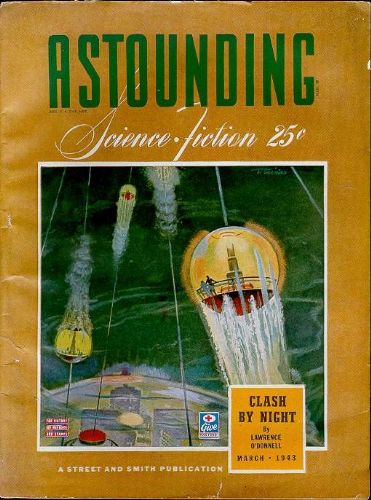


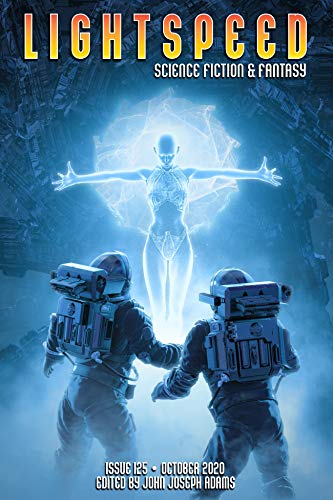
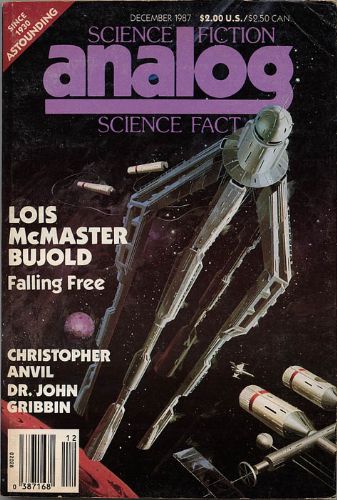


 Science Fiction & Fantasy Remembrance