(Cover by Edward Valigursky. Amazing Stories, May 1959.)
It’s February, and 29 days instead of the usual 28—not like that makes a difference for my review schedule. It’s the time of one of my least favorite holidays: Valentine’s Day. I just ignored it last year, but this time I figured I may as well have some fun with the timing of it. Originally I was gonna tackle all collaborative stories this month, as a gimmick. After all, it takes two to tango, and authors working together can sometimes bring out the best in each other. Indeed for the collaborations I decided to go for different types of collaborative relationship: mentor and apprentice (Brackett and Bradbury), siblings (the Strugatsky brothers), an emerging master and his idol (Ellison and van Vogt), young lovers (Tuttle and Martin), and an actual married couple (Kuttner and Moore). It’s a fun idea!
Unfortunately I did say “originally” because tragedy struck the field last month: we lost some our most talented writers. Within the span of a week Terry Bisson, Howard Waldrop, and Tom Purdom died. I was gonna wait until April to do this, but I realized that with the way things have been going we might lose a few more major talents in the interim. This may sound cynical, but I wanted to strike while the iron was hot. It also lets me not have to comb too hard for collaborative stories.
For the novellas:
“Lorelei of the Red Mist” by Leigh Brackett and Ray Bradbury. From the Summer 1946 issue of Planet Stories. The logical heir apparent to Edgar Rice Burroughs, Brackett’s influence on the planetary romance can’t be overlooked. I need not tell you about Bradbury. Despite being only five years his senior and debuting around the same time, Brackett acted as a mentor figure to Bradbury. It’s probably not a coincidence both were Planet Stories regulars in the late ’40s.
“The Storms of Windhaven” by Lisa Tuttle and George R. R. Martin. From the May 1975 issue of Analog Science Fiction. This is a reread, but you know how I feel about rereads. Tuttle is known for her horror, but she has also dabbled in SF, and I can guess how she contributed to the Windhaven stories. I don’t need to introduce Martin. They were lovers in the early ’70s, and were probably still together when they came up with the Windhaven setting.
For the short stories:
“The Human Operators” by Harlan Ellison and A. E. van Vogt. From the January 1971 issue of The Magazine of Fantasy and Science Fiction. The first of the two Ellison collaborations, although it was actually the last released, its magazine publication being pretty much simultaneous with Partners in Wonder. Ellison thought the world of van Vogt, even bullying the SFWA into making him a Grand Master.
“First Fire” by Terry Bisson. From the September 1998 issue of Science Fiction Age. Bion has the unique honor of being the first author whose work I reviewed on this site, that being his legendary story “Bears Discover Fire.” Bisson started out as a novelist but is probably now more remembered for his short fiction, with short but densely packed stories like “macs” and “They’re Made Out of Meat.”
“What You Need” by Henry Kuttner and C. L. Moore. From the October 1945 issue of Astounding Science Fiction. Retro Hugo nominee for Best Short Story. It’s hard to overstate how great Kuttner and Moore were together in the ’40s, and also how prolific. My quest to cover as many Twilight Zone stories as I can continues, as “What You Need” was turned into a classic TZ episode of the same name.
“Initiative” by Arkady and Boris Strugatsky. From the May 1959 issue of Amazing Stories. Translated by Harmon Rutley. The Strugatsky brothers were, aside from Yevgeny Zamyatin, the first Russian authors to leave an impression on American genre SF; mind you this was during the Cold War. Their novel Roadside Picnic is one of the most famous non-English SF novels, as well as the inspiration for Stalker.
“Do Ya, Do Ya, Wanna Dance?” by Howard Waldrop. From the August 1988 issue of Asimov’s Science Fiction. Unlike Bisson, Waldrop seemed to think himself much more keen on short fiction, with only one solo novel being published and at least one more supposed to have been written but never seeing print. He’s probably most known for his seminal alternate history story “The Ugly Chickens.”
“Reduction in Arms” by Tom Purdom. From the August 1967 issue of The Magazine of Fantasy and Science Fiction. Despite having debuted in the ’50s, Purdom was one of those writers who really came into his own in the ’60s, when the New Wave was in full bloom and the market for genre SF had become more permissive. Purdom remained active for over sixty years, and his absence is sorely felt.
Not much else to say. Next month, as I said not long ago, we’ll be covering all short stories, all from F&SF, and all from the ’50s. February is another roster of novellas and short stories, but with a twist.
(Cover by Vidmer. Beyond Fantasy Fiction, July 1954.)
Who Goes There?
We don’t know a lot about Evelyn E. Smith (not to be confused with Edward E. Smith), which unfortunately is not unusual for women in pre-New Wave SF, and incidentally she had mostly stepped away from the field by the time the New Wave and second-wave feminism kicked in. Her story is very much like what you’ve come to expect with female SFF authors in the ’50s: she would mostly give up short fiction to focus on novels. Hey, that’s where the money is! It’s a shame, because this is my first story of hers and I’m already looking forward to more stuff of hers. “The Agony of the Leaves” is very much emblematic of the kind of fantasy H. L. Gold wanted printed in the short-lived Beyond Fantasy Fiction, and I mean that in a good way. This is a fun yarn that doesn’t take itself very seriously.
Placing Coordinates
First published in the July 1954 issue of Beyond Fantasy Fiction. It’s been reprinted a total of one time, in Rediscovery: Science Fiction by Women (1953-1957). The editor isn’t credited, but seeing as I am friends with a few of the people involved, I can make an educated guess on who the culprit is. Also strange to see “The Agony of the Leaves” included here since it’s urban fantasy and not SF.
Enhancing Image
Ernest is a freelance tea master (I guess they had fictional jobs that don’t exist in the ’50s) who has to live with two women fighting over him—both of whom are witches. Mrs. Greenhut (whatever happened to Mr. Greenhut is never disclosed, although Ernest has his theories) and Ms. Levesque are not the most charming or kind-hearted women, but what they lack of decency they make up for in assertiveness. Ms. Levesque has been giving Ernest love potions while Mrs. Greenhut has been giving him love cookies. “[Ms. Levesque]—both of them—were so careless with other people’s property, as well as with other people themselves.” The two women were once friends but now fight as rivals over Ernest. That Ernest is being fought over by two powerful women and is also able to afford rent with his non-job immediately tells us this is a fantasy, never mind the witch part. Then there’s Nadia, an Eastern European woman whom Ernest has the hots for, and this conflict makes him worry and wonder as to what’s to be done about the witches. So we have what you might call a love square at the heart of it, with Ernest trying to get it with Nadia while also trying to make her understand that two witches are tormenting him.
Getting the obvious out of the way, I’m not sure if Smith would’ve read Fritz Leiber’s Conjure Wife when she wrote this story. Sure, the magazine version of Conjure Wife would’ve been a decade old at this point, but I have no clue if Smith would’ve read the issue of Unknown it appeared it, and then there’s the fact that Leiber’s novel didn’t see book publication until right before Smith would’ve presumably written her story. A recurring criticism of Leiber’s novel is that it operates on the (admittedly absurd) notion that women are witches; not that witches are women (as they tend to be depicted), but that every other woman in the world is secretly a witch. Achievements that men take for their own are actually the workings of their witch wives, which means (of course Leiber didn’t intend this implication) that women are reponsible for holding up patriarchy. It’s a hurdle to get over, if you’re the kind of person who doesn’t like to have fun at all. Smith’s story seems to be in conversation with Leiber’s; after all, all the women with speaking roles in the story are either witches or suspected to be witches. Unlike the protagonist of Conjure Wife, who makes the uncomfortable discovery that his wife is a witch, Ernest starts out as knowledgable about witchcraft and wants desperately to return to normalcy—whatever that is.
(By the way, the title is a reference to tea-making, “the unfolding of the leaves when boiling water’s poured on them.” Ernest is apparently eager to tell everyone about his tea-making knowledge, and there are even hints that he’s the 1950s equivalent of a weeaboo. Of course it’s also a pun, given how much Ernest suffers here.)
So there are two driving questions: How do we get rid of these witches? And is Nadia a witch herself? When Ernesst and takes Nadia out to dinner, the witches try to ruin the date, and they try pretty hard; but for some reason their magic tricks have no effect on Nadia, who either doessn’t notice or mistakes Ernest’s blubberings for some psychological thing. Nadia herself is a funny character: she talks in butchered English and is weirdly preoccupied with psychoanalysis. Everything that happens to Ernest (according to Nadia) can be explained by either mania or hallucinations. Nadia isn’t even sure these women exist, despite them living in the same apartment building as Ernest. Is Nadia gaslighting Ernest or is she genuinely clueless? It gets to the point where even Mrs. Greenhut and Ms. Levesque are unsure if Nadia is a witch even more powerful than either of them, which leads them ultimately to joining forces—if for no other reason than to get Ernest out of the clutches of this foreign lady. “The Agony of the Leaves” is a novelette that moves at a breakneck pace, such that you probably don’t realize we’re already approaching the climax when Ernest takes Nadia out on that date. Smith has a way with snappy dialogue that makes everything at the very least entertaining.
There Be Spoilers Here
The ending is pretty good. It’s not confirmed if Nadia is a witch or not but it’s implied she’s a normal-ish person, who just so happens to be way more charming than the witches. Ernest ultimately decides that it doesn’t really matter if Nadia is a witch or not, because he’s under a different kind of spell, if we’re to take Nadia as emblematic of the then-modern woman. It’s subversive because we were led to believe that, given her heritage and her unusual behavior, Nadia is a witch of an even older breed than Greenhut and Levesque. There’s an unspoken rule that Eastern European characters are written as prone to a certain pre-Christian mysticism. The two witches admit, however, that they’ve lost this battle. Smith might be saying something about the superficial nature of a lot of relationships, or she could be having fun with it. This is a pretty cynical ending that could take a legitimately dark turn if it wasn’t the ending to a comedy.
A Step farther Out
On the one hand there’s not too much to say about the story itself, but does there need to be? It’s a frivolous satire, of the kind Gold liked, but it does that job with a fun-loving nature that doesn’t read as phoned-in; rather it seems like Smith genuinely liked to play into Gold’s brand of comedy. I never laughed out loud, but I did chuckle a few times and I was smirking for much of it. You could very easily turn this premise into something unfunny and offensive, and in the hands of a male writer from that period (including, sad to say, Leiber) it could’ve been that. A shame this one had to languish in limbo for over half a century; it’s a fun read.
I’ve covered David Drake before, with his dinosaur time travel novella “Time Safari,” and while I wasn’t a fan of that story it did succeed in making me curious about Drake’s work. Sadly Drake passed away in the interim, and what struck me about people’s reactions to this was that Drake was a pretty uncontroversial figure despite being a pioneering writer of military SF, never mind a heavy contributor to the Baen stable. He was maybe (I’m not sure, truth be told) on the conservative side, but he wasn’t a raging bigot and he didn’t seem to have crackpot theories about the environment or the government or what have you. Reading his introductions to some of his stories, he seemed to like someone who understood the human cost of war from first-hand experience. He took a break from writing at the start of his career to see action in Vietnam and he was candid about how this experience had given him PTSD and how he’d cope with it for decades. We lost a good man with David Drake, that much is certain.
Of course, Drake didn’t just write military SF—far from it. He at least dabbled in nearly everything, and if anything he seemed to think of himself as a horror writer first and foremost, despite that not being what he’s most known for. “The Automatic Rifleman” is a creepy yarn, although less haunted-house horror and more a look into man’s capacity for evil. Because it’s never been anthologized I had basically no clue what it even was going in, but in hindsight I should’ve taken the title (it’s a reference) as a clue. It’s also SF, although how it’s SF is not revealed to us until the very end. I won’t bury the lead here, so I’ll say now I liked this one quite a bit more than “Time Safari,” although as we’ll see, and as Drake will admit freely, he did take some notes from one of the masters of the field.
Placing Coordinates
First published in the Fall 1980 issue of Destinies, which is on the Archive. It’s never been anthologized, but has been reprinted in a few Drake collections, incidentally all being his horror-themed collections. There’s From the Heart of Darkness, Balefires, and then Night & Demons, which from what I can tell is just Balefires but bigger. The latter two (not sure about the first) come with lengthy introductions by Drake for each story. A few stories from these collections are available to read on Baen’s site free of charge, although “The Automatic Rifleman” is not one of them.
Enhancing Image
A trio, Kerr, Davidson, and Penske, arrive at a secluded apartment for a certain man they’re supposed to need for a certain job. Kerr is an idealist, Davidson is a bitch, and Penske is a pessimist. The other party, Coster, is a strange man with an even stranger-looking rifle that’s supposed to be his weapon of choice; their mutual contact didn’t say much about him, but he’s apparently a gifted marksman. The job is simple: assassination. The target is the prime minister of Japan, who is touring the US for the sake of business. (Incidentally this story anticipates the racist tendency in some ’80s SF to depict Japan as a threat to American economic and technological supremacy.) Kerr, the brains behind the operation, has rather vague politics but seems to fall somewhere on the left; certainly his disdain for environmental destriction in the name of business has an anti-capitalist bent. (I think Drake makes a bit too much of a point that Kerr is an “affluent” black American, with a suit and everything.) Whether or not Coster agrees with Kerr’s views doesn’t matter: he’s getting paid to do a job.
On November 22, 1963, Lee Harvey Oswald took position in the Texas School Book Depository in Dallas, as John F. Kennedy was passing through as part of a motorcade. Oswald fired three shots with a bolt-action rifle, wounding the governor of Texas and killing Kennedy, scoring a shot through the throat plus a headshot. He was a former Marine.
Something sneaky “The Automatic Rifleman” does is that it makes you unsure if anything even fantastical is gonna happen, because for a long while it holds its cards close to its chest and plays out like a realistic crime thriller. There is, however, a creeping sense that something beyond normal human experience might be at work. Penske is the weapons expert of the trio, set to be the second gunman in the assassination in case Coster fumbles, and he can’t figure out what kind of gun Coster’s is supposed to be; it looks like a modified M14 carbine but Penske can’t be sure and Coster’s not telling. At one point he asks Coster how he got the rifle and Coster replies with, “You’d better hope you never learn.” We never do learn exactly how Coster got his rifle, but we can infer he didn’t buy it at a gun store. Certainly Coster doesn’t treat his rifle like how a normal person (with training) would handle a firearm; he basically always has it with him, even when he goes to bed. It could just be that Coster has a screw loose: he does, after all, claim to have killed both John F. Kennedy and Martin Luther King, with this rifle, and he’s implied to be some kind of racist. He makes the trio uneasy, but he’s also an unnaturally good sharpshooter.
On August 1, 1966, Charles Whitman killed his wife and mother before taking a sniper rifer to the clock tower of the University of Texas at Austin, killing three people in the campus’s main building before killing another eleven from the clock tower. He kept shooting for an hour and a half before authorities killed him. He was a former Marine.
Penske is the one in the trio who doubts Coster’s skills, so they travel to a farm owned by a contact of theirs that would serve as a firing range. Coster proves to be as good a shot as he claims to be, but he also acts rather strangely around firearms—like he’s not used to being around them, despite never being without his rifle. Afterwards Penske even claims he saw Coster close his eyes shut while firing his rifle, as if jarred by the very use of his weapon. He can’t put his finger on how this is possible, but Penske supposes Coster is not a veteran, or has military training at all, yet is able to hit bottles with pin-point accuracy, even with his eyes closed. It’s like handling the rifle gives him the ability to shoot like a pro, like how the whimpiest person on the planet can be made threatening with a good guard dog. “Or a witch cat,” Penske says rather pointedly. He’s scarily close to being right. Coster is sort of like a foil to Penske, in that they’re both pessimists who think themselves good at what they do, namely killing; yet while Penske is an imperfect but skilled shooter, there is something seriously wrong with Coster. He has a strange philosophy about the nature of man, that man of some kind of werebeast, “part flesh, part metal,” conjoined with his technology.
On April 4, 1968, James Earl Ray shot Martin Luther King in the face with a hunting rifle while the latter stood on the balcony of his motel room. King died about an hour later. Ray was a convicted criminal and was already on the run from authorities when he crossed paths with King in Memphis. He had military training but was apparently a poor soldier, and several sources, including King’s family, doubt he was the shooter.
Have I mentioned this story is dark? Its eeriness has only increased with time, which is partly why I think it’s due to be included in some themed anthology in the future. It’s a story whose potency only heightens as American life becomes more submerged in everyday violence. Assassinations, lynchings, police brutality, white supremacists ramming their cars into crowds of protesters, people bringing guns into schools. We know that, regardless of individual or systemic problems, these are the result of human malice, and Drake knows this too. In his introduction he says “The Automatic Rifleman” is horror, but also escapist, because it posits that man’s evils are not the result of man’s own doing. “The story posits the notion that things are in their present state because some external force is working to make them bad; in other words, the world’s problems are not the result of mankind’s own actions.” It actually reminds me of the movie Sorcerer, and how director William Friedkin said he picked that title because he wanted to evoke the sense that the horrors of human existence are the machinations of some unseen force. The sorcerer is purely metaphorical, and in the case of Friedkin’s movie the sorcerer is capitalism; but the external evil lurking in Drake’s story turns out to be a lot more tangible.
There Be Spoilers Here
It’s the day of the assassination, and Penske and Coster have set up camp while the prime minister is making his way through a parade. The “good” news is Coster’s aim is true, and within seconds the prime minister lies dead or dying, “his spine shattered by two bullets,” while security people surround him in vain. (Reminder that this was published about six months before the assassination attempt on Ronald Reagan.) The bad news, for our Anti-Heroess™ at least, is that in trying to escape the scene (they were on a high-level floor), Coster takes a serious fall and is unable to get up; and Penske knows carrying Coster would likely result in both of them getting caught. Coster, in self-defence, takes aim at Penske when it becomes clear what’s about to be done, but his rifle refuses to fire—the safety refuses to turn off. We don’t see it, but it’s implied Penske knifes Coster to death, and we can infer this because afterwards he now has the rifle. Have I mentioned this story takes a bleak view of humanity? I hope you didn’t go into this expecting to sympathize with any of the characters. I know Drake said it’s meant to be escapist, but I keep thinking of real-world horrors while reading it. Can’t tell if this counts as good or bad writing.
On July 8, 2022, Tetsuya Yamagami shot former Japanese Prime Minister Shinzo Abe in the chest with a double-barreled shotgun the former had constructed in the comfort of his own home. Abe died five hours later. Yamagami had military training, and a series of family tragedies plus Abe’s cult connections drove him to plot Abe’s murder.
You may be wondering just what is SFnal about this story, and if you’ve been paying attention you probably guessed: the rifle is alive. Specifically the rifle is an alien, descended from “metal creatures who glittered and shifted their forms and raised triumphant cities to the skies.” The rifle is basically a parasite that communicates telepathically with its host, like Sauron’s ring, and Penske has taken Coster’s place as the new Gollum. We learn all this in the last few paragraphs of the story, and for my money I think Drake could’ve done a slightly more convincing job had he opted for fantasy and made the rifle a supernatural thing; but then there weren’t many outlets for short fantasy in 1980. Science fiction it is, then! Drake freely admits to have taken inspiration from Fritz Leiber’s “The Automatic Pistol,” which honestly is a connection I should’ve made from the start given I had read that story. I think I prefer Drake’s rendition, granted that “The Automatic Pistol” was a very early Leiber story and that later Leiber would write more gracefully than Drake. You could call it a sort of remake, but I like to think of it more as a variation on a theme. Leiber wrote his story seemingly in reaction to Chicago gang violence in the ’20s and ’30s while Drake was reacting to shootings and assassinations in the ’60s.
A Step Farther Out
A good story can be similar to an older story, by design, and get away with it if it adds something new to the equation, which I think this does. There’s the Leiber influence, with perhaps some Sturgeon (specifically “Killdozer!”) in there as well, but it’s still very much David Drake’s story. The SFnal element is a little arbitrary, in that it could have just easily been explained in supernatural terms, but as a machine fable in the mode of Kipling it’s still effective. This all raises a question, though: If “The Automatic Rifleman” was a then-modernized riff on “The Automatic Pistol,” then what story would take the same basic premise and apply it to the current era? And has such a story already been written?
He was not the most prolific writer, but Michael Bishop was one of the most eye-catching new authors to come out of the post-New Wave period, debuting in 1970 and spending the rest of that decade making a name for himself. I had been meaning to get more into him, but unfortunately I did not get much of a chance while he was alive. Bishop died in November last year, leaving the field just slightly emptier. “The Samurai and the Willows” is one of Bishop’s most acclaimed stories, having solidified this by placing first in the Locus poll for Best Novella. It’s part of a series—a fact I genuinely had forgotten about prior to reading it, which would go to explain my confusion with some details in the world he constructs. Bishop is clearly hunting big game here, intellectually, and while I have a few qualms with this story I have to admit it also left me with a lot to think about.
Placing Coordinates
First published in the February 1976 issue of The Magazine of Fantasy and Science Fiction, which is on the Archive. It was anthologized by Best Science Fiction Stories of the Year, Sixth Annual Collection (ed. Gardner Dozois), and… that’s it? It was collected in the fix-up “novel” Catacomb Years, which has all the stories in that series along with interludes. I know it was reprinted in a couple more recent Bishop collections, but Bishop had the tendency to revise his works decades after the fact and “The Samurai and the Willows” was no eception. We’re reading the magazine version.
Enhancing Image
First, about the worldbuilding, because context is important and if you’re going into this story then you should know a little about the future Bishop creates here first. “The Samurai and the Willows” is one entry in an episodic series about a future Atlanta that, for some reason, is domed “surfaceside” and has several underground levels. This story here is set on Level 9, which as you can imagine is a good deal underground. Simon Fowler is a 38-year-old man of at least half Japanese descent (on his mother’s side), a “samurai without a sword” who runs a floral shop, and is cubical mates with Georgia Cawthorn, an 18-year-old black “Amazon” who clearly has ambitions that involve moving out of the catacombs. They have nicknames for each other: Simon is Basenji and Georgia is Queequeg. If you know your Moby Dick then congratulations, Bishop has already planted an idea in your head in the first couple pages. I’ll be calling these characters by their nicknames henceforth since it’s clear to me Bishop wants us to understand them on a symbolic level. There’s a good deal of symbolism at work in “The Samurai and the Willows,” and not all of it is obvious.
This is a short novella, only about 19,000 words, so in the threeway tug-of-war between plot, character, and worldbuilding, something has to give; in this case it’s plot that draws the short stick, but that’s not necessarily a bad thing. Bishop drops us off at the deep end of what already seems like a fully developed Atlanta of 2046 (and no, there’s no way major cities across the US would become domed go partly underground within seventy years of the story’s publication), with characters who usually do not explain the obvious to each other for the reader’s benefit. There’s some blatant exposition thrown in, but this is pretty much all through the third-person narration as opposed to what characters are saying. Basenji has been living like this for many years and Georgia doesn’t even really have memories of life before the dome. It’s never said explicitly why cities have become “Urban Nuclei,” with the honeycomb structure, but it’s implied that an environmental catastrophe has rendered much of the world unwelcoming to human habitation; at least that’s what I assume is happening. There are several questions about the background of this story that go unanswered.
(You may be wondering why I bothered mention Basenji and Queequeg’s ages at the start. All I can say is get ready for a tangent in the spoilers section, it’s gonna be awesome I promise.)
So what’s the plot? Kind of a trick question. Basenji is a florist who also happens to keep a diary, plus a lot of guilt over something that is not revealed to us until very deep into the story. There’s clearly some unspoken sexual tension between Our Heroes™, but this is put aside momentarily as a third wheel enters the picture: Ty, who happens to be around the same age as Queequeg (I think a year or two older) and has the same job as her. (I find it curious that Basenji, or rather Bishop, gives a black woman the name of a Polynesian man, even calling her a harpooner. There’s something to be said about the racial and cultural politics here, but I’m putting a pin in all that for a second. [Yes, I understand the possible symbolism of naming her Georgia, given the setting.]) There’s evidently a generation gap at play: Basenji has memories—or at least a dconnection via his parents—of life before everything changed, and now he has to play nice with people two decades his junior, who were born and raised to understand a city that has changed radically even from our understanding of it in 2024. The point is that this is not an action narrative; the world is not at stake; rather this is the story of one man coming to terms with his personal demons.
Like I said, Basenji keeps a diary, where he does what you normally do in a diary, but he also dabbles in poetry. Early on we get a telling note in said diary about Yukio Mishima, who of course was probably the most famous Japanese author in the west at the time. I’m not gonna tell you the whole story, because you can look it up yourself and anyway he was quite the character, but Mishima was something of a paradox: he was a hardcore conservative, to the point where he wanted Japan to its pre-World War II imperial era, but he was also gay, never mind an artist in the truest sense. Was Mishima a samurai who wanted to be an artist, or an artist who wanted to be a samurai? A similar question could be asked of Basenji. As you know, if you know his story at all, Mishima committed seppuku—ritual suicide—and this is actually something that preoccupies Basenji’s mind: the idea of giving up one’s life for the sake of honor. His beliefs, we come to find, are a sort of Christian-inflected Shintoism; not cleanly falling into either camp, but if you’ve read the story then you know what I mean. Basenji has an albatross around his neck, so to speak, and his relationship with Queequeg and Ty will involve him throwing off that albatross.
Now, as for the whole fact that this is a narrative with three main characters, none of whom are white, and one of whom explicitly takes after a non-Anglo culture. Would it have been preferable if “The Samurai and the Willows” had been written by someone with actual Japanese heritage? Probably. The problem is that whenever we say this about a work of art we basically make up a hypothetical instead of criticizing the thing itself. “What if this story had been written by a completely different person?” It doesn’t really solve anything. What matters is the question of whether Bishop handled the material with delicacy. I’m not an expert on Japanese culture, no matter how many hours of anime I’ve watched, so I can’t say with certainty. I will say that Basenji’s characterization didn’t make me cringe, although I have to admit Queequeg did, if only because her accent is laid on rather thick; there were times where I struggled to understand what she was saying. There is one other thing about Queequeg that bothers me, but it has less to do with cultural sensitivity and more certain decisions made late in the story that I can’t readily make sense of.
There Be Spoilers Here
Basenji and Queequeg have an almost-encounter one night, but nothing happens—for the moment. After Banenji has passed out Queequeg decides to take a peek at his diary, as you do. This incident, weirdly enough, does not come up later: Queequeg never admits to going through his belongings and so Basenji never finds out about it. It does serve the function of making Queequeg respect her cubical mate more, since it had been established earlier that the two were kind of on uneasy terms. She likes his poetry, even if she doesn’t understand all of it. It’s quite possible that it’s this incident that makes her care for him, at least in a way. We soon learn that Queequeg and Ty are gonna get married, although it’s ambiguous how much they actually care for each other. They’re clearly sexually into each other, but the shotgun wedding routine might be more for financial reasons than anything. Given Ty’s status, marrying and moving in with him would give Queequeg a good reason to leave the catacombs. As for Basenji, he would have to find a new cubical mate within a time limit or else get evicted. Well that sucks. Queequeg is screwing over Basenji a little bit, but it’s for a totally understandable reason, and anyway Basenji is happy for her.
Then, right before the wedding day, Basenji and Queequeg have a one-night stand. This is pretty strange. I assume Queequeg is cheating on Ty, but neither party acts like adultery is being committed, so that despite his overactive conscience Basenji doesn’t seem to mind it. Maybe they’re in an open relationship; it’s not made clear. Of course, social norms have to have changed a great deal in this bizarro 2046 where Atlanta is basically a police state (even classic rock music is prohibited), but Bishop leaves something to the imagination with how human relationships work here. And then there’s the age gap. It could be worse; I’m just saying that in the ‘70s there was this period of loosened censorship on genre SF writing, which overall was to good effect but which sometimes also resulted in authors being a little too permissive in some ways. You’d think the new freedom writers had would mean more positive depictions of, say, homosexuality and non-monogamous relationships, and we did see some of that; but we also got one too many stories where people in the thirties and forties are having sexual relationships with high schoolers. (I love John Varley’s early work, but he was a little too fond of putting full-grown adults in precarious situations with teenagers.) I’m not sure of this, but I imagine if one were to revise this story decades later changing the sex scene between Basenji and Queequeg would be a high priority. After all, it’s not even necessary for the story’s climax.
It has to do with Basenji’s mom. Remember that Basenji takes a lot of pride in his Japanese heritage; he associates the beforetimes with his mom’s home country. Basenji seems to have a case of post-nut clarity, because after having sex with Queequeg he makes a confession—that he had put his ailing mother in an experimental nursing home, as part of a deal. She was aging prematurely, and she would die there. It’s not the worst thing a person could do (although putting one’s parents in a nursing home never sits right with me), but it’s been dogging Basenji’s mind for years now, and once he confesses to Queequeg he finds a kind of tranquility. Having articulated what he sees as his greatest failure, and with the possibility of losing his cubicle on the horizon, he has given himself permission to commit suicide. He passes on his floral shop to Queequeg and Ty, as newlyweds, in a passing-of-the-torch moment. We aren’t told directly Basenji kills himself, but context clues at the very end imply he did, after having come to terms with himself. Honor kills the samurai. It’s a good ending, even if I wish Bishop hadn’t used an unearned sex scene to get to this point.
A Step Farther Out
I like novellas. A lot. I like them as a length because you can fit a whole world into fifty to a hundred pages, with some room left for character development. “The Samurai and the Willows” is light on plot but heavy on worldbuilding, character, and themes. It’s a dense fifty pages that somehow feels incomplete, possibly because Bishop had by this point already written a few stories in the same setting. There are some questions raised in the story itself that go unanswered, and these might be resolved in other stories. The setting could use some filling out, is what I’m saying. But if your story makes me hungry for more in the same series then surely you must’ve done something right. We’ll be returning to the domed and semi-underground Atlanta at some point not too far into the future, rest assured.
(Cover by Virgil Finlay. Weird Tales, August 1939.)
Who Goes There?
Manly Wade Wellman debuted in 1927, in Weird Tales, and remained a resident there for quite some time, which partly explains how he, who wrote both SF and fantasy, managed to stay relevant after John W. Campbell started reshaping the former genre in his own image. Indeed his reputation as a fantasist only grew over time, and when he eventually settled in North Carolina he would become one of the foremost authors associated with that state. His career is a long-spanning one, and I’m sure we’ll be seeing him again before too long. He won the World Fantasy Award for Lifetime Achievement in 1980. I may have picked “The Valley Was Still” as my first Wellman to review because it was adapted into a classic Twilight Zone episode, retitled “Still Valley.”
Placing Coordinates
First published in the August 1939 issue of Weird Tales, which is on the Archive. Was anthologized in Weird Tales (ed. Peter Haining), The Twilight Zone: The Original Stories (ed. Martin H. Greenberg, Richard Matheson, and Charles G. Waugh), and The American Fantasy Tradition (ed. Brian M. Thomsen). It’s also in the Wellman collection Worse Things Waiting. That last one seems to be in print.
Enhancing Image
I wanna start this review by saying I’ll be discussing the ramifications of the American Civil War a fair bit—maybe even a bit more than the story itself. “The Valley Was Still” is a very fine story, but it’s also a work of neo-Confederate propaganda, albeit one that’s more morally nuanced than the usual. Wellman believed pretty heavily that the Confederacy fought for a just cause, more specifically that the Confederacy fought for “states’ rights.” What rights exactly states should have is something neo-Confederates are always silent about giving. The topic of slavery never comes up in this story, which for anything regarding the Civil War basically renders the given viewpoints incomplete at best. The problem with not mentioning slavery when talking about the Civil War is that the absence of slavery renders the Civil War a conflict seemingly without a root cause. The Civil War, Confederacy sympathizers argue implicitly, is a war that started basically from nothing. Mental gymnastics are obviously at work here.
You may be wondering how I, as a proud Union man, can like this story if I think the implied worldview it’s presenting is wrong on a basic level. The answer is simple: I have the media literacy of at least a 5th grader, as opposed to the 3rd grade where too many people are stuck at. You can like a work of art whilst disagreeing with its worldview. This is really easy to understand, but many people somehow miss the point. Like I said, “The Valley Was Still” is a very fine story, with maybe more texture in its ideas than Wellman had intended; but then art, even art written to fill pages in a pulp magazine, requires at least a fraction of the artist’s subconscious for its making. I have to say Wellman also does something that at least from a modern perspective is hard to pull off, in that he gives us a protagonist who is a Confederate soldier, a “chivalric idealist” as Wellman tells us, and despite his patriotism for a doomed and deeply immoral system he remains worthy of our sympathy. This is a sign of good writing, by the way. Wellman tells us very early on that Joseph Paradine is this idealistic patriot, because it’s important to establish such a thing before Paradine gets confronted with what would be for him (if not for us dirty Yankees) a tough choice.
Paradine and his scout buddy Dauger are looking out over the town of Channow, a Southern town deep in a valley that Union troops are supposed to be encamped in. There’s one problem: from where Paradine is sitting he can’t find any Yankees. Indeed the town is… a little too quiet. Paradine volunteers to go on ahead by himself, in what would under normal circumstances by almost a suicide mission. He would be guaranteed a POW if the Union boys caught him if not for the fact that he could, at least at a glance, pass for a Union soldier, having stolen several items of apparel as “trophies of war.” On the other hand, if the Union troops are not encamped here, then something more sinister may be going on. Paradine ventures into town and it doesn’t take him long to scout out the place: it’s basically deserted. All the townsfolk had gone. More importantly, he finds dozens of Union troops, all of whom have seem to have dropped dead. “But who could have killed them? Not his comrades, who had not known where the enemy was. Plague, then? But the most withering plague takes hours, at least, and these had plainly fallen all in the same instant.” Only it turns out, after some testing, that they’re not dead, but have somehow been made to take to a deathlike sleep. But what could’ve done this?
I wouldn’t call “The Valley Was Still” a horror story, but it does have a quiet eeriness at its center, and this is helped by Wellman’s style, which I would call a few steps above the standard weird pulp prose of the time. Rod Serling, when he adapted it into a teleplay for The Twilight Zone, must’ve been similarly taken by Wellman’s writing, It’s simple, but controlled and quite affecting. By the way, Serling must’ve read it in what had to be a battled old copy of the 1939 issue of Weird Tales, since “The Valley Was Still” had not yet been reprinted anywhere at that time. Indeed it’s very short (only maybe a dozen book pages) and it presents its message with a neat little bow, which is just the kind of thing Serling liked. However, the message, for how concisely it’s presented, may not be so simple. Things get weirder when Paradine finds there is one other waking person in the town—a very old man named Teague, who had apparently put a spell on the Union boys. Teague is a “witch-man,” from a family line of witches, so he says. The townsfolk of Channow treated him as an outcast, only coming to him for favors, and when the Union boys came in they high-tailed it, leaving Teague seemingly alone to fend for himself—only he’s a one-man army.
Like Paradine, Teague is a patriot. He almost confused Paradine for a Union man and nearly put the sleeping spell on him, but is delighted to find a bright-eyed Confederate willing to do anything for the cause. Well, we’ll see how far that “anything” goes. Before I get to spoilers, I wanna say again that we’re clearly supposed to believe Paradine is fighting on the “right” side of the conflict, even if it’s doomed by history. The plot almost could not exist if not for its pro-Confederacy angle—I say “almost” because Serling, a New Yorker and a flaming liberal, saw that there was something rather touching at the core of what could easily be woe-is-me Gone with the Wind-esque soap-boxing. (Gone with the Wind is a very bad, overlong, melodramatic, and deeply racist novel, none of whose qualities overlap with “The Valley Was Still,” other than a general wistfulness about a certain war neither of the authors were even old enough to have witnessed.) We’re told repeatedly that Paradine believes in honor, that he looks up to Robert E. Lee, that he believes in chivalry. Lee fought to preserve slavery, but he was courageous, and he did believe in such a thing as honor on the battlefield.
The question Wellman then poses is: How low are you willing to sink to fight for what you believe is a just cause? Do the ends justify the means? Should the Confederacy win, even through dishonorable means? Is “honorable” defeat something Paradine will have to accept? These are some juicy questions Wellman asks of us in the span of only a few pages, and it’s here that the story reveals itself as a parable. On the surface it’s a parable about an honorable man who’s fighting for a dishonorable cause, and must chose between cheating for the sake of victory and defeat on his own terms. Consciously Wellman thinks Paradine and Lee are perfectly honorable men, but subconsciously he might’ve been more conflicted; he might’ve been unsure, deep down, if the Confederacy really was a cause worth dying for. This uncertainty stops “The Valley Was Still” from becoming jingoistic garbage, but it also elevates this story about witchcraft from pulp to a perfectly respectable fantasy fable.
There Be Spoilers Here
Teague has a spell book. The whole thing, he claims, is filled with the word of God, but when Paradine sees the book for himself he finds God’s name has been crossed out and replaced with what is highly implied to be the devil’s. We’re told that with the power in this book the Confederacy can win the war, with Paradine as the second greatest man in the South—only behind Teague, of course. Paradine assumes when Teague refers to the greatest he means Robert E. Lee, but Teague clearly thinks highly enough of himself that he believes he can rule the South almost single-handedly. Almost. He needs the help of some fresh meat, some young patriot to help carry out his plan—someone like Paradine. All Paradine needs to do is sign his name in the book, with his own blood, to make an allegiance with the devil, and the South can win this war; if he doesn’t sign, then we’re told the devil doesn’t like being scorned. Now, Paradine is well-read enough to figure out quickly what kind of situation he’s in; he may be an idealist but he’s not an idiot. He knows the price one might have to pay for this deal.
Victory through evil—what would it become in the end? Faust’s story told, and so did the legend of Gilles de Retz, and the play about Macbeth. But there was also the tale of the sorcerer’s apprentice, and of what befell him when he tried to reject the force he had thoughtlessly evoked.
Thus “The Valley Was Still” is a Faustian parable, or a deal-with-the-devil type story. The difference between this and some others of its ilk is that rather than make a deal with the devil, Paradine ponders whether he should do such a thing in the first place. Ultimately he decides that whatever wrath the devil might inflict on him and the South, he figures it’s better to lose (if the South is to lose) honorably than to win dishonorably. Not only does he reject Teague’s deal but he cuts the old man’s head off with his saber before he can finish signing his name. He then takes the book and undoes the sleeping spell, replacing the devil’s name in his recitation with God’s, opting to do the right thing even if it means likely getting taken prisoner. Wellman seems to be telling us that even the most patriotic of Confederates would rather risk losing the war than to commit blasphemy in the name of winning it. I think Wellman is being a little charitable here, but you have to admit his take on the war is about as morally upright as one can be while still being pro-Confederate; indeed the story borders on anti-jingoistic. In the context of the story, the South loses because one man chose to do the right thing, even if it meant the devil conspiring against him.
A Step Farther Out
I shouldn’t have to say this, but you don’t need to be a neo-Confederate or even a Southerner to enjoy this one. Wellman, as expected in the pulp tradition, can phone it in at times, but this is definitely not one of those times. This is a story he clearly wanted to tell; it might’ve been rolling around in his head for years prior to the writing for all we know. It has the controlled style and tight structure, combined with a thematic density, that implies it was a passion project, and I’d be surprised if it was just another bit of hackwork. You could teach this in a course on the art of the short story and people would probably not make a big fuss over it. Certainly it’s a good place to start with if you’re getting into Wellman.
Michael F. Flynn was arguably one of the last major discoveries to first appear in Analog Science Fiction, debuting relatively late (he was already in his thirties) in 1984 and quickly becoming a resident of that magazine. He was a generation younger than the likes of Larry Niven and Jerry Pournelle, but his politics and hard-nosed approach to SF aligned with theirs enough that they would collaborate on occasion, and indeed my first run-in with Flynn was the novel Fallen Angels, co-written with Niven and Pournelle. (This novel is rather infamous among older SF readers, and yeah, it’s not good, but I found it too silly to be offended by it. It’s at least marginally more enjoyable than Fritz Leiber’s The Wanderer, but then so are most novels.) I didn’t read my first solo Flynn until last year, incidentally not long before his death, but I figured quickly he was someone to keep an eye on.
Unfortunately Flynn died in September 2023. I actually work in the same town he lived in, but we never crossed paths—probably not even close. He was, from what I’ve heard, a very affable man despite his conservatism, and surely the field will not look quite the same henceforward. I wanted to review something of his, sort of in memoriam, and ultimately I went with what seems like an uncharacteristic story of his. “House of Dreams” is a rare case of Flynn appearing outside of Analog, and it even won a major award, the Theodore Sturgeon Memorial Award. This is one of the few Sturgeon winners to not get a Hugo or Nebula nomination (only a Locus poll spot), and—well, there might be a reason for that.
Placing Coordinates
First published in the October-November 1997 issue of Asimov’s Science Fiction, which is on the Archive. Unfortunately this is the only way you can read “House of Dreams”; it has never been reprinted in English. If you wanna read it then you’ll just have to read that PDF of the issue, or find yourself a used copy if you’re the collecting type.
Enhancing Image
We know this is a story about parallel worlds because the narrator tells us right away, about “worldlines abutting” and “the walls of the universes.” The action is framed as a sort of cautionary tale, told by an elder to some villagers around a bonfire—or so that’s how I see it. We’re immediately met with the most contentious part of “House of Dreams” (or rather one of two very contentious points), which is the manner in which Flynn decided to tell his story. This is not just a first-person narrator; it’s a first-person narrator with an attitude. The narrator both is and is not a character, being outside the action of the story but still conveying his own personality to the reader. Like I said, it’s framed as if we the reader are a listener at a bonfire, and the narrator is a flesh-and-blood storyteller. I’m not very fond of this, although it could be more the particular voice Flynn decided to use: a kind of jokey but not necessarily funny tone that can strike one as condescending. It does, I suppose fittingly, sound like emulation of one of Sturgeon’s own attempts at narrative voice, but unfortunately it’s an emulation of one of Sturgeon’s unsuccessful attempts.
The actual protagonist is Ted, an academic type with a wife and son who’s in the process of buying a house. The purchase has not been finalized and so the family hasn’t moved in yet, but that doesn’t stop Ted from loafing about in the place for days on end, by himself, with tragic consequences. The house has not been cleared out yet, which allows Ted to go poking around, and at one point he discovers a bulky and weird-looking flashlight—a device that doesn’t illuminate areas in the conventional sense but, as it turns out, does shed light on parts of the house otherwise unseen. This all sounds somewhat detached, for one because of the narrator’s voice and also the fact that there’s basically no dialogue. It’s almost a one-man show. Ted doesn’t interact with other characters in conventional sense, although we do get a line into his thoughts and there is one other character of note. As for the flashlight, we never learn where it came from or who built it, but we do find out quickly that it can show a different plane of existence in the house that works in parallel with what the naked eye can see.
Ted, using the flashlight, discovers a stranger in the house—a woman who can’t see him, although he can see her. The meeting is ass-first. “He didn’t see her face, not then. The view was strictly from the rear.” The narrator is quick to remind us that Ted is a faithfully married man, but that doesn’t stop him from experiencing love at first sight, or at least lust at first sight. I’m not exaggerating when I say Ted’s boner for the ghost woman (the narrator settles on calling her “Betsy,” so let’s go with that) will determine the course of the rest of the story. The male gaze is so strong here and so deliberately put in that it arguably becomes the point of the story, rather than something that distracts from it. There are obvious criticisms one can make. Being unable to talk to Betsy or even get her to acknowledge his existence, Ted has to settle for watching, although sometimes he does a little more than that. One night, in his bedroom, Ted turns on the flashlight and sees Betsy naked next to him, crying—maybe from sadness or an intense happiness. The narrator tells us, in so many words, that Ted jerks off to this image of Betsy, and you have to admit this is not something you read about every day. It’s discomforting, probably more than Flynn intended, and I’m not sure how much of it is supposed to serve a function other than pornographic. Robert Silverberg in the ’70s would’ve done something like this.
We learn a few things along the way, although naturally we don’t learn every detail since the world on the other side of the flashlight is blocked off to Ted other than what it allows him to see. We know Betsy lives in an alternate world where humanity has apparently been brought to the brink of annihilation, being at war with a race of vicious ape-like creatures called “leapers,” which we’ll come back to later. We know Betsy herself is a warrior, armed with a bolt-action rifle and some knives for close encounters, probably living every day as if it might be her last. We can infer Ted is drawn to Betsy by her immense physical prowess, her courage, and her rough beauty, but we can also infer Ted becomes obsessed because there’s something missing in his everyday life. We get to know very little about his marriage (his wife does not appear at all until the end), but despite the narrator’s insistence that Ted leads a faithful life he would not be so fiercely attracted to someone else unless he was discontented. The narrator tells us Ted probably decided to give the woman a name, if not Betsy, and why else would he do this other than as a projection of distorted love? “Names make us human.” Of course it’s a doomed attraction, because while he can see that other world with the flashlight, he can’t interact with it.
“House of Dreams” is about the inherent tragedy of wanting something you can’t have. I wish it went about that theme in a different way. While we can read some of Ted’s thoughts, he remains a distant character because this is all filtered through the jokey, cloying narrator who proves to be an obstacle one has to get over to enjoy the actual story at hand. I could buy into Ted’s sort of perverted attraction to Betsy if we were firmly planted in his shoes. Many would be put off by the perversion regardless, but I would argue it’d at least be easier to understand if Flynn had decided to tell this story in a more personal way. Flynn is trying to examine a basic human truth here, but decides to keep us one degree separated from the heart of the matter for some reason I can’t ascertain, and ultimately such a choice undermines what should be more emotionally resonant.
There Be Spoilers Here
The leapers, somehow, are able to sense Ted’s magic flashlight, which proves to be a problem; it’s never explained how they, but not the humans in the parallel world, are able to sense Ted’s presence, but I’ll deal with it. More unfortunately for Ted in the short term, he is forced (or rather forces himself) to witnesses Betsy’s last stand against the leapers. She gives them a pretty good fight, which gives this final scene between the two a bittersweetness, even if they’re never able to exchange even a word. Betsy seems like an interesting character; would be cool if we got a parallel story from her perspective. After Betsy’s death, Ted gives up the flashlight for good, which ultimately doesn’t do him any good, as it’s heavily implied the leapers have found a way to tear into “our” world, not only killing Ted but eating him partly. The house becomes abandoned. The narrator implies the leapers will do to our world what they did to Betsy’s. This is a thorough downer of an ending, which makes me wish I cared more.
A Step Farther Out
Was not a fan. Granted, I had no clue what I was expecting. I’m not sure what the people who voted for that year’s Sturgeon Award were thinking either, other than that it reads like Flynn trying to sound like Sturgeon. The problem is these are two writers with very different worldviews with different writing philosophies. Sturgeon, aside from being a more graceful prose stylist (even when he was trying too hard), was as open-hearted a romantic as one could get, and I’m not sure the same can be said for Flynn. “House of Dreams” has little in the way of hard science and instead focuses on a parasocial relationship, which is probably why it didn’t appear in Analog. Maybe this was not the best way to pay tribute to an author who died somewhat recently and who had done better work.
(Clark Ashton Smith, as sketched in the October 1930 issue of Wonder Stories. Artist uncredited.)
It’s the first editorial of the year, and yeah, I know it’s a bit late to be seeing this. Clark Ashton Smith’s birthday is January 13, so a couple days ago. He was born in 1893 in California, and he would more or less live there for the rest of his life. He never ventured too far, and in the ’20s and ’30s he would care for his ailing parents, hence his turning to writing fiction. So the story goes. Smith never gave interviews, and we still don’t have a biography of him, but we do have copious letters he wrote to H. P. Lovecraft, Robert E. Howard, August Derleth, and others. With only one serious rival (whom I’ll get to), Smith was, for my money, the best line-for-line writer to appear in Weird Tales during its 1930s heyday; and he appeared in that magazine A LOT. Despite being formidable in both quality and quantity, though, Smith is somewhat forgotten today unless you’re a weird fiction enthusiast; certainly he lacks the mainstream recognition of Lovecraft and Howard. You’d be hard-pressed to find Clark Ashton Smith studies in academia and you’d be as hard-pressed to find Clark Ashton Smith fanclubs.
How Smith’s reputation failed to pick up a posthumous second wind like what happened with Lovecraft and Howard is a mystery that has a few clues, but after all it might not even be a mystery. Certainly Smith becoming semi-obscure by the time of his death is the same fate that befalls most authors—those, anyway, who garnered any reputation in the first place. It’s the singing quality of his prose and the striking power of his writing that makes this fate seem unjust, though. This dissonance between his deserving recognition and not getting said recognition was solidified by Smith “winning” the Cordwainer Smith Rediscovery Award in 2015, an award reserved for authors whom the folks at Readercon believe to be worthy of recovering from the dust piles of history. Even Lovecraft agrees with me and the Readercon people: he singles out Smith as one living master of weird fiction in his seminal essay “Supernatural Horror in Literature.” It’s funny, because in some ways Lovecraft and Smith were very different, the former zeroing in on a rather niche subgenre of horror while the latter was content to hop across genres if it meant an extra paycheck.
Going back to the beginning, Smith tarted out as a poet; as a teenager he caught the attention of some notable personalities in the local California literary scene, even running into Ambrose Bierce. Smith was an autodidact who accrued an enormous amount of knowledge and even learned a couple extra languages from being a voracious reader. He would read encyclopedias and dictionaries front to back. He read seemingly everything he could get his hands on. Even without a proper education, Smith would come to have a much larger vocabulary than the vast majority of people who read his stories in the pulps, hence his (in)famous prose style. Smith dabbled in short fiction during his early days as a poet, but it was not until the late ’20s that he went full steam ahead on writing short fiction. Smith wrote something like a hundred short stories between 1929 and 1934—enough for a lifetime, compressed into five years. All told, Smith put out more fiction than Lovecraft (who, incidentally, did not write a whole lot during that same period), and he probably matched Howard in productivity for a short time there. He appeared in ten out of twelve issues of Weird Tales in 1934 alone, making him an almost omnipresent force.
Unlike Lovecraft, who turned up his nose at anything he deemed less dignified than Weird Tales (he was apparently cross when August Derleth sold At the Mountains of Madness to Astounding Science Fiction), Smith was not so picky; he would sell to Weird Tales the most, but he also appeared in Wonder Stories, the short-lived Strange Tales, and even Astounding. Of course, given how much he was writing, Smith could not afford to sell to only one outlet. And unlike Lovecraft, who didn’t seem to think of some of his work as science fiction, and Howard, who straight up never wrote science fiction, Smith was fine with playing into the recently founded pulp SF market, hence his appearing in Wonder Stories almost as often as Weird Tales. Smith had created several series, although it would be more accurate to call them settings: Zothique (a far-future wasteland which anticipates Jack Vance’s The Dying Earth), Hyperborea (a prehistoric Earth not dissimilar from Howard’s fantasies), and Averoigne (an alternate medieval France that has been infested with vampires, ghouls, and the like) are the big ones. When not setting his fiction on some fantastically altered Earth, Smith sometimes resorts to picking Mars or some other planet as the venue.
It’s worth mentioning, of course, that while Smith did play to the expectations of pulp readers for the sake of a paycheck, he did not do much to dumb down his language even with his most uncharacteristic work, which must’ve come as a shock to many at the time. The reality is that even many of the “classic” SF stories of the ’30s are semi-literate; they had other redeeming qualities, but you did not go to such fiction expecting to enjoy the prose for its own sake. Those who complain about the lack of literary flashiness in pre-New Wave SF writing would scarely survive a bout with SF as published in the pulps circa 1934. Read a randomly picked Smith story, on the other hand, and you’ll notice two things: you’ll find at least one word you do not recognize, and you’ll probably get swept up in the rhythm of Smith’s style. I’m a highly colloquial writer as opposed to a poetic one, so rather than try to lecture on what makes Smith’s prose different, I’ll simply provide a couple examples. The first is from the most recent story of his I’ve reviewed, “The Door to Saturn.” The wizard Eibon has used a magical door, courtesy of the god Zhothaqquah, to escape a pack of zealots, and upon entering Saturn (Cykranosh) encounters a strange creature:
He turned to see what manner of creature had flung the shadow. This being, he perceived, was not easy to classify, with its ludicrously short legs, its exceedingly elongated arms, and its round, sleepy-looking head that was pendulous from a spherical body, as if it were turning a somnambulistic somersault. But after he had studied it a while and had noted its furriness and somnolent expression, he began to see a vague though inverted likeness to the god Zhothaqquah. And remembering how Zhothaqquah had said that the form assumed by himself on Earth was not altogether that which he had worn in Cykranosh, Eibon now wondered if this entity was not one of Zhothaqquah’s relatives.
The second example is not from a story I’ve reviewed, but one I had read over a year ago which helped make me a Smith fan. This is from “The Dark Eidolon,” one of Smith’s best and most bombastic stories—a real scorcher of a tale, a dark fantasy epic in miniature. The wizard Namirrha, having accrued an unspeakable amount of power in his decades-long quest for revenge, has summoned the literal horses of the apocalypse to decimate the city of Ummaos, reveling in the destruction even as it will likely cost him his own life in the process:
Like a many-turreted storm they came, and it seemed that the world sank gulfward, tilting beneath the weight. Still as a man enchanted into marble, Zotulla stood and beheld the ruining that was wrought on his empire. And closer drew the gigantic stallions, racing with inconceivable speed, and louder was the thundering of their footfalls, that now began to blot the green fields and fruited orchards lying for many miles to the west of Ummaos. And the shadow of the stallions climbed like an evil gloom of eclipse, till it covered Ummaos; and looking up, the emperor saw their eyes halfway between earth and zenith, like baleful suns that glare down from soaring cumuli.
This shit is EPIC.
I wish I had something more sophisticated to say, but Smith’s work at its best conveys a sense of scale and a dark majesty in the span of twenty to forty pages that most novels fail to match up with, let alone other short fantasy stories of the time. Robert E. Howard was unlikely to use “somnolent” and almost certainly never used “somnambulistic,” let alone in combination with “somersault,” achieving the effect Smith pulled here. Lovecraft was also one to pull obscure words out of his ass, but he also never wrote a story featuring (among other things) a revenging sorcerer, an army of giant skeletons, and horses the size of skyscrapers which trample a whole city underfoot; and this is all in the same story! I’m just saying, read “The Dark Eidolon,” it kicks ass. You could say Smith dared to kick ass in a way Lovecraft had no interest in, and which Howard could only match via a different school of writing, that being the propulsion of action writing. Howard thrilled us with tales of musclebound men fighting demons and giant snakes, rescuing damsels and the like, but Smith thrilled us with his use of language. Reading a lumbering Smith paragraph, with its parenthetical asides and protracted sentences chain-linked with semi-colons, peppered with words you might not have ever seen before but whose meaning you can gather from context, can be like reading an incantation in a forbidden spell book. If Howard was a literary swordsman, then Smith was a literary sorcerer.
(Cover by H. W. Wesso. Strange Tales, October 1932.)
There is, of course, at least one writer in Weird Tales in the ’30s who I think matched Smith on almost the same wavelength: C. L. Moore. Being nearly twenty years Smith’s junior, Moore was very young when she hit the scene in 1933, but her first professional story, “Shambleau,” was an immediate success, and in just a couple years Moore garnered a reputation as a sort of prose poet, never mind a writer of immense depth. Moore’s Jirel of Joiry is one of the most memorable old-school sword-and-sorcery characters (she should by all rights be as influential as Conan, but sadly she is not), probably a bigger achievement than any of Smith’s characters individually (although Eibon and Maal Dweb are very fun and dastardly sorcerers), and despite her youth she could at times go toe-to-toe with Smith’s poetic strength. Imagine being a Weird Tales reader circa 1934 and seeing both Moore and Smith’s names in an issue’s table of contents. Both of these writers, for the rather brief time they were direct contemporaries, must surely have expanded the language of many readers, and by extension their minds. Moore is another writer who deserves to be popular with modern readers and for some reason is not; but that is a story for a later date.
Aside from being pessimists with a penchant for penning brooding passages, Smith and Moore were also both more open go writing about sex their most of their contemporaries—I don’t mean sex as a source of titillation, but as it pertains to human psychology. Lovecraft was probably asexual, and so avoided the topic when he could, and Howard, while he did sometimes write about erotic love (never mind his attempts at titillating the reader), was not given to jealousy, forbidden lust, and other psychosexual matters. Moore’s Jirel of Joiry experiences a crisis of conscience when she realizes (after she has killed him out of vengeance) that she is profoundly attracted to the man who had sexually assaulted her. Smith’s characters likewise are at times met with these conflicts between mind and flesh. Jealousy and temptation are especially common. I’ve noticed, after reading enough of his fiction, that Smith was fond of using flowers as symbols for two things at the same time: an ideal and tempting beauty, and a horrific malice which lurks under said beauty. For example, in his story “Vulthoom” (review here), the protagonists are met with an eldritch being in the Martian underground who, seemingly in an effort to tempt Our Heroes™ over to its side, takes on the appearance of an androgynous beauty within a massive flower. Much like Smith himself, who was a notorious womanizer (he only married after his sixtieth birthday), characters in Smith’s writing think about sexual attraction, and this thinking-about-sex plays into their psychologies.
Why did Smith never pierce the mainstream consciousness? There are a few reasons for this. For one, the fact that he never wrote a novel in adulthood (he did write one as a teenager, but it was only published decades after his death and I don’t know anyone who cares to read it), does hurt him, as it would anybody. Unfortunately novels have always sold far more than short stories; you’ll find many stories of SFF writers in the ’50s who take up novel-writing in an effort to make that extra cash. Even Howard, who died so young, wrote a novel with The Hour of the Dragon. Another is that while Lovecraft and Howard were very good at writing a certain type of story, Smith is harder to pin down—that is to say it’s harder to come up with a single “encapsulating” Smith story to hand off to some newcomer. Someone curious about Lovecraft would do well to start with “Dagon” or “The Rats in the Walls,” but an unaccustomed reader might find the sheer awesomness of “The Dark Eidolon” or “The Maze of the Enchanter” off-putting. Even when compared to Lovecraft, who by no means was a slacker in the language complexity department, Smith’s prose is positively purple. The truth is that Smith is at his best when his language is at its most pyrotechnic; an “easy-to-read” Smith story is a relatively boring one. Lastly, Smith was not exactly an innovator, nor did he write extensively on the history of weird fiction; as such he was neither a pioneer nor chronicler of the form.
As you know, Smith’s output slowed to a trickle after 1934; once his parents died he no longer had the financial strain that had pushed him to try writing for a living. He could be coaxed to write a short story now and again thereafter, and strictly from a modern perspective it might seem like he actually wrote a decent amount after 1934. He always remained a poet. Being restless as an artist, he would also take to sculpting and illustrating, although his reputation stands on his prose and poetry. Smith died in 1961, having outlived some of his contemporaries by a good margin, but in the context of weird fiction and American fantasy it’s easy to think he had “died” around the same time as Lovecraft and Howard. Much like how Moore’s story as a writer basically came to an end with the death of her first husband, Henry Kuttner, Smith’s winding-down as a writer of some of the darkest and gnarliest (and at times funniest) fantasy can be said to coincide with Weird Tales‘s subtle decline towards the end of the 1930s. Many writers have tried (and a few have even succeeded) to sound like the next H. P. Lovecraft, but I don’t know anyone who has tried to sound like the next Clark Ashton Smith. Maybe he was a sorcerer without an apprentice.
(Cover artist not credited. New Worlds, June 1965.)
Who Goes There?
I’ve occasionally covered authors who had meteoric rises such that they garnered reputations only a couple years after entering the field, but Vernor Vinge falls on the opposite end of the spectrum. Vinge debuted in 1965 with the story I’m talking about today, but he would not start to make an impression on the field until his cyberpunk novella “True Names” in 1981, and would not surpass that until A Fire Upon the Deep in 1992. This is all a little pointless to say now, since Vinge (sadly now retired from writing fiction) has long since made his case for being one of the important SF writers in living memory. His Zones of Thought series has one of the most unique and captivating space opera premises. “True Names” was an eerily prescient glimpse at what virtual reality and cybersecurity might entail. He has won five Hugos and is one of the few people to earn the Special Prometheus Award for Lifetime Achievement. I like him.
“Apartness” was Vinge’s first published story; he would’ve been all of 19 when he wrote it. Now, tempting as it is to pick on a literal teenager, I wanna be clear that for all its flaws, this is a pretty ambitious story. Here we have a post-apocalypse story that tackles, rather directly, the ramifications of real-world colonialism. It’s a rare genre SF story from the era that tackles race relations without resorting to metaphor. This is a lot to chew on for a 19-year-old, and it hints at an ambition Vinge would take advantage of much later. I recommend it, despite its roughness.
Placing Coordinates
First published in the June 1965 issue of New Worlds, which is on the Archive. It was then reprinted in World’s Best Science Fiction: 1966 (ed. Terry Carr and Donald Wollheim) and Under African Skies (ed. Gardner Dozois and Mike Resnick). Then of course there’s The Collected Stories of Vernor Vinge, which is supposed to be a complete volume of Vinge’s short fiction but which does not include a few stories that were published afterward. Somebody should update that maybe.
Enhancing Image
Context matters, so I’m frontloading the review with some of that if you don’t mind. Some three centuries into the future, half the world has gone to shit. The “North World War” was a series of calamities that left the entire northern hemisphere devoid of human life, with only South America, South Africa, and Australia and I guess New Zealand too escaping the carnage; and even then, the survivors were by no means unscathed. South America has since been “unified” by a family line of dictators, resulting in one massive police state. We follow Diego Ribera y Rodrigues, an anthropologist on a seafaring expedition near Antarctica, who has to deal with a cynical captain and a group of government-appointed astrologers, who basically take the place of scientists. What these astrologers could be doing or accomplishing is unclear, but it is clear that Ribera’s only allowed to be here because he has good connections, otherwise “el Presidente Imperial” would be happy with just superstitious busybodies.
Vinge gives us a whole lot of backstory upfront for a short novelette, and right away you might guess how this future world might be unusual for genre SF in 1965. The main characters are, at the very least, not white Americans or Europeans; actually you’d be hard-pressed to find another SF story from the era that has a cast of Hispanics. There’s an African character and another part of the backstory Vinge does not reveal until much later, but we’ll get to that. This is also a rare case in SF of a first contact narrative between two groups of humans; because, you see, the people on the ship find that there are also people in Antarctica. Which is weird. Nobody was supposed to be living here. Now if you know your history then you know first contact between an indigenous people and a more “advanced” group of settlers has always ended badly, and the following encounter runs a similar course. Naturally the people living in the Antarctic are not natice to that land, but it becomes clear they have become accustomed to the harshness of the land and have not been in contact with other human civilizations for a very long time. Delgado, the ship captain, is unimpressed.
Vinge, even as a teenager, understood that for our talk of wanting to see exotic alien worlds, there are places on Earth that are already strange enough, just from their geography and weather. Ribera and his fellow South Americans, accustomed to warmer climate, are taken aback by the stark coldness of the Antarctic landscape—the sheer desolation of it. “The only things that seemed even faintly normal were the brilliant blue sky, and the sun which cast long shadows into the drowned valley; a sun that seemed always at the point of setting even though it had barely risen.” There’s not so much a subgenre as a subspecies of SFF, the lost world tory, that was pretty popular in the late 19th and early 20th century, and which was about civilized (read: white) man venturing into some unmapped corner of the globe and finding lost civilizations, ancient creatures, and so on. Of course, as the surface of the globe became more or less entirely charted, the lost world story faded into antiquity—except for when there’s a twist. “Apartness” is a lost world story with a couple twists: firstly, the explorers are not white, and secondly, the “lost world” is a place that had once been known but, as a result of a quasi-apocalypse, had been forgotten.
As for the people in the Antarctic, they’re not dissimilar from what you’d find in an old lost world story, with a race of ape-people who are semi-civilized but who might also want the explorers for lunch. There’s a big language barrier issue; whatever language the ice people speak it has been isolated from the rest of humanity for a couple centuries. Ribera discovers that the ice people are the survivors of what must’ve been a shipwreck, although what exactly happened will not be revealed until after we have left the Antarctic. There’s certain information Vinge, rather coyly, refrains from giving us, which made me scratch my head whilst reading the story a bit. The structure of the thing is a bit odd. There’s some useful context that’s denied us until after the central action of the narrative. If it seems like I’m trying a little too hard to not jump ahead it’s because the conflict, or rather the question, of the story is a bit foggy without that last piece of the puzzle. And it is a mystery, with who these people are and what civilization they could’ve descended from. “Ribera’s mind returned to the puzzle: where were these people from? How had they gotten here?” You could flesh out this scenario into at least a novella, which Vinge probably should’ve.
There Be Spoilers Here
Things go badly between the groups and Ribera takes a harpoon to the abdomen, which honestly he should not have survived (especially because, by his own admission, there wasn’t much medical help on hand), but a little too miraculously he survives. I know why Vinge did this: because Ribera is our POV character and if he dies then the final scene becomes a dialogue between two characters we knew nothing about previously. I guess that would be worse since it would slightly undermine what ends up being a pretty powerful closer; indeed it’s only here at the end that it becomes clear what point Vinge is trying to make. Hitherto there have been little inklings of what “Apartness” is about, but only with the introduction of Lunama and his subsequent infodump do all the pieces fit. Lunama is a government guy, part of the propaganda wing—and a black African, a proud “Zulunder.” It turns out that, among the other atrocities committed during the North World War, an actual race war erupted in South Africa, with black Africans taking to exterminating the white settlers in the region. On the one hand, that’s a spicy meatball; on the other hand, Vinge at least tries to not play into the (presumably) white reader’s fear of a “white genocide.” If anything there’s the implication that whitey might’ve had it coming, as brutal as that sounds. You don’t read about anti-colonial extremism often in old-timey SF often, especially from a non-reactionary viewpoint.
Ya know, it’s an awkward word, like you would never hear someone use it in a conversation, but “apartness” sure does sound similar to “apartheid.” Vinge is playing an association game with us.
But, as Ribera points out, you can’t entirely wipe out a people with as much power and influence as the white South Africans had. Colonialism always leaves its mark. “The Afrikaners had left a lasting mark, obvious to any unbiased observer; the very name Zulunder, which the present Africans cherished fanatically, was in part a corruption of English.” We also learn that the people in Antarctica are the decendants of white South Africans who, desperate to escape the carnage, escaped on two luxury cruisers, housing a total of some 5,000 people. Ribera, now understanding the why of the situation but also understanding this is a couple hundred years post-race war and genocide, speaks up to convince Lunama that the Antarctic barbarians need not be exterminated, but Lunama makes it clear they’re perfectly happy to leave those people basically alone—cut off from the rest of humanity. The “civilized” man, left without a colonized land and people to exploit, has descended into barbarism. (Incidentally, or maybe not, Ribera calls these runaway white South Africans “aborigines” at one point, which is funnily ironic.) Certainly from a modern perspective this is a spicy meatball, and I’ll be honest, I did not expect someone like Vernor Vinge to make such a point: that the “Afrikaners,” in thinking themselves innately superior to the people they’re exploiting, have deservedly been left to rot in their own “apartness”—their separation from mankind. It doesn’t help, of course, that the richest person in the world (depending on the time of day) is a fascistic and socially inept white South African.
A Step Farther Out
Obviously I wouldn’t recommend “Apartness” as one’s first Vinge, although if you know your SF then you’ve probably read at least some Vinge already. It’s an outlier in his oeuvre, but while it would not cover the same territory as more mature Vinge and indeed has a touch of the amateur, it’s a good time provided you’re a fan who’s curious about a great writer’s early days and/or your interest is piqued by the somewhat unique and thorny material Vinge is playing with. Most authors’ first stories are creaky and unassuming, and while “Apartness” certainly is creaky it is not unassuming; rather it’s an ambitious start for someone—I need remind you—who was a literal teenager at the time. I’m able to give works of literature the proper context when understanding them, so I enjoyed it.
Judith Merril was one of the few female members of the Futurians, that New York-based fan group that would have way too many big names among its ranks. She wrote a couple novels in collaboration with fellow Futurian C. M. Kornbluth, but she’s much more known for her short fiction and work as an editor. Her debut story “That Only a Mother” is one of the most reprinted so-called Golden Age SF stories—really too often reprinted at this point. She was never that prolific a writer, and after 1970 she basically took no part in the field; because she quit SF relatively young her work gives the impression of someone who was restless and, by the end of it, more than a little jaded. Her criticism is well worth reading. I’d been meaning to get more into Merril’s fiction (which is not hard, as there’s not a lot of it), but something would always sidetrack me. But no more!
“Project Nursemaid” might be the most Judith Merril story ever, in both its length and how it encapsulates Merril’s mission statement; it shows off what made her unique at the time as well as her weaknesses. When Algis Budrys called Merril the founder of “the steaming-wet-diaper school of SF,” he was probably thinking of this story specifically. For my money, “Project Nursemaid” is a good story that tragically has been stretched too thin, like a delicious gob of peanut butter over too much bread. It took me several days to get through it, partly because I’ve been sick for the past few days (my tonsils rebelling against me) but partly because you start to feel that length. Also sorry this is a day late; these things happen.
Placing Coordinates
First published in the October 1955 issue of The Magazine of Fantasy and Science Fiction, which is on the Archive. It has only been reprinted a few times. It was anthologized once, in Six Great Short Science Fiction Novels (ed. Groff Conklin). For Merril collections we have Daughters of Earth: Three Novels and Homecalling and Other Stories: The Complete Solo Short SF of Judith Merril. That last one rolls right off the tongue.
Enhancing Image
The plot is simple. In a distant (although not too distant) future, the “world government” wants to colonize the moon. One problem: you can’t take pregnant women to the moon. You can take a fetus in an incubator, but not a pregnant woman. Thus for Project Nursemaid there are two objectives: to gather enough “Pre Natals” (fetuses) and Foster Parents—those who will raise the young on the moon. Major Colonel Tom Edgerly thus has to find enough would-be mothers who are willing to give up their babies, and even more importantly enough women who are willing to spend a whole year on the moon. The deadlines are strict and the criteria for the women are no less strict. Conveniently Tom is also a trained psychologist, which makes him fit to interview quite a few women in search of those with the right stuff. But, unfortunately, the saying that doctors are bad at taking care of themselves (dentists having bad teeth, for example) holds true here, as Tom will have to answer to some hard truths about himself, and unlike the women who have a psychologist to talk to, Tom’s superiors want results first and foremost. This almost sounds like a recipe for disaster.
And that’s basically it!
Looking at the Mel Hunter cover for this issue of F&SF, I assumed the cover illustrated Merril’s story and thus had to do with robots colonizing the moon; we don’t get robots nor do we ever get to see the moon colonization first-hand. If you’re curious to read an SF story about a robot raising human children on another world then I would recommend Vernor Vinge’s “Long Shot.” Overlooked short story, that one. Anyway, technology doessn’t really play a part in “Project Nursemaid” other than as a point of logistics; the tech is feasible, and arguably not even science-fictional from today’s viewpoint, but Merril discusses (at exhausting length) who might be the right people to get involved with such tech. One could make the argument that “Project Nursemaid” is not even really a science fiction story, but pure speculative fiction. What’s the difference? For my money, it has to do with the role technology plays in the character drama and how essoteric said tech is. Maybe in 1955 using incubators to create moon babies was far-out, but not so much in 2024. More importantly, you could replace the colonization project with some other thing—some totally real-life project, like the space race that was just getting started in 1955—and I’m pretty sure the ensuing character drama would be mostly unchanged.
Let me put it another way: Gravity is certainly speculative fiction, in that it speculatives on a what-if scenario of some freak accident marooning some astronaut on the cusp of Earth’s outer atmosphere, but it’s not really science fiction because the technology is basically arbitrary. Of course the other, equally valid, argument is that something can be SF even if it does not involve the hard sciences—for example if it’s about the soft sciences. I forget who said this (might’ve been P. Schuyler Miller), who argued Theodore Sturgeon’s novel Some of Your Blood still counts as SF, depite scoring zero in the area of technology, because it’s still a novel about a soft science—namely psychology. “Project Nursemaid” is certainly more about psychology, a soft science, than it is about the hard-nosed business of raising a group of people on the moon. What type of woman would willingly give up her baby, and what type of person would be looking for such a woman in the first place? This novella brings up some topics which would’ve been rarely discussed, if not taboo outright, in genre SF at the time, such as abortion and women having sex out of wedlock, and we even get a reference to masturbation, if only in the metaphorical sense.
(Little side note, but I found it amusing that Merril set her story in some alternate timeline where the UN was actually useful, but did not predict Alaska soon becoming a US state. It had been a territory for decades but would not join the Union until 1959.)
Speaking of stuff that would’ve been unusual for ’50s genre SF, we have Tom, who in the hands of a Robert Heinlein or Isaac Asimov would’ve been a cold, chauvinistic, reason-oriented man who would only do “what needs to be done.” This story would’ve been fundamentally different had it been written by someone preoccupied with the logistics of the project itself, but to its advantage Merril was not. Tom gets to know some of the women he interview, and even has romantic tension with one (Ceil, a tough-minded unmarried woman barely out of high school), though the latter comes about not because there’s some romantic tension quota to meet but because it’s implied Tom is a deeply lonely person. Much is made about how women in genre SF have historically drawn the short stick, being often written without interiority or much of a sense of agency; but just as important is that the men in genre SF, especially in the early decades, often lacked interiority as well. Tom, unlike most of the male leads in other stories of the time, has a rich inner life, with palpable internal conflict. This richness of Tom’s character remains something to admire, even when “Project Nursemaid” (as it does sometimes) becomes nothing but people talking.
There Be Spoilers Here
(This is the part where I would be discussing late-game plot developments, but for one, I feel like roadkill and can barely bring myself to type these words; and another is that this novella has a rather amorphous plot structure. I’m afraid you’ll just have to use your imagination for this part and come up with my possible response, assuming you’ve already read this story. I actually considered skipping this review altogether but I figure I at least owe you an impression of what I took away from this story.)
A Step Farther Out
I was surprised by how little I had to say about this one. You can blame it on the illness, but also it did take me four days to get through “Project Nursemaid,” by the end of which I was… tired. There’s some fun with realistic speculation on moon colonization, plus Tom being kind of a unique male protagonist in genre SF at the time, but this is still seventy pages of mostly people talking in rooms. I can get invested in people talking in rooms under the right circumstances, and with enough zeal on the writer’s part, but there are chunks where “Project Nursemaid” spins its wheels more than anything. No doubt I’ll look back on this review and feel bad about it, and give Merril a more fair shot, but be aware this was about the best I could do whilst sick for the better part of a week now. Apologies.
A famous and well-worn “takedown” of criticism, usually said by artists who are deeply insecure about their craft, is that critics aren’t artists, or if they’re artists then they don’t have the talent to match the art they’re criticizing. “If you can’t do something yourself then why criticize it?” sounds reasonable until you realize nobody would be able to criticize a bad piece of woodwork unless they’ve worked in carpentry, or nobody would be able to criticize the comfortability of a pair of shoes unless they’re a shoemaker. I’m getting a bit sidetracked. Thing is, Algis Budrys is a notable response to this non-criticism because he is one of the few people in the history of genre SF to ssucceed as a writer, critic, and editor. He started off as a very promising short story writer (debuting the same year as Philip K. Dick and Robert Sheckley, the early ’50s were insane), before showing as much success with novels, and then mostly moving away from fiction in the ’60s in favor of criticism. Budry’s writing didn’t always live up to his own standards, but one can’t doubt he helped raise literary standards in genre SF.
Placing Coordinates
First published in the December 1961 issue of Galaxy Science Fiction, which is on the Archive. It’s been reprinted a decent number of times. Where to start? The Tenth Galaxy Reader (ed. Frederik Pohl), Alpha Two (ed. Robert Silverberg), Galaxy: Thirty Years of Innovative Science Fiction (ed. Martin H. Greenberg, Joseph D. Olander, and Frederik Pohl), and The Arbor House Treasury of Modern Science Fiction (ed. Martin H. Greenberg and Robert Silverberg). There’s also the Budrys collection Blood and Burning. This is all well and good, but “Wall of Crystal, Eye of Night” has apparently fallen out of copyright; you can read it on Project Gutenberg.
Enhancing Image
Rufus Sollenar is the current head of the Sollenar Corporation and the new owner of EmpaVid, a machine that’s set to push TV to the next level. However, as Ermine, an advisor from the International Association of Broadcasters, informs Our Anti-Hero™, there’s trouble on the horizon. Sollenar’s long-time competitor, Cortwright Burr, has been in talks with the Martians about a machine that might outcompete EmpaVid if put on the market but whose properties Ermine is super-vague about; in fairness to the man he doesn’t really know what Burr is up to. The point is that if Burr’s machine is what Ermine thinks it is then the IAB (who are basically a board of investors) will ditch Sollenar in favor of Burr. Sollenar, being a totally reasonable businessman, decides to take matters into his own hands, i.e., to kill Burr and steal the mystery machine for himself; this will turn out to have tragic and very strange consequences.
If it seems like I’m frontloading this review with more synopsis straight from the tap than usual, it’s because Budrys frontloads his story with exposition—only it’s not as straightforward as that. There’s some context that would be helpful that Budrys, for some reason, refrains from telling us. In the first few pages we’re told that this is set at some point in the future, sometime after 1998, and that the Martians, “a dying race” (when are they not), are trading with human civilization like it’s no big thing. This raises some questions that go unanswered, and while this may be so because these questions are not strictly plot-relevant, the answers would add some background flavor the story is otherwise lacking. We know basically nothing about Sollenar aside from his having inherited a powerful company and that he seems used to always getting his way; again, this is all the plot needs to work, but it is unfortunately lacking in character. We arguably learn more about Ermine, who is deliberately made out to be sort of an enigma, than Our Anti-Hero™, and I don’t think Budrys intended this.
I don’t usually say this with regards to length, but “Wall of Crystal, Eye of Night” could stand to be a couple thousand words longer. ISFDB says it’s a novelette, and while I haven’t run the Gutenberg text through a word processor I’d wager it just barely reaches the 7,500-word mark. Even taking the exposition into account the pacing on this thing is lightning-quick, and not strictly to its benefit. I’m pretty sure Budrys would get on my case for saying this, but this story reads like a pastiche of Dick’s early work: the pacing, the sense of irony, and most importantly the playing with the line between reality and illusion. Once Sollenar fails to kill Burr (so he thinks) the story descends into borderline horror of the surreal kind, which would almost feel more at home in the pages of Weird Tales than Galaxy—if only Weird Tales were still around in 1960. The science-fictional element could easily be replaced with fantasy anyway, and might even work better in that context. Sure, Budrys wrote a story about the future of TV, but that’s an obstacle that can be easily overcome; and anyway who says a fantasy setting can’t have a bit of electricity. The machine the Martians gave Burr, which is now in Sollenar’s possession, may as well be magic. Unfortunately the only American fantasy outlet when Budrys had at that time was Fantastic, which did not pay so well.
This is not to say it’s a bad story. It reads very well, Budrys has a fluency with English that would not give the impression it’s his second language, the pacing (like I said) is fast as a whip, and there is a weird strangeness that one doesn’t normally see in SF of this vintage. Burr is not really a character so much as a ghost that haunts Sollenar, mute, silently judging, looking “like a corpse. Or worse.” Worse yet, after trying to kill Burr, Sollenar is now on the IAB’s shit list; not only might he lose his business but he might also lose his skin. Ermine plays the role of the strictly rational bystander here—so blocked off from emotion that he had all his nerve endings severed so that he literally can’t feel anything. We thus are dealing with a literal zombie and a man who, while not dead, has all the feeling of a corpse. The enjoyment in reading this story comes from watching a not very good person enter a downward spiral as a result of his actions. We’re told, even from the introductory blurb, that Sollenar is likely to meet a bad end; how he meets that end is the real question. It’s a twisty and rather morbid tale that would arguably have benefited from Budrys giving it more time in the oven.
There Be Spoilers Here
Turns out Burr really did die, but—probably because he knew Sollenar had it out for his—decided to give his competitor one last fuck-you in the form of the machine the Martians had given him. The machine, we learn much later, creates what amounts to a waking dream for the auditor, which can be used on the person with the machine or on someone else. The results of such a machine would be unspeakably disastrous, considering the user can basically induce hallucinations in other people, and I’m not sure why the Martians built such a machine in the first place, let alone are willing to sell it to humans. Burr has in fact been dead for most of the story, but he induced a continuing hallucination in Sollenar such that he torments him from beyond the grave. This indirectly leads to Sollenar’s death at the hands of Ermine, but in what I suppose is a moment of grace he uses the machine to give Ermine the illusion of his senses having returned. Sollenar knows the IAB will have him assassinated no matter what at this point, so why not give his assassin a farewell gift.
That has to count for something.
A Step Farther Out
It could be that for personal reasons I’ve been experiencing some gnarly sleep depravation (we’re talking two or three hours of sleep a day) for the past few days, but I was struggling to come up with things to say about this one. My brain was and still is a-fog. In a way this is appropriate since “Wall of Crystal, Eye of Night” is a surreal narrative, but unfortunately it does not lead to clear-minded literary analysis. There is, of course, the chance that there isn’t much to say about this story because there simply—well—isn’t much to say about it. This is strange, because it’s not hackwork and Budrys’s good stuff lends itself to discussion, if only to criticize it; but then Budrys’s work tends to be more lucid than this story. It could be in attempting to write a nightmare masquerading as an SF narrative, taking after Philip K. Dick whether he intentionally did so or not, Budrys wrote something that can be experienced fine but not so easily rationalized. I’ve mentioned this before, but had Weird Tales still been around in the early ’60s Budrys could’ve reworked the story into a fantasy; it would not have taken much effort and might’ve actually improved the thing.


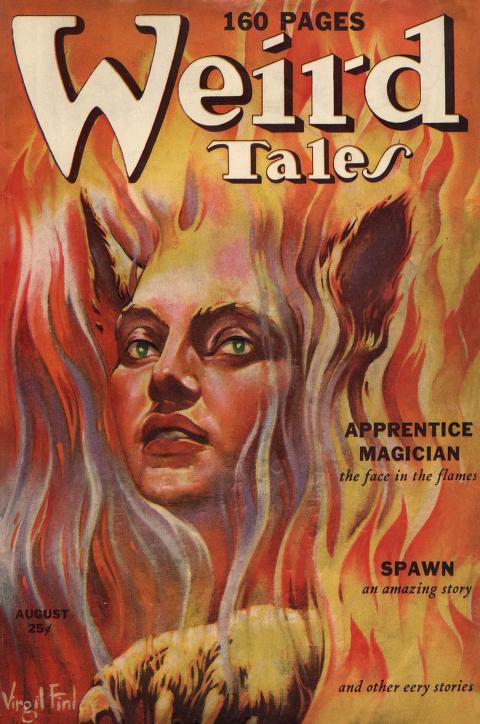

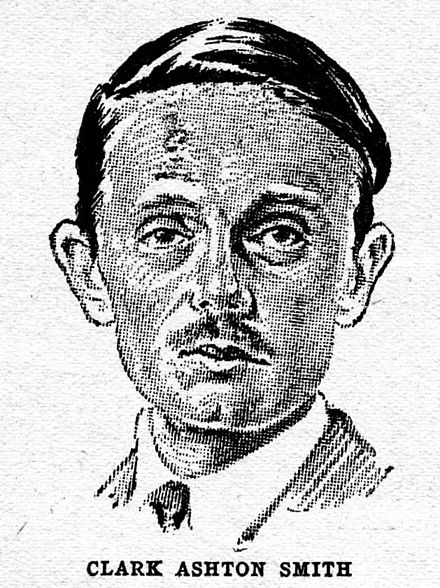


 Science Fiction & Fantasy Remembrance