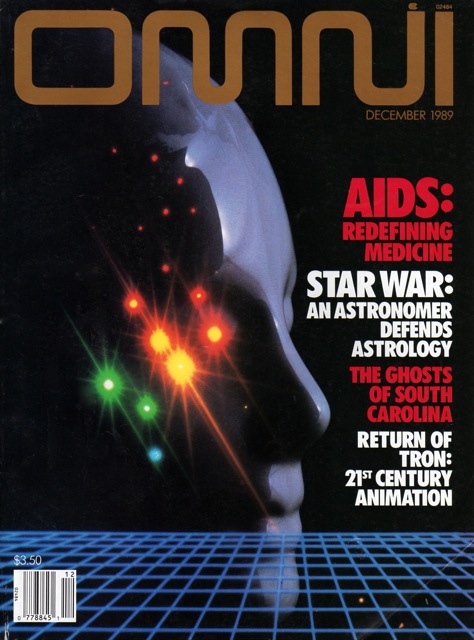
We are now knee-deep in spring, which means last month I narrowly survived a fit of allergies. (I’m not really exaggerating, I got hit with what the doctor called postnasal drip, and for some days it was difficult to even breathe, let alone sleep at night.) In terms of weather this might be my least favorite time of year, because of said allergies. In better news, it’s also time for applying for memberships at the yearly Worldcon, if you’re interested. This one is happening in LA, which is unfortunate because it’s the other side of the country for me and I don’t have any connections who live close enough to where the action’s happening. I have a few friends in California, but as you know, California is a big state. (That’s not even getting into people from outside the US who want to attend in person. It’s rough.) I did end up getting a WSFS membership, I think for the third year in a row. I mainly do this for all the free stuff you get, a very good I would say given it’s only $50. You get ebooks of novels and short fiction, and you even get files for the movies up for Best Dramatic Presentation.
As for what we’ll be reading this month, for the first time in a long while we have a complete novel, which I have to get around to this time. (Unlike last time.) We also have a novel in serialized form, by someone whom I’m sure will not raise any eyebrows. Incidentally, two of the stories here are related to World War II, although one was written on the eve of the war in Europe while the other is an early example of a “Hitler wins” alternate history. Such a scenario is pretty tired today, but it was not so when C. M. Kornbluth came up with it back in the ’50s. Another funny connection is that both Kornbluth and L. Ron Hubbard served in WWII, the former in the army and the latter in the navy. Hubbard’s time in the navy was respectable, and I’m sure nothing untoward or embarrassing happened when he was at sea. Unfortunately for Kornbluth, his time in the army caused a weakness in his heart that would later see him die quite young.
Anyway…
We have one story from the 1940s, two from the 1950s, one from the 1980s, one from the 2000s, and one from the 2020s.
For the serial:
Final Blackout by L. Ron Hubbard. Serialized in Astounding Science Fiction, April to June 1940. Where do we even start with Hubbard? One of the most controversial figures in not just SF but also modern religion and pseudo-science. Hubbard had Dianetics published in 1950, and in 1952 he founded the Church of Scientology, one of the most successful (if only because of the disproportionate number of rich people in its ranks) cults in recorded history. Before all that, he was a fairly respected genre writer, with the late ’30s and early ’40s marking his peak for both quality and quantity. Final Blackout is probably the most well-received of Hubbard’s SF novels, after the much more famous but also more controversial Battlefield Earth.
For the novellas:
“The Giants of the Violet Sea” by Eugenia Triantafyllou. From the September-October 2021 issue of Uncanny Magazine. Born and raised in Greece, and indeed currently living there, Triantafyllou writes her fiction in English. Her personal website says she has “a flair for dark things.” She made her debut in 2017, and so far has only written short fiction. This here novella is the longest work of Triantafyllou’s to have been published up to that point.
“Two Dooms” by C. M. Kornbluth. From the July 1958 issue of Venture Science Fiction. Kornbluth is maybe one of my favorite SF writers to have really flourished during the ’50s magazine boom-and-bust, although he had made his debut long before that. He was a prodigy whose earliest work was published when he was a literal teenager. Unfortunately he also died very young, at just 34, from a weak heart, robbing the field of one of its most incisive writers.
For the short stories:
“The Persecutor’s Tale” by John M. Ford. From the November 1982 issue of Amazing Stories. Speaking of very good writers gone too soon, Ford also made his debut when only in his teens, but he picked up on the trade pretty quickly. A writer’s writer, the best way to read a Ford novel is the read it twice. Sadly he died in 2006, at just 49, having not quite completed his final novel.
“Always” by Karen Joy Fowler. From the April-May 2007 issue of Asimov’s Science Fiction. Nebula winner for Best Short Story. Believe it or not, there’s an L. Ron Hubbard connection here. Fowler is maybe the most high-profile author to have made her debut in the annual (and Scientology-backed) Writers of the Future anthology series, although Fowler herself is not a Scientologist.
For the complete novel:
The Big Jump by Leigh Brackett. From the February 1953 issue of Space Stories. While Brackett’s first few stories were published in Astounding, she soon moved to other magazines that were more open to her brand of space adventure SF. By the end of World War II she’d come to be associated most with Planet Stories, in a mutually beneficial relationship. Indeed, after Edgar Rice Burroughs, Brackett can be considered the leading writer of planetary romance. She married fellow writer Edmond Hamilton in 1946, but they almost never collaborated. Nowadays she’s best known as a successful screenwriter, and for her grounded SF novel The Long Tomorrow, which is quite different from what she most often wrote. The Big Jump is a short novel, apparently published in magazine form unabridged, and later as one half of an Ace Double along with Philip K. Dick’s Solar Lottery.
(Cover by Philippe Halsman. The 28 June, 1952 issue of Collier’s, where Ray Bradbury’s “A Sound of Thunder” first appeared.)
When Robert Heinlein’s “The Green Hills of Earth” appeared in the 8 February, 1947 issue of The Saturday Evening Post, there was cause for celebration. Heinlein had just returned from a four-year hiatus, having spent much of that time helping with the war effort, and when he got back to writing it was as if he had never left. In the years immediately following the war, in which the US immerged as a superpower, there was a burgeoning suburban middle class, and therefore a burgeoning suburban middle-class readership. The Saturday Evening Post was, for much of its existence, a weekly tabloid-format magazine that had already been around for over a century; but by the immediate post-war years it had reached the absolute height of its popularity. By 1948 something like 10% of American adults were reading the Post, which was and still is a ridiculous circulation. The Post was a “slick” magazine, although it didn’t use slick paper; rather it was slick in the sense that it paid well for articles and stories, and the lucky author would enjoy a wide readership. It was a mainstream magazine that occasionally printed genre fiction. When several of Heinlein’s stories appeared in the Post in the late ’40s, corresponding with a book deal he had made with Scribner’s, he knew he had hit the big time.
Heinlein’s experience with gaining mainstream traction was not totally unique to him. There were some other writers of his generation, and even more of the following generation, who started out writing pulp fiction before moving to the slicks. Ray Bradbury, Elmore Leonard, John D. MacDonald, Raymond Chandler, Harlan Ellison, and even Stephen King had their first stories published in pulp magazines. King, in the introduction to his story collection Night Shift, thanks (among others) Robert W. Lowndes, who was editor of the cheap and now-forgotten magazines Magazine of Horror and Startling Mystery Stories. Lowndes had also bought King’s first two stories, when the latter was barely out of his teens. Evidently the apple hasn’t fallen too far from the tree.
Science fiction has infested practically every facet of modern life, so it can be hard to appreciate the fact that it used to be quite a niche interest. We’re constantly being flooded with bestselling novels that are SF, and a disproportionate number of the highest grossing movies ever are SF. For better or worse (it’s easily for the worse) we’re at the mercy of technocrats who grew up reading SF. But going back to the 1940s and ’50s, SF was mostly constrained to magazines with ultimately low circulations, not to mention all the B-movies. Even before that, SF was steeped in the pulp tradition, which is to say being published in pulp magazines. While science fiction as a codified genre became a thing in 1926, with the launch of Amazing Stories, the pulps went back to the tail end of the 19th century, and some fiction from these older pulp magazines even found their way as reprints in Hugo Gernsback’s newfangled “scientifiction” magazine. The pulps started proliferating in the 1900s thanks to a few big publishers, maybe the most famous of them among old SF fans being Street & Smith, who would later print Astounding Stories. By the time Amazing Stories launched, you already had popular pulp magazines that sometimes printed science fiction and fantasy, including Argosy, Adventure, and Blue Book. Most famously there was Weird Tales, which while focused on horror and fantasy also regularly printed SF.
The “pulp” label is easy enough to understand, although it’s not totally consistent. As a rule of thumb, a pulp magazine in the early 20th century had such-and-such dimensions, but more importantly it had to do with the quality of the paper, which was rough and brittle. Sometimes the edges were untrimmed. These magazines were cheaper to buy than their slick counterparts, but correspondingly they also paid less by the word. Also, in terms of class politics and age demographics, it must be said that while the likes of The Saturday Evening Post and Harper’s Weekly appealed to bourgeois readers, adults who while part of the workforce weren’t exactly getting their hands dirty, the pulps appealed more to working-class adults and adolescents. Granted that it’s unwise to generalize a whole era of popular fiction like this, the stories in these magazines tended to be heavy on action and plotting, and with at least a tinge of wish fulfillment. As I said, these stories did not pay well on a word-by-word basis, but if one could crack the code of what a magazine’s editor is looking for, and how to write a reliably solid adventure story, there was some money in it. The luckiest of these pulpsters was Edgar Rice Burroughs, who had taken on writing relatively late in life, already being deep in his thirties and with some odd jobs behind him. In 1912 alone Burroughs cracked the code with such gusto that he basically changed the face of American pulp fiction, with the one-two punch of A Princess of Mars and Tarzan of the Apes, both appearing in the pulp magazine The All-Story (which later merged with Argosy, it’s confusing). Burrough’s literary reputation is up for contention, but the cultural impact he continues to have is hard to deny.
Most of the authors who appeared in these pulps are now totally forgotten, and in fact got tossed into the dust bin of history decades ago. At the same time, some of the most important American writers of the 20th century got their start writing for the pulps, be they SFF magazines or other genres. Black Mask, founded in 1920, was a crime-oriented pulp magazine that would publish works by such future giants of crime fiction as Dashiell Hammett and Raymond Chandler. The best of these authors eventually moved on from the pulps in favor of better-paying markets, such as getting into novel-writing, but the strictness of magazine protocol encouraged discipline over raw imagination. In the introduction for his collection Trouble Is My Business, Chandler recounts his experiences with writing stories for Black Mask and other pulps in the ’30s as follows:
If the formula had been a little less rigid, more of the writing of that time might have survived. Some of us tried pretty hard to break out of the formula, but we usually got caught and sent back. To exceed the limits of a formula without destroying it is the dream of every magazine writer who is not a hopeless hack.
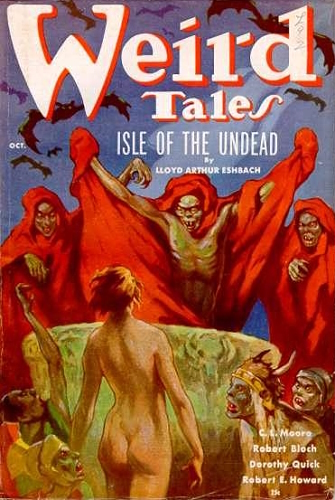
Chandler describes a push-and-pull effect with writing for the pulps that’s by no means unique to crime fiction—in fact it applies to every other genre of magazine fiction, including what appears in the slicks. Editors have their biases, no matter how benign they appear, and there were restrictions regarding censorship in those days that made it so that the language could never be too salty or the sex appeal all that explicit. (The sexiest a fiction magazine could get was Weird Tales, which you have to admit had some pretty erotically charged covers in the ’30s, but even that came with some legal trouble. Pick a random issue of Weird Tales from the year 1935 and juxtapose it with a random issue from 1939 or 1940: you’ll see the difference.) These restrictions encouraged writers to develop formulae that could get their work accepted with more ease, depending on the market. The work itself might not be masterful, but these markets did serve as training grounds for promising writers.
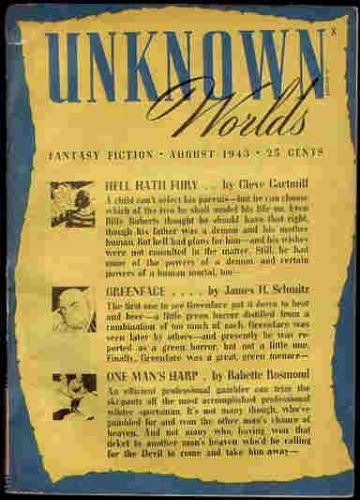
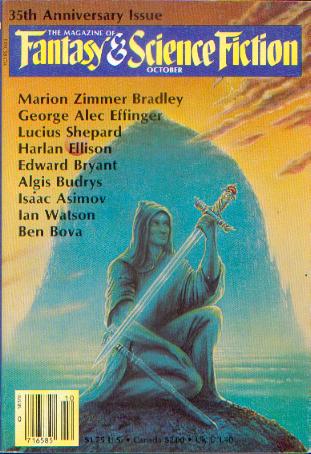
The years between the world wars saw the height of the pulps, but America’s involvement in World War II demanded everyone tighten their figurative belts, including a need for paper. The paper shortage during the war saw the deaths of several pulp magazines, maybe the most lamented of them being Unknown, Astounding‘s fantasy-oriented sister magazine. Astounding itself barely survived the paper shortage, being the only one of Street & Smith’s genre magazines to have made it. Even the ones that did survive, including Weird Tales and Amazing Stories, fell on hard times during and immediately after the war, with the former eventually closing its doors (not for the last time) in 1954. This is not to say good fiction wasn’t being published in these magazines, especially in the case of Weird Tales which continued strong more or less until the end, but these were struggling magazines with small (if also devoted) readerships. By the early ’50s the pulp format was on its way out, with former pulps switching over to digest. It didn’t help that there were newfangled magazines at this time, including Galaxy Science Fiction and The Magazine of Fantasy and Science Fiction, which were printed in digest format from the beginning. These magazines were not quite slick, as they were still aimed at the small world of genre readers; but they had decent quality paper, they paid well enough, and they (namely F&SF) even sometimes reprinted material from the slicks.
(Cover by Clinton Pettee. The All-Story, October 1928. This issue ran Tarzan of the Apes in its entirety.)
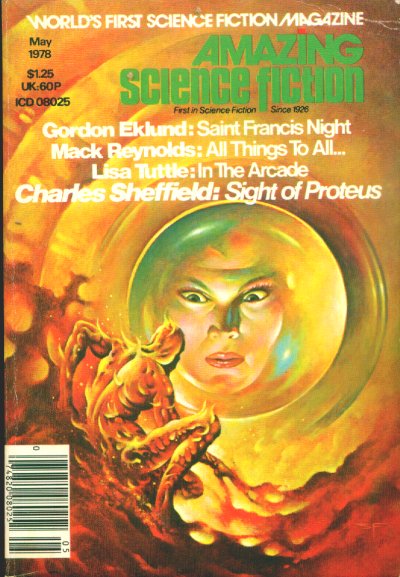
Of course, pulp writing, along with the format associated with it, is dead, and in fact has been dead since before my parents were even born. Analog Science Fiction, formerly Astounding, is now the only genre magazine still standing which had begun its life as a pulp magazine. What little remains of the pulp years has long since found its way into book form, as novels, story collections, anthologies, what have you. The 1950s saw the extinction of the pulp magazine, with the last of these to have stuck with the format, Science Fiction Quarterly, ending with its February 1958 issue. The digest format, a sort of happy medium between the unsophisticated pulps and the decidedly bourgeois slicks, continued. Now, while the pulps were gone, they were by no means forgotten. If you love Star Wars, Indiana Jones, Tarzan, or a good film noir, just know that these things have their roots in the pulps. Hell, H. P. Lovecraft had much of his fiction published in Weird Tales, and indeed that lurid magazine was often the only market that would take his work. Given that the rates were poor, the paper was brittle, and the readership either very young or not too thoroughly educated, pulp fiction left quite a legacy. And within a couple decades there would be a book counterpart to the digest magazines—that is to say, popular fiction in book form that’s sort of pulpy but also sort of slick. There soon came a mode of writing that would embody the best (and worst) qualities of both its parents, and in part is has to do with paperbacks outselling magazines.
The market for genre magazines has evolved radically over the decades, so that the most successful ones running today are online, subsisting on either Patreon subscriptions or simply donations. There’s no debate, however, that the book, and more specifically the paperback, enjoys a far wider readership than any magazine you can name in [the current year]. Go to any bookstore, be it a Barnes & Noble or that indie place you frequent just around the corner, and you will find rows upon rows of paperbacks and hardcovers; meanwhile there may be a couple stalls for magazines, if any, and only a fraction of those will be magazines focusing on fiction. Now, it’s not exactly cheap to buy a paperback novel, unless you have a publisher’s line of paperbacks, like Oxford World’s Classics or Barnes & Noble Classics, that focus on printing “classic literature” at very reasonable prices. But most paperbacks will cost you something. My paperback copy of R. F. Kuang’s Babel (to use an example of a recent novel that a lot of people have read and liked) ran me $20, which feels almost as if Kuang herself (or rather her publisher in this case, HarperCollins) had beaten me over the head with a stick and called me ugly. Kuang is independently wealthy, even if she weren’t a popular writer; surely she (or rather HarperCollins) didn’t need my $20. Still, she writes for a broad audience, as in she writes popular fiction, and evidently she’s doing something right.
You know who else writes popular fiction? George R. R. Martin. One of our most famous living writers, regardless of genre. I’ve covered a few of his short works on this very site, and will do so again eventually. Martin’s A Song of Ice and Fire series is very popular, both in how many people read these books as well as the demographic Martin writes (or wrote) with in mind. But was that always the case? Did you know that the Daenarys chapters of A Game of Thrones first appeared as a novella in an issue of Asimov’s Science Fiction, just a few months before A Game of Thrones found its way to bookstore shelves? If you were one of the relatively few people to have been subscribed to Asimov’s in 1996, you would’ve gotten a sneak peek at what has since become one of the most famous and controversial series in all of fantasy. Asimov’s is a digest magazine with, as I said, a healthy but ultimately modest readership. It’s not pulpy, but you also wouldn’t call it slick or popular. It’s sophisticated, but not that sophisticated. Martin himself has made no secret of being influenced by pulp fiction from the days of yore, namely SF published in Astounding before it became Analog. Indeed Martin’s biggest aspiration as a writer at the outset of his career was to get published in Analog, which he succeeded at. Nowadays people tend to overlook Martin’s pre-ASoIaF SFF, maybe because said fiction was not aimed at a general readership for the most part. I do suggest doing some digging and, for instance, reading the short fiction collected in Martin’s Dreamsongs.
Popular genre fiction takes the broad demographic and image of respectability from the slicks and combines that with the juvenile adventurousness of the pulps. The problem we’re now facing is that with the pulps long gone and the slick magazines not much more relevant, the options you have for reading some good SFF have narrowed. This is made worse by the phasing-out of the mass market paperback, which for a few decades served as like a book equivalent to a pulp magazine issue, in terms of paper quality, garishness, and affordability. The mass market paperback is smaller and cheaper than the trade paperback, but the latter has has finer and more flexible paper, not to mention an air of respectability. You can still find Martin’s old books as mass market paperbacks, but the same can’t be said for Kuang, or indeed other SFF authors of her age or even a generation older. Publishers used to get by on selling mass market paperbacks at $9 a pop, or magazine issues at the same price; but now they want your $20 for a trade paperback edition novel you might already have. Pulp and slick writing have merged, or maybe fallen together into a boiling pot, to create popular fiction, but this Frankenstein monster is itself a victim of capitalist greed. Clearly there’s a big audience for fancy trade paperbacks and even fancier hardcovers, but the problem (and I’m sort of paraphrasing Oscar Wilde here) is that audiences tend to be stupid.
Both Wikipedia and the SF Encyclopedia have little to say about Amelia Reynolds Long. She apparently lived a long but quiet life, born and died in Pennsylvania. She lived her whole adult life in Harrisburg, specifically. She got both her BA and MA from U Penn, and incidentally she earned her MA the same year “Omega” was published. Long was part of that first generation of women to write for the genre magazines, and along with Clare Winger Harris she had her work published under her full name. She wrote short SF somewhat prolifically from the late 1920s through much of the ’30s, but by the ’40s she turned away from SF to focus on writing mystery fiction. ISFDB is very useful for tracking authors’ writings, for the most part, but the folks in charge tend to neglect listing non-genre works, even with there being a non-genre section. Long stopped writing mystery fiction in the early ’50s to focus on writing poetry and editing textbooks. “Omega” is a pulpy but somewhat prescient SF-horror tale, seemingly written in homage to Edgar Allan Poe but with that touch of 1930s super-science that dominated the field until the tail end of the decade. Long challenged herself by telling a story of the last days of mankind without using time travel.
Placing Coordinates
First published in the July 1932 issue of Amazing Stories. It’s been reprinted in Avon Fantasy Reader No. 10 (ed. Donald Wollheim), Amazing Science Fiction Anthology: The Wonder Years 1926-1935 (ed. Martin H. Greenberg), and Beyond Time: Classic Tales of Time Unwound (ed. Mike Ashley). Sorry, it doesn’t seem to be public domain yet.
Enhancing Image
Professor Michael Claybridge is giving us a testimony of a pretty unusual event, that being an experiment in which a man, under hypnotic suggestion, took on the persona of the last man to live on Earth—tens of thousands of years in the future. This was an experiment conducted by a friend and colleague of Claybridge’s, Professor Mortimer, and the subject was a man named Williams. From hereon I’ll be summarizing the plot in the present tense, but we can gather from Claybridge’s tone and choice of words in the beginning that this experiment was successful—maybe too successful. The session is a way to test what Mortimer calls “mental time,” his theory that there are two ways in which we understand time: materially and mentally. More importantly, he argues that the latter is just as legitimate and has as much bearing on human perception as material time. Mortimer had already tested this on a willing subject who claimed to have experienced life in the time of Napoleon, but Claybridge is understandably skeptical about this. It’s one thing to claim to have lived, for a moment in your mind’s eye, in a different country a century ago, but what about the future? What about the end of the world as we know it?
People who know their classic horror should immediately think of Poe’s “The Facts in the Case of M. Valdemar,” which on top of being horror is also arguably an example of proto-SF. Hugo Gernsback certainly thought so, even printing it in the inaugural issue of Amazing Stories. Both “The Facts in the Case of M. Valdemar” and “Omega” are examples of SF having to do with hypnotism, or mesmerism as it’s also called, a topic that doesn’t come up so much nowadays but which can be considered a soft science. Hypnotism tends to be written off these days as pseudo-science rather than soft science, not helped because its most prominent influence on the real world in living memory is its connection with Dianetics and the Church of Scientology. Indeed, what Mortimer’s been testing with “mental time” sounds like a more inoccuous precursor to what L. Ron Hubbard and his followers would be doing just a few decades later. Going back to Poe’s story, that one has to do with the titular Valdemar, an old man, who is put under hypnosis while on his deathbed, with the results being disconcerting, to say the least. Williams, a man who is on the run from the law on account of murder, but who is unable to kill himself despite a guilty conscience since his religion “forbids suicide,” signs up for Mortimer’s experiment.
Mortimer (rightly) suspects the experiment, like in Poe’s story, will go sideways somehow, so he has Williams sign a waver and with a hefty cash reward of $5,000. Where Mortimer got the money from, I’m not sure, especially this supposed to be in 1926 (when the story is set) dollars. You may also be wondering how Claybridge contributes to this experiment: he doesn’t really. Well, on a metatextual level Claybridge is there so that we have a “grounded” and journalistic viewpoint on what sounds like a bunch of quackery. In-story the justification is that despite his better instincts he’s become morbidly curious about what Williams might say while under hypnosis. The scene of the action is a room that’s been cleared out for this purpose, described as follows:
It was windowless, with only a skylight in the ceiling to admit light and air. Aside from the chair in which Williams sat, there was no furniture save an instrument resembling an immense telephone transmitter that a crane arm held about two inches from the hypnotized man’s mouth, and a set of ear phones, such as a telephone operator wears, which were attached to his ears. But strangest of all, the walls, floors, and ceiling of the room were lined with a whitish metal.
Basically we have a white metallic cube with only a skylight for air and light, said skylight figuring into the story’s ending. While under hypnosis Williams is made to recount the last six days (in “Biblical time,” as in Genesis) of life on Earth, from the perspective of man—not any specific man, but sort of the inverse of ancestral memory. In a voice that isn’t his own, Williams gives us the story of the last days of mankind, and a planet that has gone very hot and very wet, before finally the seas dry up and the last lifeforms on Earth wither. For the record, as someone who’s read Genesis a couple days, I’m not really sure what Mortimer means by this way of keeping time. There’s material time and mental time, but then there’s Biblical time. If you’ve read even a few books from the Old Testaments, the unknown authors of these books had some pretty funny ideas about how time works. Anyway, we’re given a tour of life, more than 40,000 years into the future. It’s here that Claybridge as both narrator and character evaporates, to say nothing of Mortimer and Williams, as the story turns away from plot and even character to focus on what I have to think is honest speculation.
There was some dying earth SF prior to “Omega,” albeit not a lot of it. Pretty memorably the hero of H. G. Wells’s The Time Machine travels millions of years into the future in the climax of that novella, to find an Earth that’s become all but inhospitable. There was also William Hope Hodgson’s The Night Land, from 1912, which itself would prove quite influential on science fiction and fantasy about Earth in its twilight years, not least of them being Jack Vance’s own The Dying Earth. Long’s way of getting around having to send her characters forward in time in order to give us a glimpse of Earth in such a state also anticipates John W. Campbell’s “Twilight,” which has been reprinted far more often and is in some ways the less dated story. Campbell’s technique is more fluid and “mature” than Long’s, although it must be said Long’s story doesn’t have the unfortunate bits of anti-black racism that crop up in “Twilight.” This is a nice way of saying “Omega” now reads as stilted and rather basic, although it would not been taken as such in 1932. The dialogue especially can be hard to stomach now, but that part mostly goes out the window once Williams tells his story.
There Be Spoilers Here
Not only does Williams feel psychological agony from the hell of Earth’s distant future, but Mortimer isn’t even able to pull him fully out of his hypnotic state. Much like how poor Valdemar is able to keep talking even after death (sorry for spoilering a story that came out 180 years ago), Williams is unable to break out of this “last man” persona. Things go from bad to worse when on “the sixth day” something totally unexplainable happens: as Williams’s persona dies, the man himself seems to get atomized, with only his charred clothes remaining. The skylight from above killed Williams like how sunlight typically kills a vampire. Well, at least those $5,000 would presumably go to his sister.
A Step Farther Out
By the time “Omega” was published, Amazing Stories was no longer the top dog in the small world of magazine SF. Hell, Astounding was a couple years away still from holding that title. Keeping in mind that we’re reading a story from a magazine that had gone from being a pioneer to second-rate in just a handful of years, “Omega” ain’t half bad. It’s simple, and ultimately isn’t trying to say anything all that meaningful about the future of mankind, but its simplicity and egalitarian attitude are to its credit. I said before that Campbell’s “Twilight” takes a similar premise and executes it perhaps more memorably (readers certainly thought that was the case), but “Omega” doesn’t have that certain awkwardness of Campbell’s story which makes it hard to recommend these days.
(Cover by Frank R. Paul. Amazing Stories, December 1928.)
Who Goes There?
I’ve covered Jack Williamson here a number of times before, in part because he was so prolific and also because his early writing is indicative of the spirit of ’30s and ’40s SF. He made his debut in 1928, with a guest editorial and then a short story, “The Metal Man.” He was only twenty years old at the time, but had taken an interest in writing SF in the mode of A. Merritt as a teenager and was quick to learn the ropes of pulp writing. Williamson would end up having the longest career of any SF writer, at 78 years, having only stopped with his death in 2006. The fact that he appeared in Gernsback’s Amazing Stories and lived through nearly eighty years of the field’s history is really an incredible thing. His Hugo-winning memoir, Wonder’s Child, is a candid record about his childhood, moving from place to place along the southern border of the US (he was actually born in Arizona before it became a state), along with some angst regarding romance and trying to lose his virginity as a young man. He was also candid about his limitations as a writer, namely that no matter how much he worked his craft, he could never develop the refined style needed for more “sophisticated” SF. He simply didn’t have a delicate ear for writing prose.
Said limitations didn’t stop him from staying in the game for decades, pretty much without any kind of hiatus, although his most productive period was in the first dozen or so years of his career. He became the second author to be made an SFWA Grand Master, after Robert Heinlein, and on top of the Hugo he won for Wonder’s Child he won another Hugo as well as a Nebula for his novella “The Ultimate Earth.” Not bad, given he was in his nineties. As for “The Metal Man,” which kicked off this long and acclaimed career, it’s… not very good. Which I guess is understandable, the man was barely out of his teens and this was his first professional sale, in a market that was itself rather new and untested. I can also readily believe Williamson was thinking of Merritt with this, since I’ve read enough Merritt to figure that; but while Merritt impressed a baby-faced Williamson in the 1920s, Merritt now reads as pretty clunky and whimsical.
Placing Coordinates
First published in the December 1928 issue of Amazing Stories. It’s been reprinted more times than should be considered reasonable for a story of middling quality, but I guess it does have some historical significance. “The Metal Man” has appeared in Avon Fantasy Reader #8 (ed. Donald Wollheim), The Best of Amazing (ed. Joseph Ross), The Arbor House Treasury of Science Fiction Masterpieces (ed. Martin H. Greenberg and Robert Silverberg), The Oxford Book of Science Fiction Stories (ed. Tom Shippey), and the Williamson collections The Best of Jack Williamson, The Early Jack Williamson, and The Metal Man and Others.
Enhancing Image
The narrator tells us of a lifelike and life-size statue of a man at the Tyburn College Museum, which despite being in a state of neglect is an object whose very unusual and tragic origin is a sort of open secret. The statue is all that remains of Thomas Kelvin, a widely respected geologist who became obscenely rich off of prospecting for radium, only to have met a slow and yet early demise. He had apparently become sick “of a strange disorder that defied the world’s specialists, and that he was pouring out his millions in the establishment of scholarships and endowments as if he expected to die soon.” Which he did. The man’s body has been encased in metal, and looking at him he seemed to have been in good health, except for a “peculiar mark upon the chest,” a “six-sided blot, of a deep crimson hue, with the surface oddly granular and strange wavering lines radiating from it—lines of a lighter shade of red.” There are disagreements as to how Dr. Kelvin met his fate and became a museum piece, but the narrator claims to have obtained the manuscript of Kelvin’s account of those fatal prospecting days, as his body was shipped in from France. The rest of the story is that manuscript, told straight from the horse’s mouth.
A year prior, Kelvin had hoped to find radium deposits in El Rio de la Sangre, “the River of Blood,” which sure sounds inviting. Now, you may be wondering why the hell a geologist would hope to find radium of all things, since nowadays we know radium to be pretty dangerous and to have only a niche use. You know how in the early 20th century cocaine was used and advertised as a medicinal drug? Similar lines. The effects of radiation on the human body had not yet been studied, a gap in knowledge I suppose Williamson uses to his advantage. Hugo Gernsback’s introductory blurb for “The Metal Man” says the story has “a surprising amount of true science.” No fucking clue what he could possibly mean by this. I guess it’s a surprising amount of true science in that there’s virtually none to be found here. Speaking of things that strain one’s suspension of disbelief, Kelvin is both a wealthy scientist and an aviator, even purchasing a private “monoplane” he pilots himself. He does a scouting run along the river and finds a huge crater, at first appearing to be a lake but actually being a pit of heavy green gas. (Something I couldn’t help but notice is Williamson relying on colors a lot, especially the primary ones, a habit that seems to crop up in his early fiction a fair amount.) Well, in Kelvin goes.
I would like to mention that the pacing of this story is very strange. Kelvin says he only has so much time to write about his adventures, and overall the manuscript is short enough, but it’s also needlessly verbose. This kind of purple (sorry about the color thing) prose is uncharacteristic of Williamson, and it’s no wonder that he would soon abandon it. Merritt wrote in such a style to achieve a certain effect, not unlike Lovecraft (who was, after all, a close contemporary), although it must be said that Merritt was not as deliberate with his word choices. Williamson, having been so young and with not much of a background in literature at this point (he would earn a BA and MA in English much later in his life), didn’t seem to consider both the readability and plausibility of the framed narrative as much as he should’ve. And of course, Kelvin’s need to attribute a color to every goddamn thing is never given any in-story justification.
There Be Spoilers Here
One of the strangest things to happen is Kelvin coming upon an eagle, which had once been living, but having since turned to metal, apparently covered in the same “bluish radiance” as Kelvin and his plane. He then finds other birds, also cast in metal, having fallen victim to the deadly magic of this area by the so-called River of Blood. There’s even a “pterosant,” which is to say an ancient flying reptile. “Its wing spread was fully fifteen feet—it would be a treasure in any museum.” It’s clear that whatever killed these flying creatures will at some point come to collect on Kelvin, but he’s able to delay the inevitable by trying out some awful tasting purple berries. The juice of the berries tastes like ass, but has the helpful ability of counteracting one’s transformation into metal. The solution, unfortunately for Kelvin, is temporary, and the problem is permanent. He’s able to escape this dark little corner of the globe, and to write about it, but he’s a dead man walking.
A Step Farther Out
I’m sort of taken aback by how many times this story has been reprinted and how many editors consider it to be essential Williamson. Is it because it’s his debut? There are major authors with innocuous or even bad debut stories that understandably get thrown in the dust bin of history. Williamson himself thought well enough of it that he went to the trouble of revising it for one of his collections some forty years after the fact. It could be the nominally SF story that’s really an adventure narrative in an exotic location had an appeal for those of Williamson’s generation, and even a generation after that, that’s lost on me now. You can certainly do worse as a twenty-year-old just learning to write sellable pulp, but Gernsback glazing it and history being kind to it is baffling to me.
(Cover by Frank R. Paul. Amazing Stories, April 1926.)
Who Goes There?
When Hugo Gernsback launched Amazing Stories in 1926, the inaugural issue’s contents would be very important. It was, after all, a newfangled magazine with a novel premise, that being the exclusive focus on science fiction, a term that hadn’t even been coined yet. In his editorial for this issue, Gernsback mentions H. G. Wells, Jules Verne, and Edgar Allan Poe as the leading forerunners of what he calls “scientifiction.” These were and still are important names in the history of the field, so Gernsback had made a wise choice by not only mentioning them, but printing fiction by all three in the first issue. A name he doesn’t bring up alongside those three, but who does appear here, is George Allan England. Contrary to what his last name would make you think, England was an American. He had a pretty active life, being a prolific writer, adventurer, and failed politician, having unsuccessfully ran for governor of Maine as a socialist. Incidentally he was close contemporaries with fellow adventurer, pulpster, and socialist Jack London. But whereas London because rich and famous from his writing, England never reached that level of mainstream success, and nowadays you’d be hard-pressed to find someone who has heard of him.
While England was more a novelist than a short-story writer, he did write a few shorts which have been reprinted more than once, “The Thing from—’Outside’” (sometimes reprinted without the em dash and inverted commas) being maybe the most popular. It was first published in 1923, when England was already in the third act of his career, in Science and Invention, of whom one of the editors was (you guessed it) Gernsback. Apparently he thought it was so nice he printed it twice. It counts as science fiction, I guess, but it’s much more a work of cosmic horror, so that honestly it could’ve just as well have appeared in Weird Tales.
Placing Coordinates
First published in Science and Invention in 1923, then in the April 1926 issue of Amazing Stories. It has since been reprinted in Strange Ports of Call (ed. August Derleth), the January 1965 issue of Magazine of Horror, Friendly Aliens: Thirteen Stories of the Fantastic Set in Canada by Foreign Authors (ed. John Robert Colombo), Sense of Wonder: A Century of Science Fiction (ed. Leigh Ronald Grossman), More Voices from the Radium Age (ed. Joshua Glenn), and a few others. Because it’s been in the public domain for a minute, you can find it on Wikisource of all things.
Enhancing Image
Five Americans have gone canoeing in the Canadian wilderness, a trip which has already gone south by the time the story starts, on account of their indigenous guides having abandoned them. Apparently something had spooked them. This is a racist trope I notice pop up in old pulp adventure writing: the native guide leaving the (white) explorers to their fate or dying unexpectedly. As for the Americans, we have Professor Thorburn and his wife; Vivian, Mrs. Thorburn’s younger sister; Jandron, a geologist; and Marr, a journalist. (Bit of a digression here, but how much younger is Vivian supposed to be than her sister? Professor Thorburn is said to be deep in his fifties, and presumably his wife isn’t too much younger than that, but Vivian’s young enough [and attractive enough] to be called a “girl” more than once.) It’s easy to think at first that the professor is the protagonist, but actually it’s Jandron—an observation easy enough to make with hindsight. Not everyone will make it out alive, and nobody (except for Jandron) knows what they’re doing. Things are already looking rough, even without a cosmic entity taking, since they’re already miles away from civilization and this was in the days before cell phones. This is all before the coming of the ice—and while this is Canada, winter isn’t due yet.
We know about burns, from intense heat, but we also know similar damage can be done with intense cold, hence things like frostbite. Jandron, being a very smart person, finds a ring of ice burned into a rock, which (he tells the others) will be there forever. He’s seen something like this before, and for better or worse, he’s also into Charles Fort. For some context, Charles Fort was a journalist who, late in his life, gained unexpected prominence with a few books that are comprised of unusual and dubious “data.” In other words, useless but curious information, a lot (if not all) of it not based in fact. In other words, he spread misinformation for the fun of it, and also to make a point. He didn’t actually believe, for instance, that mankind is secretly the property is an unimaginably advanced lifeform. He inspired a couple generations of SF writers and readers. One of his books, Lo!, was even serialized in Astounding. It’s unclear how much these people took Fort’s throwaway ideas seriously, or if England believed any of it himself, but Jandron seems to be a true believer.
As Jandron explains later in the story:
“[Fort] claims this earth was once a No-Man’s land where all kinds of Things explored and colonized and fought for possession. And he says that now everybody’s warned off, except the Owners. I happen to remember a few sentences of his: ‘In the past, inhabitants of a host of worlds have dropped here, hopped here, wafted here, sailed, flown, motored, walked here; have come singly, have come in enormous numbers; have visited for hunting, trading, mining. They have been unable to stay here, have made colonies here, have been lost here.’”
Bro would be a crazy person in the real world, but luckily for him (or maybe not) his hypothesis that the Thing stalking him and his friends is an invisible being that exists Outside (with a capital O) the universe is correct. Or at the very least it’s never proven incorrect. “The Thing from—’Outside’” is one of the earliest (it might be the very first) works of fiction to deal with Charles Fort’s writing, even mentioning it directly. In a way it reads like a contemporary of H. P. Lovecraft’s work, albeit pulpier, although I’m not sure if England was aware of Lovecraft at this time. He was most certainly aware of Algernon Blackwood at least, and indeed England’s story reads less like Lovecraft and more like a scientific counterpart to Blackwood’s “The Willows,” which itself has a similar premise but takes a mystical approach. “The Willows” is one of the most reprinted and respected weird horror tales of all time, despite the fact that it’s about fifty pages long and not much actually happens in it. “The Thing from—’Outside’” is more eventful; indeed it’s indicative of England’s trade as someone who wrote for the non-genre pulp magazines. There’s action, but also a lack of elegance.
(Modern readers should also take note that while England was a leftist, he was also a white man born in 1877, so his views on women and non-white folks can chafe, even in this story. Of course, being bigoted and also a socialist is something that can be applied to quite a few white leftists in both the 1920s and the 2020s.)
This is not to say “The Thing from—’Outside’” isn’t worth reading; on the contrary, it’s a good deal of fine. There are moments of genuine creepiness sprinkled into what is really a great-outdoors adventure story with some rather high stakes. The wilderness becomes colder and more inhospitable with every passing hour, so that one night the bonfire they’ve set up goes out suddenly, even with the plenty of wood to spare, as if a giant pair of wetted fingers had pinched out the flame. They also notice that less wildlife has been showing up, even down to the bugs, so that the forest becomes lifeless except for the trees, which themselves are losing their leaves. This change in climate is both unnatural and concerning. Even the river Our Heroes™ have been canoeing along has grown ice at the bottom. “It” is like an invisible cat and the humans are a bunch of field mice, although they make the comparison of being like ants more often. There’s a sense of both patience and sadism to the invisible horror, giving it the semblence of a personality despite being totally unseen and unheard. Some spooky shit is definitely going on, and one by one the party of five dwindles.
There Be Spoilers Here
By the time we get to the climax, the professor and his wife have both died. This is unfortunate. Even more unfortunate is that Jandron now has to deal with a stir-crazy Marr, and Vivian, who isn’t in much better shape. What happens to Marr, thanks to “It,” is maybe the creepiest part of the whole story. While he had blocked himself off from the others the Thing from Outside the universe had contorted and deformed his body and mind, so that he became “something like a man,” a “queer, broken, bent over thing; a thing crippled, shrunken and flabby, that whined.” Ultimately he dies before Jandron and Vivian are rescued, which is maybe a good thing for him. The others narrowly survive, and for Vivian the whole episode has been blacked out of her mind. Eventually they get married (right, there’s a romance angle here that I don’t care for), but Vivian “could never understand in the least why, her husband, not very long after marriage, asked her not to wear a wedding-ring or any ring whatever.” Granted, Lovecraft protagonists tend to get off with worse, so this is bittersweet instead of a downer. But while Vivian remains mercifully ignorant of those days in the wilderness, we’re told Jandron will always be so haunted.
A Step Farther Out
It’s not as good as “The Willows,” but then what is? England wasn’t typically a horror writer, but rather an adventure writer who just so happened to write a decent amount of SF—again, a term that did not exist in the 1910s and for much of the ’20s. He also, for reasons I’m unsure about, took a detour into cosmic horror, and did a fine job at it. England would appear in SF magazines from this point on, mostly after his death, and entirely (unless I’m missing something) through reprints. I’ve not read a whole lot of pre-Campbell magazine SF, but I’ve read enough to know you can do worse (so much worse) than “The Thing from—’Outside.’” You can also do much worse if you’re interested in some classic cosmic horror that’s contemporaneous with Lovecraft, but quite different in style.
(Cover by Leo Morey. Amazing Stories, Jaanuary 1934.)
In March 1926, there was a new fiction magazine on newsstands. This in itself was an unexceptional event; after all, there were already quite a few fiction magazines on the market, “the usual fiction magazine, the love story and the sex-appeal type of magazine, the adventure type, and so on.” But this was Amazing Stories, a magazine whose mission statement was to publish a genre of fiction which prior to this didn’t even have a name: science fiction. Sorry, “scientifiction.” The publisher was Experimental Publishing Company, which had already run SF-adjacent magazines, namely Science and Invention and Radio News, and the editor was Hugo Gernsback. Gernsback was born and raised in Luxemburg, but moved to the US as a young man, where he made a name for himself as an inventor, as well as taking major part in the aforementioned magazines. He was also a lousy fiction writer, and even worse when it came to having business sense. What he lacked in those areas, though, he certainly at least tried to compensate with a restless imagination. He was a pioneer in the truest sense, with both the good and bad that come with being on the razor’s edge of innovation. Gernsback ran SF before, but he wanted a whole magazine dedicated to “scientific fiction,” and as he explains in the inaugural editorial: “By ‘scientifiction’ I mean the Jules Verne, H. G. Wells, and Edgar Allan Poe type of story—a charming romance intermingled with scientific fact and prophetic vision.” The standard for science fiction had been set.
There was science fiction prior to Amazing Stories, of course, and a lot of it. Gernsback himself considered the first real master of SF to be Edgar Allan Poe, who despite being known for his horror also wrote quite a few SF stories—the two not being mutually exclusive. (Nowadays people, including those like Brian Aldiss who very much know their stuff, tend to say SF really started with Mary Shelley’s Frankenstein.) Other practitioners of proto-SF include Jack London, William Hope Hodgson, Nathaniel Hawthorne, Ambrose Bierce, and others. Indeed, it’s this wealth of SF published prior to 1926 that would make up the bulk of the material in Amazing Stories for the first few years of its existence. Gernsback especially resorted to reprints of stories and novels by H. G. Wells, who was still alive and well at this point. The business relationship between Gernsback and Wells eventually soured, and unfortunately this was a common occurrence with authors hoping to be published in Amazing Stories. The big problem was that Gernsback seemed to have the money-handling abilities of a gerbil or guinea pig, neglecting to pay his writers for absurdly long periods, even having to be threatened legally to pay up. The money problem got so bad that it’s suspected by some historians that Gernsback declared bankruptcy because he found it preferrable to paying up on his debts. There was an infamous case where H. P. Lovecraft only appeared in Amazing Stories once, with “The Colour Out of Space” (one of his best), on account of Gernsback’s reluctance to pay him, with Lovecraft calling him “Hugo the rat.”
Despite the financial strain, and with Gernsback losing his own magazine only three years after launching it, Amazing Stories somehow persevered. Things looked even rougher when T. O’Conor Sloane, who was managing editor under Gernsback, got kicked upstairs to become editor. Sloane was already in his seventies when he took over, so he was goddamn unspeakably old from the outset. He eventually died in 1940, at the impressive age of 88. If Amazing Stories was shaky in quality under Gernsback, with the original fiction often failing to stand toe-to-toe with the reprints, then the Sloane era made it thoroughly play second-fiddle to newfangled SF magazines, including Astounding Stories and Gernsback’s own Wonder Stories. Within just five years or so the first SF magazine got relegated to publishing second-rate fiction with second-rate paychecks for its writers. E. E. Smith, who had first made his mark in Amazing Stories, eventually jumped ship in favor of Astounding. You also like authors like Jack Williamson, who stayed loyal to Gernsback despite everything. That Amazing Stories made it to the end of the ’30s, and survived well beyond that, is really incredible. It subsisted largely on an audience comprised of young readers and scientist/inventor types. These are very different demographics in some ways, mind you. It continued, under Sloane, as the magazine where science and adventure would (ideally, if not so much in practice) be perfectly balanced.
It wasn’t all bad. In scouting for this month’s selection of short stories to review, I thought the pickings would be slim, but there was still a decent amount of fiction printed in the first ten years or so of this magazine’s life that at least looked intriguing. For instance, how many women would you say wrote for Amazing Stories in those early years? More than you’d think. Gernsback had his shortcomings, but he didn’t seem to have a misogynistic streak worth mentioning, and on occasion he published stories that would be considered positively feminist for the time. So, we have nine stories, the biggest batch of fiction I’ve had to tackle in a bit, all from the 1920s and ’30s. I’m sure some of it will not be very good, and it’s worth mentioning that when reading SF of such vintage it’s important to put yourself in a certain mindset. Still, I think I chose well.
For the short stories:
“The Thing from—’Outside’” by George Allan England. From the April 1926 issue. First published in 1923. Makes sense that we’re starting with a reprint, given the heavy usage of them in early issues. Also, it originally appeared in the Gernsback-edited magazine Science and Invention. England was a prolific pulp adventure writer, real-life adventurer, and failed socialist politician.
“The Fate of the Poseidonia” by Clare Winger Harris. From the June 1927 issue. Harris was, as far as we can tell, the first woman to write for the genre magazines under her own name. She made her debut in Weird Tales in 1926, but more than half of her work went to Amazing Stories. I had meant to review her debut story some months ago, but I struggled to write anything constructive about it.
“The Metal Man” by Jack Williamson. From the December 1928 issue. Williamson might have the single longest career in genre fiction, although Michael Moorcock is getting close. He made his debut in 1928, with this very story, and only stopped with his death in 2006. He always remained pulpy in style to an extent, but he managed to stay relevant for an impressive span of time.
“The Undersea Tube” by L. Taylor Hansen. From the November 1929 issue. Lucile Taylor Hansen was a trained anthropologist whose writing was mostly nonfiction books and articles. She concealed her first name and gender when writing SF early on, likely to separate this side gig (she didn’t write much SF) from her life in academia. She contributed some science articles to Amazing much later.
“The Gostak and the Doshes” by Miles J. Breuer. From the March 1930 issue. Breuer was the son of Czech immigrants, and even wrote for Czech-American publications in Czech rather than English. He was a trained medical doctor, and he spent most of his adult life in Nebraska, working alongside his dad at first. As you can guess, he didn’t write that much SF, on account of his day job.
“Omega” by Amelia Reynolds Long. From the July 1932 issue. Long seemed to have lived her whole life in Pennsylvania, although she would’ve lived on the other end of the state from me. She cut her teeth on writing SF, seemingly using the field as a training ground, but she later moved to detective fiction and poetry. She worked at the William Penn Memorial Museum for 15 years.
“The Lost Language” by David H. Keller. From the January 1934 issue. Of the pre-Campbell SF writers, Keller might be one of the most respected. Like Breuer, he was a trained physician, complete with an MD, and like Breuer he served in the Medical Corps in World War I. He was one of the first American doctors to deal with PTSD in soldiers, which apparently influenced his fiction.
“The Human Pets of Mars” by Leslie F. Stone. From the October 1936 issue. Stone was another pioneer in the field, in that like Harris she published under her real name, although many assumed it was a pseudonym. Her work is shockingly feminist and anti-capitalist for the time. She stopped writing by 1940, having become disillusioned with both the field and the world at large.
“Shifting Seas” by Stanley G. Weinbaum. From the April 1937 issue. For about a year and a half, Weinbaum was arguably the hottest new writer in SF. His untimely death from cancer in December 1935, about 18 months after his debut, means we’ll never know how he might’ve matured as a writer. Ironically he never appeared in Amazing during his life, opting instead for its competitors.
(Cover by H. W. Wesso. Strange Tales, January 1933.)
Who Goes There?
Robert E. Howard’s career lasted only about a dozen years, from 1924 until his death in 1936, but in that time he wrote several volumes’ worth of short fiction, poetry, and a few novels. He wrote for every pulp fiction of just about every sort (except, funnily enough, science fiction, whose market was burgeoning at the time), and for every magazine that would take him. He wrote Westerns, sports stories (he especially loved boxing), non-supernatural adventure fiction, horror, and of course, fantasy. Fantasy writing, prior to Howard, was pretty much invariably rooted in the British tradition, but Howard brought a distinctly American flavor which has been a subspecies of fantasy writing ever since. He is the father of sword-and-sorcery, although he wasn’t strictly the first practitioner, nor did he coin the term. But he created a few series characters who fell into fantasy of this sort, culminating in Conan the Cimmerian, the first great sword-and-sorcery hero. With Conan, his most popular creation, Howard’s legacy was secured; and a good thing too, considering Howard would take his own life at the age of just thirty. Most writers don’t even reach maturity in their craft by that age, and some don’t even start writing until later; so it’s impressive that Howard had said all that he more or less wanted to say by that time, although he had shown interest in shifting away from fantasy and focusing more on writing Westerns. Sadly, the world will never know.
Something I didn’t bring up in my recent editorial on Howard is how his Irish heritage informed his writing, there being no clearer an example of this than with Conan himself. Contrary to what Arnie has made us think, Conan, as written by Howard, is very much a Celtic warrior, rather than Germanic. Howard’s Irish background also plays a big role in today’s story, the standalone horror year “The Cairn on the Headland,” which takes place in none other than Dublin, Ireland. The setting, as well as its use of Irish and Nordic mythology, makes for some of Howard’s most overtly Irish writing. It’s also a fun time, so there’s that.
Placing Coordinates
First published in the January 1933 issue of Strange Tales. As was typical, it wasn’t ever reprinted in Howard’s lifetime, only first reappearing in the 1946 collection Skull-Face and Others. It has also appeared in The Macabre Reader (ed. Donald A. Wollheim), Rivals of Weird Tales (ed. Stefan R. Dziemianowicz, Martin H. Greenberg, and Robert Weinberg), and the Howard collections Wolfshead and The Horror Stories of Robert E. Howard.
Enhancing Image
This is a tad embarrassing, but although you get what the word means just from context in the story, I did feel the need to look up the definition of “cairn” at one point. It’s not a word you see used casually, at least in modern times, and neither is “headland.”
The story itself takes place sometime in the early 20th century, in what would’ve been the Irish Free State. James O’Brien (possibly a shoutout to Irish author Fitz-James O’Brien) is our protagonist and narrator, an Irish American who has come to the land of his ancestors, and unfortunately for him he didn’t come alone. Ortali is a gaping asshole, and is here because O’Brien can’t get rid of him. I’m not joking. In a series of events that maybe shouldn’t be taken at face value, O’Brien got into a feud with a professor, and went to his abode one night with the intent of just threatening the older man. However, the professor had drawn a knife, and in a freak accident fell on it, stabbed right through the heart. This sounds unlikely. Regardless of whether O’Brien is being an unreliable narrator in recounting this story, Ortali, being an assistant to the professor, had witnessed O’Brien just after the fact, and even if O’Brien didn’t commit murder it would be hard to prove otherwise in court. Ortali, being a totally reasonable man, decided to blackmail O’Brien, and the two have been conjoined at the hip ever since. As O’Brien says, “If hate could kill, [Ortali] would have dropped dead.” If only there was a way to be rid of him.
Calling O’Brien a hero would be terribly generous, not because he has thoughts of murdering Ortali for much of the story, but in fairness Ortali (at least from O’Brien’s perspective) is shown to be worse. Scheming, selfish, condescending, and maybe worst of all, disrespectful toward Irish history. He writes off O’Brien’s interest in Irish mythology as silly superstition, but you can guess who gets the last laugh there. O’Brien spends a good portion of the story’s opening stretch explaining the lore behind Grimmin’s Cairn, a monument on the outskirts of Dublin which serves as a sign of the fallen, in the last battle between the Celts and the Vikings. In 1014 CE, King Brian and his troops drove off the Vikings for the last time, making sure the Vikings didn’t take Ireland. Literally it was a battle between an indigenous people and an imperial force, but it was religiously a decisive blow, between “the White Christ” and Nordic paganism. Nowadays certain white supremacists and fascists cling to the Nordic pantheon symbolically, but Christianity was here to stay. The strange thing about the cairn, O’Brien claims, is that it surely was not made to commemorate the soldiers fallen in battle, being a single mound and, as he says, “too symmetrically built.” It was made for something (or someone) else.
Something I really dislike about the magazine version of “The Cairn on the Headland” is that the both the illustrations and introductory quotation give away all the major spoilers, so that frankly it’s hard to be surprised by the story’s climax. There’s a strange old woman by the name of Meve MacDonnal whom O’Brien meets, their meeting itself being a bit uncanny, because Meve’s accent is a strange one. If you’ve read this in Strange Tales you could already infer, however, that Meve is a ghost, having been dead some three centuries, a reveal that’s not made in-story until later. Still, the two bond over their shared heritage, with Meve even saying O’Brien was her maiden name. Meve also gives O’Brien a special cross, a relic he assumed to be kept away somewhere, in secret. Only one of it’s kind in the world. She says he’ll be needing it. What a nice lady, never mind the whole being-dead part. Of course it’s only later that O’Brien finds Meve’s grave and understands that either he’s nuttier than squirrel shit (a possibility) or he’s dealing with the supernatural.
Whilst ostensibly a spooky story, “The Cairn on the Headland” is less effective as horror than as a classic ghost story in an exotic locale. There’s an undercurrent of tragedy, given that despite it being his ancestral homeland, Howard never lived to visit Ireland. Lacking first-hand experience of the landscape, he resorted to the imagination, of which this story is very much a byproduct. Dublin here is not the Dublin of James Joyce, but a dreamland, where a plot epiphany quite literally comes to O’Brien in a dream, and which he decides to take at face value. Even in the real world we have this funny habit of reading our dreams as sometimes being premonitions, or warnings, so O’Brien’s behavior, while a bit contrived, is not that unusual. It also helps O’Brien is narrating, from his somewhat deranged point of view, so that it’s easier to buy into the weird shit.
There Be Spoilers Here
In this kind of story it’s customary to have a character who fucks around and finds out, which in this case is not O’Brien, but the even more unlikable Ortali. Thanks to a prophetic dream and some knowledge of Nordic mythology, O’Brien concludes that the cairn is not a monument to any Irish or Nordic soldier, but to Odin himself. The one-eyed. The Gray Man. Grimmin’s Cairn turns out to be a bastardization of Gray Man’s Cairn, after centuries of neglect, a fallen god stuck in a land where nobody believes in him. The Norse gods may be gone, but they’re by no means dead. The problem is that, as tend to be the case with the heads of pantheons, Odin is a major-league asshole—a lesson Ortali learns too late, after having torn the cairn asunder in the dead of night.
It’s maybe convenient for O’Brien, already a fugitive for one unlikely death, that the awakened and grumpy Odin smites Ortali with lightning. I mean what’re the odds of such a thing happening, right? Even more conveniently for O’Brien, the ghost lady had given him that cross, and for some reason, like a vampire, Odin is allergic to crosses. I know the reason, of course, it has to do with Norse religion having been overrun and finally replaced by Christianity. This is funny coming from Howard, who was not really a religious person at all, but I get it has more to do with Christianity’s (more specifically Catholicism’s) centuries-long shared history with Ireland than with a belief in “the White Christ.”
A Step Farther Out
Howard was not the most original of horror writers; like a lot of us he learned his craft by way of mimicry. “The Cairn on the Headland” is not a very original story, in that even if you didn’t have the ending spoiled for you in advance you can easily anticipate the outcome. It has a certain vibe about it, though, like a good-but-not-great M. R. James story. The atmosphere is the key to enjoying it.
(Robert E. Howard in 1936. One of the last photos taken of him.)
(As you can guess, this post has to do with mental illness and suicide. My main source for this is Mark Finn’s Blood & Thunder: The Life & Art of Robert E. Howard, which even with its faults in mind [namely some sloppy editing] is a reliable summary of Howard”s life.)
I consider myself something of a Robert E. Howard fan, and yet I’ve not even come close to reading all of his work. Given that he committed suicide at just thirty years old, Howard had written an intimidatingly large amount over a career that only spanned about a dozen years, between a few novels, dozens of short stories and novellas, and quite a bit of poetry. He was born on January 22, 1906, 120 years ago, and died on June 11, 1936. He was a Texan born and raised; yet despite adhering to the rough-and-tumble ways of his state to an extent, he knew from an early age that he wanted to be a writer. While he had an intellectual curiosity, Howard also knew from an early age that he wanted to write pulp fiction, rather than “real” literature. This was during the age of the original pulp magazines, called so because they were printed on cheap paper, sometimes with untrimmed edges. The world of pulp fiction in the 1920s and ’30s was pretty broad, believe it or not, ranging from general adventure fiction to Westerns, detective fiction, science fiction, sports stories, and fantasy. When he was in his teens, Howard tried desperately to write pulp of professional quality, aiming to be published in Adventure, one of the biggest pulp magazines of the time. But he never appeared in Adventure. Instead his first professional sale went to the newfangled Weird Tales in 1924, where Howard would stay as a regular (on top of selling to other magazines) until his death. Just twelve years as a professional, but it was enough.
Howard’s early death and the circumstances of his suicide have haunted the world of fantasy for nearly a century—a haunting made more eerie because for decades we didn’t have much more than hearsay as to what the man himself was like. Howard never lived to give any interviews, and while we now have a number of letters, his character and reputation rested on the words of those who knew him, and in some cases, those who didn’t. Dark Valley Destiny: The Life of Robert E. Howard, by L. Sprague de Camp, Catherine de Camp, and Jane Whittington Griffin, was the first book-length biography of Howard, and it was only published in 1983. L. Sprague de Camp had already written on Howard and was, along with Lin Carter, responsible for public perception of Howard’s work (for both good and ill) starting in the ’50s. De Camp didn’t know Howard personally; they would’ve been contemporaries, had Howard not died when he did. There wouldn’t be another book-length biography of Howard until the 2000s, hence Mark Finn’s book. There is, of course, a saying attributed to Oscar Wilde that there is no such thing as history, only biography. Another way of looking at it is that there’s no such thing as history, only the interpretation of history. There are some basic facts, but what to do with these facts, not to mention the messy details (or, as happens more often than not, the lack of details), is really up to the biographer. Howard’s fate, on top of being tragic no matter how you look at it, has presented a problem for those wanting to know about him for decades, and (to paraphrase William S. Burroughs) there’s no secret Howard himself can tell us.
What’s the story everyone knows? Hester, Howard’s mother, was ill for many years, and in June 1936 she slipped into a coma from which she would never awaken. Howard and his father Isaac knew that this was it. Howard didn’t exactly have an easy relationship with Isaac, what with their arguments and Isaac holding Howard’s choice of profession against him, but his relationship with Hester has long been the subject of controversy. It doesn’t help that like Socrates and Jesus of Narzareth, we don’t really have anything from Hester’s own perspective on the matter—only how others viewed her. While Finn tries to be even-handed in his assessment of Howard as a person (Finn clearly being a fan of Howard’s work), his assessment of Hester is decidedly unflattering. Finn frames Hester as being chronically manipulative, lying to her son on a regular basis throughout his life, as well as trying to push him away from Novalyne Price, the only woman Howard ever loved romantically. (Howard’s relationship with Novalyne is its own can of worms, so we’ll get to that later.)
There are several famous authors who were momma’s boys to varying degrees of unhealthiness, from Marcel Proust to D. H. Lawrence, with Howard being among them. This much is not up for debate. It’s also quite unambiguous, because he admitted as such to more than one person, that Howard planned to not outlive Hester. For her part, Hester’s days were always numbered, a fact she seemingly used as a manipulation tactic. That Howard actually went through with his plan came as a shock to his friends and Novalyne, since even the few who did know about such a plan didn’t believe it was something Howard was that serious about.
Still.
On June 11, the day after he drank coffee for the first (and last) time in his life, Howard went out to his car, pulled out a .380 revolver he had borrowed, and shot himself through the temple. Isaac and others heard the shot and brought Howard into the house, and rather miraculously he lived for another eight hours before dying.
Hester died the next day. Within a span of 24 hours, Isaac witnessed the deaths of both his wife and his son.
Robert E. Howard never married, and he didn’t leave behind any heirs. He did write up a will weeks before his death, which I don’t think is something the average 30-year-old does. The thing about Howard is that, as often (but not always) happens with suicides, he deliberated on ending his life for quite some time before the end. There are about as many reasons for why someone might commit suicide as there are stars in the sky, which I’ve noticed is something people who’ve never grappled with depression or suicidal ideation struggle to understand.
Finn interprets Howard’s suicide as perhaps an inevitability, a foregone conclusion neither Howard nor anyone close to him was equipped to prevent. This might well be true. It’s tempting, especially given how young the man was, to imagine an alternate timeline wherein Howard was able to live even ten or twenty more years—the problem being that there’s no clear path for this alternate ending. There is no simple or singular “if only” scenario in which Howard could’ve spared himself. Some suicides are preventable, but others, even with the gift of hindsight, are not so straightforward. As I said before, a lot of suicides (especially, it must be said, the famous cases) plan their own deaths well in advance, either with utmost secrecy or hidden in plain sight. When Kurt Cobain killed himself, it was in fact not the first time he had attempted suicide, and those close to him knew just how volatile his mental state had been. Ian Curtis of the band Joy Division wrote tracks for the band’s final album which amounted to death poems, with said album releasing after Curtis’s suicide. Ernest Hemingway admitted to his wife, many years before his death, that he would probably commit suicide like his father did.
So it was.
Let’s rewind the film a bit, and by “a bit” I mean a few years. Howard and Novalyne had met in 1933, through a mutual friend, with Novalyne knowing Howard by reputation prior to having met him. She knew Howard as a writer and an eccentric, who while having various pen pals was more standoffish with local people. The good news was that Novalyne was bookish herself, and she had enough willpower to not only hit up Howard, but to get past his conniving mother. The two started dating in 1934, and their relationship lasted about a year, with its ups and downs. The tragedy of their romance was twofold, in that Howard’s neurosis worked to sabotage it, but also that even if they had stayed together, it’s unlikely that Novalyne could’ve prevented Howard’s suicide.
This is not to say nothing good came of their relationship; on the contrary, Novayline inspired some of Howard’s strongest material when it came to writing women. As Finn puts it:
It’s easy to see how Robert could have been attracted to Novalyne. Certainly, she was prettyand intelligent, but her spirit was vital and alive, and not unlike some of Robert’s stronger female characters. Just prior to their first meeting in 1933, Robert sold ‘The Shadow of the Vulture’ in late March, a story that was written in late 1932. It’s tempting to insinuate that Red Sonya was inspired by Novalyne, but it’s more probable that if any character was a response to Robert’s new, outspoken girlfriend, that character was Agnes de Chastillon, the Sword Woman.
Another clear example of Novalyne’s influence was Valeria of the Red Brotherhood, Conan’s strong-willed companion in the novella Red Nails. There’s also the pirate queen Bêlit, in “Queen of the Black Coast,” one of the most beloved Conan stories, who takes on the burly Cimmerian as her lover. It is indeed the one time Conan falls genuinely in love throughout the series, at least as written by Howard.
Conan the Cimmerian is one of the most famous characters in fantasy, and one of the few characters in literature to emerge from the 20th century and garner a permanent legacy. Everybody “knows” who Conan is, even if it’s more often through movies and artwork than through Howard’s writing. You could Conan as a pop culture figure is a mixed child birthed from Robert E. Howard, Frank Frazetta, and Arnold Schwarzenegger. In just four years Howard wrote more than a dozen Conan stories, including a full novel, and that’s not even taking into account the stories published after Howard’s death. Howard had started several series character, including the undead-fighting Puritan Solomon Kane and the proto-Conan figure Bran Mak Morn; but Conan was Howard’s ultimate hero, and soon came to be easily his most popular character ever.
The success of Conan also came to be a thorn in Howard’s side, though, in that he at times grew tired of the character, a fatigue he admitted in letters to friends. Even if we didn’t have those letters, however, it’d be easy enough to infer that sometimes Howard went to Conan simply for the paycheck, since some Conan stories are easily worse than others. I don’t see anyone claim “The Pool of the Black One” or “The Devil in Iron” as their favorite Conan story. The lesser Conan stories are formulaic and not very exciting, frankly. Howard’s growing weariness with his star hero also correlated with the series becoming progressively grimmer, bordering on outright nihilistic. While awesome violence was always a part of the series, and indeed Howard’s fiction more often than not, the tone of latter-day Conan stories was more pessimistic than earlier entries. By the time we get to Beyond the Black River, serialized in 1935, we have one of the most downbeat endings to any pulp story published at the time.
It maybe shouldn’t be surprising, then, that Howard decided to lay Conan to rest as early as 1935. Red Nails was the final Conan story Howard wrote, and its serialization in Weird Tales happened around the same time as Howard’s death. It’s possible that had Howard lived long enough he might’ve eventually returned to Conan, like Arthur Conan Doyle did with Sherlock Holmes, but the truth is that Howard had become disillusioned with the character who had brought him the most attention. He had become interested in writing Westerns, and he might’ve been the first author to have consciously mixed the Western with weird fiction, most notably with the 1932 story “The Horror from the Mound.” This, along with the rare non-supernatural fiction he wrote, spoke more directly of the landscape he knew: that of Texas in the early 20th century.
It’s hard to say what Howard would’ve written had he lived longer, but he seemed convinced, by the end of it, that he could not write anymore. In the last months of his life, after he and Novalyne had broken up, he had made up his mind to kill himself. Novelyne, who had not heard from Howard for some time, had gotten word of his death on June 15, four days after the fact. She had witnessed his declining mental health, including the uncharacteristic growing of a mustache which didn’t suit him, but didn’t act. She recalled things Howard said to no one in particular, repeatedly, like lines in a poem. As Finn writes: “Robert frequently talked of being in his ‘sere and yellow leaf,’ and the phrase always stuck in Novalyne’s craw, for she could never remember where she’d heard it before.” She did some digging and found the line to be from the final act of Macbeth.
The full line is as follows:
I have liv’d long enough: my way of life Is fall’n into the sere, the yellow leaf; And that which should accompany old age, As honour, love, obedience, troops of friends, I must not look to have; but, in their stead, Curses, not loud but deep, mouth-honour, breath, Which the poor heart would fain deny, and dare not.
When it comes to bystanders in the wake of a suicide, there tends to be the creeping feeling that a) something could’ve been done, and b) there were warning signs. Howard didn’t exactly try to keep his plan to commit suicide a seqret, and yet nobody close to him was prepared to take extreme measures. I’m not sure if I agree with Finn’s opinion that nothing could’ve been done to avert Howard’s suicide, that his death was inevitable and unpreventable, if still tragic. It’s certainly tragic in that we see someone who was quite talented, and who in his own way had a strong personality; yet this very personality, with such a dim outlook on life, seemed to have doomed him. At the end of his relationsip with Novalyne, Howard lamented that he sometimes wanted to and yet could not be a “normal” man. He couldn’t smoke cigarettes with the lads by the railroad tracks or go to church on Sundays, or work a normal job. If he did those things he would perhaps no longer be Robert E. Howard, the creator of Conan and Solomon Kane. He hated the idea of working a normal job, he was ambivalent about Christianity, and he was maybe too devoted to his mother.
For better or worse, only someone like Howard, that man who spent his final days profoundly unhappy, probably believing himself to be a failure, could’ve forever changed fantasy writing the way he did. Which might be the ultimate tragedy of the whole thing.
(Cover by Frank R. Paul. Amazing Stories, February 1927.)
Since it’s now the new year for everyone, it’s only natural that we have some new things to look forward to or new things to do. I have a few New Year’s resolutions myself: some movies on my watchlist, quite a few video games I hope to get around to playing. I have hundreds of games in my backlog and even more books to be read in my personal library. I have multiple hobbies, which is something I would recommend to everyone. Unfortunately another thing on my to-do list for 2026 is to either get a second job or to try my hand at writing professionally, which would take time away from this hobbies, including this here blog.
Truth be told, I’ve been winding down productivity here for a minute, so this shouldn’t come as a surprise. I’m seemingly incapable of uploading posts “on time” (but of course who’s keeping time except for myself), and I’ve been missing one or even two reviews every month for the past several months. I wouldn’t be too worried, for the few of you who read this, since I’m not gonna be shutting down this site—just lowering my productivity. Granted, for the first couple years I ran this site I was writing at a feverish pace; in hindsight I’ve not really sure how I did that while also having a day job. In 2023 and 2024 I wrote over 200,000 words a year, according to the stats, which is a lot for one person. There was less wordage for 2025, and now for 2026 you can expect fewer posts as well. But this is like being on a flight and going from 20,000 feet to 10,000 feet.
Now, as you may know, Amazing Stories turns 100 this year. It was revived (again) not too long ago as basically a fanzine, but I would like to celebrate Amazing Stories as a professional magazine, which still means going through material that spans seven decades or so. It’s a lot, not helped by the fact that it has a pretty messy history as far as changes in editorship and publisher go. Except for maybe the beginning of its life it always played second fiddle to competing magazines, but it survived (sometimes even thrived) for an impressive stretch of time, given the circumstances. So, every month (except for March, July, and October, where you can expect short-story marathons) I’ll be covering a serial, novella, or short story from the pages of Amazing Stories. This should be interesting.
With the exception of the aforementioned months we’ll be doing only one serial, one novella, and one short story every month from now on, plus at least one editorial. Anyway, we have one story from the 1900s, one from the 1930s, and one from the 1950s.
For the serial:
The First Men in the Moon by H. G. Wells. Serialized in Amazing Stories, December 1926 to February 1927. First published in 1901. Feel like it would be criminal to pay tribute to Amazing Stories without bringing up Wells at least once, possibly even twice, since he was heavily associated with the magazine in its first few years. Wells himself is arguably the most important SF writer to have ever lived, with his influence being felt to this day practically everywhere you look. Any given SFnal premise likely has its roots in something Wells did over a century ago. This is even more impressive when you consider that Wells at the height of his powers lasted only half a dozen years or so. The First Men in the Moon is one of the last of his classic novels.
For the novella:
“The Gulf Between” by Tom Godwin. From the October 1953 issue of Astounding Science Fiction. Godwin became somewhat famous in SF circles for exactly one story, “The Cold Equations,” which he wrote pretty much in collaboration in John W. Campbell. It might surprise some people that Godwin had in fact written other stuff, and I admit I’m part of the problem because I don’t think I’ve read any Godwin aside from “The Cold Equations.” But I’m gonna fix that. “The Gulf Between” was Godwin’s first story, and it’s notable, if for no other reason than that the cover it inspired would later be reworked as the iconic cover for a certain Queen album.
For the short story:
“The Cairn on the Headland” by Robert E. Howard. From the January 1933 issue of Strange Tales. Over the course of about a dozen years, Howard wrote nonstop for every outlet that would accept his work, and he was not just a fantasy writer, also writing horror, Westerns, sports stories, and non-supernatural adventure pulp. He wrote everything except for SF, which he didn’t seem to have an interest in. Conan the Cimmerian occupied much of Howard’s later years, to the point where he began to resent his creation, but this didn’t stop him from doing standalone yarns like this one.
Carol Emshwiller was one of the most acclaimed short-story writers of her generation, made more impressive because she kept doing good work for about half a century, longer than most authors’ careers. She started in the ’50s, at the tail end of the magazine boom, and kept writing, albeit mostly in the realm of short fiction and never too prolifically, until her death in 2019. She likely would’ve still become a favorite of readers from across a few generations even had she not been married to Ed Emshwiller, but that certainly helped, with Ed even illustrating some of her stories. It was one of those rare marriages where you had two very talented artists, and whose works even sometimes fed into each other. Emshwiller (Carol, that is) was also not an SF doctrinaire, but someone who was open to experimenting with genre boundaries from pretty early in her career, so it makes sense that she was one of the few women to appear in Dangerous Visions. Today’s story is itself very much outside the boundaries of SF, although I hesitate to call it horror as well, even though that’s what it is marketed as. “I Live with You” is a short and simple story that doesn’t easily fall into any genre; if it’s horror then it’s by virtue of the uncanny nature of the relationship between the two women at its center. This is a story that’s meant to be taken allegorically, rather than literally.
Placing Coordinates
First published in the March 2005 issue of The Magazine of Fantasy and Science Fiction. It’s been reprinted in The Mammoth Book of Best New Horror 17 (ed. Stephen Jones) and the Emshwiller collections I Live with You and The Collected Stories of Carol Emshwiller Vol. 2.
Enhancing Image
The narrator is a ghost, maybe, or perhaps just unhoused lady who has somehow been living off of table scraps, in a book store for a while and in a department store before that. She’s been hiding for who knows how long, but nobody has caught her yet, and as she says, “I never steal.” At least this was the case before she started hiding in Nora’s house. The narrator looks enough like Nora to be her doppelganger, but the two don’t seem to be related. The only other company at this house is the cat, which Nora doesn’t get along with very well, although the little beast takes much more of a liking to the doppelganger. She spends her time in the attic, when Nora is home, but otherwise she has the whole house to herself. It takes weeks for Nora to figure that someone might be intruding, and even then she doesn’t call the cops, but instead has a deadbolt installed for her bedroom door. Nora is so out of it, so passive in her day-to-day life, that she doesn’t even notice when her doppelganger is just one room over from her. The narrator, partly out of pity for Nora and partly as a means of entertainment for herself, figures it’s time for Nora to get herself a man—or rather for the narrator to get one for her. The more pitiable the better. In stories in which a “normal” person meets their doppelganger, the latter is typically more adventurous or mischievous, if not outright evil, and the same holds true here. The disparity is such, in fact, that Nora comes off as the uncanny one in the pair, rather than the narrator, on account of how empty she is as a person. The narrator schemes to bring a man to Nora’s home because she’s frustrated with how dull Nora is. As the narrator says:
At the book store and grocery store at least things happened all day long. You keep watching the same TV programs. You go off to work. You make enough money (I see the bank statements), but what do you do with it? I want to change your life into something worth watching.
There’s the question, firstly, of why the narrator continues to live with Nora if she finds her so boring, and it’s a question she doesn’t answer in any straightforward fashion. There’s also the question (also never quite answered) of what the narrator is supposed to be and why she’s a dead ringer for Nora. There’s something supernatural going on, maybe, but Emshwiller doesn’t care to give us answers to these questions, if for no other reason than that an explanation might distract from the unusual dynamic between the women. As a rule of thumb, good horror (and “I Live with You” is ostensibly horror) should abstain from explaining or rationalizing the horrors of its world. Certainly from Nora’s perspective this ordeal would count as horror, as it uneases her enough to get deadbolts for her bedroom door—for the inside and then, rather irrationally, for the outside. The real question is, who is really the woman living in the attic? Literally it’s the narrator, but she’s so comfortable living in Nora’s house that it’s Nora who comes off as the one living here as an outsider. The narrator comes and goes as she pleases, taking bits and pieces of Nora’s stuff, although it’s always stuff Nora was unlikely to appreciate in the first place.
Things get more interesting once the two women finally meet face to face, and of course it’s by accident. This is in the midst of the narrator’s scheming to have a guy with a gimp leg, named Willard. It’s possibly the most memorable passage in the whole story, if only because of how neatly it illustrates the contrast between the women. As the narrator says, “I’m wearing your green sweater and your black slacks. We look at each other, my brown eyes to your brown eyes. Only difference is, your hair is pushed back and mine hangs down over my forehead.” Worth mentioning that while “I Live with You” is technically a first-person narrative, the doppelganger refers to “you” as if you were Nora, or rather as if she were talking directly to Nora. The reader is meant to be in the place in this plain, unassuming, seemingly empty-headed woman. In a way it makes sense, because who else could she be talking to? If it has to be told in the first person, then making it border on second-person like this makes sense enough. It also adds a touch of creepiness, since the doppelganger, this unnatural person, is talking directly to us, although she means no harm.
There Be Spoilers Here
The threeway(?) doesn’t exactly go well. Willard comes over under the impression that the woman who wrote him the letter was Nora and not the narrator, a confusion compounded because of the ladies’ identical looks. Nora seems to be taken in, though, after some initial fumbling (quite literally at one point, as the narrator trips her on purpose), and it seems like the two might at least be hitting off for a one-night stand. It’s implied that the narrator is here to watch, except that when things do get steamy she’s disappointed by the lack of spectacle. (Given that Emshwiller would’ve just turned eighty, I’m a bit surprised that sex plays as big a factor in this story as it does.) Nora fumbles for the last time, though, and Willard leaves. The narrator also decides to leave at this time, having left Nora traumatized but also a more mature woman than before. I’m actually not sure how old the two women are supposed to be, certainly old enough that Nora has a house and a job; but despite her assumed age, Nora’s implied to possess a certain innocence which by the end of the story has been taken and replaced with something. Maybe something better, who’s to say? Even for full-grown adults there are events in our lives in which we feel like we’ve been compelled, or maybe pushed or shoved violently, into being one step closer to enlightenment. As with the stories of Theodore Sturgeon and Robert Aickman, whom Emshwiller may have been thinking of, the crossing of the shadow-line is framed as traumatic.
A Step Farther Out
“I Live with You” won the Nebula for Best Short Story that year, which is curious, for one because it’s pretty unassuming, but also this was in the sixth decade of Emshwiller’s career. The fact that she had won her first Nebula just a few years earlier is in itself unusual; authors typically don’t write work this solid this deep into their careers. I unfortunately can’t say I agree with the Nebula win for “I Live with You,” but it is a tightly knit and moody story with a feminist bent. It’s hard to write about something that’s both this self-contained and which more or less already speaks for itself, so the only thing I can really do is recommend you read some Emshwiller, especially since her career coincides with much of genre SF’s history, from the pre-New Wave years into the 21st century.