There’s something about October that brings a change in me. It could be that autumn has now unambiguously started, as opposed to just going by the autumnal equinox. The weather is now colder and dryer. My hands and nose are getting dry, the latter occasionally resulting in a nosebleed. I now feel like I can put on a hoodie and jog around the city. The trees will start being stripped of their leaves. Overall it’s a time of changes, mostly for the better. October is also the month of Halloween, which is far and away my favorite holiday, to the point where it might the only one I really get festive about. Now is the time for watching horror movies, from the classices to some grade-A schlock. Time to catch up on some horror reads I’ve accumulated on my shelf. Time for pumpkin spice lattes, if you’re into that. In other words, this is for me what Christmastime is for some people—mind you that I tend to get depressed around Christmas.
For this month we’re back to reviews at regular intervals, all short stories, all featuring thrills, chills, and assorted horrors. For the first time in a while I’m actually excited with what I’m gonna be writing about. Hopefully you’ll be joining me in reading at least a few of these.
We have one story from the 1940s, three from the ’50s, three from the ’80s, one from the ’90s, and one from the 2020s.
For the short stories:
“The Hungry House” by Robert Bloch. From the April 1951 issue of Imagination. Bloch was correspondents with H. P. Lovecraft when the former was still in high school, and this friendship had an apparent influence on Bloch’s early fiction. While he’s most famous for writing Psycho, which is non-supernatural horror, most of Bloch’s work involves ghouls, cosmic horrors, and whatnot.
“Rabbit Test” by Samantha Mills. From the November-December 2022 issue of Uncanny Magazine. Winner of the Hugo, Nebula, and Theodore Sturgeon Memorial Award, being only the third story ever to win all three. Mills debuted in 2016, with her debut novel published in 2024. “Rabbit Test” was the last of a streak of short stories, as Mills stopped writing short fiction for three years.
“Punishment Without Crime” by Ray Bradbury. From the March 1950 issue of Other Worlds Science Fiction. Being one of the most famous American authors ever, it can be easy to forget that Bradbury started writing for the genre magazines, not all of them being of the first rate. He also wrote so much horror early in his career that only a fraction of it appeared in The October Country.
“Lost Memory” by Peter Phillips. From the May 1952 issue of Galaxy Science Fiction. I had ever heard of Peter Phillips before, which might be because he was only active for a short time, from about 1948 to 1958. He stopped writing SF for reasons I’m not sure of. He was also British, at a time when there weren’t too many active in the field, even appearing in the inaugural issue of New Worlds.
“Yellowjacket Summer” by Robert McCammon. From the October 1986 issue of Twilight Zone Magazine. McCammon made his debut in 1978, but it took him a bit to come to the forefront of contemporary horror fiction. His massive post-apocalyptic novel Swan Song tied for the inaugural Stoker for Best Novel. Disillusionment with the industry made him step away from writing for a decade.
“Bloodchild” by Octavia E. Butler. From the June 1984 issue of Asimov’s Science Fiction. Winner of the Hugo and Nebula for Best Novelette. This is a reread for me, but I’ve been meaning to return to it for a close read for a minute. Butler wrote only maybe a dozen short stories, but they’ve received a disproportinate amount of praise, with her winning Hugos for short fiction twice consecutively.
“Reckoning” by Kathe Koja. From the July 1990 issue of The Magazine of Fantasy and Science Fiction. Koja debuted in the late ’80s with a pretty strong string of short stories before her debut novel, The Cipher, hit stores in 1991. She was a formiddable horror talent in the ’90s, but in the 2000s onward took to writing novels aimed at young readers, and she hasn’t written much generally lately.
“Day of Judgment” by Edmond Hamilton. From the September 1946 issue of Weird Tales. While he’s most known as a pioneer of space opera, as well as his Captain Future series, Hamilton appeared frequently in Weird Tales from the beginning of his career, sometimes with SF but also sometimes with fantasy and horror. He was an old-school pulp writer in that he wrote for basically any market.
“The Pear-Shaped Man” by George R. R. Martin. From the October 1987 issue of Omni. Winner of the Stoker for Best Long Fiction. Martin is a case where a series (A Song of Ice and Fire) of his is so famous that it overshadows the rest of his work, which mind you is considerable. Martin’s gone on record as thinking of himself as instincively a horror writer, a fact which is on display here.
We have pretty much an all-star cast of authors here, so I hope this will help my recent writing slump. Of course, the most important thing is that we have fun with this. Happy Halloween.
(Cover by C. Barker Petrie, Jr. Weird Tales, August 1926.)
Who Goes There?
A couple years ago I was supposed to review A. Merritt’s novel The Dwellers in the Mirage, although I couldn’t get far into it before admitting defeat. It could be because I was reading it as it appeared in Fantastic Novels, a magazine with a type size intended for ants and other insects, but I was struggling with it. At the time I knew I would have to give Merritt another shot at some point, not least because of his reputation in the field—or, more accurately, his lack of a reputation nowadays. Abraham Merritt only wrote eight novels and small number of short stories, which for someone who wrote pulp fiction is borderline miniscule, but in fact he had such a well-paying day job that he felt not the need to write much fiction. He worked as assistant editor and later editor of The American Weekly, a Sunday newspaper whose top positions paid a pretty good deal. (Making it as a journalist a century ago meant a lot more than it does now, in the sense that you could afford a house without taking on a second job.) Merritt basically quit writing fiction after 1934 to focus on his lucrative career, resulting in a writing career that lasted not quite twenty years. As with close contemporary Edgar Rice Burroughs, Merritt didn’t start writing fiction until he was in his thirties; but once he picked it up, he found a good deal of success with it as well. Merritt cultivated such a devoted following that he’s one of a very small group of people to have a genre magazine named after him, the short-lived A. Merritt’s Fantasy Magazine.
Yet Merritt’s reputation dwindled in the years following his death in 1943, with naysayers popping up rather early on. In one of his books of criticism, I forget which piece exactly, James Blish calls Merritt a lousy writer. While such an assessment is more often true than not when it comes to once-beloved genre writers from so long ago (E. E. Smith was indeed a pretty bad writer, and his immense influence on the field is thus hard to account for), this judgment of Merritt seems harsh to me. It’s telling that Merritt was one of the first people to be inducted posthumously into the Science Fiction and Fantasy Hall of Fame, then was “awarded” the Cordwainer Smith Rediscovery Award in 2009. His stuff only seems to be kept in print by small independent presses, and I’m actually unsure if even all his novels are in print. He also wrote few short stories, with “The Woman of the Wood” being his only original appearance in Weird Tales. Merritt’s work was frequently reprinted in the genre magazines of the time, but he was originally published in the general pulps, namely Argosy.
Placing Coordinates
First published in the August 1926 issue of Weird Tales, and later reprinted in the January 1934 issue. It’s also been reprinted in the first issue of Avon Fantasy Reader, A Treasury of Modern Fantasy (ed. Terry Carr and Martin H. Greenberg), The Fantasy Hall of Fame (ed. Robert Silverberg and Martin H. Greenberg), and the Merritt collection The Fox Woman and Other Stories. It’s in the public domain now, which means you can read it however, although it’s not been transcribed for Project Gutenberg in the US as of yet. Very little of Merritt’s public-domain work is there.
Enhancing Image
McKay, an American World War I veteran, has come to the mountains of France in need of some fresh air. A pilot in the war, McKay had apparently joined the French forces and later the Americans, once they entered the war; but while he served honorably, the experience left him shell-shocked. “The war had sapped him, nerve and brain and soul. Through all the years that had passed since then the wound had kept open.” This is, of course, Merritt telling us upfront that we ought to take McKay’s testimony of the strange events to follow with a grain of salt. Indeed, McKay not entirely having his mental screws in place is key to the story working, or else it would sound even more ridiculous than it already does. McKay is quite different from his creator, being a war veteran while Merritt was not, but both men are what we might call eccentrics, and both also have green thumbs. McKay would be perfectly happy as a gardener, such that he seems to get along better with plants than people, and like Bob Ross he has a tendency to bestow human personality on the birch and pine trees of the Vosages. He’s staying at a lodge, owned by an unnamed inn-keeper and his wife, on the edge of a lake, with only one other human habitation at that forested lake—that being the house of Polleau and his two sons.
Polleau and his sons are the descendants of serfs who lived off the land generations ago, but they’ve been feuding with their surroundings such that several members of their family have befallen to bizarre tree-related accidents. Now they are the last of their kind. Given that McKay repeatedly equate the trees with royalty and medieval figures, it’s easy to picture the last of the serfs going up against a legion of nobility (or so Merritt/McKay thinks) from centuries past, in a France which has not had a monarch for many years at this point. When one of the sons tries cutting down a birch (the birch trees are given feminine qualities), McKay witnesses something very strange indeed: the trees seem to fight back. The birch, wounded, lies on a neighboring fir “as though it were a wounded maid stretched on breast, in arms, of knightly lover.” Something I’ll say in Merritt’s favor is that while he’s fond of using certain words over and over, he has a knack for evocative imagery that’s a step above most other people submitting to Weird Tales at the time. The cast is small, and it become apparent pretty soon where Merritt is gonna take the plot, but the setting is well-realized, and there’s an intense earthiness to it that reads like a pulpier and perhaps less scary Algernon Blackwood. I have no doubt that Merritt would’ve read his fair share of Blackwood, considering he was big into reading on the occult and both authors have a shared fondness for rural spaces. “The Woman of the Wood” was by no means the first “Nature fights back” story, probably not even the first to be published in Weird Tales that year, but it’s redeemed by Merritt’s knack for setting and tone.
One of the sons lose an eye in the ordeal, which was a bit more violent than I was expecting, but also it’s unsurprising that a) this conflict between man and tree is a bit more literal than would be deemed realistic, and b) McKay sympathizes a lot more with the trees. Later he is tormented, or maybe just haunted, by a small army of birches come to life as ghostly women, which is how I imagine we got the cover for this magazine issue. The trees tempt McKay to “slay” (they keep using that word specifically for a while, which makes the proceedings just a bit hard to take seriously) the Polleau family for them. Since the closest we have to a human woman in the story is the inn-keeper’s wife, who doesn’t say much, the estrogen quota will have to be met in the form of sly and vaguely slutty tree spirits. The spirits of the forest are not exactly evil, nor are they really good, but simply wanting to retaliate against a small but passionate force of deforestation. It does not seem to occur to anyone, even Polleau himelf, that the old man and his sons should probably make plans to move out of the mountains; but then, considering what we see of them, it wouldn’t be surprising that their pride would make moving out of the question. As is typical of weird fiction, and also pulp writing generally at the time, there’s an appeal more to emotions than the brain. That Merritt can delay the reader in thinking about the logical issues of the setting is to the story’s benefit, not really a negative. That McKay himself is shown to be in a fragile mental state to begin with also makes his extreme actions in the climax easier to understand.
There Be Spoilers Here
The really crazy part, which might be the one thing I wasn’t expecting in terms of the story itself (putting style and pacing aside), is that McKay gets away with murder. Yeah, he shivs one of the sons in the goddamn neck, in a kind of tree-induced rage, actually rips out the guy’s throat with the knife (it should be sliced instead of ripped if it’s with a blade, but putting that aside…), and it’s pretty graphic. It’s about as graphic as you could get away with in a dark fantasy magazine with a lot of naked women on its covers in the 1920s. And what’s more, the trees kill Polleau and the other son off-screen, giving McKay enough leeway to get off scott free. The trees don’t even take vengeance on him when he turns down their offer to join them (I assume by giving up his human body to become a tree spirit, I’m not sure), they just seem a little crestfallen about it. But yeah, aside from being shaken from killing a guy and making contact with a bunch of ghosts, McKay gets out of this in one piece. Didn’t expect that.
A Step Farther Out
Merritt’s known more for his novels (not that he’s known much at all these days), but I’m more of a short story fan myself. Why he didn’t contribute more to Weird Tales, I’m not sure. Maybe the pay rate wasn’t enough. At least with Amazing Stories in the late ’20s, Merritt’s lack of original appearances (although he did give the green light on a few reprints) can be explained by Hugo Gernsback being reluctant to pay anybody much of anything. By the time more rivals to Weird Tales, and indeed more genre alternatives to the general pulps, came about, Merritt stopped writing, and then he died about a decade later. It’s a bit of a shame, because it turns out he wasn’t half bad at writing short fiction. “The Woman of the Wood” is a decent bit of rural weird horror that’s aged better than most from the same period, namely due to Merritt’s style plus the lack of racism.
(Cover by H. R. Van Dongen. Astounding, November 1955.)
So I had read Anne McCaffrey’s “The Weather on Welladays,” and I didn’t like it. I’ve read Dragonflight and The Ship Who Sang, plus one other novel and a few short stories now, and I’m still not really sure what McCaffrey’s appeal is (I say this as someone who jumps to defend A. E. van Vogt’s early work). “The Weather on Welladay” isn’t bad, but it’s seriously hampered by being a novelette where the perspective shifts several times so that we have a few protagonists, when ideally we should have only one. I also just don’t think McCaffrey is that good a writer when compared with some of her peers, who were (and still are) not as popular. It’s nice that McCaffrey was the first woman to win both a Hugo and Nebula for fiction, but I wish those honors had gone to better writers. That’s the gist of how I felt about it, in case you’re wondering where my review post for it is.
The funny thing is that I had too good a time during the couple of days I normally would’ve spent on reading and writing for this site, which is ironic. I struggle to write here either when my personal life is at a peak or when it’s deep in a valley. I have to admit to you, the five of you who actually read these posts, that I sometimes resent writing—well, really anything, but especially for SFF Remembrance. Sometimes I just don’t feel like writing anything, but the problem is that if you stop writing then it can be a real challenge to start again. Writing (if you’re “a writer”) is like brushing your teeth, in that ideally it should be a daily activity. But I also don’t like writing that much; yet at the same time I can barely do anything else that would be considered “productive.” I work a service job. I pay my bills and my rent and my taxes like a “good American,” but I feel like I don’t create anything. I have this urge, or maybe this sense of obligation, to create something that is of any value, but I can’t do it. I hate myself and this country I am forced to live in. The environment is hostile, for creativity but also just for human decency. It’s like that Godspeed You! Black Emperor song: “We are trapped in the belly of this horrible machine, and the machine is bleeding to death.” I hate being here, and yet I’m not sure where I could be that’s better. I hate that this is a culture that worships money and productivity. We must have infinite growth, even if the destination is oblivion.
Putting aside that I’m forced to live in this body, and in this third-rate backwater country called America, things are going well for me! Maybe that’s the problem: on a personal I’m doing well, for the most part, but I get the sense that this contentedness will not last, because the world around me is dying. My surroundings are transient. There will surely come a point where the workers of the world will have their revenge and the last politician is strangled with the entrails of the last capitalist; but I’m convinced that I will not live to see any of this happen. Not even the beginning of it. I will have made my way for the exit before this play called The Downfall of Capitalism will have even gotten to its prelude. The curtains will not have risen and we will not see the stage, let alone the actors. There is a future on the way, but something tells me I won’t take part in it.
…
This is getting to be a bit much.
What’s the holdup? After all, it’s a packed month, as far as my review schedule goes, and I’ve really been meaning to get to some of these works for a hot minute. I’m also taking advantage of the loophole I had made for myself and so I have a serial from Galaxy, on top of a novella. We’ve got one story from the 1920s, one from the 1940s, one from the 1950s, one from the 1960s, one from the 1970s, one from the 1980s, and one from the 2010s. This might be my most diverse roster yet, in terms of when the works were published. Well, let’s get to it.
For the serials:
A Time of Changes by Robert Silverberg. Serialized in Galaxy Science Fiction, March to May-June 1971. Nebula winner for Best Novel. When Galaxy changed editors in 1969, readers at the time as well as historians are prone to say the change was a downgrade. One major plus, however, of Ejler Jakobsson taking over was that we got several Silverberg novels in the magazine as serials in rather quick succession. Despite the acclaim he was earning, A Time of Changes was the only Silverberg novel from this period to win a major award.
Under Pressure by Frank Herbert. Serialized in Astounding Science Fiction, November 1955 to January 1956. Also titled The Dragon in the Sea, this was Herbert’s first novel, after he had been in the field for a few years already with now-forgotten short fiction. Herbert’s legacy pretty much solely rests on his Dune series, to the point where it might surprise the reader to find any Herbert that isn’t Dune-related in the wild. I’ve heard from a friend or two that this is actually supposed to be one of Herbert’s best, but we’ll see about that.
For the novellas:
“The Lady Who Plucked Red Flowers Beneath the Queen’s Window” by Rachel Swirsky. From the Summer 2010 issue of Subterranean Online. Nebula winner for Best Novella. More controversially Swirsky also won a Nebula for her story “If You Were a Dinosaur, My Love.” She was also the founding editor of PodCastle, which is crazy to me because she was like, 26? She’s written a good deal of short fiction and poetry over the years, plus one novel so far.
“A Tragedy of Errors” by Poul Anderson. From the February 1968 issue of Galaxy Science Fiction. It’s been a minute since we last covered Anderson, made more conspicuous because he wrote a truly staggering amount of fiction. Of Anderson’s several series the most ambitious might be his Technic History, a centuries-spanning saga tracing the rise and fall of a galactic empire. “A Tragedy of Errors” takes place toward the end of this future history’s timeline.
For the short stories:
“The Storm King” by Joan D. Vinge. From the April 1980 issue of Asimov’s Science Fiction. Not quite as well-known as her late ex-husband, Vernor, partly on account of the fact that she hasn’t written much over the past four decades, but Joan D. Vinge was one of the most promising new writers of the post-New Wave era. She’s more known for her SF, but “The Storm King” is fantasy.
“The Woman of the Wood” by A. Merritt. From the August 1926 issue of Weird Tales. In the ’20s and ’30s Merritt was one of the most popular pulp writers, even getting a magazine named after him. I was set to review one of Merritt’s novels a couple years ago, but I could not get far into it. Well, now it’s time to correct things a bit. Curiously Merritt didn’t write much short fiction.
For the complete novel:
The Sorcerer’s Ship by Hannes Bok. From the December 1942 issue of Unknown. Bok was known far more for his artwork than his fiction, which is understandable given that he was one of the most gifted and recognizable SFF artists of the ’40s and ’50s. You kinda know a certain magazine or book cover is a Bok work just from looking at it. That Bok died relatively young and in poverty, after having all but retired from illustrating, is tragic. Of course, we might not even know about Bok in the first place if not for Ray Bradbury acting as cheerleader for his early material. Bok was really one of the few mavericks of SFF from that era, being a semi-closeted gay man with some niche hobbies, who was also a perfectionist when it came to his art. The Sorcerer’s Ship was Bok’s debut novel and was published complete in Unknown, but would not see book publication until after his death.
(Cover by H. W. Wesso. Strange Tales, January 1932.)
Who Goes There?
Despite the sheer length of his career and how much of SF history he was involved with, there’s been relatively little retrospective material on Jack Williamson. He made his debut in 1928 and kept writing, albeit with quiet periods in his career, until his death in 2006. By the time First Fandom arose in the late ’30s, Williamson was already considered something of a titan in fandom circles, yet he also outlived most of the young folks in First Fandom who looked up to him. Williamson’s obscurity could be tossed up to him being a B-tier writer who occasionally wrote A-tier material, and also because despite being pretty popular within SF fandom, especially in the ’30s and ’40s, his influence is nowhere near as pronounced as, say, Robert Heinlein’s or even A. E. van Vogt’s. As he more or less admits in his memoir, Wonder’s Child, Williamson didn’t think of himself as a capital-A Artist™, but rather he wrote genre fiction because he enjoyed it. In a way he was the longest-lived and most persistent of the pulpsters, having more in common with the likes of Robert E. Howard and Edgar Rice Burroughs than Heinlein. “Wolves of Darkness” itself is a curious if imperfect SF-horror blend that marked one of several turning points for Williamson as a writer. It was, up to that point, his biggest paycheck for a single story, it was made the cover story for the January 1932 issue of the short-lived Strange Tales, and it was also his first attempt at applying an SFnal rationalism to what was then considered purely the ground of fantasy: lycanthropy.
Placing Coordinates
First published in the January 1932 issue of Strange Tales. It was stranded there for 35 years, until it was reprinted in the November 1967 issue of Magazine of Horror. It’s also been reprinted in The Mammoth Book of Classic Science Fiction: Short Novels of the 1930s (ed. Isaac Asimov, Martin H. Greenberg, and Charles G. Waugh), Rivals of Weird Tales (ed. Stefan R. Dziemianowicz, Martin H. Greenberg, and Robert Weinberg), Echoes of Valor III (ed. Karl Edward Wagner), and the Williamson collection The Collected Stories of Jack Williamson: Volume Two.
Enhancing Image
Clovis McLaurin is a med student, so somewhere in his twenties, who makes his way to the rural Texas landscape on account of his weird scientist dad needing his assistance for some vague purpose. Dr. McLaurin had inherited a ranch plus some funds from his brother, and has apparently been using the combo of free home and secluded location to conduct experiments. Clovis convinces one the locals, Judsgon, in the town of Hebron, near enough to the ranch, to help him on his way, although traveling by night ends up being a huge mistake for both of them. We’re already told early on that the landscape in these here parts of the state seem to be tormented at night by a pack of wolves, or maybe a werewolf. The introductory blurb for “Wolves of Darkness” tells us that this story will have to do with lycanthropy, which is true enough, although Williamson’s treatment of it pretty unconventional by the standards of pulp fiction. It’s also worth mentioning that one major plus in this story’s favor is its sense of place, which is no doubt inspired by Williamson spending much of his life in rural areas. He was, in fact, born in what is now Arizona, before it had become a state (that’s how old he is), before his family moved to Texas and then New Mexico, literally in a covered wagon in the 1910s. Despite being ostensibly set in what was then modern times, “Wolves of Darkness” is a depiction of the southwest at a time when it was still in the early stages of modernization. It’s set in the 1920s or early ’30s, but could almost just as well takes place circa 1900, as if the past and present were converging. Incidentally Jack Williamson and Robert E. Howard were close contemporaries who were both from the southwest, and thus reading their work from the ’30s you can get an idea of what early modernization for that region was like, albeit from quite different perspectives: Howard had a very love-hate relationship with Texas while Williamson was more forgiving.
Anyway, Clovis it’s such a weird name I’m sorry and Judson are attacked by wolves and a rather skimpily dressed lady with glowing green eyes—in fact the wolves have the same sort of uncannily green eyes, as depicted in the cover. Judson gets killed off-screen, but the woman and her wolf pack take Clovis back to the ranch as a captive. Clovis swears he recognizes the girl from somewhere, and realizes it’s at least the body of Stella Jetton, the daughter of Dr. Jetton, who is (or was) Dr. McLaurin’s colleague. The problem is that Stella doesn’t recognize Clovis, and going by her actions it’s more likely that some outside force has taken control of her body. This turns out to be the case, not just with Stella and the wolves but Dr. McLaurin himself, who is, let’s say not quite himself once Clovis meets him. Both the people and wolves Clovis meets all have green eyes, and all seem to be possessed of some fierce intelligence that while in the bodies of “lower” animals appears to give them extra intelligence, while in the bodies of people they become more animalistic. The big weakness of this outside force becomes apparent early on when Dr. McLaurin (or the thing inhabiting his body) tells Clovis that they really dislike light of any kind, so as to why the interior of the ranch is only shown in a dim red light. The beings who have taken over these bodies are nocturnal, or rather they come from a world that is deprived of light—a notion that seems outlandish, although there are many organisms in the depths of our own planet’s oceans that have never known sunlight. “Wolves of Darkness,” like much if not necessarily all of weird fiction, is basically about someone trespassing beyond the boundaries of the natural order and in so doing fucking around and finding out, as we say. In the case of this story it’s Dr. McLaurin who, prior to the beginning, had tampered with studies in possible alternate dimensions. This is what I mean by the story being SF rather than fantasy, since we’re given an SFnal explanation for why these things are happening.
Even in 1932 the premise of humanity coming into contact with malicious alien life was by no means new, although what’s more novel here is that “Wolves of Darkness” is an early example of aliens of the body-snatching variety. We never see what they look like, although from what I can tell they’re more like energy beings of the sort of that appear regularly in Star Trek; rather we only see them as filtered through the organic Earth bodies they take over. The conflict thus boils down to Clovis being held hostage, to help the aliens make a machine that would basically facilitate an invasion of Earth, or die a horrific death. Of course, he figures he’s gonna die either way, but he’d much rather defeat the aliens and save Stella in the process (he’s not as concerned about saving his dad). I’ve read enough early Williamson that I can tell Clovis very much fits in the mold of what Williamson was doing at the time, which is to say Clovis is a typical early Williamson protagonist: he’s sort of shy and intellectual, but also antsy, and he has a hunger for adventure that puts him in dangerous situations despite his social insecurities. In a way this is wish-fulfillment, a fact which Williamson was not exactly secretive about when it came to his ’30s output. (Some writers intentionally keep the methods behind their madness hidden while others, especially in the age of social media, are a little too eager about sharing with us all the boring fucking processes of their work. Williamson, in Wonder’s Child, takes a pleasant middle ground and only gives us insight into what really mattered to him as both a writer and person. If I ever become a professional writer of fiction, please put a gun to my head if I start oversharing about the miserable and solitary process of writing and getting my stories accepted wherever.) The “romance” between Clovis and Stella (the two barely interact if we discount scenes where the latter is still possessed) is also indicative of pulp fiction, in that it’s totally unconvincing.
What’s more convincing is the thinly veiled sexual angst, which Williamson also points out in his memoir as being rooted in his own failed attempts at romance and sexual intimacy at that time. There’s a memorable scene in which Stella bites Clovis’s leg in retaliation and licks the blood, in a way which is animalistic but also evocative of a merciless dominatrix. Clovis carries that leg wound for the rest of the story, and it gets brought up a few times so as to remind us that Clovis is not in the best physical shape to run from these horrors, but it’s also a connection he has with this woman he is irrationally driven to save. The idea is that he really want to fuck Stella, although this sentiment is never made explicit, or rather it’s shrouded under the guise of “true love.” Their relationship is unconvincing when taken on its face, but is more convincing when read as repressed lust, helped by the fact that Stella is barely clothed for pretty much the whole thing. Another neat thing is that the energy beings are apparently able to inhabit any organic life, even those who are dead, resulting in a small army of green-eyed zombies, including the resurrected Judson. There’s a memorable little passage in which Williamson describes one of the zombies, apparently missing its head, with a pair of gaseous green eyes protruding from its neck stump. This is the kind of gory and unabashedly horrific stuff that would’ve been fine in Weird Tales but would probably not have been fine for Unknown a decade later. “Wolves of Darkness,” aside from just being too long (it’s a novella but has the plot and character depth of a novelette), is a slight challenge to recommend because it has elements of both pulpy weird fiction and more sophisticated SF and fantasy that would appear later.
There Be Spoilers Here
After a lengthy infodump, in which Clovis manages to put Stella under hypnosis and make the energy being recede from controlling her temporarily, and also a failed escape attempt, Our Hero™ knows what he must do. The aliens really hate light, to the point that enough exposure might be able to kill them, or at least make them retreat from the bodies they control. With the help of a few locals, some dynamite, and some matches, he kills the fuck out of some of the zombies and ultimately is able to turn the tables on the aliens. Of course everyone who fell under the possession of the aliens is dead now, including Clovis’s dad, a fact which he doesn’t seem to mind much, leaving Stella as the sole survivor. All’s well that ends well, I guess? It’s a weirdly upbeat ending, considering the death toll and also the strain it put on Clovis’s mental health; meanwhile Stella conveniently doesn’t remember being a meat puppet. Not one of the more convincing endings among Williamson’s fiction.
A Step Farther Out
A few years ago, when I really started to get into magazine fiction, I remember being instantly captivated by H. W. Wesso’s splendid cover for this issue of Strange Tales. I didn’t even know what Strange Tales was at the time; it was actually the horror/fantasy sister magazine to Astounding Stories, back when both were published by Clayton. Astounding almost didn’t make it, but Street & Smith came to the rescue, although Strange Tales was left to rot. Since it was the cover story for this issue, I’d been wanting to read “Wolves of Darkness” for a minute, and I’m glad I finally did. I will say that it does pale a bit in comparison with Williamson’s later attempt at putting an SFnal twist on lycanthropy, “Darker Than You Think,” which I had read a couple years ago, although I may revisit that for the sake of writing about it. “Wolves of Darkness” is a liminal piece in Williamson’s career that I’d recommend for anyone interested enough in the trajectory of the man’s career and/or the history of old-school weird fiction.
(The Shining. Cover by Dave Christensen. Doubleday, 1977.)
Aside from comedy, horror is the genre whose impact hinges most on its brevity, and indeed comedy and horror are rather closely linked, almost like twin siblings who have strikingly different personalities. Both traditionally rely on a setup followed by a punchline, preferably in quick succession. If you watch some third-rate horror movie you’ll likely be subjected to the “jump scare,” which itself plays out like a joke: there’s the setup (the growing sense of tension, either through a building musical score or the conspicuous lack of music, the person about to be jump-scared either knowing implicitly that something lurks around the corner or being totally ignorant of that lurking thing), followed by the punchline (the jump scare itself, typically accompanied by a scare chord from the music section). So, horror is tension plus time. The tension can only be sustained for so long, much like how the setup for a joke can only be sustained for so long before the audience gets impatient or bored, hence why historically horror has worked best and most often at short lengths. Surveying the history of horror literature in the Anglosphere as we recognize it, from the late 18th century to now, there’s no shortage of authors who wrote horror prolifically at short lengths. In the history of American literature especially the art of the modern short story can be traced back to Edgar Allan Poe and Washington Irving, who both often wrote either horror or fantasy of a weird if not outright horrific sort. Irving’s “The Legend of Sleepy Hollow” and “The Adventure of the German Student” by themselves may have inspired quite a few authors to try their hand at what we now call weird fiction, but then Irving wasn’t primarily a horror writer. Instead it was Poe who made his name as a master of horror in the short form, in the process also giving rise to the detective story, and even a fair amount of science fiction.
Poe’s most famous and arguably best story, “The Fall of the House of Usher,” came as a revelation when it was published in 1839—not so much for its innovation but in how it reshaped what had been for a couple decades seen as a literary school that had run its course: the capital-G Gothic narrative. I say “narrative,” but the Gothic story was, prior to Poe, typically of novella or novel length, the latter being more lucrative. The reality is that what was true in 1820 is more or less still true in 2025, which is that novels sell. With a few very notable exceptions (I’m looking at you, Ted Chiang), the rule is that if you wanna “make it” as a writer then you have to write novels. You can write short fiction on the side if you want, as like a hobby, but you must write at least a few novels. Preferably a series, if you can. And yet, despite the demands of capital, horror at novel length only existed sporadically in the time before Poe, and indeed for more than a century after his death. The horror novelist, i.e., someone who specializes at least somewhat in writing horror novels, simply did not exist yet. Consider what H. P. Lovecraft, in his seminal essay “Supernatural Horror in Literature,” thought of as the first true supernatural horror novel, that being Matthew Lewis’s The Monk. Lewis, the learned son of a diplomat, was only 19 when he wrote The Monk, a messy and rambling but also striking and entertainingly grotesque novel, published in 1795 or 1796 depending on the source. The Monk sparked controversy in the UK at the time, but it also sold well, to the point where it garnered the very young Lewis a reputation which he was not terribly keen on, being called “Monk” Lewis. While Lewis would continue writing, mostly for the stage, he never wrote a proper follow-up to The Monk; maybe he would have, had he not died young, at only 42.
There goes our first would-be horror novelist.
There was, of course, a close contemporary of Lewis’s who bordered on being a horror novelist, and may have been one had what she written been more in line with the genre. Ann Radcliffe is a name fans of Jane Austen would find as ringing a bell, if only because Austen satirizes her work rather playfully in the novel Northanger Abbey. Radcliffe was famous at the tail end of the 18th century for her Gothic novels, although actually she only wrote six of them before retiring from novel-writing at a relatively young age, and only one of them, The Mysteries of Udolpho, holds serious water in pop culture. Radcliffe’s novels are not horror as we understand the term, but more true to the title of that aforementioned novel, they’re meant to be taken as mysterious. The Gothic elements, from the castles to the Spanish Inquisition, certainly make these works rub shoulders with proper horror, but scaring her readers was not Radcliffe’s aim; rather she wanted to convey a sense of wonder and mystery, although many, including Lovecraft, fault her for providing at times convoluted rational explanations for what appear to be supernatural doings. In part due to Austen’s skewering of her work (albeit that it seemed to be affectionate) and partly from a rare case of pop culture osmosis having a negative effect on an artist’s reputation, Radcliffe’s work has only gotten reevaluated in the past couple decades, some 200+ years after publication. A couple decades after Radcliffe’s retirement, indeed around the time of Austen’s death, there were at least two one-off efforts from very different authors that would do what Radcliffe did not: Mary Shelley with Frankenstein and Charles Maturin with Melmoth the Wanderer. Lovecraft considered both but especially the latter to be the last and ultimately best out of the original Gothic tradition.
Mary Shelley needs no introduction, although it must be said that the stars seemed to align such that she would become one of the most important authors in all English literature, despite said importance hinging more or less on a single work. Shelley was the daughter of William Godwin and Mary Wollstonecraft, who were both famous in their time as proto-feminist and anti-authoritarian figures. Shelley herself married the now-famous Romantic poet Percy Bysshe Shelley, who sadly died very young in a shipwreck, just a few years after the publication of Frankenstein. The story of how Mary Shelley came to write Frankenstein is almost as famous as the novel itself, to the point where it’s recreated as the framing narrative in Bride of Frankenstein (weird choice, I know). The story goes that in 1816 Mary, Percy, Lord Byron, and John Polidori made a bet to see who could write the best horror story, although only Mary and Polidori actually managed to finish their contributions, the latter having written the pioneering vampire story “The Vampyre.” Frankenstein was published in 1818, with Mary Shelley revising it considerably in 1831; a good way to start an argument with fans of the book is to ask which version one should read first. Brian Aldiss later claimed, in Billion Year Spree among other places, that Frankenstein was the Big Bang moment for science fiction, the first proper SF story that set the standard for all to follow—a claim that certainly has firm ground for itself. But while Shelley wrote another major SF novel, The Last Man, Frankenstein remained her most substantial horror story, never mind the work she remains by far the most known for.
Charles Maturin was a very different case from Mary Shelley. An Irish Protestant clergyman of French heritage, Maturin mostly wrote in obscurity, and indeed Melmoth the Wanderer, widely considered his magnum opus, is the only thing of his you’ll likely to find in bookstores. Published in 1820, and inspired somewhat by what Maturin called “the Radcliffe romance,” Melmoth the Wanderer goes far beyond what Radcliffe or even Shelley had done, being at once a harrowing and genuinely eerie Gothic narrative and also bordering on an encyclopedic novel, being dense with allusions and references. One needs an edition that comes with notes when tackling this one. But while it is perhaps overstuffed with frame tales and almost cartoonish in its anti-Catholic sentiments (there’s a looooong sequence involving the Inquisition), there is, as Lovecraft says, “an understanding of the profoundest sources of actual cosmic fear.” Perhaps for the first time since The Monk, which is a religiously serious novel despite its grotesquery, there’s a tangible sense of fire-and-brimstone wrath in horror writing, made possible with Maturin’s novel. Maturin may have written a follow-up to Melmoth the Wanderer, had he not died only four years after its publication; as such it remains yet another one-off effort in the genre’s history, which at this point seems plagued by inconsistency. In the whole first half of the 19th century there was not a single writer, at least in the Anglosphere, who took up the mantle of writing horror consistently at novel length, and indeed there wouldn’t be one for a long while yet. Maturin’s own grand-nephew, the much more famous Oscar Wilde, himself wrote a rightly beloved horror novel, The Picture of Dorian Gray; but alas it would be his only novel, and anyway Wilde was not exactly a horror writer.
Looking back on the genre’s history, one would think horror literature stayed more or less dormant through the Victorian era and into the early 20th century, but this is far from true, for at short length the genre stayed very much alive and well through the years. There was a half-century period, from about 1890 to 1940, where the horror short story was arguably at the height of both its average quality and how much was being written, between those who specialized in horror and those who did not. The list, even if we’re just counting “literary” authors who wrote a fair number of short horror stories, is daunting: Ambrose Bierce, Henry James, Edith Wharton, Mary E. Wilkins-Freeman, Rudyard Kipling, H. G. Wells, John Collier, O. Henry, and so on. But then you also had those who did specialize in horror, at which point the list becomes near-endless. Yet none of these people wrote horror novels with any regularity—except maybe one. The closest we have to the first proper horror novelist is the semi-obscure William Hope Hodgson, whose books did not sell much when he was alive and whose untimely death on the battlefields of World War I meant he did not live to interact with the authors he would influence. Hodgson wrote four novels, but I’m especially considering the first three, which were written and published in quick succession, and which Hodgson considered what “may be termed a trilogy; for, though very different in scope, each of the three books deals with certain conceptions that have an elemental kinship.” These are The Boats of the “Glen Carrig,”The House on the Borderland, and The Ghost Pirates. I’ve read all three, and indeed despite very different settings (The House on the Borderland especially feels like an outlier), they do seem in conversation with each other; they’re also early examples of weird horror crossed with a romanticism that has not aged nearly as well. The Ghost Pirates, being easily the least romantic of the three, I would say is also the best from start to finish. Hodgson was a true innovator, but he also wrote for a living and it shows, not to mention his early death robbed us of more work.
It could be because the genre’s finest contributors tended to either stick to short stories and novellas or die tragically young, or both, but even during the height of Weird Tales, in the latter half of the 1920s through the ’30s, horror novels were still hard to come by. The editor of Weird Tales during this period, Farnsworth Wright, wasn’t keen on long serials, and as such you would only get maybe one full novel serialized in that magazine per year, sometimes not even that. Even when a novel runs in Weird Tales it is unlikely to find publication in book form anytime soon; there just wasn’t a market for new horror books in the ’30s. It’s perhaps telling that Lovecraft’s own three longest stories, The Case of Charles Dexter Ward, At the Mountains of Madness, and The Dream Quest of Unknown Kadath, had long journeys to publication, with only At the Mountains of Madness seeing print in Lovecraft’s lifetime, and only some five years after he had written it. His contemporaries didn’t do any better for the most part. Seabury Quinn, who in the ’30s was one of Weird Tales‘s most popular contributors, had his novel The Devil’s Bride serialized in 1932, yet it would not appear in book form until 1976. Robert Bloch’s first novel, The Scarf, languished in obscurity for decades and only got brought back into print literally this year. Bloch of course gained mainstream recognition for Psycho, the Alfred Hitchcock movie more so than the book itself; but while it is horror, Psycho is totally bereft of supernatural elements, making it an outlier in Bloch’s oeuvre. Frank Belknap Long wrote almost no horror at novel length. Robert E. Howard only managed to complete one novel, The Hour of the Dragon, which is a Conan story and not horror. When Wright stepped down as editor, shortly before his death, Weird Tales gave even less room to serials, with its new editor, Dorothy McIlwraith, focusing more strictly on short stories.
By the time the US entered World War II, the magazine market for both horror and fantasy was at a bit of a crossroads, and there was still no substantial book market for either; this trend continued into the post-war years, albeit there were a few spots of hope. In the ’50s Richard Matheson blessed us with semi-regular excursions into horror at novel length, including I Am Legend, A Stir of Echoes, and The Shrinking Man (primarily SF but definitely containing prominent horror elements), never mind his almost obligatory haunted-house novel Hell House in 1971. As with Bloch, however, Matheson wrote more prolifically elsewhere, be it short stories or writing film and TV scripts. Shirley Jackson, one of the most famous and controversial short story writers of her time, also found reasonable success with novels, and probably would have enjoyed the deluge of horror in the ’70s if not for her death in 1965. Indeed it wasn’t until the ’70s that the horror novel, having by this point become divorced from the magazine market while at the same time taking advantage of loosening censorship in multiple mediums, had begun truly to blossom in the sense that multiple authors were making a killing on the profession at the same time. Alongside Hell House in 1971 we also got William Peter Blatty’s The Exorcist, which you may have heard of. The Exorcist was not only a bestseller but spawned an even more popular movie that took home two Oscars, including one for Blatty’s screenplay. Horror, especially in the film world, was becoming nigh-ubiquitous, but for literature it would take one more push to make a powerhouse industry out of it.
In 1974, a sort of miracle happened. A young and often drunk writer from Maine in his twenties, named Stephen King, finally got his novel Carrie published, at Doubleday and under the shrewd editorship of one Bill Thompson. King had been writing horror stories since the tail end of the ’60s, and even got some published in respectable mainstream outlets prior to Carrie; but it was that first novel, which mind you is really a mix of horror and science fiction, which made him a star. However, it would’ve been one thing if King had written just Carrie before going back to short fiction; instead he did what previously mentioned authors did or could not do and came back soon with yet another bestseller in the form of ‘Salem’s Lot. Being one of the all-time classic vampire novels and arguably King’s first truly great novel, ‘Salem’s Lot was far more ambitious than Carrie, yet also showed a growing maturity in King’s writing and a fine-tuning when it came to building tension. By the time The Shining was published, not quite two years after ‘Salem’s Lot, it became apparent that King was a force to be reckoned with, for both his productivity and his commitment to writing horror that was accessible to the mainstream reader. I’ve given King a lot of shit, as I continue to do (I recently tried reading his overview of 20th century horror, Danse Macabre, and couldn’t get through it because I thought it was quite bad), but it would also be foolish to not give credit where credit’s due. It could be that King was on a creative streak in the ’70s, when he was young and hungry, or it could be that Thompson had edited his first four novels and provided a restraint latter-day King lacked, or it could be some combination; but regardless, King had emerged as almost an industry unto himself, a fact which shook the reading world.
By the end of the ’70s the horror novelist, as distinct from a novelist who sometimes writes horror, had come into existence, seemingly arbitrarily. Anne Rice made her novel debut with Interview with the Vampire in 1976, a very gay horror novel that also became a bestseller and which spawned a film adaptation, a TV adaptation, and a long-running book series. Peter Straub, who had made his debut in 1973 with the non-horror novel Marriages, languished in obscurity for a bit before making it big with Ghost Story in 1979, an atmospheric if also bloated horror novel about shape-shifting monsters. You may have heard of Straub if you’re a King fan because of their acclaimed collaborative novel The Talisman. (They also much later wrote a sequel, Black House, although we don’t talk about that one as much.) The ’80s saw such a growth in horror novels being published every year that the Horror Writers Association (HWA) was founded in 1985, and in 1987 would start giving out the Bram Stoker Award for several categories, it being the horror equivalent of the Hugo. The first year’s shortlist for Best Novel was so packed the the winner ended up being a tie between King’s Misery and Robert McCammon’s Swan Song. Indeed at this point you had Stephen King, Anne Rice, Peter Straub, Robert McCammon, Dean Koontz, Dan Simmons, Clive Barker, Ramsey Campbell, Tim Powers, and others who made a living off of writing novels which at least had prominent horror elements. The dam had burst open. These were not coming from small publishers either, like Arham House, but big names like Doubleday, Viking Press, and Pocket Books. When it comes to horror the big and small publishers have come to work parallel with each other, each covering ground the other will not, with the latter especially being good for short fiction and “the classics.” Regardless, it seems that nobody has dared look back.
It took close to two centuries, and indeed a few decades longer than it took with science fiction and fantasy, but long-form horror literature became its own industry, beholden to both critics and capital, for better or for worse. When David G. Hartwell assembled the landmark reprint anthology The Dark Descent in 1987, he envisioned it as a look back on the history of horror at it pertained to short fiction, since it had become apparent by the mid-’80s that the horror novel had overtaken the horror short story in the popular consciousness. The problem is that while the horror novel was and continues to be popular, there was no continuity of long-form horror up to that point, since as we can see, looking over this pretty lengthy piece of mine, the horror novel in English, for nearly 200 years, only existed sporadically. As Hartwell says in his introduction:
It is evident both from the recent novels themselves and from the public statements of many of the writers that Stephen King, Peter Straub and Ramsey Campbell, and a number of other leading novelists, have been discussing among themselves—and trying to solve in their works—the perceived problems of developing the horror novel into a sophisticated and effective form.
With the exceptions of a few novels which are unspeakably old at this point (Shelley’s Frankenstein, Stoker’s Dracula, and a couple others), the novels making up the horror “canon” have come about no earlier than 1950; and indeed recency bias has come into effect with horror far more profoundly than with science fiction, if only because there are so few horror novels published between 1900 and 1970 that one could even name, let alone think of as “canonical.” The horror novelist is a relatively new animal, being a mutation, somewhere between the Gothic novelist and the SF novelist. When King dies (hopefully later rather than sooner), we’ll have to reckon with his legacy with regards to his own body of work, but also the industry he helped create. It’s possible that in one year or in ten there will be a conspicuous King-shaped hole in horror writing, after Anne Rice and Peter Straub’s recent deaths. And Ramsey Campbell is looking quite old now, as is Dan Simmons, although Simmons is an asshole anyway. Hartwell himself died in 2016, and I’m not sure if he ever found a solution to the problem that is the still-young and uncertain world of horror novels as “serious” literature, which we are to study alongside examples of “canonical” SF and fantasy. It’s not a problem for me to think about much longer, since I tend to prefer short stories and novellas, but it’s food for thought.
(Cover by Paul Callé. Worlds Beyond, December 1950.)
Who Goes There?
To say today’s author is an outsider to the field might be an understatement. Graham Greene was one of the most beloved English writers of the mid-20th century, even being nominated for the Nobel Prize multiple times. He’s known chiefly for his novels, which he divided into two groups: the serious (often Catholic-themed) novels and the “entertainments.” The former could be entertaining and the latter could at times be deceptively serious; they were not really mutually exclusive. You get the sense that The Power and the Glory and Our Man in Havana were written by the same man, despite them being in some ways very different novels. Greene was an atheist in his adolescence but converted to Catholicism when he was in college, making him one of the few adult Catholic converts who isn’t a fucking weirdo about it. Despite his strong sense of metaphysics and moral seriousness, he was at the very least a fellow traveler when it came to leftist politics, a fact that, given the Church’s allying with several fascist regimes, made his relationship with his faith a fascinatingly complicated one. Similarly today’s story, which Greene wrote in 1929, and which was apparently a personal favorite of his despite being from so early in his career, has a touch of religion about it; but if so, it’s a dark touch, showing Greene at his most cruel. “The End of the Party” isn’t exactly a supernatural horror story, although its uncanniness does push it at least to the borderline, if not there outright.
Placing Coordinates
“The End of the Party” was first published in The London Mercury in 1932, before being reprinted in the December 1950 issue of Worlds Beyond. It has since been reprinted in Children of Wonder: 21 Remarkable and Fantastic Tales (ed. William Tenn), The Sixth Fontana Book of Great Horror Stories (ed. Mary Danby), The Light Fantastic: Science Fiction Classics from the Mainstream (ed. Harry Harrison), Perchance to Dream (ed. Damon Knight), among others, along with the Greene collections Twenty-One Stories and Complete Short Stories. This story, being one of Greene’s most popular out of his short fiction, is not exactly hard to find.
Enhancing Image
Peter and Francis Morton are identical twin brothers, both ten years old, and while they do look very similar, they are in other ways very different. Peter is the “normal” one, while Francis seems to have lagged behind in terms of maturity—or perhaps it’s something else. Despite his age, at which points children would be more courageous, Francis is still deathly afraid of the dark, and even has a nurse chaperone him, which is embarrassing for someone his age. He also doesn’t understand social interactions very well, especially with those of the opposite sex. Girls make him uneasy, which is not by itself unusual, except he doesn’t seem to do much better with people of his own gender. Speaking of uneasiness, we know from the opening scene that something bad is on the horizon, because Francis had a dream that he was dead. And today is the yearly party at Mrs. Henne-Falcon’s place. Both brothers dread this, although Francis more so, given he has to suffer more directly. It’s at this party, every year, that the adults turn off all the lights and the children play a game of hide-and-seek. Peter doesn’t like this, if only because it scares his brother so much.
[Francis’s] cheeks still bore the badge of a shameful memory, of the game of hide and seek last year in the darkened house, and of how he had screamed when Mabel Warren put her hand suddenly upon his arm. He had not heard her coming. Girls were like that. Their shoes never squeaked. No boards whined under the tread. They slunk like cats on padded claws.
Francis feigns ill, but his parents don’t buy it. They’re all going to the party, because it’s one of those family obligations. It’s like if you hate weddings, but oh a relative of yours is getting married so you “have” to goooo. It’s horrible. This is the kind of horror that would most strongly work on people who find themselves in either Francis or Peter’s shoes, which is to say I found it a pretty effective exercise in escalating dread. This story is nearly a century old, and I haven’t been officially diagnosed myself, but Francis is very likely autistic. He might also have some kind of PTSD. The two are not mutually exclusive. There is something not right about the boy. On the one hand Greene is clearly setting up a bad fate for Francis, but he also writes him from a just as clearly empathetic standpoint, as if Greene understands the boy’s anxieties and that the act of writing this story was also an act of sado-masochism. It must have hurt to write it, but at the same time it might’ve been a kind of pain that really does strengthen one’s own character (unlike most pain, which is “malignantly useless”), hence I think why Greene continued to have a soft spot for it. “The End of the Party,” which mind you Greene would’ve written when he was only 24 or 25, marked a bit of a turning point for him as a writer.
Like a lot of great short stories, “The End of the Party” is loaded with details, some of which are arguably problematic. There’s a pervasive misogyny that’s baked into the narrative, both what happens and the symbolism behind it, such that it only makes sense as a story when one considers the misogynistic elements. With the exception of the nurse, who, like Peter, serves to keep Francis out of danger, every other female character acts as an antagonist, including the twin boys’ own mother, who tells Francis that he “must go” (italics mine) to the party, with “the cold confidence of a grown-up’s retort.” The young girls who will be at the party, who are up to a few years older than the boys, are even more scornful. And then there’s Mrs. Henne-Falcon, whose very name is somehow a combination of two birds, a hen and a falcon—both a “gossiping hen” and a bird of prey. Danger. Greene is a great writer, maybe one of the best of the 20th century, so it’s no surprise that even when his ends might be disagreeable, the means are usually not. He knows what he’s doing. You could, of course, reason that since this story is told from the perspective of two young boys (the exact perspective shifts back and forth between Francis and Peter), the misogyny should be assumed to be more a flaw of the characters than the author; and after all, having been raised as a boy myself, I can tell you that boys, almost without exception, hold a strong primordial distrust toward girls.
There is also the context in which Greene wrote “The End of the Party,” it being subtextually a post-war narrative. Something to remember about World War I is that there was a profound difference in post-war experiences between the American and British sides, the Americans, having barely fought in the war to begin with, having come out of it relatively unscathed; but for the British it was a very different story. Greene was born in 1904, so he was too young to have served, even if he wanted to, but he grew up in the shadow of a generation of damaged men—the ones who had come out of the war alive, that is. He could not understand too vividly the sufferings of the generation of British men that preceded him, so with this story he did something rather intriguing and profound, in that he seemed to transfer some of that war trauma to the generation that came after him. Remember that Francis and Peter are ten years old, and assuming the story takes place roughly when it was written, this means they would have been born very shortly after the end of World War I. While the war, to my recollection, never comes up directly in-story, something big hangs over the boys’ heads—something much bigger than just awkward social interaction. Of course, for someone neurodivergent like Francis, awkward social interaction might well represent what World War I represented for a lot of people during that war’s duraction: the apocalypse.
There Be Spoilers Here
The party happens and so does the game of hide-and-seek, and there’s no way Francis can get out of it, as if fate has ordered this series of events. Or maybe God did it. God comes up a few times in this little story, and if the God of Abraham does exist (as Greene believed), then He seems to have it out for Francis, and for no discernable reason. Francis’s destiny, be it for good or ill, will not be deferred. Of course, this all could’ve been prevented had the adults taken Francis’s disability into consideration, but, having forced him to be like the neurotypical kids they’ve tried to fit a round peg in a square hole. It’s during the game that Peter and Francis, after having been separated, are reunited, although they can’t see each other. It’s also at this point, during the story’s climax, that the perspective shifts back to Peter, after having us mostly be stuck with Francis. If you’ve read the story then you may have already forgotten that we were in Peter’s shoes at the very beginning, and so here we are again at the end. There’s a reason for this. Peter sees his brother as a reflection of himself, both physically and symbolically. Peter finds Francis in hiding and touches his brother’s face, which is how he knows it’s him, before taking Francis’s hand in his. Francis doesn’t say anything after this point, not even after the game has ended and the lights have come back on—because he’s dead. He died, apparently from sheer fright, when he felt Peter’s hand on his face, as if it were the hand of God which emerged from the blackness. Peter would’ve noticed something was wrong sooner, but he’s so intimately connected with his twin, as if there were a psychic link between them, that he could not at first separate the two.
Peter continued to hold the clenched fingers in an arid and puzzled grief. It was not merely that his brother was dead. His brain, too young to realize the full paradox, wondered with an obscure self-pity why it was that the pulse of his brother’s fear went on and on, when Francis was now where he had always been told there was no more terror and no more darkness.
Not that there are many happy endings in Greene’s fiction, but this is surely one of the bleakest and unsettling.
A Step Farther Out
Greene struggled with mental illness throughout his life, namely depression, which I think often shows through in his novels; but with “The End of the Party,” one of his most reprinted short stories, it’s like a tiny but all-devouring neutron star. It’s a black hole of pessimism, on almost a cosmic scale despite its small size. I was under the impression, going in, that this was a ghost story, although it ended up not being that; actually it doesn’t even have any overt supernatural elements to speak of. What it does have is a strong sense of the uncanny, and of impending doom. It’s a story of two young boys, both of whom are troubled, each in his own way, who have spent their whole lives by each other’s side up to this point, until suddenly they’re separated, as if God had cut the tape between them with a pair of scissors. It’s scary, but also tragic. I love it.
We seem to be living in a world of shit, or at least it’s easy to think that way. The irony is that the people who think this the most are also probably (being queer and disabled I’m actually not sure how I’m gonna turn out) the ones most likely to come out of all this bullshit unharmed—in body, if not in soul or mind. But, the show continues. I thought I had more to say for this month’s forecast, and at this point I think it’s fair to say my Things Beyond posts have become like actual weather forecasts (I predict, but that doesn’t mean the thing will 100% happen); but still, aside from a couple things I’m sure we all know about already, the past month has been uneventful. I got my purchases for Worldcon at basically the last minute, so I’ll be seeing what I can see of the con virtually if not in person, and with any luck I’ll even be on a couple panels, as one of those inside-a-computer people. I’ve been slowly but surely moving “up” in the world of fandom.
Anyway, for decades we’ve got two stories from the 1920s, one from the 1940s, one from the 1970s, one from the 1990s, and one from the 1890s. As for the stories themselves, we have…
For the serial:
Sunfire by Francis Stevens. Serialized in Weird Tales, July-August to September 1923. Francis Stevens is the androgynous-sounding pseudonym of one Gertrude Bennett, who for just a few years wrote prolifically for the pulp magazines, apparently to help pay the bills. Once her sickly mother died, she stopped writing fiction, with Sunfire being the last story of hers published. It would take more than seventy years for this story to appear in book form.
A Story of the Days to Come by H. G. Wells. Serialized in Amazing Stories, April to May 1928. First published in 1899. Wells is perhaps the most crucial pioneer of science fiction; aside from maybe Edgar Allan Poe he stands as arguably the genre’s nucleus. This is made more remarkable since Wells wrote his most famous work over the span of only about a decade. This story comes from said decade of greatness, but I guess due to its length it remains overlooked.
For the novellas:
“The Glowing Cloud” by Steven Utley. From the January 1992 issue of Asimov’s Science Fiction. Utley was born in Kentucky, at Fort Knox (he was a military brat), before moving to Texas (Austin), and then finally Tennessee. He wrote prolifically in the ’70s, all of it short fiction, as one of the post-New Wave generation. He then fell mostly silent in the ’80s before reemerging in the early ’90s.
“To Fit the Crime” by Joe Haldeman. From the April 1971 issue of Galaxy Science Fiction. Haldeman, like Utley, came about during the post-New Wave era; he had spent the New Wave years in college, and then in Vietnam, where he got damn near killed. Once his wounds healed enough he got to work writing SF. This story here is the first in a loose series, starring Otto McGavin.
For the short stories:
“When the Bough Breaks” by Henry Kuttner and C. L. Moore. From the November 1944 issue of Astounding Science Fiction. Retro Hugo nominee for Best Novelette. I had missed the boat on reviewing Moore solo last month, and I can’t review Kuttner solo next month either; so together here they go. Kuttner and Moore were of course married, and they’re also two of my favorite writers.
“The End of the Party” by Graham Greene. From the December 1950 issue of Worlds Beyond. First published in 1932. Greene was famous in his day as both a serious novelist and a writer of espionage thrillers, although the two were not mutually exclusive. He also occasionally dabbled in supernatural horror, with this story being one of his own personal favorite works despite its age.
(Cover by Margaret Brundage. Weird Tales, July 1935.)
Happy New Year. Blow confetti. Get drunk. Maybe kiss and cuddle a friend or significant other of yours. Although of course you would’ve done that last night. A lot of stores are closed today, because work sucks and the reality is that with a few notable exceptions nobody really wants to work. I hope this message finds you well. There will be a couple changes to this site, which mind you does not mean bad news at all. Frankly those of you who frequent here might not even notice the one “negative” change, that being the fact that given my current life circumstances I can no longer guarantee that a post will be finished on the date I expect it to be. For two years I kept to a pretty strict release schedule with my posts, but after moving into my own place, with all the pros and cons that come with that, I would expect more posts to get delayed by, say, a day, if I were in your position. Occasionally I might not even be able to post a review that I said I would; this happened a few times actually, since November, and I think it’s time to acknowledge that while I try to be prolific, I can only do so much, from a mix of life changes and depression. Also that’s why I’m reviewing a story I was supposed to write about in November, but never got around to even reading it, that being Eleanor Arnason’s “Checkerboard Planet.”
Now, in good news…
The serials department is back, after I had announced at the start of last year that I would only be covering short stories, novellas, and complete novels in 2024. I had thought about what would be the first serial to commemorate the department’s coming back from hiatus, and ultimately I figured it had to be something big. Thus I went with a Robert Heinlein novel I’ve not read before, and truth be told Heinlein’s juveniles are a bit of a blind spot for me in my knowledge of his work; I’ve read a few of them, my favorite probably being Between Planets, but I should certainly read more. It’s also been too long since I last covered Heinlein here.
In other good news, we have another magazine to pay tribute to this year, albeit not on quite the same scale as what I did with F&SF. As you may or may not know, Galaxy Science Fiction launched with the October 1950 issue, making October (or September, depending on how you look at it) of this year its 75th anniversary. Along with F&SF, Galaxy played a pivotal role in reshaping who and what got published in genre SF following Astounding‘s near-stranglehold on the field the previous decade. Especially in the ’50s, a disproportionate number of now-classic stories and novels first saw print in the pages of Galaxy, under the ingenious (if also tyrannical) editorship of H. L. Gold. Unfortunately Galaxy had a bit of a rough history after its first decade, going through a few editors and experiencing declining sales before finally being put out of its misery in 1980. It only lasted thirty years, which admittedly is still better than what most SFF magazines get, but during that time it was arguably the finest magazine of its kind. So, in March, July, and October, as with last year, I’ll be reviewing only short stories, this time from the ’50s, ’60s, and ’70s respectively, and all from Galaxy. I’ll also be reviewing one short story, novella, or serial from Galaxy every month apart from that. This should be a good deal of fun.
Now what do we have on our plate?
For the serial:
Citizen of the Galaxy by Robert Heinlein. Serialized in Astounding Science Fiction, September to December 1957. Heinlein is that rare author who really needs no introduction, but who no doubt deserves one. He made his debut in 1939, at the fine age of 32 but having already entered the field more or less fully formed as a writer; it helps that he had already written a novel, albeit one that had initially gone unpublished, at this point. From the late ’40s to the end of the ’50s he wrote a series of “juveniles,” which helped lay the groundwork for we would now call YA SF. Citizen of the Galaxy was one of the last of these juveniles, and as far as I can tell its serialization occurred more or less simultaneously with its book publication.
For the novellas:
“The Organleggers” by Larry Niven. From the January 1969 issue of Galaxy Science Fiction. Reprinted thereafter as “Death by Ecstasy.” One of those old-fashioned planet-builders who appeared just as the New Wave was getting started, Niven very much follows in the footsteps of Poul Anderson and Jack Vance. “The Organleggers” is the first in a series of SF-detective stories starring Gil Hamilton.
“In the Problem Pit” by Frederik Pohl. From the September 1973 issue of The Magazine of Fantasy and Science Fiction. Pohl is one of those people who can claim to have taken part in pretty much every aspect of SF publication, from author and editor to literary agent. He edited Galaxy and If in the ’60s, to much acclaim, but in the early ’70s he gave up editing returned to writing fiction regularly.
For the short stories:
“Checkerboard Planet” by Eleanor Arnason. From the December 2016 issue of Clarkesworld. Judging from her rate of output you might think Arnason a more recent author, but in fact she was born in 1942 and made her debut back in 1973. She’s been an activist for left-liberal causes since the ’60s but did not start writing full-time until 2009, hence her recent uptick in productivity.
“Jirel Meets Magic” by C. L. Moore. From the July 1935 issue of Weird Tales. Moore might not be a mainstream figure in genre fiction, but she and her first husband, Henry Kuttner, have a strongly passionate following among older readers. With justification. She’s a favorite of mine. It’s been almost two years since I reviewed the first two Jirel of Joiry stories, which is far too long a wait.
Edward Bryant was born in New York, but raised in Wyoming and even went to college there; and it was the latter’s desolate landscape that very much inspired today’s story. Bryant made his professional debut in 1970, just as the New Wave was hitting its peak before going downhill, such that he would be one of the more acclaimed post-New Wave writers of the ’70s. He never wrote a novel solo, although he did collaborate on a few; but it was the short story that Bryant was really keen on, such that he managed to win back-to-back Nebulas for “Stone” and “giANTS.” Similarly “Strata” also garnered a Nebula nomination. Bryant also has, I suppose you could say the honor of having a hitherto unpublished story appear in The Last Dangerous Visions, although whether the wait was worth it or not is unclear. Bryant died in 2017, and The Last Dangerous Visions came out in 2024. While known for his SF, Bryant also wrote his fair share of horror; he did, after all, appear in the seminal horror anthology Dark Forces. “Strata” is an SF-horror hybrid, albeit leaning more into the latter genre.
Placing Coordinates
First published in the August 1980 issue of The Magazine of Fantasy and Science Fiction. It was then reprinted in Best Science Fiction Stories of the Year: Tenth Annual Collection (ed. Gardner Dozois), A Spadeful of Spacetime (ed. Fred Saberhagen), Fantasy Annual IV (ed. Terry Carr), Dinosaurs! (ed. Jack Dann and Gardner Dozois), Strange Dreams (ed. Stephen R. Donaldson), and the Bryant collections Wyoming Sun and Particle Theory.
Enhancing Image
“Strata” is a novelette, but feels shorter and smaller in scale than it is, which is mostly a good thing. I have to admit that the first few pages made me worry, since I think Bryant gets us started on the wrong foot, namely with the problem that the opening is loaded with exposition, most of which will turn out to be quite unnecessary. We’re introduced to a group of four friends, who in a flashback are celebrating their high school graduation: Steve Mavrakis, Carroll Dale (“It became second nature early on to explain to people first hearing her given name that it had two r’s and two I’s.”), Paul Onoda, and Ginger McClelland. Steve is our POV character, more or less, so it’d be fair to call him the protagonist, although he’s not a hero by any means—not to say he’s an anti-hero, but rather he’s mostly an average dude who’s also heavily implied to be autistic. Paul is the only non-white member of the group, being Japanese-American, and indeed his parents had spent time in an internment camp during World War II. There are implications with how Bryant uses Paul as the token non-white character that I don’t like, or which at least show the story’s age, but I at least understand the symbolic purpose behind using someone who comes from a persecuted racial minority. This is a story about the ugly side of American history, namely racism and colonialism, indeed the side of this country’s history that continues to reverberate in the present. It’s also a story about the baby boomers, of which Bryant and his characters are members, and how this generation, which would have come of age in the ’60s and ’70s, ran into a certain problem.
On the night of their graduation, the four kids ran into something, while hanging out and “necking” right outside Shoshoni, which I found out is a real town in Wyoming (I also recently discovered that human beings do in fact live in Wyoming, albeit not many), although it’s not something any of them can easily describe. While Paul is the token POC of the group, Steve is the token neurodivergant member, which seems to give him supernatural powers not too unlike Stephen King’s shining; his dreams are strange, even by the standards of most dreams, and no doubt they have a prophetic quality to them. Steve is shown to have a keen intelligence, but is reported as being a mediocre student, and he also has trouble interacting with people. How he then grew up to become a journalist I’m not sure. The writing of autistic characters and characters with various mental illnesses has a long and rather bleak history, since the public treatment of people with such conditions has only become to improve relatively recently, and those who have written on such persons are mostly looking from inside a glass house. It’s not unusual for neurodivergant characters in classic literature to be depicted as different in a way that implies the supernatural, one of the most famous (or infamous) examples being Benji Compson in William Faulkner’s The Sound and the Fury, who seems to experience the past and present simultaneously. Similarly when Steve has visions of the prehistoric past bleeding into the canyons of present-day Wyoming it’s like a layer of film superimposed on top of another. The most memorable and eerie of these visions, which naturally happens during one of his dreams, is Steve imagining himself as an animal with fins instead of hands. This is strange at first, but it only gets stranger when the four friends reunite fifteen years later.
The canyons of Wyoming are haunted, although by what is unclear at first. “Strata” attempts, through some exposition on Paul’s part, to provide an SFnal explanation for the things the four friends see, but it’s ultimately a ghost story; there are ghosts in the quite literal sense, but there’s also the ghost of the American frontier’s bloody past. I can see why this got a Nebula nomination, less so for the execution, which I find to be a bit clunky, and more for the ideas Bryant plays with; he’s hunting some intellectual big game here, although I think the story could’ve used another draft. Steve and company run afoul of malign spirits, although they’re not the spirits of dead indigenous peoples, but instead animal life that lived in this part of the country (although, as Steve points out, it would’ve been an ocean depending on the time period) over a hundred million years ago. In particular there’s what seems to be unnamed ancient marine reptile, large, carnivorous, and with big fins, which stalks the group. I had heard this was a story that involves dinosaurs, which I can now say is a bit misleading, not least because ancient marine reptiles were not dinosaurs. We also see at one point what looks to be a pterosaur, which mind you is also not a dinosaur. Bryant does something curious in that he clearly wants us to think of these ghostly animals as stand-ins for the wrong indigenous people who still live in that region of the country; meanwhile the actual indigenous people Steve and company come across remain on the margins of the story, barely mentioned, let alone given a chance to connect explicitly with the ghosts. But while textually something is lacking, subtextually what Bryant wants us to think about still worms into our minds.
Bryant and his characters are boomers, in the proper sense that they were born around or following the end of World War II, with Bryant himself being born about a week before Japan surrendered. The boomers are now typically derided by members of younger generations for being exceedingly selfish, short-sighted, and unwilling to take responsibility for how they may have negatively impact the world. Whereas the silent generation grew up in the shadow of the Great Depression, the boomers were born into an America which was rapidly on its way to becoming the world’s leading superpower, and with an economy and expanding middle class to show for it. World War II was a pyrrhic victory for the British empire, which came out of the war more or less in shambles, and having to resort to a kind of soft coddling welfare-socialism in order to rebuild itself. The Soviet Union came out second place, having fought back the Nazis in an impressive show of force, albeit suffering almost inconceivable losses of life in the process, showcasing a very different (and much more brutal) kind of socialism from the British. So the US became, almost overnight, the crowning beacon of capitalism for all the world to see. The boomers, growing up, probably thought this prosperity (for white people, anyway) would last forever—the only problem, at least according to a lot of boomers, being that it didn’t. The dream had, at some point, been pawned, and for what? It’s a problem that lurks in the minds of Bryant and his characters, and I don’t think it’s a coincidence that “Strata” is about boomers who would not only have come of age but would been in their early-to-mid thirties.
There Be Spoilers Here
It’s ambiguous just how much the ghosts are able to interact with the world of the living. At one point we see a deer that’s been bisected, but we’re not sure what did it; could’ve been a car, or it could’ve been something else. The encounter with the giant marine reptile in the climax is also ambiguously framed, but nevertheless the car goes offroad and crashes, and Paul dies as a result, his neck “all wrong.” Indeed something must have gone wrong a long time ago, for the spirits of the dead in this region to be so vicious. The survivors at the end are left wondering if they’re in some way responsible for the hauntings of the land, or if there’s even still time to turn back. The land has had its vengeance, not for the first time and probably not for the last time either. It’s an ominous ending, somewhat ambiguous, which I think sends off the story on a much stronger note than how it started. Paul dying and leaving the lily-white characters to fend for themselves leaves sort of a bad taste in my mouth, but this might’ve been intentional.
A Step Farther Out
I liked thinking about this one more than I liked reading it, which may or may not be a good thing considering you might spend more time thinking about something than reading it.
(Cover by Virgil Finlay. Magazine of Horror, July 1968.)
Who Goes There?
It’s not every day you get to talk about a Nobel winner for your genre fiction review blog, but here we are. Rudyard Kipling was born in 1865, right at the end of the year, to British parents in India. Kipling was one of the few real prodigies in prose writing; while it’s not too surprising he started writing poetry from a very young age (although he didn’t consider himself much of a poet), he also showed himself pretty much off the bat as a consummate writer of short stories. That he also got a job as a journalist while still a teenager goes to explain his professionalism, but also his (at least when he was young) unadorned style, such that his straightforwardness partly inspired the title of his first big story collection, Plain Tales from the Hills. He would later write The Jungle Books, Just So Stories, and other collections of stories. His 1901 novel Kim was one of the first modern espionage novels, sort of, although it’s much more than just an exotic spy thriller. To this day he’s the youngest to ever win the Nobel Prize for Literature, being just 41 at the time, an age that would be unthinkable for an author nowadays; but like I said, Kipling started early and he ended up writing a lot.
Kipling also wrote a good deal of genre fiction, pretty much of every stripe, including what we now call science fiction. Like seemingly every British writer of the late Victorian and Edwardian eras, though, he really had a soft spot for the supernatural horror story—granted that his supernatural stories weren’t always horror. But Kipling came from a generation of Britons who apparently loved telling and writing ghost stories, partly to make a bit of extra money but also for some gather-around-the-fire entertainment. “The Phantom ‘Rickshaw” was published on the eve of Kipling’s twentieth birthday; yet despite being a teenager when he wrote it, and despite a bit of roughness, it shows a very promising young writer who has already nailed down the basics to an eerie extent.
Placing Coordinates
First published in 1885, it first appeared in book form in The Phantom ‘Rickshaw and Other Tales in 1888, the same year as Plain Tales from the Hills. On top of the July 1968 issue of Magazine of Horror you can find it in H. P. Lovecraft Selects: Classic Horror Stories (ed. Stefan Dziemianowicz), The Big Book of Ghost Stories (ed. Otto Penzler), and The Body-Snatcher and Other Classic Ghost Stories (ed. Michael Kelahan). By all rights I should recommend the meaty tome Rudyard Kipling’s Tales of Horror and Fantasy, but having gotten a copy for myself, I have to say the proofreading is abysmal, to the point where there seems to be a typo every other page. Fine. You can read “The Phantom ‘Rickshaw” on Project Gutenberg.
Enhancing Image
This story technically has two narrators, the first being unnamed and presumably a fictionalized version of Kipling himself. The first narrator serves as a walking framing device, telling of the unfortunate demise of his friend Jack Pansay, who supposedly died of some wasting disease, but who according to his own written testimony (he wrote of his experiences in the last few months of his life), the cause is something quite different. Writing with “a sick man’s command of language,” the now-deceased Pansay tells us, in his own words, of the horror that befell him. A few things to say first, not the least being that even with this short opening section, which gives context to the switching of narrators, Kipling’s ear for dialogue is on-point. We only see him a few times, but the quack doctor Heatherlegh is memorable both for his quirkiness and his seeming incompetence, or rather cluelessness as to what could be ailing Pansay. Pansay himself is indicative of the kind of anti-hero Kipling was fond of writing for his early set-in-India horror yarns: the haughty Englishman who learns a harsh lesson. Some of Kipling’s characters live to put what they learned into practice, but Pansay is not one of them. (Of course, since we already know what has become of the main character, this is a rather hard story to spoil.)
A few years ago, Pansay had an affair with a married woman, one Agnes Wessington, fellow Briton traveling in India, and the two worked out well—for a while. But Pansay grew tired of her, which was not in itself unusual, as he confesses to us he tires of his partners sooner or later, the only problem being Mrs. Wessington did not feel the same way. “Ninety-nine women out of a hundred would have wearied of me as I wearied of them; seventy-five of that number would have promptly avenged themselves by active and obtrusive flirtation with other men. Mrs. Wessington was the hundredth.” Since it is surprisingly hard to ghost someone in the 1880s, Pansay struggles to get her off his back before making clear that he is no longer interested in the relationship. Mrs. Wessington doesn’t take the rejection well, although rather than plot revenge or running back to her husband, she simply… withers. Eventually she dies of a wasting disease, similarly to how Pansay goes, but it’s clear that what really killed her was a broken heart. Pansay feels a pang of remorse about this, mixed with a hateful resentment towards the poor woman, even after she has died—but he’ll learn the error of his ways soon enough. When Mrs. Wessington dies it had been a couple years since Pansay dumped her, and since then he’d moved on to another woman, Kitty Mannering. There’s no going back.
Mind you that despite being a ghost story, and despite the setup leading us to expect a certain chain of revenge, this is not a revenge narrative; rather it’s a narrative about guilt and misogyny. Pansay, in trying to rid himself of Mrs. Wessington, comes to loathe her but also pity her, these two very different emotions clashing, and so he mistreats her even as he tries to cement the bad news in her mind. “I was the offender, and I knew it. That knowledge transformed my pity into passive endurance, and, eventually, into blind hate—the same instinct, I suppose, which prompts a man to savagely stamp on the spider he has but half killed.” I was taken back by this a bit, because truth be told, as someone who considers themself a Kipling fan, issues of feminism and womanhood are not his strong suit—at least early on. He would later write some pretty memorable and well-rounded heroines in stories like “Mary Postgate” and “The Gardener,” but a childish sort of misogyny runs through some of his early fiction. Indeed woman-forsaking bachelorhood is treated as something to be aspired to (and conversely, something to be mourned when it is lost) in one of my favorite Kipling stories, “‘The Finest Stories in the World.’” Kipling, like pretty much every great writer, is someone with a few internal contradictions: he was a proud Englishman, but ended up marrying an American woman; he was a lifelong imperialist, with the belief that the British empire really had Indians’ best interests at heart, yet some of his writings come off as deeply ambivalent about government. To paraphrase George Orwell (who, like me, was a socialist and thus not a fan of Kipling’s politics), Kipling’s brand of conservatism doesn’t really exist in the US, UK, and Canada.
Of course, Kipling’s brand of misogyny is in itself sort of alien in today’s Anglosphere, in that he was not actively a woman-hater who believed women were basically property with legs; rather he believed in a softer kind of misogyny that modern-day liberals would probably find agreeable, in that he believed women and men are different on some fundamental level (a level that transphobes have a hard time defining, despite their “best” efforts), with women being fragile in some immaterial way. Granted that this is all told from Pansay’s POV, but Mrs. Wessington and Kitty are both depicted as overly emotional and temperamental, being more beholden to the id than the superego, whereas Pansay’s problem (aside from the titular ghostly ‘rickshaw that haunts him) is that he’s torn apart by having too active a conscience. Another way of looking at it is that Pansay didn’t have enough of a conscience before Mrs. Wessington’s death, but the haunting presence of her ‘rickshaw (a two-wheeled carriage, for those who forgot), with its spectral bearers (or “jhampanies” as they’re called), drives him to realize that he had indirectly killed someone who had meant him no harm. That the story is a bit overlong in getting to this point says that Kipling had not yet gotten down the flow of narrative pacing (a gift he would use with extreme prejudice in just a few years), but he’s getting there. “The Phantom ‘Rickshaw” is not a scary story, nor does it try that hard to be scary in the first place, but it’s compelling and psychologically thorny.
There Be Spoilers Here
Something I was thinking about while reading “The Phantom ‘Rickshaw” was a fallacy in first-person narrative writing that even hardened professionals make, which is that the narrator, telling a story in the past tense and thus something that has already happened, makes remarks on their story as if they were currently experiencing it, without time to think retrospectively on the events. At least here, though, Kipling averts the fallacy by having there be a time skip in Pansay’s writing; he has, after all, spent a fair amount of time writing about the thing which is now killing him. As the end looks to be nigh, Pansay comes to grips with the notion of dying, and also that he was in a way responsible for Mrs. Wessington’s death, his only concern being what will happen to him after he dies, since he is convinced that there is such a thing as a life after this one—a kind of afterlife which doesn’t look inviting, if it’s true. His final comment, and by extension the story’s final paragraph, is a haunting one, so I’ll just repeat it here: “In justice, too, pity her. For as surely as ever woman was killed by man, I killed Mrs. Wessington. And the last portion of my punishment is ever now upon me.”
A Step Farther Out
I was indulging myself a bit with this one, as an aforesaid Kipling fan, although I had not read “The Phantom ‘Rickshaw” before and there was a very real chance it would disappoint. (Truth be told, I’m not the biggest fan of Kim or the first Jungle Book.) But Kipling, even baby-faced Kipling, often delivers the goods, as he does here.


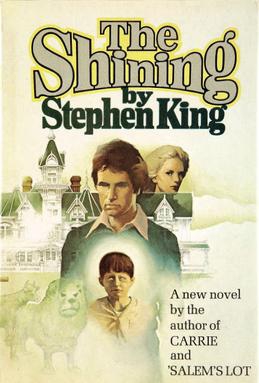


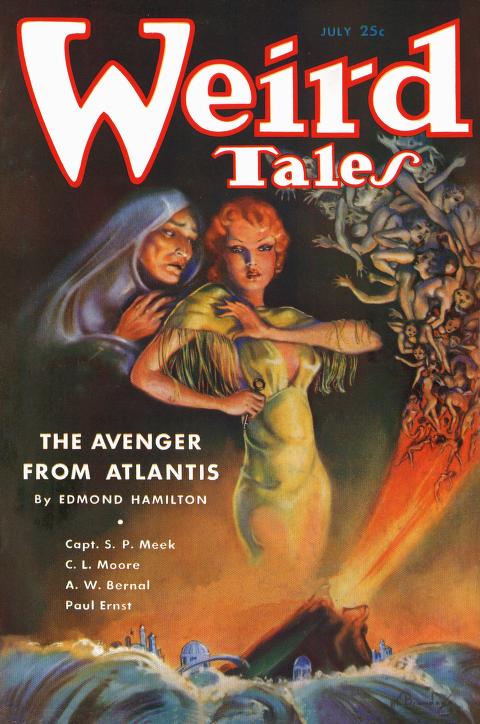

 Science Fiction & Fantasy Remembrance