(Cover by Allen Anderson. Planet Stories, Fall 1949.)
This will turn out to be a busy month for me. I’m gonna be a guest on one or two podcasts/streams with some people I very much respect, and I’ll also be flying out of my Jersey/Pennsylvania bubble to visit some friends I rarely ever get to hang out with in person. On the one hand this is all more eventful than what I usually deal with, but also I’ll have a bit less time to manage this site—which won’t stop me from putting in as much effort as I usually do. It’s draining sometimes, but that is how passion works.
My personal life is gonna be busy, but also my review lineup is FILLED for May: we’ve got two serials, two novellas, two short stories, and finally a complete novel—our first one in six months. I know, the gap between novel reviews looks to be wide, but mind you that there aren’t too many of these “complete” novels in the magazines.
One more thing: I mentioned in a past editorial that I think very highly of 1953 as a year when SFF flourished, in general and especially in magazine publishing, which was experiencing a bubble we would not see again until… now, basically. Strangely, I haven’t before covered ANYTHING from that year, so to compensate we’ve got two stories from 1953 in the lineup. 1953 was such a banger that I could probably get five years out of just reviewing everything that was published then.
Enough wasting time, though, let’s see what we have.
For the serials:
All Judgment Fled by James White. Serialized in Worlds of If, December 1967 to February 1968. White is an author I’ve not read a single word of (or at least I think) up to this point, and given his philosophy with storytelling this feels a little criminal to me. When planning this post I flip-flopped between All Judgment Fled, Second Ending, and The Dream Millennium for my first White, since all three sound appealing, and ultimately went with this because I’ve also been meaning to tackle something—anything—that was published in If.
Sos the Rope by Piers Anthony. Serialized in The Magazine of Fantasy and Science Fiction, July to September 1968. Yes, that Piers Anthony. He actually appeared regularly in the genre magazines early in his career, when he was a promising young writer and people did not yet know the horrors he was about to unleash on the world. My only prior Anthony experience was the short story “In the Barn,” and let me tell you… that’s the kind of thing that puts you off an author for years. But maybe Sos the Rope, his second novel, will be good!
For the novellas:
“The Rose” by Charles L. Harness. From the March 1953 issue of Authentic Science Fiction. Retro Hugo nominee for Best Novella. Harness is one of those recent discoveries of mine that I’ve been meaning to explore further—made easier because Harness was not that prolific a writer; when he wrote he was fairly productive, but then he would vanish for several years. Harness apparently struggled to find a publisher for “The Rose” in the US, having to jump across the Atlantic and submit it to a filthy British magazine.
“Enchantress of Venus” by Leigh Brackett. From the Fall 1949 issue of Planet Stories. Brackett is now most known for her part in the messy scripting process for The Empire Strikes Back, for her collaborations with director Howard Hawks, and for the rather unchararcteristic novel The Long Tomorrow. Much of Brackett’s fiction, however, is planetary romance a la Edgar Rice Burroughs, complete with swashbuckling antics. “Enchantress of Venus” is one of several stories starring Eric John Stark, the barbarian hero for the space age.
For the short stories:
“Second Variety” by Philip K. Dick. From the May 1953 issue of Space Science Fiction. Retro Hugo nominee for Best Novelette. Not that I try to hide my biases anyway, but Philip K. Dick is one of my top five favorite authors—and he ain’t #5 on that list. But before he broke new ground as a novelist, Dick was one of the most talented and prolific SFF writers of the ’50s, with about thirty of his short stories being published in 1953 alone. “Second Variety” is one of Dick’s most famous short stories, and yet somehow I’ve not read it before.
“Black God’s Shadow” by C. L. Moore. From the December 1934 issue of Weird Tales. It’s been two months since I reviewed Moore’s “The Black God’s Kiss,” which was a reread, and true enough there was a two-month gap in publication between “The Black God’s Kiss” and its direct sequel. Only a year into her career and Moore had skyrocketed to being one of Weird Tales‘s most popular authors, with the adventures of Northwest Smith and Jirel of Joiry getting started during this period. Moore is a favorite of mine, naturally.
For the complete novel:
Big Planet by Jack Vance. From the September 1952 issue of Startling Stories. Believe it or not, this is a reread—actually one of the first stories I remember reading via magazine scan. As is often the case with me, though, there are surely many things about this novel that I didn’t pick up on a first reading. Vance is not an author I’m strongly attached to, but he does fill a certain niche, being a planet builder par excellence and a crafter of gnarly planetary adventures when he feels like it. Big Planet represents planetary romance shifting away from the Burroughs-Brackett model (which is really science-fantasy), and injecting the subgenre with some semblance of scientific plausibility. But how does this novel hold up on a reread? Let’s find out.
We have a nice mix of science fiction and fantasy, all of it vintage. We’ll get back to some more recent publications next month… maybe. You have to understand that I only cover so much in a given month and that there’s so much history behind the genre magazines. The roster, you may notice, leans toward adventure this month, between the Brackett, Moore, Vance, and probably the Anthony pieces; it just sort of turned out that way. Maybe given that I’ll be traveling soon I thought it appropriate to focus more on tales of high adventure for my site. Regardless, it won’t be a boring lot.
(Cover by Richard Hamilton. New Worlds, October 1967.)
Who Goes There?
Thomas M. Disch would’ve been no older than 26 when he wrote Camp Concentration, and yet he already had three novels under his belt, including the immensely bleak The Genocides. Like other New Wavers, Disch was edgy, transgressive, but also cultured, bringing a literary flair to the field that was previously the exception and not the rule. In terms of installments Camp Concentration is the longest serial covered on this site thus far, but going by actual word count it is certainly not the longest; indeed the book version is only about 180 pages, or I’d reckon round 50,000 words. A lot of that word count is spent on monologues, by the way. This is a very chatty novel that substitutes plot for character (kinda) and symbolism (oh yes), which may rub some people the wrong way. Disch is showing off here at least a little, but most of it I think is worth the trouble—most of it.
Placing Coordinates
Part 4 was published in the October 1967 issue of New Worlds, which is not on the Archive but which can be found on Luminist, link to the New Worlds page here. Camp Concentration in book form can be found used easily, and if you want a fresh copy then the Vintage paperback is still in print.
Enhancing Image
Part 4 is the shortest installment, which means I won’t have as much to talk about—at least on paper. There’s about as much plot here as in the previous installment, which is not a compliment towards Part 3 I might add, but what’s more, Disch has one hell of an ending to give us; more on that later. To start things off, Louis has gone blind by this point: one of the inevitable symptoms of the super-syphilis (that’s what I’m calling it now) as we reach the end of the victim’s life. Shit’s not looking good for Our Anti-Hero™, and Louis is an anti-hero if anything; it’s not like he does anything heroic or has any grand scheme for escaping the prison. Indeed the novel’s ending depends on Louis being deliberately kept out of the loop by his fellow prisoners at Camp Archimedes, a true innocent who has no idea there’s been a secret plan to escape the prison this whole time.
But I’m getting ahead of myself.
Last time we heard that Dr. Busk had left the prison, or rather vanished into thin fucking air, and even at the end we still don’t know what exactly became of her. We do know that Busk had apparently contracted the disease, all but certainly of her volition, and in the months since we’ve been seeing the work of a super-syphilis super-spreader in the outside world. This is all a little silly. I have to wonder if Disch would’ve written this subplot the way he did had he written the novel in a post-AIDS world; more specifically Louis’s projections about the disease spreading, evidenced by quite a few stories being connected and making it clear that at least a couple million people now have the super-syphilis. To quote Louis:
Within two more months 30 to 55 per cent of the adult population will be on their way to soaring genius. Unless the government immediately reveals all the facts in the case. Less specific warnings against venereal disease will have no more effect on promiscuity than thirty years of Army training films have had. Less, because nowadays we’ve come to place our faith in penicillin rather than in condoms. Penicillin, sad to tell, has no efficacy against Pallidine.
Yeah, would not be the case if this was 1985 and not the novel’s version of 1975. I could go into a long tirade about how the Reagan administration completely denied the public knowledge of AIDS for four years after the first reported case in the US, and how misinformation from both news media and the government contributed to the spread of AIDS even after the public was made aware of the threat, but we’d be here for a while. In some ways Camp Concentration is creepy and prescient, helped by most of the novel only being nominally science fiction, but in other ways it very much comes from a point in time when the worst thing you could catch from doing the nasty was syphilis, which could be treated with penicillin—although that (rather conveniently) has no effect on the super-syphilis. Death is certain unless someone can invent a cure, and even if you were to become impossibly intelligent you only have months to use that intelligence.
My point is that even if you had someone deliberately spreading the disease, the actual number of people infected after, say, a five-month period, would be waaaaaaay lower than what’s Louis’s estimating; his stats are bogus. Sadly as the novel creeps more and more into outlandish territory the harder it becomes to take seriously. I wanna point out that when I say “outlandish” I don’t mean stuff like Louis having dinner with a grossly obese Thomas Aquinas—stuff that’s clearly a product of Louis’s psyche—I’m talking real things that are supposed to be really happening in the world of the novel. Keep this in mind, because the ending Disch decides to go with is a real doozy. It’s here, in the home stretch, that the novel stretches my suspension of disbelief before finally snapping it in two with what is admittedly, to Disch’s credit, a clever twist if totally removed from reality.
One more thing…
It’s here, a bit in the last installment but especially here, where we’re introduced to yet another batch of characters who, like what’s-his-face from before, serve no purpose other than to mark time in the narrative. The cast of characters we actually care about has whittled down to Louis and Haast, which I know is not entirely accurate if you know the ending, but from the perspective of a first-time reader we’re left with two main characters, a goofy replacement villain, and some redshirts. In a way I can see why Disch opted for a bombastic and ludicrous ending, because the back end of the novel is otherwise lacking in both plot and character, only kept afloat by some poetry and musings on symbolic connections with other works.
There Be Spoilers Here
After having gone blind and suffered a stroke, it looks like Louis will be put out of his misery at the hands of Skilliman and his henchmen, with Skilliman (so it seems) having overpowered Haast but who may be losing control of the prison guards. For the first time in months Louis gets taken outside, into the cool air of the real world, and in a nice little exchange he asks if it’s day or night. Now of course we know that Louis can’t die because if he did then he wouldn’t be able to write about said near-death experience, but let’s put that aside for a moment. Haast ends up killing Skilliman and reveals that a) the guards are in cahoots with Haast, and b) Haast is not really himself. I wanted to build up to this more, but I may as well say it now: Haast is actually Mordecai, who you may recall had died two installments ago. A switcheroo of epic proportions had been committed a while back.
I won’t dignify the explanation by going deep into it, but apparently Mordecai and the prisoners under his leadership had conspired to save themselves by… swapping their minds with the bodies of the prison staff. Okay. So Haast was in Mordecai’s body when “Mordecai” died of an embolism at the end of Part 2. Haast has, in fact, been dead for about half the novel. “Mordecai maintains that it was the thought of being a Negro.” What’s more is that Louis’s own life is miraculously saved when his mind gets moved into the body of one of the prison guards. This is rather hard to explain, and even harder to justify given what we’ve known about the mechanics of the novel’s world up to this point. I don’t think I’m being unfair when I say Disch jumped the shark when he came up with this deus ex machina, and yet I don’t think he did it because he was pressured by Michael Moorcock or anyone else. Looking back, the twist had been established as early as Part 2, although even so the bread crumbs Disch leaves are so small that only the most desperate of rodents would deem them a fine meal.
I’m reminded of the A. E. van Vogt story “The Great Judge,” which has a twist ending very similar to the one in Camp Concentration, to the point where I have to wonder if Disch was inspired. In “The Great Judge” you’re given a mad scientist, an evil dictator, and the solution the mad scientist uses to take out the evil dictator, all in the spance of half a dozen pages; and yet even within the tight confines of a short-short story van Vogt alludes to the solution early on and implies that such a solution, though incredible, would be possible given what we know about the story’s world. Mind you that “The Great Judge” is far more removed from everyday reality than Camp Concentration and thus the mind-swapping is much easier to digest. I’ll give Disch credit in that the ruse is a good one because it’s nigh-impossible to predict, but it’s also like that because it’s so far-fetched. You wouldn’t expect the twist because it totally goes against your understanding of what is possible in what is, like I said, only nominally science fiction otherwise.
I’m conflicted about the ending because while I think it’s ridiculous, and snaps my suspension of disbelief in half like a twig, it’s not predictable and it’s not boring—unlike a couple stretches earlier in the novel. There’s debate as to whether the ending of Camp Concentration breaks or redeems the novel, and I think that debate wouldn’t be happening if it wasn’t such a flabby and uneven novel, even at its short length. It’s a fine novel, but it could’ve been even better had it been a 30,000-word novella, cutting out tangents and monologues that lead nowhere; then again I’m biased, as I think a lot of flawed SF novels would be better if they were novellas.
A Step Farther Out
I have issues with the endings, which brings it down half a point, but I can’t say it wasn’t memorable. I wanna accuse Disch of being outrageous for the same of itself, but I don’t think that’s the case. I also have to wonder how this novel would read as one unit, as opposed to four short installments, because goddamn did it feel longer than it actually was when stretched out like that. Not helping was also the microscopic type used in New Worlds during this period, which was seemingly made to be read by ANTS. And my ass is legally blind. Doesn’t matter too much, because if you want a taste of what New Wave science fiction is all about (sex, drugs, foul language, snobby literary references), then Camp Concentration is a good choice.
(Cover by Peter Phillips. New Worlds, September 1967.)
Who Goes There?
A bit of a tangent here, but I do recommend reading Disch’s “The Brave Little Toaster,” also the film based on it. People of a certain generation might remember The Brave Little Toaster, but it’s a relatively obscure movie now and the source novella is doubly obscure. A shame, because even when he’s deliberately writing for a younger audience (or at least a less jaded audience), Disch has tricks up his sleeve. Disch’s writing sometimes raises questions of gender, of war, of the human condition in general—which is to be expected considering he was part of a wave of queer SF writers who happened to come along around the same time in the ’60s. Another thing Disch and his fellow New Wavers had in common was a love of literature that fell well outside the confines of magazine SF; he had read Dante’s The Divine Comedy and Joyce’s Ulysses, and he wanted to make sure you knew that.
Placing Coordinates
Part 3 was published in the September 1967 issue of New Worlds, which is… not on the Archive. But it’s on Luminist! Just gonna link to the magazine’s page here, rather than the specific PDF; you’ll know where it is. You can get a used copy, as far as the book version is concerned, or you could buy a fresh paperback from Vintage. Apparently there’s an SF Masterworks edition of Camp Concentration as well, if you don’t mind it being British.
Enhancing Image
Last time we were with Louis he was in the midst of an existential crisis—which continues quite merrily here! Now, in reviewing novels installment by installment I’ve come to notice more the workings of structure, and how a novel that’s being serialized on a monthly or bimonthly schedule might be written in such a way that the author deliverately deploys peaks and valleys in the narrative. With Camp Concentration there have been crescendos of action and/or plot revelation at the end of each installment, with the stakes and scale of the action widening or even narrowing accordingly. Most of Part 3 sees a profound narrowing of scope, but the intensity of the action has not ebbed—only been funneled into what amounts to a drama of values between two characters. Interestingly, we’ve done away with dates for Louis’s journal entries at this point, not that I noticed much of a difference.
Not only is Mordecai dead, but Camp Archemedes has become generally a much smaller and quieter place in the months since that event. That’s right, we’re experiencing not so much a time skip as a time slippage, and like water through the gaps between his fingers the people Louis has come to know and (maybe) love have all left him, to go the way of Abraham. By this point he doesn’t even have fellow prisoners to chat with, now being stuck with Haast, the man he despises most and yet feels a strange pity for. And what about Dr. Busk, the token woman of the group? She’s left house. “She has been out of sight, in fact, since the very evening of Mordecai’s death.” Make sure to put a pin in this one, because it’ll come back much later.
While the cast has shrunk, however, we do get a new character in that we’re finally introduced to the camp administrator—man by the name of Skilliman. Does that sound a lot like “skeleton”? Hmm. And oh boy, he’s Haast’s boss! Holding your breath for his actual arrival will be quite the challenge, though, as we don’t see or hear much from him for most of Part 3. Before we’ve even gotten a good word from the guy we’re immediately told, rather indirectly, to be wary of him, partly because of his name and partly his backstory, which does not give the impression of a fine role model. A (thankfully small) portion of this installment concerns Louis writing a short story that’s based maybe a little too much on Skilliman’s life, with Haast does not approve; and, though I would not be eager to agree with Haast, I also would not approve, more so for the reason I found the story-with-in-a-story borderline unreadable. The best I can say of Disch’s little experiment here is that since it went in one ear and out the other, I can’t say it was painful.
What’s of more interest is the changing relationship between Louis and Haast, which is naturally adversarial to an extent but which also seems to strike both men as a necessary evil. Sure, Louis could give Haast the silent treatment, but then who else would he talk to? He’s already losing his mind, and his body is following suit as well. (I’m not sure how much time Louis has left, since he’s been infected with the Pallidine for at least a few months now, and the physical symptoms of the disease have made themselves very much known. Our boy is having a bad time.) It’s here that we get what might be the most telling exhange in the whole novel up to this point, and unlike the fiery monologues that came before this is but a brief dialogue between Louis and Haast that says a lot about both the latter’s character and the integrity of Camp Archimedes—or rather the lack of it.
I did ask him, jokingly, if he too had volunteered for the Pallidine. Though he tried to make of his denial another joke, I could see that the suggestion offended him. A little later he asked: “Why? Do I seem smarter than I used to?”
“A bit,” I admitted. “Wouldn’t you like to be smarter?”
“No,” he said. “Definitely not.”
Even the director doesn’t want it. In case it wasn’t clear before, Disch does not think highly of the prospect of artificially heightened intelligence, not that this is a unique view among SF writers. How many cautionary tales have there been, especially in old-timey SF, where the protagonist or some other character experiments so as to raise their brain power, or even to force themselves into evolving beyond normal human capacity? I’ve mentioned Flowers for Algernon before, but I’m also thinking of Poul Anderson’s Brain Wave, wherein the suddenly heightened intelligence proves to be as much a curse for some people as it does a blessing for others. If you think about it, Camp Concentration is not unique in its pessimism, although the delivering of said pessimism certainly raises eyebrows. I honestly can’t think of a magazine SF story published prior to Camp Concentration that was as vulgar, as shameless, as filthy, and yet as literary in combination with the vulgarity. While he teeters on being edgy, Disch knows what he’s doing.
There Be Spoilers Here
So, about Dr. Busk. Apparently the camp staff, even with the help of a nigh-infinite budget, have been unable to track her down; not only has she left the reservation, she’s seemingly gone into hiding completely. Personally I find the mystery of Busk’s whereabouts a bit hard to believe. I was also reminded about the plot point that, at least according to Haast, Busk was, despite being a fairly aged woman, a virgin; the keyword here, though, is “was.” Oh yes, now we’re getting to the big reveal of Part 3, and I have to admit it’s quite the climax despite Skilliman’s lengthy and kind of insane monologue toward Louis threatening to weigh down everything. Skilliman, being a late addition to the play that is the novel, is not as convincing an antagonist as Haast or even Busk, and it’s possible that Disch is aware of Skilliman’s lack of actual personality; even Louis is ultimately unconvinced. “Suddenly he [Skilliman] was not Satan at all, but only a middle-aged balding seedy administrator of not quite the first rate.” Just as well, because soon human villains will be outdone but a much larger and more shadowy threat.
(One more thing: we did get another new character, in the form of Bobby Fredgren, Busk’s replacement, but if I’m being honest I totally forgot about him while in the midst of writing this review; I had to check my notes again to be reminded of his existence. Indeed the few characters introduced in this installment seem mere shadows of their predecessors, which might be intentional; I hesitate to call this shallowness a flaw.)
You may recall that the prisoners of Camp Archimedes were infected with a special kind of syphilis, and syphilis is an STI. Sexuality—specifically the grotesque side of it—permeates much of Camp Concentration, but it comes back with a vengeance at the end of Part 3 as we find out that the disease, previously contained within the camp’s walls, has found its way into the outside world. It’s implied, and most likely true, that Mordecai had sex with Dr. Busk not long before the former died, presumably with the latter’s knowledge (I mean it would be impossible for her to not know)—specifically that the good doctor took it in the rear. I know, the “it doesn’t count if it’s anal” joke, some things never change. More importantly, Busk has possibly been spreading the disease among other people, which sounds evil as fuck if I’m being honest, but also coldly logical from Busk’s perspective. After all, the terminal status of the disease has no known cure, but suppose you infected enough people and someone were to find that cure…
Well shit, we may have a crisis on our hands.
A Step Farther Out
The plot thickens!
For a bit there I was worried we had run out of momentum and were just gonna devolve into mad ramblings from Louis, but things pick up again and we’ve reached the precipice of what might be a delicious climax. We’ve been stuck in Camp Archimedes so long that I forgot there was even an outside world to think about, but that’s just what Disch was counting on anyway. The world suddenly opens up again, but not in a ray-of-hope kind of way; rather the horrors inflicted on the prisoners of Camp Archimedes now reveal themselves as a real danger to the outside world. I have heard from some reliable sources, however, that the ending for this novel is… not good; so I’ll be going into the final installment with modest expectations.
(Cover by Eduardo Paolozzi. New Worlds, August 1967.)
Who Goes There?
There’s debate as to when the New Wave of science fiction started, since certain works, such as Alfred Bester’s The Stars My Destination, anticipated the transgressions made during that movement. Authors who would be often affiliated with the movement, such as Kate Wilhelm, R. A. Lafferty, and Harlan Ellison, also usually got their start in the field well before the mid- to late-’60s height of the New Wave. Another author who came around just in time was Thomas M. Disch, who in the ’60s saw pbulication on both sides of the Atlantic, in both the US (ohh) and the UK (eww), and aside from having the handicap of being a filthy British magazine, New Worlds proved to be the ground where Disch could be his saltiest and most transgressive. Camp Concentration saw serialization in New Worlds in 1967, just before that magazine was to run into some real legal (on top of the already financial) problems, and thus, regardless of its flaws (I do have some quibbles), it can be seen as emblematic of New Worlds during its peak, despite being written by an American author. Disch’s novel would see book publication in the UK the following year, although weirdly American readers would have to wait until 1969 for an American edition.
Placing Coordinates
Part 2 was published in the August 1969 issue of New Worlds, which is on the Archive; and just to keep my bases covered I think this will be the first time I’ve linked to Luminist. Just be aware that PDFs on Luminist tend to be BIG, including this one, but at least its collection of New Worlds is more complete than the Pulp Magazine Archive’s. As for book versions there aren’t a lot of options, but it looks like the Vintage paperback is still in print and readily available, so yeah, probably go for that.
Enhancing Image
Before we get to the plot, which there isn’t a whole lot of for this installment, let’s talk about interiors and how they can relate to the stories they’re supposed to be illustrating. Sometimes an interior, depending on where it’s placed, can be illustrating something that has already happened in the text, or it can serve as a kind of foreshadowing, alluding to something that will happen later in the text but which, upon seeing the interior, we will not have read for ourselves yet. Part 2 of Camp Concentration opens with an interior by Zoline, depicting a rabbit on its hind legs kissing a cherub, which sounds transgressive but also like a non sequitur—for now. Believe it or not this is a pretty good use of illustrative foreshadowing, as it sets up the meat of what is to come in Part 2, though we’re not able to connect those dots yet. I guess it’s NSFW, given the cherub’s dingus is hanging out, but that’s also not an uncommon sight in religious paintings and sculptures.
Observe:
Last time we ended with a performance of Christopher Marlowe’s Doctor Faustus that went wrong, with the magic pixie dream boy George having fallen violently ill with what turns out to be a condition all the prisoners at Camp Archimedes have—a condition that gives them only months to live. George soon dies and there’s a funeral held for him; we didn’t get to know him very well, but he clearly serves as the sacrificial lamb for both Camp Archimedes and the novel, Disch seemingly telling us that even the most innocent of the lot are not safe. Louis, who was already an unhappy camper (lol) before this, threatens to have a breakdown.
The prisoners do things to preoccupy themselves, partly because the drug they’ve been given has heightened their intelligence and thus their need to satiate cognitive activity, and partly to keep their minds off the fact that they will all die rather soon. Louis starts writing a three-act play of his own, titled Auschwitz: A Comedy, which perhaps for the best we learn very little about. This is one of those little things about the novel that can be taken as either simply edginess for the sake of itself or a bit of very dark comedy; I’m inclined to think it’s the latter. I’m reminded of a line in the film Crimes and Misdemeanors wherein a character insists that comedy is simply “tragedy plus time,” a philosophy Disch might agree with—that is to say, once enough distance in time is made from a terrible event, that terrible event can be warped and recontextualized to become funny.
Louis has another conversation with the camp doctor and local Ms. Exposition (not to mention the novel’s only female character), Dr. Busk, where we’re finally told what exactly the prisoners have been injected with, because it’s not just any drug. To make a long story short, the prisoners of Camp Archimedes have been infected with a highly advanced form of syphilis, that most horrible of vinereal diseases in a pre-AIDS world which sees the victim succumb to insanity, then death. Some famous people thoughout history were known, or at least suspected, to have contracted advanced syphilis, the most famous example probably being Friedrich Nietzsche. Yet, as Dr. Busk points out, these people who were ultimately ruined by the disease also seemed to have flashed of brilliance amidst the madness that could have been a direct result of the disease, and though he is loathe to admit it, Louis has to agree somewhat.
But it has been suggested—and by some very reputable people (though they were not usually in the medical line)—that neuro-syphilis is as often beneficent as it is at other times malign, that the geniuses I’ve mentioned (and many others that I might add) were as much its beneficiaries as its victims.
Meanwhile there’s an apparent rivalry between Haast and Busk with regards to certain activities the prisoners take up to preoccupy themselves, with Haast being on the side of the mystic and Busk being on the side of the materialist—a rivalry that involves Louis and Mordecai. Mordecai, last time we saw him, had taken a keen interest in alchemy, which by now has blossomed into an autistic fixation. It’s here that we get the most memorable scene in the installment, and the point of inspiration for that opening interior illustration. Mordecai, who by this point become perhaps a little unscrewed mentally, introduces Louis to his three “familiars,” those being rabbits who have also been infected with the disease and who subsequently only have a short time to live—though for them it’s a matter of weeks rather than months. The rabbits seem to all be male, for they also have incredibly swollen testicles because of the disease.
That’s one half of the equation for the illustration, but we’ve not quite reached the other half involving the cherub yet…
There’s an obvious parallel between the prisoners and the rabbits, with the two being treated more or less the same. Testing on animals, and rabbits especially, has historically been pretty common, to the point where the imagery of rabbits in cages in some laboratory has been shorthand for experimental (and unethical) testing. I do have to wonder if Disch was thinking of Flowers for Algernon when writing Camp Concentration, since the two have similar premises and play with the same notion of accelerated human intelligence. Of course, the premise of Flowers for Algernon is actually a bit more implausible because scientists, no matter how unethical, would not test their hypothesis on a single rodent and then greatly upscale that experiment for a human. Disch also uses his premise to comment on the US government’s gross treatment of protestors during the Vietnam war; it’s not hard to think the government at this time would see infecting a bunch of naysayers with a terminal disease in the name of “science” as a convenience, even killing two birds with one stone.
I know I mentioned this in the previous installment, but the Tuskegee experiment, wherein dozens of African-American men were unknowingly infected with syphilis, was still in progress, unbeknownst to Disch and the rest of the American public. The lesson here is to never underestimate the potential evils of government—then or now. This is all made extra eerie since Mordecai is easily the most prominent black character among the ensemble, and it’s clear that he’s also been taking his condition not too well. We’re never sure how sincere Mordecai is being about his turn towards mysticism, but what’s not so ambiguous is that he’s dying, and he’s a man in the midst of an existential crisis. “The whole goddamned universe is a fucking concentration camp,” he says at one point, and for him that might indeed be true; for a terminally ill man, where freedom is impossible, life itself has become a prison where “escape” means death.
There Be Spoilers Here
Mordecai, with Haast’s approval, performs a religious ritual on Midsummer’s Eve, one which pushes Dr. Busk’s buttons, but while the not-so-good doctor is triggered in the short term (of course the one female character is a total stick in the mud), she feels morbidly vindicated when the “elixir” Mordecai has been working on seemingly has no effect; not only that, but Mordecai dies, pretty abruptly, before completing the ritual. Haast, who really did believe in Mordecai’s promise as an alchemist, feels betrayed by both his death and the lack of effectiveness of his studies, and he has quite the episode. Mysticism has failed, and materialism does not provide a cure for the specter of death which plagues them all.
What’s strange about the series of revelations in this installment is that Louis treats his own terminal condition like it’s supposed to be a surprise; like sure it sucks that you’ll die from syphilis in a few months, but given what we’ve known up till now I would’ve just assumed that was the case. Of course it makes sense symbolically, in a deal-with-the-devil fashion: Louis and the other prisoners were trapped in more conventional prisons, ones which had shitty living conditions but which at least showed the posibility of release, and they made a deal with Haast where they got to live in an underground facility that was more like a hotel than a prison—only, unbeknownst to them, they had all been given death sentences. Still, I can’t always make sense of Louis’s reactions to plot developments, like how I also can’t tell if he’s merely a lapsed Catholic or an apostate; he certainly sounds concerned with the theological minutia of the Church scriptures.
Speaking of which, the actual ending of Part 2 is a protracted dream sequence, which Louis is somehow able to recall in detail (writers beware that dreams, and the recollection of dreams, basically never work this way), wherein he has a rather odd conversation with a monstrously fat Thomas Aquinas, with cherubs as minions. Louis, eyeing one of the cherubs, notices something worrying about it, “the distressing inflammations that had swollen its tiny scrotum and caused the poor thing to walk with a strange, straddling gait.” Does this sound familiar? Now it all adds up… sort of. I’m still not quite sure what Disch means with the swollen testicles bit, but he’s clearly drawing a line between rabbits and people, with cherubs standing in for the latter. There’s also a subliminal homosexuality about all this, since both the rabbits and cherubs, given their genitals, are supposed to be male. (I know what you’re thinking: that sounds bioessentialist. I’m talking specifically in the context of the novel, which is so lacking in women anyway that male homosexuality is all but inevitable, even without Disch’s teasing.) What could it all mean, though? I’m not sure yet.
On a final note, we’re one again reminded of the Faustian theme of man’s hunger for knowledge at any price, with Aquinas’s obesity being symbolic of his insatiable hunger for knowledge. Obesity is typically used in fiction as shorthand for a character’s greed (a gross demonizing of obesity that even left-leaning people are guilty of using at times), but at least here I can sort of look the other way since Disch is using it less to illustrate Aquinas (who after all is just a figment of Louis’s imagination here, and thus a projection of his own insecurity) and more to illustrate Louis’s character, not to mention how it ties into the novel’s general thesis. How problematic this all could be considered is a topic for another time, perhaps.
A Step Farther Out
Sorry for the relative brevity of this one, but given how short these installments are and how pressed for time I am I don’t see why not. There’s also not a whole lot to say with this one, since it has middle-of-the-trilogy syndrome written all over it—just replace “trilogy” with “quartet.” Something I’ve come to realize about this novel is that, structurally, it has peaks and valleys: there’s a long conversation or three followed by a Very Important Event™ that changes the course of the plot. We have scenes where characters are just talking, which in some way set up what’s about to transpire, followed by a crescendo wherein Louis’s world is rocked.
Strange thing about Part 2 in particular is that we get basically two climaxes: the first one with Mordecai, and then at the end we have the dream sequence with Aquinas which, admittedly, bordered a little too much on padding for my liking. I think I get where Disch is going with the latter, symbolically, but given how short this novel already is I have to wonder if he drew out the dream sequence as long as he did because he realized oh shit, one of the novel’s major characters is dead and we’re only about halfway through. Still, it says something about the evocativeness of that symbolism that I’m still thinking about it a couple days after having read it.
Thomas M. Disch started out not too dissimilar from close contemporaries Samuel R. Delany and Roger Zelazny, being at least adjacent to what we’d call the New Wave period of science fiction. Like Delany and Zelazny, Disch was literate, uncompromising, at times crass, but also quite funny; he had a sense of humor, even when working with premises that produced the bleakest outcomes. His debut novel, The Genocides, is apparently one of the bleakest works in the genre’s whole history, and he was just getting started with that one. Disch wrote a ton in the ’60s (about half his novels were published that decade, so by the time he turned thirty) for a variety of outlets, but his presence at New Worlds, under Michael Moorcock’s editorship, had to be the most unconstrained, the most vulgar. New Worlds was the only SFF magazine on either side of the Atlantic at the time where you could see dirty words like “fuck,” “shit,” “piss,” “pussy,” “cock,” “cunt,” “twat,” and “Englishman.” As such it shouldn’t be surprising that the first installment of today’s novel, which appeared in New Worlds at the height of its powers, has some of those words along with ones I did not mention.
I’ve been curious about Camp Concentration for a while, and since starting this site of mine I’ve gotten a good reason to read it carefully. It’s also the longest serial I’ve done so far if we’re going strictly by number of parts, but in its book form Camp Concentration clocks in at only about 180 pages. Each part is only 10 to 25 pages, but keep in mind that the type is microscopic, on top of being two-columned, and in A4 format—some made-up British thing, I think. Not a long book, this one, but it looks to pack a punch.
Placing Coordinates
Part 1 was published in the July 1967 issue of New Worlds, which is on the Archive. Just a heads up, we’ll be moving to Luminist at some point for this serial, because the Pulp Magazine Archive’s coverage of New Worlds is a bit spotty right now. This is a very nice cover by M. C. Escher too, which is a nice change; a lot of the covers for New Worlds from this period are just kind of ugly. Anyway, this is not a novel that has been reprinted very often; it wasn’t even printed in the US until 1969, hence American reviewers were slow to cover it. I do believe the most recent paperback release from Vintage is still in print, so try looking for that one. It’s at least much easier to find than the chapbook release of Disch’s “The Brave Little Toaster,” which has been out of print since the ’80s and which goes for prices that’ll make your wallet weep.
Enhancing Image
Louis Sacchetti is a poet, and at the outset he’s also a political prisoner, with a history of dissent. A few things immediately struck me about Louis, all of them seemingly contradictory. Despite his history of protest he does not act like one of those “flower children” that would’ve been making the rounds on college campuses and at rock concerts in the ’60s, but rather someone of the older generation who was sympathetic to the cause. He’s also a believing Catholic—a “WASC,” he calls himself at one point, although aside from confessionals he hasn’t done much that could be considered Catholic-y as of late. He’s also, really by his own admission, an egocentrist: he gets a kick whenever someone mentions that they’ve read his poetry, which he hasn’t been able to read in book form himself on account of being held prisoner. “For ten years I could lay claim to no book but my wretched Doctor’s thesis on Winstanley; now my poems are in print—and it may be another five years before I’m allowed to see them.” We start off in a normal everyday prison, without any science-fictional trappings aside from what’s happening outside the prison, but we won’t be here for long.
Right, so I don’t think we’re given an exact year, but Camp Concentration takes place in the near future—like the very near future. The US president is McNamara, as in presumably Robert McNamara, which seems to imply that he would succeed Lyndon B. Johnson; keep in mind now that Johnson and McNamara were partly responsible for the war effort in Vietnam (which hadn’t even gotten so bad yet when Disch was writing this novel, probably in late 1966) escalating like it did. Pretty much immediately we’re placed in what now reads as an alternate past wherein the US’s efforts to “defend” South Vietnam grew more drastic than anticipated—or maybe just as drastic as reality would have it. Something you have to understand about Camp Concentration is that it’s a bit of a time capsule; Disch makes no secret of what current events he was taking inspiration from when writing it. In that way the novel feels very much “of its time,” but there were also few SF novels at the time that placed such a high bet on capturing that specific time frame, to the point where metaphor is all but expelled.
The novel is written in the form of Louis’s diary, which he keeps at the prison he starts at and will keep when he’s moved, unexpectedly, to somewhere else without his knowledge or consent. We’re given a month and day but not a year. In this initial sequence we’re introduced to a few characters who will probably never be seen again once we get to that other place, namely a couple “faggots” (look, I’m bisexual and Disch was gay, I think we can use that word with impunity) who share Louis’s (what I have to think is a large) cell with a “Mafia” guy. These first several diary entries establishes Louis’s character somewhat, and get us in touch with the unabashed crassness of the novel’s world, but we’re given very little insight as to what’s happening or what any of this might signify. Not gonna lie, I was worried the salty language was just gonna be there because this is New Worlds and we gotta have some shock value at first, and I was also worried that this would be one of those SF novels where the SF element is so subtle that it might fly over my head, but thankfully this will not be the case.
There’s a brief pause where Louis is unable to write in his diary before he’s given it back at the new place: Camp Archimedes, which is not a prison in the conventional sense but something else—call it a testing facility. There’s a bit of eerie prescience set up here, because I’m not sure how aware Disch could’ve been of several gross human rights violations that the US government was committing against its own citizens at the time; the Tuskegee syphilis experiment, for one, would not be made public until five years after this novel’s publication. Anyway, Louis is introduced to the head of Camp Archimedes, Humphrey Haast, or as he likes other people call him, H. H., a former big-time military man who now in his old age looks after this little testing facility of ours. Haast pretends to wanna be on friendly terms with Louis, but seems aware that kidnapping a man is not a surefire way for him to become buddies with you—even if you compliment his poetry and he’s always up for such a compliment.
Louis is horrified to be here at first, but soon becomes relatively accustomed to the quirks and mysteries of Camp Archimedes, which after all proves a much different and possibly less dreary existence than back when Louis was in Springfield Penitentiary. “Shall I confess that there is a kind of pleasure to be had in the situation, that a strange castle is rather more interesting than the same old dungeon all the time?” Why yes it is, maybe. It’s here, once we’ve gotten introduced to a few of the main characters, namely Haast, local Ms. Exposition Dr. A. (stands for Aimée) Busk, George the happy idiot, and Mordecai, the unofficial leader among the “students” of this establishment. Or you know, if you’d rather think of them as guinea pigs, which really they are. A lot of the men here are exmilitary, brought in on insubordination, aggrivated assult, those sorts of things, being given the choice between prison and Camp Archimedes and picking the latter; it must’ve at least sounded more exciting for them. Everyone here plays a role, with Louis as the equivalent of the town poet, as well as a sort of middle man between the fellow prisoners and the leaders of the place.
A few things to note here before we get to the climax of Part 1, since there both is and is not a lot of ground to cover. With a couple exceptions we don’t get any meaningful descriptions of places and objects; this is the sort of thing you’d expect from someone writing in a diary. One of the chief advantages of having a first-person narrator write a diary or memoir, especially for a new writer, is that you need not worry much about giving places and things flowery descriptions, because realistically, if you were the one writing in a journal or whatever, you’d focus on what matters to you specifically, which would probably be people’s personalities and your conversations with them. There’s also some possibility (I’d argue almost inevitability) of Louis being an unreliable narrator, since he recites quite a few conversations (indeed these convos take up the bulk of the “action”) that probably didn’t go down exactly as how he recalls them, but chances are we’re supposed to take his writings at face value. If you’re looking for adventures with spaceships and rayguns then you might have to wait—or that stuff might not come at all; what we have is a series of dialogues that border on Socratic.
There Be Spoilers Here
By the back end of Part 1 we’ve come to know that there is very little that’s off the table for Camp Concentration, with homosexuality and harsh language being not implied but overtly parts of the text. There’s another thing that would usually be considered taboo that gets referred to almost with glee here: drug here. Unfortunately for Louis and the others, the prisoners are not taking drugs of the fun kind, but rather something wholly experimental that is supposed to raise one’s intelligence. Now, we’ve seen many stories in the field before this that played with the notion of accelerating human intelligence, and drugs may have even played a part in some of them, but probably not as depicted in Disch’s novel. The prisoners are given a drug that might work, or it might not—or hell, it might work but have some serious side effects. People are only now, in the year 2023, coming to the realization that the truly dangerous drugs are not cocaine and heroin, but prescription drugs that you can buy perfectly legally. The legality of Camp Archimedes is pretty murky, of course, but given that the military is involved to some extent and that the site is backed by “a private foundation,” the US government probably doesn’t mind.
George, the friendliest if not brightest man among the lot, has been ill as of late for reasons none of the other prisoners can explain, but that doesn’t stop our boys from performing Christopher Marlowe’s Doctor Faustus (with a shoutout to Goethe’s version, of course) in Part 1’s climax. Keep in mind that up to this point both Louis and Disch have toyed with intertextuality in a way that’s kind of frivolous but which also bring some light to what’s going on within the novel, especially Dante’s The Divine Comedy. The connection with the Faust/Faustus myth being made explicit is only the cherry on top, what with humanity’s quest for knowledge and the repercussions of that quest, and I have to wonder if Disch is teasing us here. Disch, like Delany and Zelazny, loves to play with mythology and juxtapose myths from ye olden times with “modern” lingo and anxieties.
I find all this amusing, but I have to admit I’m a little concerned that the pyrotechnics of Part 1’s climax might be something that Disch cannot top, or at least elaborate upon. the point being that its here that George illness enters dire territory, and it’s here that the prisoners are all suddenly made aware that George’s declining health is not unique to him—that it is, in fact, something that will afflict them all within a matter of months. The fruit of knowledge reveals the worm inside…
A Step Farther Out
At first it was rough going a bit, just because we spend time in a location that we never come back to, and at first we’re not even sure what the plot is. Once we enter Camp Archimedes, though, it’s off to the races. On the one hand I’m tempted to call Disch’s use of profanity edgy, and yeah, it’s a bit edgy, but don’t we tend to use saltier language when we’re chatting with close friends? Despite the darkness of the atmosphere, and the mass death implied at the end, it’s far from a dour novel—at least so far. Louis is a conversational and pretty coloquial narrator, and while he is egocentric and pretentious, he readily admits to that. Indeed the point, so far, seems partly to challenge Louis’s vanity and bring him down to the level of the rest of the prisoners. This is in essence a prison novel, complete with references to homosexuality, but it’s also playful riff on multiple myths: Disch knows that we know that he knows, so he has fun using intertextuality like a carrot on the end of a stick. I very much await what he has in store for us…
It’s the first day of April… and I don’t have a prank in mind.
I’m just gonna do what I do with every one of these forecast blogs, which is to give you a quick update on things and then list off what I’ll be reviewing in the coming weeks. Hope you did your taxes well in advance and aren’t scrambling now! If you’re a filthy American, that is.
Anyway, the biggest thing to happen to this blog recently has been the opportunity to get interviewed by German warrior queen and Hugo winner Cora Buhlert (link here), which naturally gave me the warm fuzzies. This is a relatively young blog, but already I feel I’ve made major progress with it, and it’s been a reliable excuse for discovering new (to me) authors and returning to old favorites. My goal with this site has been to indulge my own quirky and admittedly retro-leaning love of genre fiction, with a literary if also highly colloquial bent, and on that front it’s been a success. Honestly there are too few active fanzines in the field right now, with a good number of them being one-man shows like myself, and goddamnit we deserve to get more notice among industry regulars.
Now, where was I?
Right. It’s been what, four months since I covered a so-called complete novel? And uhh, we still haven’t gotten there yet: April is thirty days, not 31. Sad. Just one more month, I promise. In the meantime we have a serial, two novellas, and two short stories. Admittedly we have more familiar faces in the lineup than I would normally prefer, but given my schedule as of late I’ve made an exception for myself. Let’s see what we have.
For the serial:
Camp Concentration by Thomas M. Disch. Published in New Worlds, July to October 1967. Disch is one of those American authors who appeared regularly in New Worlds during the height of the New Wave era, alongside Samuel R. Delany and Roger Zelazny. This is a four-part serial, but don’t be fooled! From what I can tell each installment is pretty short, which adds up because the novel in book form is like 180 pages. Short, but potent—or so I’ve heard. I’ve read a few short works from Disch before but this will be my first novel of his.
For the novellas:
“Forgiveness Day” by Ursula K. Le Guin. From the November 1994 issue of Asimov’s Science Fiction. Hugo and Nebula nominee for Best Novella, and winner of the Theodore Sturgeon Memorial Award. I hate to say this as someone who likes Le Guin a lot, but I’ve yet to read the linked collection Four Ways to Forgiveness—thought apparently now it’s titled Five Ways to Forgiveness (they found another one). Three of the stories in this collection were published in Asimov’s in fairly close succession, with “Forgiveness Day” being the first.
“Memorare” by Gene Wolfe. From the April 2007 issue of The Magazine of Fantasy and Science Fiction. This is one of those F&SF special author issues. Hugo and Nebula nominee for Best Novella. Wolfe made his first SFF sale in 1951, but he didn’t start writing regularly until the mid-’60s, where from then on he became one of the field’s most distinguished authors. He’s most famous for The Book of the New Sun and the fix-up novel The Fifth Head of Cerberus, but Wolfe did not shy away from short fiction, with “Memorare” as but one example.
For the short stories:
“The Big Night” by Henry Kuttner. From the June 1947 issue of Thrilling Wonder Stories. I covered C. L. Moore again last month, so I figure I ought to do Kuttner the same. The two are often treated as a package deal, forming like Voltron under their own names as well as a variety of pseudonyms, especially for the high-paying Astounding Science Fiction. Kuttner also appeared in several magazines apart from Moore. Take “The Big Night,” for example, which Kuttner had published under the pseudonym Hudson Hastings.
“The Lonely Songs of Laren Dorr” by George R. R. Martin. From the May 1976 issue of Fantastic. Martin has spent the past few decades so entrenched as a fantasist that it’s easy to forget there was a time when he mostly wrote science fiction instead, and that it was fantasy which was reserved for once in a blue moon. In 1976 you had two fantasy magazines: F&SF and Fantastic, and the latter paid worse. But Martin was good buddies with Ted White, Fantastic‘s editor, and this saw the publication of Martin’s first “pure” fantasy.
That’s it, that’s all I have. I take way too long to come up with these forecasts. I actually wrote this about a week ago; you’re only reading it now. Funny how time works. And as for those adventures in time and space…
(Cover by Chesley Bonestell. Astounding, June 1949.)
Who Goes There?
While not the first author to write what we’d call hard SF, Hal Clement, more than any other, codified this particular mode of writing. Making his debut in 1942 when he was still in his teens, not to mention an undergraduate, Clement helped introduce a degree of science-fictional hardness that previously was rarely seen, and was not considered part of some greater collective effort to put the science in science fiction. It’s about as hard-headed as you can get, and yet there’s also an undeniable joy in Clement’s writing—more specifically how eager he is to build and explore eccentric planets and alien races. He was not the first planet builder, but he was arguably the best of his generation to do this. Mission of Gravity and other stories set in that continuity alone would’ve cemented his legacy, but Clement kept writing reliably (if not prolifically) until his death in 2003.
Needle was Clement’s debut novel; while he had been active in the field for half a dozen years at this point, he would’ve only been about 26 when he wrote it. It was the first in a series of rapid-fire novels for Clement, being followed in only a few years by Iceworld and his most famous work, Mission of Gravity. A criticism (positive or negative) often made about Clement is that he seems far more invested in making rounded characters out of his aliens than his humans, and this certainly remains the case with Needle. Despite involving a teen boy as his partner in crime-solving, the hero and the character most worthy of our empathy is a four-pound blob that can barely get around on his own.
Placing Coordinates
Part 2 was published in the June 1949 issue of Astounding Science Fiction, which is on the Archive. Did you know that Needle was up for the Retro Hugo for Best Novel of 1950, but was withdrawn on the grounds that it was first published (albeit in abridged form) the previous year? Anyway, your best bet at finding the book version outside of used bookshops is to pick up the omnibus The Essential Hal Clement Volume 1: Trio for Slide Rule and Typewriter, which contains Iceworld and Close to Critical.
Enhancing Image
We had spent the back end of Part 1 off the island and on the mainland, where Bob goes to school, but now we’re back home. Bob’s father had apparently called him to return home early; up to this point we had not gotten a single word out of the father, but now he’s gonna be an actual cjharacter alongside Bob’s mother, though let’s not make a mistake here and act like these are complex characters.
If Part 1 showed Clement in his element, the concluding installment forces him to write about the thing he’s the least interested in: other people. Not that Bob was a Shakespearean figure before this, but it’s when we’re introduced to the father and more of Bob’s friends that we realize that the island setting might be even more isolated than previously thought. While the friendship between Bob and the Hunter feels earned enough, this is the only character relationship in the novel to feel even close to organic—not that there’s much in the way of competition. Much of the interest here comes from the Hunter’s paternalistic relationship with his host, the latter being just old enough to understand the mechanics of the situation but still too immature to probably act responsibly on his own. The Hunter’s role as a parental figure has deepened, made more profound by the fact that Bob’s parents are pretty relaxed folks.
This is especially true when it comes to injuries, and doubly so now that Bob is aware that he has an alien that can heal wounds up to a point onboard. Take the following, for example:
The alien, unlike his host, was able to see one good point in connection with the mishap; it might cure the boy of the unfortunate tendency he had been developing, of leaving the care of his body to the Hunter. The latter said nothing of the sort, of course—it might have been taken amiss, as Bob lay awake that night trying to keep as much of himself as possible out of contact with the sheets. He had not been so careless for years, and was inclined to blame it on his coming home at such an odd time. The Hunter did not dispute the matter. He could not have eliminated the pain without the risk of permanent damage to Bob’s sensory nerves, and probably would not have done so anyway.
Truth be told there’s not much more to say here without getting into spoilers, since this is the installment where we finally find out where the hell the fugitive could be hiding. To Clement’s credit he clearly did his homework and he’s putting a great deal of effort into making the mystery challenging from a scientific angle. There’s no easy fix for the Hunter finding the fugitive and even communicating with Bob proves a challenge, although not to put too find a point on it, but the reveal still comes too easily. Again, I wanna be fair here since crossing SF with mystery was all but unheard of at this point in the former’s history and Clement was sailing waters that basically had not been charted. I don’t blame him either for the very matter-of-fact prose style, which is typical of Clement but also goes a long way to give the proceedings a sense of realisim; if it seems too stoic and inelegant that’s still preferrable over being unnecessarily overblown.
There Be Spoilers Here
After trying and failing to find the culprit among Bob’s friends, the Hunter ends up finding the culprit much closer to home—literally. After some rather odd remarks from Bob’s dad, the Hunter deduces correctly that the father, unbeknownst to himself, has become the host for the fugitive. This makes sense considering it would’ve been easiest for the fugitive to enter someone’s body while they’re unconscious, and the chances of getting the father to be fine with being host for a four-pound alien blob would be low. Is it convenient that the person containing the fugitive happens to live under the same roof as Our Heroes™? Absolutely, but there’s a lot of potential for having a parental figure (unknowingly) assist the villain—potential which sadly, though not unexpectedly, Clement fails to exploit.
Needle is a novel that starts off quite interesting and becomes marginally less so by the climax, and there are a few reasons for this. The first is that Astounding, while being the top SF magazine of the day, also had a puritanical streak, with stories being made squeaky clean for publication on the off chance there profanity in the manuscript. While Clement’s novel is deeply concerned with biology, the sexual side of the equation goes unacknowledged, with the result being that any attempt at a Freudian analysis would hit a road block. Because Bob gets to act like a perfectly rational (i.e., too rational) human being and because he and his dad don’t seem to have a strenuous relationship, there’s potential for drama with the latter being host to villain that goes unrealized.
It’s also totally possible that, had even the censors not kept an eye on him, Clement would’ve still gone the totally pragmatic route and put out a novel concerned with the surface mechanics of its scenario but not the very obvious psycho-sexual material at hand. Had this been written by Philip K. Dick or J. G. Ballard, the basic plot beats remaining the same, we would’ve gotten a radically different novel.
Anyway, Bob and the Hunter naturally find an ingenious solution to getting the fugitive to come out of the father’s body and kill him and all is well at the end, with Bob agreeing to keep Hunter as his symbiote since the latter, by his own admission, can’t leave Earth. Killing the fugitive rather than arresting him sounds a bit cruel, but then arresting is not an option when you’re lightyears from home and thus you can’t bring the criminal to any prison belonging to your race. Something I like about the one scene we get of the fugitive talking is that much is implied in his dialogue with the Hunter but there are gaps in their history that are left deliberately unfilled. We knew already that the fugitive is not to be trusted, but it’s only here that we get it from the horse’s mouth, with the fugitive admitting to having betrayed previous hosts for personal gain.
Clement intelligently hints at a whole alien civilization while only letting us see two of its inhabitants, letting us imagine for ourselves what this society of aliens biologically wholly different from humans (they’re technically viruses, going by the definition Clement gives us) might look like. It’s a shame then that he does not care as much about making the human setting come to life, despite the novelty of a tropical SF story from this era.
A Step Farther Out
I would say I was disappointed, but I did have my expectations in check. I’m tempted to say that the lack of development with the human characters was due to length, but this is par for the course with Clement: his aliens are always more interesting than his humans. Whereas someone like Philip K. Dick would’ve taken this premise in a darker direction, diving more into psychological intrigue, Clement is content to use the reveal simply as a convenient out for Our Hero™, sadly neglecting how thematically ripe the material is. We still get a curious mashup of cold-blooded science fiction and a detective looking for a malevolent blob that doesn’t wanna be found. I haven’t read too many mysteries in my time, but I tend to find the first half—the setup—more gripping than the payoff, which might just be the nature of the genre. Not that the conclusion to a mystery being a letdown is too big a mark against this short novel or any of its ilk; it’s just that the mystery is often so much better than the mystery being solved.
There’s been an ongoing debate over the decades as to hard SF’s place in the context of SF literature, and even the basic question of what hard SF is. Now, I’m just a lay reader; I don’t have a degree in the hard sciences. I took a chemistry course in college that I’ve basically forgotten everything about. I do, however, feel confident in giving a succinct and easily understandable definition for hard SF that will hopefully mellow the conversation: hard SF is Hal Clement. Now remembered as a writer (he also did painting on the side), Clement was a trained astronomer and chemist who seemed eager (to the point of obsession) to convey his love for the wonders of the natural world to the rest of us mortals. Most famously with Mission of Gravity but palpable in so much of his work is this sense of a clockmaker or a sculptor who never tires of the delicate mechanics of his craft. Clement was what we might call a planet builder, and he was one of the best.
Clement’s career is also one of the longest of any SF author, although except for a bright period in the ’50s he was never too prolific. He debuted with the short story “Proof” in 1942, written when he was still a teenager, and his final SF work, the novel Noise, was published in 2003—the year of his death. From beginning to end he kept the faith, demonstrating that it was possible to extract artistry from the intricacies of physics and chemistry. More than any other figure (despite some being more popular), Hal Clement is the grand architect of hard SF. Our understanding of hard SF as fiction which puts roughly equal emphasis on both science and fiction goes back to Clement. To crib a line from James Nicholl, in his Tor.com article on the Ballantine slash Del Rey Best Of series, “Current exoplanet research suggests that we are living in a Hal Clement universe.”
Placing Coordinates
Part 1 was published in the May 1949 issue of Astounding Science Fiction, which is on the Archive. A word of warning: a scanning error on a specific page it’s page 26 renders a handful of words therein illegible, which left me feeling cheated slightly. Apparently this same scan is on Luminist, which means that, as far as I know, there’s no scan of this issue available online that does not have this problem. Anyway, from what I understand the serial version of Needle is arguably novella-length; Clement would expand Needle for book publication, although I can’t imagine he could’ve added that much material. Used paperback editions are not hard to find, although if you want something in print and a little fancy then go with The Essential Hal Clement Volume 1: Trio for Slide Rule & Typewriter, which collects Needle along with Iceworld and Close to Critical.
Enhancing Image
We start with a spaceship chase that quickly becomes earthbound. An alien police officer known only as the Hunter is after a fugitive, a member of his own species, when both ships crash land on Earth—and on a rather specific part of Earth, too. The Hunter is a blob-like semi-liquid alien that’s also, technically, a parasite, albeit a symbiotic one; the Hunter survives the crash but his alien host does not. Upon leaving the ship the Hunter finds himself in our ocean, not too far from shore, which is where we get the inspiration for both the cover and the first interior, involving an unlucky hammerhead shark that mistakes the Hunter for food. The Hunter at first tries taking on the shark as a host, finding a) the shark is a predator who is trying (unsuccessfully) to devour him, and b) the shark is of markedly low intelligence (apparently the symbiotes are used to taking sentient beings as hosts), the Hunter thinks it best and only fair game to leave the shark for dead once he’s able to get it to beach itself.
A few things immediately stood out to me. The narrative is third-person and sort of omniscient, but also totally from the Hunter’s perspective. The decision to make the hero of the story both an alien and non-humanoid must’ve also been a rare decision in those days, especially in the pages of Astounding; but don’t worry, there’s still some human chauvinism thrown in once the Hunter acquires his human host—more on that later. Another is the tropical setting. I don’t think we’re ever told specifically where this is set, but I’m pretty sure it’s supposed to be Hawaii, in the late ’40s when Hawaii was a US territory but not a state yet. This would also be taking place presumably a few years after the end of World War II, although the war never gets brought up directly. Finally, as is often noted when people review this novel, this is, if not the first then one of the first attempts to wed science fiction with a good old-fashioned mystery.
A common criticism (or at least it used to be a criticism) of SF-mystery is that the author can pull anything out of their ass in order for the mystery to be solved conveniently, not to mention that in a futuristic setting there would be a wide arsenal of tools the protagonist can use to solve the mystery. At least with for the latter Needle presents no such issue; while the Hunter is an alien, he has to make due with what was then modern Earth technology and the cooperation of a human who, on top of being a teenager, might not be keen on letting an alien slime ball inhabit his body. The Hunter and the fugitive are also on about the same playing field since they’re both symbiotes who both crashed in the same area, and both ideally want a host of high intelligence and mobility, in which case humans would be the only good option. Of course, finding someone who could be inhabiting any given body would be like finding a needle in a haystack (hence the title, very clever), and even with the small island setting the Hunter has potentially dozens if not hundreds of people who could be hosts for the fugitive.
You may be thinking to yourself: “Wait, an alien policeman goes after another alien that has crash landed in Hawaii, a place conveniently surrounded by water, and the latter alien is able to blend in with the local population?” No, this is not Lilo & Stitch, this is something totally different.
Now, about that human host. The Hunter comes upon a bunch of teen boys hanging out on the beach, and one of them, Robert Kinnaird (Bob for short), is taking a nap while the others are distracted. What happens next is… interesting. The Hunter makes it clear both to us and later to Bob that a symbiote much prefers to take another’s body with the host’s knowledge and consent (there are indeed benefits to having a four-pound blob inside you, as we’ll see), but since the Hunter knows nothing of the local language and has enough common sense to figure that the boy would probably not just let him come inside (there should be a better way to phrase this), he takes the sneaky option. I don’t think Clement intended this, but the body horror potential of this whole ordeal is quite big. Take the following passage, in which the Hunter creeps into Bob’s body unbeknownst to the latter:
The boy was sound asleep, and remained so. The alien organism flowed smoothly along the bones and tendons in his foot and ankle; up within the muscle sheaths of calf and thigh; switched to the outer wall of the femoral artery and the tubelets within the structure of the thigh bones; around points, and along still other blood vessels. It filtered through the peritoneum without causing the least damage; and slowly the whole four pounds of matter accumulated in the abdominal cavity, not only without harming the boy in the least but without even disturbing his slumber. And there, for a few minutes, the Hunter rested.
Ech. This was meant for teenagers? Right, Needle is technically a juvenile, although as is often the case with juvenile SF from this period (see also Robert Heinlein’s juveniles) I struggle to believe it was aimed at such a young readership. Not that the prose is hard to get through. Clement’s style is… well, it’s not poetic; actually it’s the opposite of poetic. When people say they have a hard time getting into hard SF, especially the classics, because of the inelegance of the prose, they’re thinking of some variation on what Clement was doing, and to be fair he can be occasionally clunky, but I think far more often it works. The mix of the third-person narration and the Hunter’s running inner monologue reads almost like a script for a nature documentary, albeit one that David Attenborough would be pleased to narrate. Clement writes about the Hunter as if intelligent symbiotes from another planet were as real as hippos and alligators, something that always draws me to his writing even though the human characters, by comparison, feel like little more than abstractions.
Also unusually for a mystery, the Hunter does not immediately take advantage of Bob in order to find his adversary; actually he spends several months simply trying to understand human culture as filtered through Bob’s day-to-day life, along with making sure the boy doesn’t hurt himself too bad. A symbiote can, to some extent, heal the host’s body, but the importan thing for the Hunter is to make sure Bob stays mobile, so that when they finally do reach an understanding they’ll be able to venture out and see what they can do about the fugitive, who no doubt has similar plans. The curious result of the Hunter looking after Bob is that the former almost serves as a parental figure (mind you that we don’t even hear about Bob’s father until towards the end of Part 1), although it’d be more accurate to say he becomes Bob’s guardian angel. If Bob gets a bad cut then the Hunter can speed up the healing process, or at least quarantine the injury. But of course eventually Our Hero™ will have to make himself known to his human partner more directly, which concerns the back end of Part 1.
There Be Spoilers Here
The Hunter can do some things that would give Bob the impression of something being off about himself; he could make Bob trip balls mess with Bob’s vision and make it seem like he’s hallucinating, forming letters in the air in front of him. He could do things with Bob’s body that would certainly be unusual, unless there was a far-out explanation, like say, someone not strictly human being in contact with him. But the Hunter is, ultimately, little more than a lump of jelly who can’t even pick up a pencil without the host’s imput. He at least has used his time in Bob’s body to understand enough English (he becomes oddly fluent in it in five months, but that’s still more plausible than Frankenstein’s monster becoming a Shakespearean actor after eavesdropping on some random people), but not enough to understand the limits of the human physique. There’s only so much he can do.
One night the Hunter sneaks out of Bob (I don’t know if Clement understood the implications of what he was writing) and manages to write a note for him when he wakes up. Up to this point Bob was vaguely aware that something odd has been going on with him, and it’s not puberty—no matter how tempting it is to try to make that connection. While the revelation of Bob being in contact (and rather intimate roommates) with a symbiote can feel abrupt, at least by modern standards (no doubt Needle would be at least 300 pages long if written today), it’s not sudden. We have in fact, for most of Part 1, been building up to this moment—the moment when Our Alien Hero™ and his human partner make contact.
Bob wakes up to find this at his desk:
“Bob,” the note began—the Hunter did not yet fully realize that certain occasions call for more formal means of address—“these words apologize for the disturbance I caused you last night. I must speak to you; the twitching of muscles and catching of your voice were my attempts. I have not space here to tell who and where I am; but I can always hear you speak. If you are willing for me to try again, just say so. I will use the method you request; I can, if you relax, work your muscles as I did last night, or if you will look steadily at some fairly evenly illuminated object I can make shadow pictures in your own eyes. I will do anything else within my power to prove my words to you; but you must make the suggestions for such proofs. This is terribly important to both of us. Please let me try again.”
Bob, despite being a teenager, adjusts quickly enough to the fact that he can communicate with an alien that also happens to be living inside him. A little implausible? Maybe. Clement seems to go out of his way to prevent any chance of getting an allegorical or Freudian reading from the text, although some things seep through despite his best efforts. Bob is a good American high schooler who plays football in the fall while keeping an eye on his grades, and in typical Clement fashion as far as his human characters go Bob is perhaps too rational. No matter. Most of Part 1, and by extension about half the damn novel in its serial form, has been preoccupied with the Hunter getting his bearings straight rather than going after the fugitive, but now that the Hunter and his human have “found” each other, the game is now truly afoot. Still, how will they even hope to find that other symbiote, who after all can be hiding damn near anywhere? Stay tuned…
A Step Farther Out
This is… oddly cozy? There’s a mystery, sure, and a criminal to be captured, but the majority of Part 1 is just the Hunter trying to make sense of his surroundings and adjust accordingly’ in the process we find out a good deal about the biology of these blob-like aliens, and while we don’t find out much about their culture we do get to know how the Hunter and others like him interact (at least ideally) with their hosts. I’m of course thinking of Dax from Deep Space 9, who is also a symbiote, although the Hunter presumably can’t pass along memories between hosts. Bob is not exactly a unique character, being a pretty average teenage boy, but it’s how the Hunter tries to communicate with him (or even make himself known in the first place) that generates interest. I won’t be surprised if Clement ends up taking the easy way out with regards to how the hell the Hunter will be able to find the fugitive, but I’m willing to forgive that if he keeps up this level of intrigue and pseudo-documentary atmosphere. Despite taking place on Earth and evidently being aimed at a younger readership, I’m pretty stoked about this mixture of mystery and hard SF.
(Cover by Margaret Brundage. Weird Tales, November 1934.)
Who Goes There?
We’re at the point where I probably don’t have to introduce Robert E. Howard to you, but I’ll do it anyway; or rather I’ll elaborate on what makes Howard special. Fantasy is a very old genre, but it’s much less so as practiced by American authors, at least if we’re talking fantasy as separated from horror. It doesn’t help that historically the magazine market hasn’t been very kind towards fantasy, but for a stretch Weird Tales was the most famous and most prolific outlet for American fantasy, and it was where Howard published much of his most famous work. Of course Howard was looking for several outlets at the same time, since he was such a massively productive writer, whether it be his fantasy, his horror, or hell, his stories about boxing. Oddly enough, though, he was basically absent from the then-growing science fiction scene, and one has to wonder if he would have eventually moved into SF had he lived longer.
Howard’s life was tragically short, and yet he wrote more in the span of a decade than most authors (especially today) write in fifty years. His tales of Conan the Barbarian alone take up several volumes, despite the fact that he was only able to write one Conan novel with The Hour of the Dragon. Conan is, of course, the godfather of sword-and-sorcery heroes, despite not even being Howard’s first such character. Conan is really more of an icon than a character with traits people recognize, whether it’s his very loose film depiction via Arnold Schwarzenegger or the more faithful paintings done by Frank Frazetta. As depicted in the original Howard stories, Conan shows himself to be quite different from people’s assumptions.
Placing Coordinates
Part 3 was published in the November 1934 issue of Weird Tlaes, which is on the Archive. Because Howard has been dead for almost 90 years at this point, pretty much all of his work is in the public domain, including The People of the Black Circle, which you can read in its entirety on Project Gutenberg. If you want a book copy, you have plenty of options; the Conan stories have been perpetually in print (albeit subject to some editing fuckery early on) for the past several decades.
Enhancing Image
Sadly there’s not a whole lot for me to say about the conclusion to this gripping novella; not the story’s fault really, it’s more that I’m not a very good reader and even worse when it comes to action. Howard has a sixth sense for writing action and suspense, although given how much there is of it in the third installment you might start to get the impression that Howard is grasping at straws, or rather ways in which he can challenge his nigh-invincible anti-hero.
To recap, Conan has teamed up with fellow gun for hire Kerim Shah to rescue Yasmina from the Black Seers of Yimsha, with help from some redshirts under Kerim Shah’s leadership. Kerim Shah and the Black Seers were originally working for the same country but the latter went rogue and snatched up Yasmina for their own ends. A bit of a disappointment, albeit an inevitable one, with this installment is that Yasmina is absent for much of it; she’s too busy being a damsel. I bring this up because Yasmina is almost as good a Conan woman as Bêlit from “Queen of the Black Coast,” which if I remember right was my first Conan story. I may have set up an unfair precedent with that one. Howard wrote “Queen of the Black Coast” and The People of the Black Circle close to each other, and I get the impression that at this point in his career he got pretty good at writing women who have personalities and agency. Bêlit has the advantage of being a criminal, the titular queen of the black coast, while Yasmina is filthy royalty (no truce with queens), but nobody’s perfect.
Conan, now armed with the magic girdle Khemsa had given him in the last installment, proves to be very valuable; arguably it’s the only reason he’s able to get out of this conflict alive. Something I’ve noted before and which I still like is that the enemy Conan faces off with in this story is objectively way more powerful than him, and even Conan admits that defeating the Seers for good is basically impossible. The key objective then is not to beat the Seers so much as to rescue Yasmina and get the hell out of there as fast as possible—which, naturally, involves facing off with the Seers and their underlings to some capacity. I don’t feel like recounting every detail of that journey, since it’s one long action sequence and I’m tired, but I do feel like pointing out a few things, such as…
Howard seems to be of the belief that when in doubt, throw a big aggressive animal at the protagonist. Not even an animal that’s all that fantastical, just take a normal animal and make it the size of a car. One of the first enemies Conan fights in this installment is a really big dog. How exciting. We also get giant magical snakes later on, which are at least marginally more exciting because of how Conan has to defeat them; it involves balls. I’m also pretty sure these snakes inspired this memorable interior, courtesy of Hugh Rankin. I can easily imagine Conan stories, especially this one, being adapted into an adventure flick in the ’50s or ’60s with stop-motion effects by Ray Harryhausen, although I doubt the gore would be replicated.
Speaking of gore, I was wondering, at the end of the last installment, if Conan and Kerim Shah would fight the Seers together and then have an epic duel in the aftermath, or if there would be a betrayal beforehand; turns out I was wrong about both. The master of the Seers, who last we checked was subjecting Yasmina to some pretty far-out torture, doesn’t care too much about Conan and Kerim Shah invading his private space—not because he doesn’t mind them but because he sees them as little more than petulant flies. While Conan was able to deal with the underlings and the giant snakes at the cost of a few redshirts, this forthcoming battle won’t be as easy. Actually it’s a battle that Conan hopes not to win outright so much as to incapacitate the master long enough to rescue Yasmina.
A barbarian would have absolutely no chance against such a high-level wizard—not even a certified badass like Conan, were it not for that magic girdle. Indeed the gift from Khemsa had saved him before; the aforementioned big dog went after the redshirts but ignored Conan for reasons he did not understand at first. No doubt the girdle has symbolic value: Khemsa used it to good effect when protecting Gitara, his girlfriend, while Conan is using it to help him in rescuing Yasmina. Is it quaint that we’re supposed to believe Conan and Yasmina love each other despite having known each other for less than a week and being mostly on the run during that short time? Maybe, but what’s a good old-fashioned adventure yarn without some high-spirited romance? Even for a super-macho guy like Conan.
There Be Spoilers Here
I was gonna discuss Kerim Shah’s death in the previous section, but realized a) it really is a spoiler, and b) I should probably hold off on talking about it. I just say that because it’s pretty gnarly; it’s the most memorable part of the novella’s concluding installment. The Conan series is not averse to gore at all, but even by its standards this man goes out in a gruesome fashion. When Conan and Kerim Shah confront the master of the Seers the creepy guy YANKS KERIM SHAH’S HEART OUT OF HIS BODY. Like it’s the easiest thing in the world, too. Since Kerim Shah isn’t protected by any kind of magic, well, honestly he probably should’ve seen that coming. Even so, Howard’s talent for describing visceral action kicks into high gear and the result is almost mesmerizing with how grotesque it is.
Observe in all its glory:
He held out his hand as if to receive something, and the Turanian cried out sharply like a man in mortal agony. He reeled drunkenly, and then, with a splintering of bones, a rending of flesh and muscle and a snapping of mail-links, his breast burst outward with a shower of blood, and through the ghastly aperture something red and dripping shot through air into the Master’s outstretched hand, as a bit of steel leaps to the magnet. The Turanian slumped to the floor and lay motionless, and the Master laughed and hurled the object to fall before Conan’s feet—a still-quivering human heart.
Anyway, Conan manages to “defeat” the master, nab Yasmina, and get the hell out of Yimsha, although by Conan’s own admission his defeat of the master is by no means permanent; it’s mighty hard to kill such a powerful wizard. But wait, we’re not quite out of the woods yet! In the previous installment Conan’s henchmen, by way of misunderstanding, thought he had betrayed them, so now we have to tie up that loose end with one last battle where Conan makes it clear that he was loyal to his homies the whole time. We also get what is implied to be the final appearance of the master of the Seers, in the form of a big bird (not to be confused with Big Bird), because, like I said, when in doubt just take an animal and super-size it.
The ending sees Conan and Yasmina parting ways, as is to be expected. Yasmina is the love interest of the week, and as is custom she must either die or be unable to “tame” the Cimmerian. I’m not sure if this story takes place before or after “Queen of the Black Coast,” but probably after. Bêlit was, as far as I can tell, the closest Conan had to a true love, which due to tragic circumstances was not to be. Yasmina is in many ways a worthy partner, but as queen of Vendhya she has an obligation to her people—an obligation that Conan refuses to take part in; wisely he chooses his nomadic lifestyle over being forced into becoming something he’s not in the name of love. This all reminds me of the back end of Robert Heinlein’s Glory Road, albeit more concise and without those weird Heinlein-isms.
Now I’m just thinking about what the field would look like had Howard and Heinlein crossed paths, since they’re both such unique personalities and have such odd views of how man ought to interact with the society around him. Mind you that Heinlein started out as a quirky New Deal Democrat and only later became the quirky right-libertarian we recognize him as, and meanwhile Howard’s political outlook is… harder to parse. At least in the Conan stories, however, his sympathy for barbarism (or rather his definition of barbarism, which involves being quasi-civilized) is easy enough to understand. Conan’s capacity to stay a free individual and keep himself outside the confines of normal society is what makes him such a noble figure despite his penchant for criminal activities, at least for Howard. So ends yet another adventure for the Cimmerian.
A Step Farther Out
I’m conflicted about the length of this thing. It could’ve been streamlined and shortened, but also it could’ve been expanded to novel length so that we get more character development. The scale Howard invokes here is enough to fill a modern fantasy novel (so like 600 pages), but he’s content to give us a novella that would fill 90 to a hundred pages. I might still prefer “Queen of the Black Coast” if we’re talking Conan, but it’s hard to fault The People of the Black Circle for its heightened ambition. Also, while there is some old-timey misogyny at play, Howard proves once again that he was pretty ahead of his time with regards to writing female characters. The relationship between Conan and Yasmina is a bit rushed but both parties are assertive types with their own agendas, and while Conan clearly has an upper hand physically they’re mostly shown to be equal partners. This is also one of the longest of the original Conan stories (albeit still a novella), so now I’m curious as to what the sole Conan novel (that Howard wrote) looks like.
(Cover by Margaret Brundage. Weird Tales, October 1934.)
Who Goes There?
Looking back on it, many of the most important figures in fantasy are British. J. R. R. Tolkien, C. S. Lewis, Lord Dunsany, William Morris, and of course we have William Shakespeare, whose fantastical plays (namely The Tempest) are essential to our understanding of the genre, even down to the language we use. As far as American fantasists go, though, few are more important (or more American) than Robert E. Howard, whose life was tragically short but who managed to produce a truly alarming amount of work in that short time. Across a near-endless supply of short fiction and poetry he ventured between low fantasy, horror, and the western, sometimes mixing the three to produce stories that were more invigorating than those written by his fellows. He was arguably the first literary swordsman, although he would probably prefer the position of “barbarian poet.”
Howard ran several series during his brief career, and Conan the Cimmerian was easily the most popular of the bunch, at least with hindsight; it, more than anything else, gave Howard a life after death as scord and sorcery’s key founder. While not Howard’s first sword-and-sorcery hero (or rather anti-hero), Conan was the final synthesis of Howard’s developing philosophy regarding man’s relationship with civilization.
Placing Coordinates
Part 2 of The People of the Black Circle was published in the October 1934 issue of Weird Tales, which is on the Archive. You can also read the whole novella (the individual installments are pretty short, totaling about 30,000 words) on Project Gutenberg in a variety of formats. Because this is a Conan story, and one of the more famous ones, you won’t have a hard time finding it at all, be it online or in print.
Enhancing Image
Picking up where we left off, Conan and Yamina are on the run yet again after Conan is accused of murdering an ally of his—an act actually committed by Kemsha, the wizard who, along with his girlfriend Gitara (she has a name now), turned his back on the Black Seers of Yimsha and is now trying to take Yasmina as ransom of his own. Part 1 saw us starting out in the Hyborian equivalent of India, and now we’ve moved towards the equivalent of the Himalayan mountains. You start filling in the blanks once you realize these locales are based on real places.
The romantic/sexual tension between Conan and Yasmina continues to grow when the former proposes that the latter ought to take on the clothes of a local girl so as to disguise herself; after all, at least three parties are looking for her. Conan trades with a local girl and gives her a gold coin for her troubles, although perhaps wisely he sees her running off in the buff rather than giving her Yasmina’s clothes, since if the girl were found with those clothes she could be tortured and, worse yet, Our Heroes™ could be found out. It’s a bit of a comedic scene and it provides some relief after what amounted to a prolonged chase sequence in the first installment. It’s also here that Yasmina’s attraction to Conan is written more overtly, and it turns out such attraction may not be one-sided: when Conan gives her the new robes he beckons her to change out of his sight—an unusually chivalric and modest move for the barbarian.
A little gripe to shove in here before we get to the big action set piece of this installment. I’ve said before that Howard tends to use the same words to describe things when a perfectly fine alternative doesn’t present itself immediately, like Howard is in a mad dash to get the words out and has to go with what comes to mind first. For example, I feel like there has to be a better word to describe an attractive woman’s spine than “supple.” Actually Howard throws the word “supple” at several body parts, and it only works occasionally. This is a small price to pay for writing that is, far more often than not, narratively adept. Howard, on top of having a superhuman work ethic, also had a sixth sense for plotting, both in sustaining narrative momentum and also coming up with twists and turns that’ll hold the reader’s attention.
Speaking of which, here’s one now!
Kemsha and Gitara catch up with Conan and Yasmina, quite miraculously considering Kemsha got damn near run over by Conan’s horse at the end of the previous installment, but their reunion is short-lived when the big (i.e., the true) villains of the story make their first in-person appearance. Four of the Black Seers appear out of a dark cloud, above Our Heroes™ and well out of reach, and while we were led to believe the Black Seers meant business before, this is the first time we get to see them.
Howard doesn’t miss here:
The crimson cloud balanced like a spinning top for an instant, whirling in a dazzling sheen on its point. Then without warning it was gone, vanished as a bubble vanishes when burst. There on the ledge stood four men. It was miraculous, incredible, impossible, yet it was true. They were not ghosts or phantoms. They were four tall men, with shaven, vulture-like heads, and black robes that hid their feet. Their hands were concealed by their wide sleeves. They stood in silence, their naked heads nodding slightly in unison. They were facing Khemsa, but behind them Conan felt his own blood turning to ice in his veins. Rising, he backed stealthily away, until he felt the stallion’s shoulder trembling against his back, and the Devi crept into the shelter of his arm. There was no word spoken. Silence hung like a stifling pall.
The Seers are mainly here to get at the one who betrayed them. On the one hand, fair, but also despite being a villain we’ve come to sympathize with Kemsha. Howard has a gift for creating characters who are, if not totally rounded, at least recognizably human; while we haven’t spent that much time with Kemsha and his girl we understand their motives. Surprisingly, Gitara is not a Lady Macbeth figure who bullies Kemsha into taking power so that she can rule vicariously through him; she genuinely cares for him, and he cares for her, which is a connection that is ultimately held to be true, even if what comes next is tragic.
I hate to bring up another blocky quote like this, but I had to copy down some of the confrontation between Kemsha and the Seers as told from Yasmina’s perspective. The wizards have a bit of a Dragon Ball Z standoff, and despite facing off against four wizards more powerful than him, Kemsha is able to hold his ground. We knew he was more powerful than he appeared from he was able to do in Part 1, but this battle of wills is easily the greatest test of Kemsha’s strength, both as a wizard and as a human being. Yasmina, however, being far from a brainless damsel, figures out how Kemsha does not immediately succumb to the Seers, and how he probably is only able to do this with Gitara by his side.
The answer, simply is love.
The reason was the girl that he clutched with the strength of his despair. She was like an anchor to his staggering soul, battered by the waves of those psychic emanations. His weakness was now his strength. His love for the girl, violent and evil though it might be, was yet a tie that bound him to the rest of humanity, providing an earthly leverage for his will, a chain that his inhuman enemies could not break; at least not break through Khemsa.
Unfortunately something has to give. The Seers, similarly to Yasmina, pick up on Kemsha’s love for Gitara as his shield and proceed to use it against him. Redirecting their efforts at Gitara, she unfortunately is not able to withstand their efforts and is thus guided off the mountain’s edge, taking Kemsha with her to their apparent deaths. Again, despite being villains, their downfall is framed as tragic, and such framing works as we feel their loss. With their biggest opponent (who isn’t Conan) out of the way, the Seers snatch up Yasmina and take her to their lair, with Conan getting the fuck away just by the skin of his teeth. If you’ve read a few entries in this series before then you know Conan ain’t scared of shit, except… well, maybe these creepy bald guys. Admittedly a barbarian, while he can punch and slice his way out of most trouble, would probably get ass-blasted by some high-level wizards.
The People of the Black Circle is a later Conan story and it definitely feels like a later entry, on top of being the longest written up to that point. Conan has loved and lost before, and faced off with some pretty scummy bad guys, but the Black Seers actually make the guy retreat and think hard about how he can get his girl back. Of course it’s a hard conflict to spoil since we know in advance that Conan will come out on top somehow, but it’s more a question of how many people have to die for the bad guys to get taken down. Speaking of which, there’s a character who only appeared for a second in Part 1 who makes a big reappearance here, and his crossing paths with Conan may well lead to quite the final battle with the Seers…
There Be Spoilers Here
There is one player I’ve not mentioned till now, and that’s Kerim Shah. He was allies with Kemsha in Part 1 for like five seconds before the latter decided to go rogue, but now that Kemsha is dead (well, not quite yet) it’s up to Kerim Shah to rescuse Yasmina (and by “rescue” we mean capture her for his own ends) with or without Conan’s help. Since Our Hero™ is at his lowest point towards the end of this installment and since all his allies are now either dead or think him a traitor (his own Afghuli henchmen, having thought he killed the glorified redshit from Part 1, are now after him as well), he might do well to enter a temporary truce with Kerim Shah.
The two thus join forces.
What I find entertaining about this arrangement is that Kerim Shah makes no secret of wanting to take Yasmina as ransom; he states clearly that he and Conan have different goals in mind, and that even if they were to defeat the Seers they would still fight over Yasmina. They team up anyway. Kerim Shah might be a mercenary and a bit of a shithead, but he’s nothign compared to the creepy bald guys who spend the final scene of Part 2 subjecting Yasmina to some rather esoteric torture. Hero versus villain? Yawn. Hero teaming up with Villain B to take down Villain A? Now that’s more interesting. Of course what separates Conan from Kerim Shah is that he’s not a dog for bureaucracy and he actually seems to care for Yasmina. Again, Conan is really an anti-hero; he’s the guy we root for because the people he faces off with are always much worse than him.
Oh, and one last thing…
Gitara has fallen to her death, sadly, but for better or worse Kemsha’s death was not as swift. Conan finds Kemsha barely alive, apparently little more than a pile of broken bones, but luckily Kemsha lives long enough to give Conan his magical… girdle? Yeah, I guess you’d call it that. Conan is not a magician at all, but even a tool handed down from a skilled wizard will certainly help him in his inevitable confrontation with the Seers. Then Kemsha finally dies, sort of in a state of grace, broken but not destroyed, his humanity preserved. We actually get a spectrum of villainy with this story, from irredeemably bad (the Seers), to bad pragmatic and cool (Kerim Shah), to kinda bad but also kinda good (Kemsha). Howard has a way with bringing characters to life with relatively few words.
A Step Farther Out
Thing about Conan stories is that, like any other episodic series with a recurring protagonist, we know Conan will get out of this ordeal fine; the question is how and at what cost. Conan is wearing plot armor, but they must’ve run out of stock at the plot armor store because nobody else has it. People are dropping like FLIES! And yet the good news is that the plot is funneling into what looks to be an exciting climax. Will Yasmina make it out okay? Will Conan and Kerim Shah keep to their truce or will there be BETRAYAL? Most importantly, how the FUCK do people run around half-naked or just totally naked fine when we’re in the mountains? I’m pretty it’d be chilly at that elevation. Anyway, stay tuned.


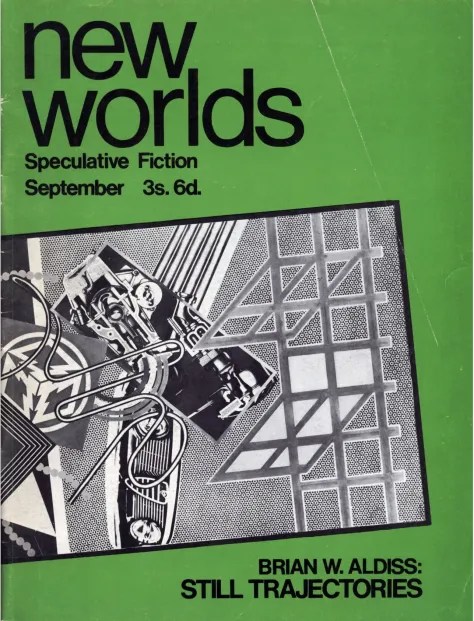
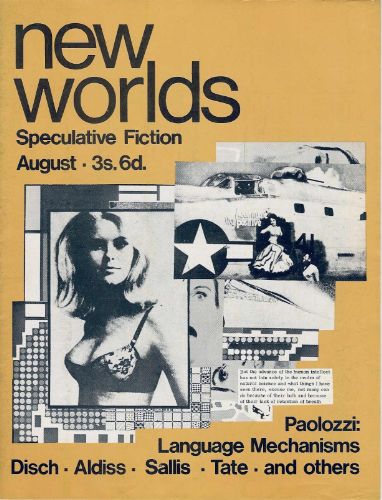
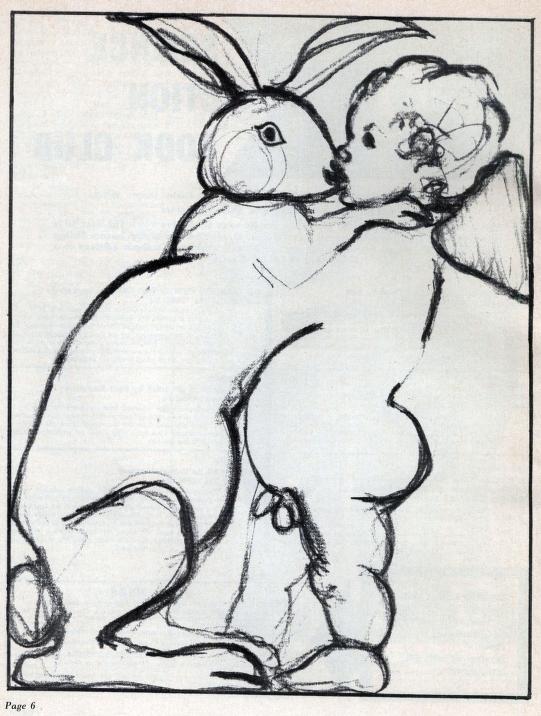



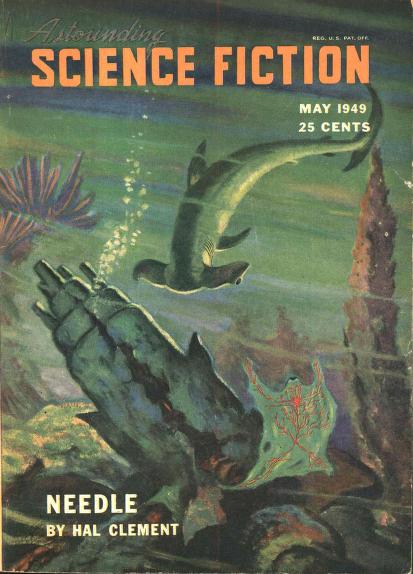

 Science Fiction & Fantasy Remembrance