Not much to say this month, except of course it is the start of Pride Month. For me Pride Month is every month of the year, so I don’t put that much significance in it; maybe I would if I went out more, attended some events in my city, which I should probably do. I’m only now realizing, as I’m finishing up this forecast post, that I could’ve also given more space to authors I know to be queer, but oh well. I focus more on old-timey SF (What even counts as “old-timey” at this point, like pre-2000?), and unfortunately there aren’t many confirmed-queer authors from before maybe the ’70s. You’ve got Frank M. Robinson, who was gay. Ditto for Samuel R. Delany. I’ve heard from a respectable source that Theodore Sturgeon was bisexual, but I’ve yet to dig into this and find actual evidence of it. Marion Zimmer Bradley was queer, but she was also a heinous sex criminal so I’m not sure about counting that. Joanna Russ was a lesbian, although I forget when she came out. You can see what my problem is there.
More so I thought about using this month to inject a bit more variety into my reviewing plate, so that it’s not all science fiction. Obviously I have to finish the Zelazny serial, which I’m liking quite a bit so far, but I also got the itch to tackle some sword-and-sorcery fantasy that isn’t Fritz Leiber or Robert E. Howard. Fuck it, John Jakes’s Brak the Barbarian. We’re also finally returning to Brian Aldiss’s Hothouse “series” with the third entry, this “series” being very much science-fantasy rather than straight SF. We’ve got a ’50s Cold War story from Philip K. Dick, who I love, and who in the ’50s seemed preoccupied with the possibility of nuclear annihilation. Relatable. Last but not least I’ve got a cyberpunk novella from Pat Cadigan, who on reflection I think is one of my favorite short fiction writers from the ’80s and ’90s. Then there’s Sonya Dorman, who I know I’ve read a few stories from in passing but I’ve not actively sought her out until now.
Going by decade, we’ve got one story from the 1950s, two from the 1960s, two from the 1970s, and one from the 1990s.
For the serials:
Doorways in the Sand by Roger Zelazny. Serialized in Analog Science Fiction, June to August 1975. Zelazny is one of the most influential SFF writers of all time, his mark being apparent on the likes of George R. R. Martin and (God help us) Neil Gaiman; and yet despite a couple generations of writers (especially those of fantasy) owing a debt to Zelazny, much of his work remains obscure or simply out of print, including this standalone novel.
Witch of the Four Winds by John Jakes. Serialized in Fantastic, November to December 1963. Jakes later found mainstream success writing historical fiction, but his early career was defined by SF and especially fantasy. During the sword-and-sorcery revival of the ’60s Jakes came in with his own sword-swinging hero, Brak the Barbarian. This serial got published in book form under the much worse title of Brak the Barbarian Versus the Sorceress.
For the novellas:
“Fool to Believe” by Pat Cadigan. From the February 1990 issue of Asimov’s Science Fiction. When it comes to naming the architects of cyberpunk the first to come up are William Gibson and Bruce Sterling, but Cadigan was also instrumental in shaping the movement. She had actually made her debut in the late ’70s, but as she did not write her first novel for several years she initially made her name as one of the best short fiction writers in the field.
“Undergrowth” by Brian W. Aldiss. From the July 1961 issue of The Magazine of Fantasy and Science Fiction. Aldiss started as a brave new talent in the UK before quickly (much faster than most of his peers, it must be said) making a name for himself in the US. “Undergrowth” is the third Hothouse story, out of five, all of which would then form the “novel” Hothouse. Aldiss won a Hugo for these stories collectively, as opposed to the novel version.
For the short stories:
“Breakfast at Twilight” by Philip K. Dick. From the July 1954 issue of Amazing Stories. In the ’50s, before he turned more to writing novels, Dick was one of the most prolific and awesome short story writers in the field. Not everything he churned out was a hit, but he had a respectably high batting average. Of course it’s very hard for me to be objective with Dick since he’s one of my favorites.
“Journey” by Sonya Dorman. From the November-December 1972 issue of Galaxy Science Fiction. Dorman was a poet as well as a short story writer who only wrote SF sporadically, and mostly for original anthologies, even appearing in Dangerous Visions. Most of her short fiction has been reprinted rarely or not at all, with “Journey” never appearing in book form as of yet.
(Cover artist uncredited. Startling Stories, May 1950.)
Who Goes There?
Everyone who makes it big has had to start somewhere, and the same can be said for John D. MacDonald, who became famous for his crime novels, be it standalones like Cape Fear (originally titled The Executioners) or his long-running Travis McGee series, about a detective who lives on a house boat. But before all those novels, MacDonald wrote a fair amount of SF in the late ’40s and early ’50s—a past he did not seem to be ashamed of, considering he also authorized a collection of his short SF in the ’70s, well after he had made it as a crime writer. Wine of the Dreamers would be either MacDonald’s first or second novel, and it’s certainly the first of a few SF novels he wrote. Why he started out with SF before soon moving to crime is unclear, but I would have to guess it has something to do with the bubble that was the market for SF in the few years right before and after 1950. If you’re a young writer looking to cut your teeth, like MacDonald was at the time, you could do much worse than writing SF, even at short lengths, since there was no shortage of outlets that took short SF. Aside from maybe catching a short story or two of his in passing this is the first thing by MacDonald I’ve read, which is not a typical starting point.
Placing Coordinates
First published in the May 1950 issue of Startling Stories. I got a PDF of the book version, and skimming through some sections quickly reveals that the magazine and book versions are rather different, with the former being abridged, although ISFDB and the SF Encyclopedia make no mention of this difference. Aside from an ebook edition the book version has not seen print in a couple decades.
Enhancing Image
I don’t have that much to say about Wine of the Dreamers, so I’ll put down my thoughts in note form and see where that takes us. My thoughts were a bit scattered as I was reading it and unfortunately, now that I’ve technically finished reading it and the dust has settled, I’m still struggling to process fully what MacDonald did here.
The premise is simple enough, although it’s given a smokescreen of complexity by virtue of there being two sets of protagonists for the price of one. Firstly we have Dr. Bard Lane and the psychologist Sharan Inly on Earth, in a quasi-dystopian near future where the space race (which mind you we were only starting to see the first glimmers of in 1950) is still a matter of national concern. Sensational news media dominates print and radio, with horrors like murder, theft, and scandal seemingly around every corner. Gambling has also become more of a concern, which is prescient on MacDonald’s part considering we in the year 2025 have a huge gambling problem—albeit more in the form of sports betting and video game micro-transactions than casinos. Divorce is also on the rise, because of course it is.
MacDonald has things to say about what were then society’s ills, or rather middle-class white America’s ills, without actually taking much of a political position. Like I couldn’t tell you if he was a Republican or Democrat at the time, although given this was before the late ’60s switching of the parties it wouldn’t have been much help anyway. In fairness to him, America really was in a liminal point in its cultural development: World War II had recently ended, leaving the US and Russia as the only really functioning international powers as far as Europe was concerned. The Allies had partitioned Germany, and even split Berlin in two, which itself turned out to be a humanitarian crisis. When MacDonald wrote Wine of the Dreamers circa 1949 it also would’ve been before the Korean War. TV was also only just starting to become commercially viable. If the scenes set on Earth do a good job at anything it’s capturing the uncertainty and paranoia of the immediate post-war years, without much room for so-called prosperity. It’s an America not too unlike ours.
The secondary plot follows the titular dreamers, or the Watchers as they’re called, a small and closed-off society of humanity in the stars that can barely be considered a society, being on its last legs and so decadent. Raul Kinson and his sister Leesa are young and rebellious members of a culture that has long since given up on progress and excellence, with the Watchers spending much of their time in dream machines, where they imagine themselves as other intelligent beings on other planets—one of these planets being Earth. Of course, the problem is that the “dreams” the Watchers have are not dreams at all, but rather the Watchers telepathically take over the minds of unwilling and unsuspecting hosts, only the Watchers don’t know this. The novel’s central dilemma is what might happen to such a society if it became aware of the evils it casually indulges. Philip K. Dick could’ve done a mean job with such a premise, but MacDonald is a very different writer from Dick and so isn’t as interested in the philosophical or religious implications of the dream machines. MacDonald illustrates the loneliness and creepiness of the Watchers’ society well, but he doesn’t go far enough for my liking.
So, the big thing that dates this novel, aside from it being very post-WWII, is the fixation with mental illness, or more specifically a neurotypical person’s conception of mental illness. This is gonna sound like it was done in bad taste, but the idea (I’m not kidding) is that the reason there have been so many freak incidents throughout modern history, with people seemingly going postal at random or being “possessed by devils,” is because of the Watchers abusing their powers and having way too much fun with the bodies they possess. Obviously we know this to not be true, and MacDonald would’ve known as well, but that didn’t stop him from coming up with a nonsense SFnal explanation for severe mental illness that shifts the blame away from capitalist society’s consistent demonizing of those with mental illness and puts it on a made-up outside force. As someone with a history of depression, this is hard for me to take. In the years immediately following the end of WWII there was evidently a resurgence of interest in psychology in middle-class America, and how people with mental aberrations might be treated. Wine of the Dreamers sees MacDonald hopping on that bandwagon.
Of the two plots, which get more or less the same amount of attention, the one focusing on the Watchers is easily superior. This might be because I’m indifferent to the Earth plot involving a rocket launch that goes horribly wrong (because I’ve become increasingly indifferent to space flight and the prospect of colonizing other worlds), but I’m more interested in fictionalized societies that say something about our own, by way of allegory. From what little MacDonald had to say about this novel we know he intended it to have symbolic meaning. The Watchers are humans who have been away from Earth for thousands of years, and the culture they’ve built up has been mostly forgotten and degraded to the point where they’re basically a dying race. As MacDonald says, “when original purposes are forgotten, the uses of ritual can be destructive.” The dream machines were not meant for sadistic fun, but as a teaching mechanism for the isolated Watchers. It’s a shame then that at least in the magazine version we only get the bare-bones version of this conflict. I will say, at least as an advertisement for the book version (although that didn’t come out until a year later), the magazine version of Wine of the Dreamers does its job.
There Be Spoilers Here
Of course all’s well that ends well, although it was indeed the ending of the magazine version that made me raise an eyebrow and wonder if there was more to the story. Turns out I was right. There’s a kind of romantic square going on between our four main characters, with Raul and Leesa taking over Lane and Inly’s bodies respectively, with Raul falling for Inly and Leesa falling for Lane. This hint of romance is only that: a hint. (By the way, something we learn about the dream machines is that the “dreamer” can only occupy the mind of a host who’s of the same sex, which makes you wonder what would happen if a cisgender Watcher took over a trans person’s body. Just food for thought.) In the magazine version we’re told, as really an afterthought of an epilogue, that Our Heroes™ will be having a double wedding, which is incredible considering they haven’t known each other that long. Skimming through the book version this epilogue at least feels less thrown-together, since it gets a whole chapter to itself as opposed to a couple paragraphs. Either way the ending is weak, smacking of either MacDonald not knowing how else to end his story or of editorial interference that would not have been unusual for the time.
A Step Farther Out
It’s competent, although somehow I felt like I was only getting part of the picture with it. It could be that the book version, being longer, is the better experience, but that’s a question to ask the three living people who have read the book version of Wine of the Dreamers. What’s funny is that looking up reviews on Goodreads, at least one major review implied to have read the magazine version, which is considerably shorter. Had I known about the difference in advance I might not have chosen this novel for review. I’m not sure if MacDonald had written the magazine version first and then expanded it or what have you, since despite being a popular writer in mystery/crime circles we actually don’t have much in terms of interviews and essays from MacDonald; he was not that much of a public figure. At some point I’ll tackle his short SF, which might be more indicative of his talent. If you’re gonna read Wine of the Dreamers then I suggest seeking out the book version, although it’s very out of print.
His star power isn’t what it used to be, although a TV adaptation of the Amber series might rectify this (because greedy executives are still looking for the next Games of Thrones), but back in the ’60s and ’70s Roger Zelazny was one of the big names in SFF. Like Ursula K. Le Guin and Fritz Leiber he was a big deal in both science fiction and fantasy, with his debut novel This Immortal (also titled …And Call Me Conrad) tying with Dune for the Hugo that year. This Immortal is ostensibly science fiction, but borrows heavily from Greek mythology so as to give it the impression of fantasy. This is a tactic Zelazny would use elsewhere, including Lord of Light (another Hugo win) and Creatures of Light and Darkness. Zelazny did not think himself part of the New Wave, but did run with those people often enough that he not only appeared in Dangerous Visions but Creatures of Light and Darkness only saw publication when it did at Samuel R. Delany’s recommendation. (In a kind of hat-tipping gesture Delany would later name one of the sections in his massive novel Dhalgren after Zelazny’s novel.) Zelazny’s career can be basically broken into three stages: the ’60s, the ’70s, and the ’80s. He died in 1995, at the relatively young age of 58. In the ’70s Zelazny focused on his Amber series, but he still had enough time to write several standalone novels, with Doorways in the Sand being one of them. I didn’t even know this novel had gotten a Hugo nomination, probably because The Forever War won that year and nothing else stood a chance.
Placing Coordinates
Serialized in Analog Science Fiction, June to August 1975. It was published in book form the following year by Harper & Row. Until a few years ago it wasn’t in print for a while, but it got new paperback and hardcover editions from a small press that seems to be dedicated to bringing Zelazny’s works back into print. This is a noble gesture, considering that until recently the only way you could get in-print copies of the Amber novels was as one huge unwieldy omnibus volume.
Enhancing Image
Fred Cassidy is charming, intelligent, and also quite lazy: in other words he’s the typical Zelazny protagonist. Fred has done very well as an undergrad, on paper—the problem being that he’s been an undergrad for 13 years. It has something to do with the will his uncle left, which stipulates that Fred’s to be given an allowance until he finishes his undergrad studies, a fact which Fred was all too happy to exploit. Of course, his uncle hasn’t died yet—merely gone into a cold-sleep chamber, which he might not even awake from. The legal situation with the will is rather shaky. Dennis Wexroth, Fred’s academic adviser, is very displeased about the fact that Fred’s been coasting on his semi-dead uncle’s inheritance, not to mention that Fred’s been using programs that should be left open for “real” undergrads—people about a decade younger than him. To make matters even worse, Fred’s looking for a new roommate, on account of Hal Sidmore, his latest one, leaving to get married, like a responsible adult. (Well, it was considered responsible at the time; nowadays it’s almost unthinkable to get married right out of college.) But wait, there’s more! In their dorm Fred and Hal had a replica of the star-stone, an alien artifact that had been given to mankind as part of a trade deal several years ago. The star-stone will be the McGuffin of this novel, and the reason for that is that the real star-stone seems to have gone missing, posing a big problem for mankind.
When I started reading Zelazny I was an undergrad myself, and I was mostly clueless as to what his influences could’ve been. Nowadays I’m a lot more “cultured” than I was back then, so it now strikes me as obvious that Zelazny must’ve read his fair share of detective fiction—not that of the Arthur Conan Doyle sort, but rather Dashiell Hammett and Raymond Chandler. We’re talking literary noir. Someone (I think it was John W. Campbell) said that SF and detective fiction simply don’t mix, which of course didn’t stop him from serializing The Naked Sun, Isaac Asimov’s classic SF-detective novel. The typical Zelazny protagonist is very much like a hardboiled detective, complete with grimy first-person narration, and Fred is no exception. He even gets the classic detective protagonist treatment: getting the shit beaten out of him. First it’s Paul Byler, who used to be Fred’s geology professor and who comes off as a bit of a mad scientist. Paul beats Fred almost to a pulp and threatens him, thinking he had taken a replica of the star-stone that Paul had kept in his lab. It turns out, however, that Paul’s replica and the one Fred and Hal kept in their dorm are different. Later a couple of goons also beat up Fred, this time over the real star-stone. Via a convoluted fashion it seems that the real star-stone, which the UN was supposed to keep safely locked away, has gone missing. (The UN, as per usual, is unable to accomplish basic tasks.) Had Fred graduated from college years ago like he was supposed to, none of this would be his problem.
Apparently Zelazny had written Doorways in the Sand in a quick burst of energy with little if any revising, which would explain the breakneck pacing, but also the lack of descriptions for places and how people look. If you pointed a gun at my head and asked me what Fred or Hal or Paul looked like, you would have blood on your hands. Anything (barring the snarky aside, which is a Zelazny special anyway) that doesn’t tie into the central mystery did not make it paper, which results in a taut and easy-to-read novel. The book version’s only about 180 pages, which was considered a novel back then but which nowadays is reserved for overpriced Tor Dot Com chapbooks. For better or worse I also get the impression that Zelazny wrote this by the seat of his pants, since he basically strings Fred along for one punishment or strange event after another; one minute we’re in his dorm and the next we’re in the Australian outback. How did we get here? I forget. Speaking of Chandler, Zelazny must’ve taken cues from his method of writing a novel for Doorways in the Sand, which is to say: “When in doubt, have a man with a gun come through the door.” (I’m actually paraphrasing Chandler, not quoting.) Fred, who’s kind of a deadbeat and also irresponsible, would come off as more insufferable elsewhere, but in this novel almost everyone around him is worse. Even Hal is only marginally more functional, given that he has a bad habit of drinking and gambling, and also his newfangled marriage has already hit a rough spot. These people are either dysfunctional or villainous, but that’s the fun of it.
There Be Spoilers Here
The most memorable part of the first installment is the back end, when Fred is on the brink of death and also somehow in the Aussie desert, with a talking wombat and kangaroo for friends. Of course the wombat and kangaroo are aliens in disguise, named Ragma and Charv respectively, although that doesn’t make their first meeting any less strange. Ragma and Charv are alien cops who take Fred off-world for a time in the hopes that he can lead them to the star-stone, but of course he doesn’t know where it is. Zelazny is a fan of talking animals, or at least aliens who take on the form of talking animals. It’s funny, so you can understand why he does it. Once Fred’s back on Earth he chills at Hal’s place (Hal is drunk, naturally), and from there we get a classic detective-fiction cliffhanger. This novel is unusual in how it depicts aliens in that first contact had already been made years ago, but mankind and the coalition of aliens (it’s like the Covenant from Halo, minus the violent religious zealotry) are not exactly on friendly terms with each other. There’s a complicated agreement between the governments that could go south at pretty much any moment. It’s like the Cold War, which was still going in the ’70s but thankfully was not at a tipping point. We’ll see if this turns into a full-on Cold War allegory or if I’m just overthinking things, considering Zelazny doesn’t tend to “get political.”
A Step Farther Out
Doorways in the Sand placed second on the Hugo ballot, but there must’ve been a disparity in votes between it and The Forever War given that the latter is still famous whilst the only people I’ve seen talk about Zelazny’s novel are boomers who will soon shuffle off this mortal coil. It’s a shame, because assuming the quality doesn’t dip this will be the best serial I’ve read in a hot minute. Zelazny himself considered this novel one of his favorites, and I’m starting to understand why. There’s a joyful and kind of zany energy to it, being probably the least serious Zelazny novel I’ve read. You’d have to be a stick in the mud to not have fun here.
(Cover by Graves Gladney. Unknown, November 1939.)
Who Goes There?
Crime fiction was and still is a genre kept in its own ghetto, like SF and fantasy, but as with those other genres it sometimes has broken into the literary mainstream. One of the big success stories of classic crime fiction is Raymond Chandler, who aside from writing some poetry had not tried his hand at writing professionally at all until he was in his forties. (This is a lesson in how if you’re such-and-such an age and wondering if it’s too late to try your hand at writing, don’t worry.) He was born in Chicago but came to be deeply affiliated with LA, which is no surprise given that that nearly all his novels take place in LA and its surroundings. He also spent some of his formative years in England, getting an education there, hence his US-UK dual citizenship. In fact Chandler’s knowledge of England plays into today’s story, which is not a detective story (although there is a detective in it), nor is it set in the US at all, but instead Victorian-era London. “The Bronze Door” is the only Chandler story to be published first in an SFF magazine, and it saw print the same year as The Big Sleep, his debut novel. Chandler had turned fifty by this point. He ended up writing only seven novels plus a rather modest supply of short fiction (he mostly stopped with the latter by around 1940), but it was enough.
Placing Coordinates
First published in the November 1939 issue of Unknown. It has the rare of actually appearing in a genre magazine twice, being reprinted in the October 1953 issue of The Magazine of Fantasy and Science Fiction. You can also find it in the Chandler volume Collected Stories.
Enhancing Image
James Sutton-Cornish is fat and middle-aged, and also given to day drinking, which angers his wife to the point where she can’t take it anymore. Mr. and Mrs. Sutton-Cornish have been living in the estate of the former’s ancestors, which really is the only thing that belongs to him; everything else belongs to the wife, including Teddy, their dog. “The rest was hers. Even the clothes he wore, the money in his bank account. But the house was still his—at least in name.” With their divorce underway, James heads out and goes into a bit of a stupor, and catches a cab—that being a horse-and-buggy, not a car. This strikes him as odd, but not that odd. “The Bronze Door” is presumably set in what was then the present day (the 1930s), and at one point James refers to “the war,” probably meaning World War I. But the cab seems to go back in time, at least to the Edwardian era, so that as James makes his way to Soho he also travels to an older, darker, grimier London. He doesn’t like this very much. He ends up at an auction house, and this is where he comes across the door of the title, which is a pretty weird contraption. It’s a metal door that can be placed anywhere and which opens one way, to—somewhere. Possibly nowhere. The theory we get from James is that the bronze door comes from the Golden Age of Islam, in which a sultan or whoever would use it as a method of hiding inconvenient concubines. (It’s Chandler, so of course sex comes up, but it’s also Unknown so it’s very tame.) James takes the door back home with him. Hilarity ensues.
Not that James was a good person to begin with (actually he and Mrs. Sutton-Cornish were arguably made for each other in that they’re both kinda evil), but “The Bronze Door” sees Our Anti-Hero™ slip into outright villainy by the simple abuse of a magical power. We see what the door does by some criminal who’s on the run going through it and simply vanishing into thin air, and it doesn’t take long for James to get a few ideas as to how the door might be applied to his benefit. Like getting rid of a bitchy ex-wife. There’s a tinge of misogyny here, as well as a homophobic remark that Chandler throws out there out of nowhere. At his home, James has portraits of now-gone family members, with the one sticking out being a general who was apparently an evil piece of shit, and also “fruity-looking” in the attire he wore for his portrait. Of course we’re supposed to infer that this general was depraved and debauched in some way, although in ways that Chandler is not really able to describe; for better or worse the general’s crimes are left up to the imagination. Given that Chandler’s writing can be pretty hardboiled and graphic for the time, I have to wonder if “The Bronze Door” was written as this tame or if it got put through the washer by John W. Campbell and his secretary. In the introduction for the F&SF reprint, the editors say that Chandler had actually written a lot of fantasy fiction over the years, but without the intent of seeing it published. The implication is that there’s this treasure trove of such fiction written by Chandler, but given that Chandler died in 1959 and that literally none of this alleged fiction has turned up, I have to wonder if they were misled, or if perhaps Chandler’s estate had his unpublished work locked away indefinitely. Needless to say this is not as hardboiled as Chandler’s usual stuff, and also given that he turned mostly to writing novels after this point it’s easy to see how he only had one other fantasy story published.
I mentioned earlier that while it’s not really a detective story, “The Bronze Door” does have a detective, in the form of Detective-sergeant Lloyd, who starts out as being on the trail of the criminal James has sent through the door, and who later sniffs around once one too many people in the area go missing without a trace. Lloyd is probably the closest we get in Chandler’s work to his take on Sherlock Holmes, although Lloyd is less a Sherlock parody and more your typical image of a late 19th or early 20th century British detective. (I should also probably mention again that the time period for “The Bronze Door” is rather vague, since it’s implied to take place in what was then the modern day, but there are also hints of a pre-WWI Britain. Chandler doesn’t explain it really, and this might be my biggest quibble with the story.) Generally Chandler could’ve done to explain more of the setting, or rather given us a more vivid picture, but what he does give us is splendid in the moment. Nobody does the simile quite like Chandler. There are descriptions of things here that I’d never even thought of before, let alone seen in writing. Philip Marlowe, the jaded protagonist of all of Chandler’s novels, has a way with words that tells us he’s more cultured than he appears, being a chronically drunk private detective, and Chandler does what he can to translate this prose-poetry to a very different setting with a very different kind of protagonist. If this were a more typical Chandler story then Lloyd would be the viewpoint character, since he’s the closest we get to a hero in this ordeal, but instead for the most part we’re stuck in the shoes of the no-good upper-class bum that is James.
There Be Spoilers Here
After James has gitten rid of the wife, and also her dog, one gets the sense that the walls are closing in on him. He’s “won” in the short term, but now he’s lonelier than ever, firing the few people working at his estate and spending the rest of the story as a cranky loner, sinking deeper into what is clearly insanity. There’s a hint of the gothic about “The Bronze Door,” with both the architecture of James’s estate and the implication that he’s falling prey to a strain of insanity that runs in his family. It’s somewhere between “The Fall of the House of Usher” and “The Rats in the Walls,” although it’s not quite a horror story. Naturally murder (in effect if not the exact result) will out, and eventually Lloyd tracks down James. The two have a bit of a fight, although it doesn’t last long, which makes since given we’re told Lloyd is a lot more physically fit than the decrepit James. The ending as a whole is not surprising, but a neat touch is that Lloyd gets some PTSD from James disappearing into the bronze door, it being a supernatural event that he can never bring himself to explain. It’s something that would freak out anyone outside of The X-Files, even someone as experienced as Lloyd. But hey, he gets a promotion and becomes an inspector by the end, so it’s not all bad. The fact that we never see what becomes of people who go through the bronze door makes it just a bit creepier. I should mention that Chandler, aside from being a raging alcoholic, seemed to have episodes of depression, most severely after his wife died, wherein he actually attempted suicide, so his fiction would be pessimistic.
A Step Farther Out
As you can see, “The Bronze Door” is a little detour in Chandler’s oeuvre, being a fantastic mystery, but not a mystery of the sort that Chandler was used to writing. Then there’s the setting, of which we never see the like again before or after with Chandler. It’s predictable, but also a solid story that’s elevated by Chandler being frankly a better prose stylist than most of the people contributing to Unknown. When you read Chandler you read for the flavor of the words more so than the plot. Not sure how Campbell managed to procure a story from someone who apparently had no experience with fantasy, but it’s a charming and somewhat eerie diversion that sees a master outside of his realm of expertise.
John Devlin used to be a doctor on Earth, but now he’s a passenger aboard a ship in search of a planet fit for human colonization; the voyage is expected to take centuries, probably a thousand years or so. The people aboard this ship spend 99% of their time in cold sleep, experiencing surprisingly vivid dreams that leave them feeling both disturbed and weary when they awake. The ship’s computer handles almost everything, but occasionally it awakes a passenger to do some exercise, recall their dreams, and also handle ship malfunctions if needed. There’s a scare towards the end of the first installment in which some intelligent aliens try to destroy the ship, but Devlin, on being awakened, is able to take control and outmaneuver the aliens, whom we’ll not see again—for now. There’s another malfunction in which one of the other passengers, in trying to see her boyfriend who’s also onboard, doesn’t get back into her chamber correctly and so dies slowly, although thankfully she’s unaware of what’s happening to her. This sad scene shows us Devlin’s past as a medical professional and that he knows a bit more than he lets on, although not enough to know exactly why these vivid dreams are happening. Through lengthy flashbacks we’re introduced to Patricia Morley, who’s a fellow passenger and also Devlin’s love interest. We’re also introduced to Brother Howard, a religious fanatic who only appears in flashbacks but who ends up being kind of a mouthpiece for White’s opinions on human nature, not to mention he has quite a bit to do with Devlin and Patricia’s voyage.
The Earth that Devlin and Patricia came from has gone to shit, which is to say it’s only marginally worse than Earth as it is now. The question driving the whole novel comes down to this: “Is humanity worth saving?” Both Devlin and White have a tug-of-war between genuine pessimism and hope that humanity might be able to move on from its dark past. Over the course of the novel Devlin has dreams of being people and even non-humans from the past, from a sauropod in the Jurassic to a medieval warrior king, to memories of his own life. Every dream somehow involves violence and death, sometimes simply due to circumstance, sometimes because of human malice. To paraphrase Marx, history doesn’t repeat, but it does rhyme. Brother Howard was once an astronaut of sorts, and in flashbacks he tries to prepare Devlin and Patricia for the horrors that await them. One can easily go insane in space. A fellow passenger had at some point gamed the system so that he could walk about outside of his chamber, only to commit suicide, with his eyes taped open.
Enhancing Image
I was worried White would fumble the last installment, or make it so that the more tedious moments of previous installments would be in vain, but thankfully he sticks the landing. I’m not sure how White went about writing The Dream Millennium; it’s possible that aside from a basic outline he wrote by the seat of his pants, which would’ve been far from unusual at the time. I suspect, although I have nothing to back this up with, that White had a beginning and ending in mind, but improvised with the middle portion, hence why there are some stretches here that come off as flabby and perhaps unnecessary. The medieval sequence, which takes up a chunk of the second installment, has some thematic significance, but is too drawn out and without anything to make us invested in the action. There’s a sequence early in the last installment where Devlin dreams that he’s a pilot whose airplane has been taken over by a team of hijackers that’s both more involving, more memorable, and also having more directly to do with the novel’s ideas about humanity’s capacity for violence. White’s fascination with violence, or rather his profound distaste for it, comes up again and again, both in his work generally and also in The Dream Millennium where Devlin and Patricia are constantly haunted by it.
The ship had been future-proofed up to a point, but after centuries (quite literally a millennium by the end of the novel) the cracks in the armor are beginning to show, so to speak. Devlin at one point finds, to a mix of horror and wonderment, just how old and dilapidated the ship has become, despite only maybe a few weeks of subjective time passing for him. In old-timey SF space technology will be new and shiny seemingly forever, but this is not the case in White’s fiction. Also, a few of the human crew have died already and a malfunction with the others’ chambers leaves only Devlin and Patricia awake at the end, in charge of a bunch of people stuck in deep sleep who will no longer be able to sit back while centuries pass by around them. They have to find a habitable planet real soon, more out of necessity than anything; it’s either that or death for all of them. You may also recall that at the end of the first installment Devlin narrowly avoids trouble with some intelligent aliens, who are rather quickly forgotten about; the good news is that this scene was not for nothing after all, since this same alien race, several centuries later in their time, figure back into the plot. It’s a bit of a deus ex machina, with how both the humans and aliens get a happy ending, but White makes it work by virtue of having used time dilation to his advantage. Indeed the ending reminded me a bit of A. E. van Vogt’s “Far Centaurus,” which uses time dilation for similar effect.
Even the flashbacks featuring Brother Howard, which probably take as much time on the page as the A-plot aboard the ship, if not more, lead to a pretty satisfying conclusion. Brother Howard used to be insane (as opposed to how he is now, which is just a bit cooky), on account of PTSD from being an astronaut, but through years of therapy he was able to return somewhat to normalcy. (In the days before manned spaceflight, and even during the height of the Space Race, there was a lot of speculation that astronauts would experience PTSD [although it wasn’t called that at the time] much like how soldiers did. The image of the astronaut-as-soldier was a powerful one, although it’s gone out of fashion in recent decades.) Brother Howard has been testing Devlin and Patricia so that he might recruit them for this extraordinary space voyage—a trip that would take more mental fortitude than most things; of course he finds Devlin and Patricia fit for the job. I’m not sure if it was necessary for Devlin and Patricia to be a romantic item, since the latter basically exists so that Devlin has a flesh-and-blood person to talk to on the ship, but it’s not like she’s a one-dimensional character. Aside from his aversion to violence it seems like White also avoids really bad misogynistic tendencies that some of his contemporaries were guilty of (looking at you, Silverberg). Overall this is a read that I would describe as refreshing, if also B-tier in quality.
A Step Farther Out
I think The Dream Millennium would’ve worked better as a novella, but given that I had read it sporadically over the span of a couple weeks, with digital scans of the magazine issues, it’s possible I won’t feel the same if I had a physical copy of the book version in my hands. White is kind of a unique and yet obscure talent in the context of when he wrote, especially in the ’50s through the ’70s, when casual violence still permeated genre SF and there was much undue optimism about mankind conquering the stars. White’s pacificism speaks to the latest generation of SF writers, even if his style is still on the workmanlike side.
Theodore Sturgeon was one of the great writers of SF and fantasy from the early ’40s until about a decade before his death in 1985, especially at short lengths. He’s also responsible for one of the all-time great Star Trek episodes, “Amok Time,” and was instrumental in building up the lore of the Vulcans. Sturgeon’s Law, also called Sturgeon’s Rule, goes like this: “90% of science fiction is crud, but then 90% of everything is crud.” This is more or less true. Sturgeon also had a pretty good criterion for determining what made for good SF, although he didn’t always follow said criterion: a good SF story should introduce a human problem that can only have an SFnal solution. Conversely you could have an SFnal problem with a human solution. This is not to say Sturgeon’s stories were strictly “problem” stories—far from it. His fantasy stories especially play fast and loose with genre conventions, although today’s story, “The Other Man,” is psychological SF in the sense that it deals with psychology, which is a soft science. Maybe the softest and squishiest science of all. SF focusing on psychology seemed to be all the rage in the ’50s, especially in Galaxy, which Sturgeon wrote consistently for at the time. Between his alcoholism, string of odd jobs, and troubled relationships, Sturgeon’s output came in peaks and valleys; he either wrote a lot or nothing at all. But the ’50s saw Sturgeon in his prime, and while “The Other Man” isn’t top-tier material it does show an ambitious writer who worked tirelessly, if also imperfectly.
Placing Coordinates
First published in the September 1956 issue of Galaxy Science Fiction. It’s been reprinted in SF: The Year’s Greatest Science-Fiction and Fantasy: Second Annual Volume (ed. Judith Merril) and the Sturgeon collections The Worlds of Theodore Sturgeon, The Stars Are the Styx, and And Now the News…
Enhancing Image
Fred (I don’t think we ever get his last name) is a combination of physician and therapist, in a future not so different from what was then the present in which psychology has been made just a bit less soft a science thanks to machinery. Unfortunately the machine in question, the psychostat, will only help him somewhat with his latest case. The problem is that Fred and one Hildy Jarrell (her nickname is Osa, so that’s what I’ll call her from now on) used to be lovers, but broke up five years ago. Now Osa’s married to Richard A. Newell, who’s a real nasty piece of work, and Osa wants Frank to help her current partner, as a kind of favor. This is probably the worst thing Osa could’ve done, having her ex work on her husband’s brain, but there’s a certain logic to it, not to mention that if she hadn’t made this weird choice then we wouldn’t have a story. Much of the conflict has to do with Fred’s own internal troubles, but also there’s the fact that Richard himself is not what you’d call a cooperative patient. Finally, to round out the cast, there’s Fred’s assistant, Ms. Thomas, who basically acts as the voice of reason and whose relationship with Fred is ambiguous. Are they just colleagues, or is there something else going on?
Thus we’re off to the races. The setup is simple and for a novella “The Other Man” goes by pretty quickly, but then it’s only maybe 19,000 words. I have a few issues with The Collection Short Fiction of Theodore Sturgeon, of which And Now the News… is a part, namely its mediocre proofreading and the occasional flub on series editor Paul Williams’s part, but Williams’s note on “The Other Man” is quite useful and enlightening. This novella could be considered a collaboration between Sturgeon and Robert Heinlein, in which the latter basically provided the premise for it while Sturgeon did the actual writing. This came about through a series of letters, and it’s interesting to read about if only because Sturgeon and Heinlein are quite different, in their personalities, politics, although not their work ethic, both being imaginative but also having often to be coaxed into getting the writing done. (Also, totally a tangent, but I’m a procrastinator who needs to be under at least a bit of pressure in order to write anything. Partly I blame the clinical depression, but even if I wasn’t often in a depressive episode I would still be prone to waiting until the last minute.) It’s also worth mentioning that for someone who at least publicly had the reputation of deriding psychology (there’s a memorable passage in Time Enough for Love in which Lazarus Long, one of Heinlein’s escapist characters, considers psychology to not be a real science), Heinlein still seemed to read a fair bit on it. Then there’s Sturgeon, who was interested in psychology but also its alternatives, to the point where he was apparently sympathetic to Dianetics in the ’50s (this was unfortunately not unusual among SF writers at the time). So “The Other Man” shows a meeting of the minds—one within the story, but it also shows such a meeting between two of the field’s great writers.
The problem with Richard, aside from being a gaping asshole, is that he has what used to be called multiple personality disorder (MPD), now called dissociative identity disorder (DID). The former was still the clinical term when Sturgeon wrote “The Other Man,” and as such his depiction of this mental disorder is rather out of date, although surprisingly (except for Sturgeon it’s unsurprising) Richard is not demonized for his mental illness. He has issues, is combative with Fred, and his relationship with Osa is on the skids, but this would probably be the case even if he didn’t have a separate identity that occasionally fronted—that separate identity being Anson. (It’s worth mentioning here that Sturgeon named Anson after Heinlein’s middle name, as a kind of tip of the hat.) Anson is “cherubic,” as I think Thomas describes him, but he’s also mentally challenged (that’s not the term Sturgeon uses, just be aware) so that despite being a grown man in personality he’s written as having the temper and vocabulary of a confused child. Fred’s able to make Anson front thanks to the psychostat, the idea being that the machine, using cycles, can break down parts of someone’s personality before putting it back together; in the case of there being more than one personality in a single body this proves to be a bit of a challenge. Fred is thus stuck with a dilemma, since medically he should eradicate Anson and in so doing “cure” Richard, but he’s also tempted to eradicate Richard’s personality and allow Anson to take over. Because this is basically a medical drama there has to be some kind of ethical dilemma.
Sturgeon combines SF technology with treatment of mental illness to explore the mystery of human nature, which both then and now is something that’s hard to parse. We know now that DID tends to be a response to severe trauma, so that a person’s identity has become fractured, but we’re not really sure why Richard is like this. The point that both Sturgeon and Fred are more concerned with is the duality of Richard and Anson as personalities, being like Siamese twins and so conjoined, but literally in the same body as opposed to sharing some skin or organs. The “other man” of the title is at least a double entendre since it could refer to Richard as “the other man” that Osa’s seeing, but also Anson is the “the other man” in Richard’s body. In Sturgeon’s world, people contain multitudes, whether they suffer from mental aberrations or not; his characters are some of the most complex and internally conflicted in old-timey SF. Fred himself is conflicted on what to do, since he’s trying to figure out what’s best for Richard, what’s best for Osa, and then finally what’s best for himself. Modern readers will be quick to notice that Fred is almost laughably unprofessional, to the point where it might strain one’s suspension of disbelief; as for me I have to admit I also found it a bit distracting, but then I also didn’t expect this story to be so insular and on such a small scale. We’re stuck with four (well, five if we count Anson) characters in what may as well be a single room, so that despite being a novella the action feels cramped.
There Be Spoilers Here
Fred and Thompson go through some options as to what might be done about Richard-Anson, with one being to have the two personalities work in shifts. This might not be a coincidence, since I’m 99% sure Sturgeon had read Wyman Guin’s “Beyond Bedlam” when that appeared in Galaxy five years earlier, but that might also just be serendipity. Mind you that aside from tackling 1950s ideas of mental illness, “Beyond Bedlam” and “The Other Man” don’t have much in common, with the former being about what might happen if a certain mental disorder were to become the new norm on a societal level, whereas the latter is far more inward-looking. Sturgeon preceded the New Wave by a couple decades, but “The Other Man” very much anticipates the New Wave’s preoccupation with “inner space,” in that it’s more concerned with human psychology than technology. Anyway, the solution ends up being that with the help of the psychostat Fred is able to merge Richard and Anson into one personality, a kind of mixing of the two so that Richard-Anson becomes a single identity, presumably with each man’s memories intact. It’s really a compromise, because otherwise one of them would have to go. At the end we’re treated to a thank-you letter from Osa, which if I was Fred I wouldn’t know how to feel about, given that she’s my ex and she’s fucking this guy I don’t like. At least it’s implied at the very end that Fred and Thomas’s strictly professional relationship is about to take a friendlier turn, so, all’s well that ends well? It’s a bittersweet ending, although it leans more on the sweetness.
A Step Farther Out
I’m constantly itching to cover more Sturgeon, although there are so many authors to choose from and life is short. This is because, depending on the time period, Sturgeon did write a lot and most of his work appeared in magazines, but also he’s such a multifaceted writer. There is no single Sturgeon story that sums up all his virtues, or which acts as a perfect gateway to his larger body of work. I could write about Sturgeon until I fucking die, and yet as far as I can tell we don’t have a proper book-length biography of him. This is terrible. “The Other Man” is B-tier Sturgeon, which means it’s still better than most SF from the ’50s.
(Fritz Leiber and Katherine MacLean at the 1952 Worldcon.)
When you read and review old science fiction as a hobby, at some point you have to ask a certain question: “How come so many of these authors from fifty to a hundred years ago, who if fan letters are to be believed were seen as giants in their day, are obscure now?” This inevitably leads to some really boring follow-up questions, such as “What belongs in the science fiction literary canon?” and “Can there even exist such a canon in the first place?” These are boring questions in themselves, if only because they’re so old that the questions have crow’s feet and grey hairs, but they do at least imply something about SF literature that is arguably unique to it, which is that, far more than with fantasy or horror, the SF “canon” is fluid. There are exceptions, but even these exceptions (which I’ll get into) are far from immune to criticism, especially from younger fans, to the point where even the most rock-solid canonical author’s reputation could erode to the point where they’re, at best, considered something of a sore subject. We actually see this happening with Robert Heinlein and Isaac Asimov in real time, and I think it’s only a matter of time before Arthur C. Clarke’s reputation takes a serious hit—more for what seem to be a few skeletons in his closet than the importance of his writing. The reality is that the people (well, usually men) most influential in the development of SF as its own genre are only human, which is a diplomatic way of saying that these people have issues. That SF fandom has been, in all honesty, more proactive in recent years about how it should deal with canonical works and authors than some others is a testament to the fandom’s—and by extension the genre’s—ability to adapt to changing circumstances.
Of the genres that involve fantastic or supernatural events, SF is the youngest, the most rebellious, and the most likely to question its own masters. Unlike fantasy and especially horror, which are (in my opinion) implicitly conservative genres in that they’re prone to defending the status quo against all sorts of change (the oldest fear, as Lovecraft puts it, is fear of the unknown), SF at least ideally wants the status quo to be shaken and even shattered. There’s a reason why most notable works of dystopian and utopian fiction are SF and not fantasy: they look on the status quo that is our world and cast either a hopeful or pessimistic light, or in the case of something like Ursula K. Le Guin’s The Dispossessed, a cautiously optimistic light. The single most famous work of fantasy (at least of the 20th century), The Lord of the Rings, is ultimately a story wherein the good guys bring back the status quo as much as they’re able to; it’s a story about a “rightful” monarch returning to the throne that he very obviously “deserves.” Yet perhaps its closest SFnal equivalent, the Dune series, shows the other side of the coin, wherein a young ruler-to-be fulfills a prophecy and the results are catastrophic. Frank Herbert had his own issues, namely his homophobia, but his staunch ambivalence towards authority figures clashes with Tolkien’s belief that there’s a “correct” ruler and that the status quo is something worth fighting for. SF, at its core, is about rejecting authority, which makes the considerable swath of conservative SF fans a bit perplexing. It might be more accurate to say SF is all about changes, whether they be for good or ill. In horror especially, though I love that genre dearly, pretty much any change that comes the protagonist’s way is to be taken as a threat; but for SF this is not so. The question is, then, what do you do with a genre that’s always changing? Or rather, what do you do with its relics?
When E. E. “Doc” Smith made his debut in 1928 with The Skylark of Space, it changed what was possible, for nobody had ever seen a spacefaring adventure of this scale before. “Space opera” was not even in our lexicon yet. There’d been stories about traveling beyond Earth, for example going to Earth’s moon, but there wasn’t anything in SF up to that point that was on the same scale of what Smith was doing. Soon what seemed like a one-off thing at first became a series, and then came the Lensman series, and then the rest was history—up to a point. From the tail end of the ’20s to his death in 1965, Smith was immensely popular with SF fandom; and yet he remained totally unknown outside of that ultimately small pocket of readers. When Smith died, the wind did not change direction, nor did the sun shine any less bright, nor did the seas wax and wane any differently. There used to be people who loved reading E. E. Smith, but they’re all dead now. His work stands now as a bunch of museum pieces, I would say for the simple reason that he was not a good writer; he was innovative, but that’s not the same thing as being good, although we have a bad habit of thinking a work of art must be good to also be innovative. When Alexei and Cory Panshin wrote The World Beyond the Hill: Science Fiction and the Quest for Transcendence, a big Hugo-winning book that took over a decade for them to write, they felt the need to defend Smith, for fear that his reputation was going down the shitter, which it was. The World Beyond the Hill came out in 1989, and since then the SF world has very much moved beyond Smith. This is a case where someone was treated as canonical by the end of their life, only to gather dust and at times derision for decades afterward, for the straightforward reason that the author’s work does not hold up to modern scrutiny. Time has been unkind to E. E. Smith and some others of his ilk.
So someone loses their canonical status because they’re simply not that good a writer. It happens. But then what happens when you have someone who by all rights should retain that canonical status, yet who nowadays is somewhat and unjustifiably forgotten? There are too many examples of such a phenomenon to list. I said before that SF is prone to questioning its masters, as well as doing a good job of tossing aside work that no longer rings as good or true; yet SF is equally prone to forgetting its best. One of the most glaring examples of this has to be Fritz Leiber, whose fantasy work is still in print, albeit not that easy to find, but whose SF has been relegated to the museum. I’ve written about Leiber enough here already so that I don’t wanna repeat myself too much, but it’s hard to overstate, from the late ’30s until close to his death in 1992, how game-changing Leiber was. Not only was he an innovator in heroic fantasy, his Fafhrd and Gray Mouser series even getting parodied in Terry Pratchett’s Discworld series, but he was one of the finest wordsmiths of his generation when it came to SF, fantasy, and horror. Indeed he’s one of the few authors who handled all three genres with more or less equal craftsmanship. He won multiple Hugos, both during his life and also one or two Retro Hugos, and he’s also one of the few people to be a Guest of Honor at Worldcon more than once, in 1951 and again in 1979. Yet nowadays you’d be hard-pressed to find Leiber’s books, even at your local used bookstore, with many of his books straight-up being out of print. If Amazon and Goodreads numbers are anything to go by (and admittedly you should take a pinch of salt with those sources), barely anyone today reads Leiber. This is rather hard to justify. Mind you that the man was not perfect, between his alcoholism and at times messy relationships, and the fact that not everything he wrote was good (The Wanderer is enough proof of that); but surely he deserves better than this.
Sometimes an author falling into obscurity has nothing to do with the quality of their work or the moral fiber of their character; actually if anything we’ve learned that you can be a real piece of shit as a human being and millions of people will still read your books. (We really have to confront people more aggressively on why they feel justified supporting J. K. Rowling in any way.) It seems to me that losing canonical status has at least as much to do with bad timing, or circumstances beyond the author’s control, as it does with the author’s own actions. It could also have to do with the fact that SF fandom today is almost unimaginably larger and more varied in its makeup than even a few decades ago. Being hot shit among SF readers in 1980 does not carry the same weight as being hot shit among SF readers in 2025, because now there are so many more people from different backgrounds who read SF regularly. Fans tolerated or didn’t even know about Asimov’s harassing of female authors and fans when he was alive, but rest assured he would not be able to get away with such foolishness today. This is a good thing, mind you. We’re doing a much better job of holding each other accountable now than before. This then presents another problem, though. How do you rescue works and authors who once had canonical status from oblivion? Another problem is, what do we do with authors who nowadays are elder statesmen? Will someone who is considered a big deal today still be remembered in another twenty-to-thirty years? Will we forget about Ted Chiang, or John Scalzi, or Martha Wells? Will there be some invisible executioner with a line of riflemen, ready to take aim and fire? Who gets to be remembered? How much control do you have over your own legacy? One can certainly do a thing or two to demolish your own chances at being remembered (or at least remembered fondly), but securing said reputation might as well be left up to the directions of the wind.
When August Derleth and Donald Wandrei founded Arkham House in 1939, it was for the express purpose of preserving Lovecraft’s works, by way of giving them fancy hardcover editions. Lovecraft had died in 1937, in poverty and as an obscure figure in the grand scheme of American letters, and there was a pretty good chance he would’ve retained that obscurity (at least for a while) if not for Derleth and Wandrei’s efforts. Arkham House soon expanded its scope and brought other authors from the Lovecraft circle into book form, giving them similarly needed facelifts. Now Lovecraft is recognized as one of the most important writers of the 20th century, even getting a Library of America hardcover volume collecting his most essential work, and “Lovecraftian” horror is synonymous with cosmic horror. Yet there are other authors, like Henry S. Whitehead and Frank Belknap Long, whom Derleth and Wandrei had rescued temporarily, only to still languish in obscurity decades later. Someone with resources might come along to dig up your work after you’ve died and give it the “proper” treatment, but that doesn’t necessarily mean you’ll be canonized posthumously. There are too many factors going into one’s own assessment as a writer. I know this is a very “boomer” opinion to have, even though I’m only turning thirty this year, but it seems to me that people around my age who are earnest about SF are, in questioning the supposed masters of yore, too quick to throw the baby out with the bath water. As a fan myself there’s not much I can do about this, but at least I’m trying here.
John Devlin is one passenger out of many aboard a spaceship, which at the beginning of the novel is already nearly a century into its voyage in search of a planet suitable for human colonization. The trip is expected to take several centuries, possibly even a millennium or more of objective time; as such, the human crew spend about 99% of their time in cold sleep, only to be woken up periodically to be tested by the ship’s computer, or to take care of some malfunction that the computer can’t handle itself. During these periods of cold sleep, in which almost no time at all passes for Devlin while decades slip by outside, he has some pretty vivid dreams, including dreams of deep-sea prehistoric life, being a sauropod in the Jurassic era, and flashbacks to his own life before he got recruited for the voyage. During one of these times where he gets woken up to handle a malfunction, a fellow passenger named Yvonne Caldwell, barely old enough to even be on the ship, is dying in her chamber, having not gotten into its properly before cold sleep took over. Caldwell wanted to see her boyfriend, who’s also on the ship somewhere, and for better or worse she’s unaware that she’s dying pretty horribly. Devlin does his best to comfort her in her last moments before she passes, and this is our first big hint that Devlin was a doctor before he left that life behind and became a passenger here.
We get a rather extensive flashback to Devlin’s life on Earth not too long ago, and apparently life on Earth has gone to shit (well, it’s only marginally worse than what we’re dealing with now). Someone I did not bring up in my review of the first installment, because her subplot did not reel me in enough at the time, was Patricia Morley, whom Devlin got to know in this flashback and who actually is also a passenger on the spaceship. Despite being standoffish in personality and also having a bit of a fucked-up face (from self-harm), Morley is Devlin’s assigned love interest for the novel. She ends up being a more significant character than she appears at first, not least because by the end of the second installment she and Devlin have both gone basically rogue on the ship. There’s also the enigmatic Brother Howard, who only appears in flashbacks and who is ostensibly of a religious order, but he seems to know more than he lets on and there’s a good reason for this. It’s also during these sequences that White’s own background as an aspiring doctor who lived in Ireland during one of the most violent periods in the country’s history is brought to the forefront.
Enhancing Image
I think my big problem with The Dream Millennium is that it’s basically two storylines, each rich enough for maybe a novella but not enough to carry a full novel on its own, that are connected enough, but then there are also scenes that have, at least on a surface level, fuck-all to do with either of the main storylines. Here, in the second installment, there’s a whole sequence (it might’ve gotten two chapters, I forget) in which Devlin dreams of being a warrior prince in medieval times who wins against a neighboring kingdom, only to have a horrible marriage in the aftermath. There’s a marked difference between Devlin’s dreams of what seem to be past lives and his dream-memories of his own life, since the former are given very little context or background. The first few dreams, involving prehistoric life, are fine as written, but unless White has something up his sleeve, the medieval sequence could’ve been cut out without diminishing the two main storylines. It’s frustrating, because this is already not a long novel (paperback editions run a bit over 200 pages), but I feel like there’s some filler here. Indeed, while reading this installment, my heart sank as I went through the medieval section, fearing that it would take up the majority of the installment and that almost nothing would actually get done. Thankfully that wasn’t the case, but it’s a black mark on the reading experience, because even if it ends up being significant later, that doesn’t change that while I was reading it I barely understood what was happening and I found it hard to care about what I was able to understand. That sequence is mostly action, and it must be said that action is not White’s strong suit.
Thankfully this installment does eventually pick up. (This is one of those things where I have to wonder if I’d be as harsh on the novel’s weaker moments if I was reading it, ya know, as a novel and not as a serial. Like remember those aliens that showed up at the end of the last installment? Yeah, they left the story about as quickly as they entered. Weird.) We get yet another lengthy flashback to just before Devlin and Morley are recruited for the voyage, but while there’s much less violence than before, the connection these scenes have with Devlin’s current predicament on the ship is much more apparent. The mystery of who the fuck Brother Howard really is is given some much needed clarity, and the budding relationship between Devlin and Morley is developed enough to justify their teaming-up in the current events. Probably the most haunting scene of this installment is during one of Devlin’s waking periods, when he finds a dead passenger named Thomas Purdy, who apparently had tricked the ship’s computer into thinking he was still in his chamber so he could commit suicide outside of it—his eyes taped open so that he could not sleep. It’s become clear by this point that there’s a huge difference between cold sleep and normal sleep, although Devlin and Morley are still trying figure out how the ship’s systems induce those frighteningly vivid cold-sleep dreams. Devlin and Morley feel weirdly fatigued, both mentally and physically, from these cold-sleep dreams, despite their bodies resting for incredibly long periods of time—or at least time outside of cold sleep. For them, subjectively, only a few days have passed, even though it’s been centuries of objective time. This boils down to the question of whether the ship itself is a simulation, and where the dividing line between dreams and reality is.
I wonder if White maybe took some notes from Philip K. Dick, particularly A Maze of Death, which, without giving away that novel’s big twist, feels thematically akin to The Dream Millennium. White and Dick are both pessimistic about the human condition, although otherwise they don’t have much in common, with White’s sensibilities being decidedly more old-school while Dick was adjacent to the New Wave. But still, while The Dream Millennium could’ve been written a decade earlier, there’s a bleakness here (not to mention a lack of problematic elements) that make it feel more modern than some other SF of the time. You’d think it’d be easy for an SF novel from 1973 to not feel horribly dated, but you’d be surprised—or maybe not, depending on your experience.
A Step Farther Out
I’m gonna hold off final judgment until I’ve actually finished the novel, but so far The Dream Millennium has been a mixed bag. Structurally it’s rather nonlinear, but it also feels like a few disparate story ideas tossed together so that White could get a full novel out of it. Other than A Maze of Death it also reminds me of Piers Anthony’s Macroscope, which it must be said is an unusually good novel by Anthony’s standards. White’s a better writer than Anthony, but even for how short it is The Dream Millennium feels a bit cobbled-together. I’m gonna see (and hope) that White manages to stick the landing with the last installment.
As you probably don’t know, I’m voting in this year’s Hugos, which makes it the second consecutive time I’ve done this. I’ll be brutally honest and say I get the supporting membership for all the free goodies it comes with more so than to take part in the grueling and overcrowded popularity contest that is the Hugos. One major plus, aside from the free stuff and indeed the thing that comes with all that free stuff, is that I’m finally given an excuse to dip my toes in more recent SFF. See, an unspoken rule of my site is that a story has to be at least one year (twelve months) old for me to consider it, since when it comes to literature I prefer to let the art marinate in the broth of time first before getting a taste of it. It’s a weird bias of mine that goes back to when I first started reading casually as a youngling, I can’t really explain it. Eugenia Triantafyllou’s “Loneliness Universe” is a Hugo finalist this year for Best Novelette, and it had already gotten a Nebula nomination. I’d been meaning to read some Triantafyllou for a minute, but have not been able to. I don’t really have an excuse. Triantafyllou is one of the most acclaimed short story writers in the field right now (she has not written a novel, at least as of yet), and like many other authors currently working she’s the sort of talent who probably had a tough go at it a few decades ago. The internet and especially online magazines have made it easier for people from outside the Anglosphere (Triantafyllou is from Greece, as she’ll have you know) to get their foot in the door, and this is very much a good thing. Despite being born and raised in Greece, Triantafyllou has pulled a Joseph Conrad and writes her fiction in English.
Now, I did not know, when I posted my review forecast on the first day of this month, that ON THE SAME DAY James Wallace Harris would post his review of this same story, so that “Loneliness Universe” is getting covered at least twice in the span of two weeks. I can say what drew me to this story, but I can’t say what would draw other people. It’s not perfect (I spotted a malapropism, and also a factual inaccuracy that distracted me), but its basic conceit is compelling enough that I’ve been stuck thinking about it for the past couple days. It’s also only nominally SFnal, really using an SFnal premise as a diving board for allegory rather than investigating a scientific phenomenon. It’s SF of such a mushy softness that it almost feels like fantasy, but this is a human narrative about a uniquely human state of mind that is sadly becoming all more commonplace. Fair warning: I’ll be talking about my autism, bouts of depression, and suicidal ideation with this one, since it’s that kind of story. It’s less that “Loneliness Universe” is exceptionally dark or bleak and more that Triantafyllou does a good job of pinpointing something I’ve been feeling for years now.
Placing Coordinates
First published in the May-June issue of Uncanny Magazine, so it’s just old enough for me to have considered for review. So far it has not been reprinted anywhere, but I’m sure that’ll change soon.
Enhancing Image
We start at the ending, with an email Nefeli sends to her old friend Cara, after the two tried but failed to meet in person, after years of silence between them. Nefeli’s wondering, after the fact, if their attempt at reconnecting would’ve worked out if not for the universe quite literally preventing them from occupying the same space. “But we’ll never know. Because despite what the scientists may say, I believe I broke the universe by coming to find you.” That last part’s probably not true, but Nefeli was patient zero for what turned out to be a world-spanning phenomenon. We’re given a general idea as to how things turned out, but Triantafyllou only gives us the details piece by piece. Some stories are a whodunnit, some are a howdidit, but “Loneliness Universe” is very much a howdidwegethere. In that sense it’s a hard story to spoil since we’re told upfront that shit’s not gonna work out—the question then being how they don’t work out. There is, of course, a big difference between having a very good meal set at your table and seeing the chef and his assistants work on said meal. The process is at least as important as the result. Indeed the process of making art (which includes cooking) is the art. So how did we get here?
Reconnecting with old friends after months or years of nothing is usually awkward, because (often correctly) there’s the sense that the part wanting to reconnect also wants something in return. What is there to say after the relationship had seemingly fizzled and reached its natural conclusion. Usually people just drift apart, or maybe it was an argument that did it. Nefeli and Cara are two old friends in Greece who had drifted apart, under, it must be said, less than ideal circumstances; but now Nefeli sees a chance to rekindle their friendship. The internet was in its toddler stage before (“the pre-internet days were rough”), but since the proliferation of social media the two have reconnected in their twenties (I feel old since they’re a few years younger than me), agreeing to meet up at a spot. What could go wrong? Quite a few things, although what goes wrong is something neither of them could’ve possibly predicted. Each thinks the other has stood her up, but no, they’re at the same place—just not the same version of that place. Like layers of film overlapping when one’s in the editing room. Nefeli and Cara are sitting on the same bench, at the same time, but they’re not occupying the same space. This is a problem. Soon enough it also applies to Nefeli’s brother, Antonis, whom she’s living with. Speaking of which, this story takes place over the course of a few months in 2015, and we know this because the emails Nefeli sends are dated; but otherwise you wouldn’t know it takes place in 2015, not helped by Antonis at one point mentioning he had a PS5, which wouldn’t come out for five more years. I have to assume this was a flub on Triantafyllou’s part.
(Remember 2015? A lot has happened since then. We didn’t worry about wearing masks in public. House of Cards was the biggest show on Netflix. Louis C.K. was a respected comedian. Vine was a thing. Elon Musk was just another “eccentric” rich asshole. The apparatus of neo-liberal capitalist “democracy” in the US was on shaky ground but didn’t look like it would crumble and give way to a kind of blue-collar trade-union-endorsed fascism propped up by technocracy.)
I’m actually not sure what the purpose of making “Loneliness Universe” a sort of period piece was; it could be that setting it in the present would’ve dated it much more severely, especially given that things (by that I mean mostly bad things) seem to be happening at a much faster pace now. Time itself seems to be moving differently. The internet has been changing our perception of time for about the past three decades, only doing more so with Web 3.0 and the more drastic splintering of the web. We know this because possibly the biggest precursor to “Loneliness Universe,” although not necessarily an influence (I don’t know if Triantafyllou has seen it), is the 2001 Japanese horror movie Pulse. Without giving away the third act of that movie, the premise is basically that ghosts are making their way into the world of the living through the internet, which sounds silly on paper, but in execution ends up being quite haunting. The world becomes more devoid of human life, being replaced by these static-filled entities that wander about the landscape, forever separated from every other one of their kind. The ghosts are not happy to be here, nor are they even really malevolent, but they’re isolated. To somewhat paraphrase a line from that movie, “Death is eternal loneliness.” Nefeli is first separated from her old friend, then her brother, then her parents, then everyone close to her in her life—except through the internet. Emails, text messages, an online game called TinyCastle they play together. But she’s unable to interact with these people in-person, and this is only the beginning.
However, being an undiagnosed (it’s hard to blame me, given current circumstances in the US, for not getting diagnosed as an adult) autistic person, I’ve been living with a more mild version of Nefeli’s situation for pretty much my whole life. Indeed, anyone who’s autistic and/or clinically depressed (and I’m both of those) can tell you that they already live day to day with this weird sense of disconnection from other people—a disconnection that’s easier to cope with over text and other online activities, but which becomes unbearable in-person. It must be tempting, if you’re a neurotypical, to see the dysfunction autistics experience as a result of the internet, or some other stupid reason (it’s painfully clear to me that a lot of neurotypicals see autism as some disease that must be cured, or prevented by way of eugenics), but really there’ve been autistic people for centuries. Really the paradox of the internet (that it allows people from different countries and even continents to connect with each other, while also balkanizing the same people into little niche groups and interests) has been fostering a dissonance in the minds of neurotypicals which people with autism have had to deal with since at least the time of Shakespeare. Yeah, you people get mad at us if our tone is even a bit “off” in public spaces, and then you wonder why we retreat into online chat rooms and game lobbies for acceptance. It’s not much of a mystery, ya know. I think what gives “Loneliness Universe” its power, despite my gripes with it, is that it allegorizes something that most people would otherwise have only the faintest idea of, that being the growing entropy someone like me senses every day—the theoretically infinite drifting-apart of time and space.
There Be Spoilers Here
“The scientists” (it’s pretty vague as to what this phenomenon is, not like it needed to be specific) are theorizing that the universe is operating in a wax-wane cycle, so that hopefully, before too long, people will start living on the same dimensional level again. Assuming it happens in the first place. For all Nefeli knows the universe will just get more and more spaced out, until everyone is like the ghosts in Pulse, forever separated from everyone else. We don’t know if things get better; the story ends on a rather open note. But then of course we had already seen the ending. What had started with Nefeli is now happening with everyone else. It doesn’t really make sense if you try to look at it scientifically, but it does make sense on an emotional level, because some of us are already living through this. When I said “Loneliness Universe” is only nominally SF, that’s what I mean; it’s only SF by virtue of not being a “realistic” story and at the same time it’s not a straightforward ghost story, although it kinda is one. It’s a techno-ghost story in which the ghosts are still alive, in that they are the living dead, and so are we by extension. We’re the living dead.
A Step Farther Out
Sorry that this has been bleak. Actually I’m not sorry. I would’ve written my review yesterday, but I was busy “crashing out,” as the current lingo has it. I laid in my bed for nearly an hour resisting the urge to head to the kitchen, take out one of my knives, and harm myself. I felt completely alone in the world, and it was not the first nor will it be the last time I get this feeling. I really hate it here. For what it’s worth, I do recommend “Loneliness Universe,” but it’s a lot. It’s supposed to be a lot. Sometimes we need art that makes us feel like shit.
In the ’50s and for much of the ’60s the US and UK scenes of science fiction were kept somewhat apart, albeit with some cross-pollination with their authors. Some UK authors appeared in US magazines and vice versa, and one of these authors from the UK to find moderate success in the US was James White. White was one of the few Irish SF writers active at the time, and that perspective ended up being rather novel, even if White himself was only a B-tier writer all said and done. Whereas the standard view at the time was that war was either basically good or bad but “necessary,” White was not so convinced of the virtues of lawful violence. Having been born and raised in Belfast and living through horrific violence between Catholics and Protestants would probably have that effect on a lot of people, but for White especially it had an apparent influence on his writing. It shouldn’t be surprising, then, that White’s fiction tends to be more far more about saving lives than ending them. Interest in medicine (White wanted to become a doctor, but this career path was not to be) also plays a big role, most prominently with his Sector General series, maybe not the first but certainly the popularizer of the space hospital in SF. The Dream Millennium is not about a hospital, at least in an official capacity, although it does have elements of a space hospital.
Placing Coordinates
The Dream Millennium was serialized in Galaxy Science Fiction, October to December 1973. It got a paperback release from Ballantine the following year, seemingly without any significant changes. Unfortunately it’s been out of print since the ’80s.
Enhancing Image
John Devlin is a passenger aboard a ship that’s on its way to a neighboring star system, in search of a planet suitable for human life. The ship is run by computers and the trip can and probably will take centuries. A lot of authors, especially back then, would find some way to cheat and have their faster-than-light travel, but James White was not one of them. The human crew are kept in cold sleep for the vast majority of the trip, being periodically awakened for brief periods to, as the computer says in all caps, “SPEAK, EXERCISE, REMEMBER.” Devlin and the others have one hour during to stretch their legs, basically, although it’s worth noting these passengers are not awakened at the same time. For all intents and purposes Devlin is alone on the ship, with only the computer for company. The “REMEMBER” part of the instructions has to do with remembering dreams, which itself is like a cognition test. The idea is that since the passengers will be in cold sleep for decades at a time, they’ll be dreaming a lot, and when they wake up for their periodic examinations their ability to recall dreams will be taken as a sign. Now, when you sleep normally, specifically during REM sleep, your dreams can at times seem vivid and at the same time feel like they last only a few minutes, while you’re in the midst of REM sleep for at least a few hours. Time works very differently in dreams. It’s not hard to figure out what the novel’s title is supposed to mean.
Devlin is, let’s say an anti-hero. We’re not sure, at first, what his deal is, but he gives the impression of having a dark and troubled past; he’s also not an astronaut or anyone really interested in space, for that matter, but someone who had a different kind of job back on Earth. Apparently there have been efforts to colonize other worlds because Earth itself is in a sorry state. Even calling it colonization is a bit misleading since that implies a more ambitious effort, like the sort of thing technocrats are obsessed with (ya know, the glory of mankind and all that), but this expedition is being done out of necessity. White is a lot of things, but he’s not much of a romantic. Most of the time there’s no life on the ship to speak of, and when there is it’s regimented and short-lived. The best thing that can be said is at least the ship’s computer really does seem to have the passengers’ best interests in mind. But still, the living situation is bleak. Part 1 of this novel is largely concerned with the first few dream cycles Devlin has that he has to recall, which on the one hand will probably turn out to have symbolic and even plot relevance, but also since these are dreams (or in one case, flashbacks) there’s no sense of urgency, nor is there much actual forward momentum with the plot for the time being. Your enjoyment of this novel will hinge partly on how much you get out of New Wave-influenced surreal imagery, mixed with more pessimism with regards to the human condition than the average. This is not to say White is a misanthrope, but… you’ll see.
The Dream Millennium has to do with the evolution of man, not unlike 2001: A Space Odyssey, although it goes about things very differently from that novel/movie. Both are big in scale despite being set primarily on a cramped spaceship, but The Dream Millennium deals with events out of events, not to mention its timespan is much bigger. The first dream cycle Devlin has sees him as a trilobite in an unspeakably prehistoric period, and the second dream cycle sees him as a brontosaurus (big sauropod) during the Jurassic era. These are out-of-body experiences that don’t further the plot much, but they do provide stimulating experiences for Devlin that at the same time tell us a bit about his character. (I think White was also looking for an excuse to include dinosaurs in his space adventure novel, but that’s fine.) Despite being dreams and therefore harmless by nature, Devlin is not free from experiencing death and disease in these dream realms; it’s also ambiguous if these are just dreams or if they’re actually visions of past lives. A couple later events imply they might’ve been actual lived experiences. The most memorable scene in this first installment is right after Devlin’s second dream cycle, when there’s been a malfunction with one of the other sleep chambers a young woman’s lying in her chamber, dying horribly and not even sure what’s happening to her. Devlin tries comforting her and lies doing so (when someone’s on their deathbed you kinda have to lie to them at least a little bit to make them feel better), but the woman makes the odd confession of having had a dream that she was a dinosaur, similar to Devlin’s. This is despite the woman admitting to not having read up on prehistoric life like the computer told her to. She says she misses her boyfriend, and then she dies. It’s a surprisingly grim scene, but it’s also a tone-setter for the rest of the installment, which delves into matters of human misery.
It’s here about halfway through the first installment that we find out Devlin used to be a doctor on Earth, although it seems he’s no longer in that profession. You can take the man out of the profession but not the profession out of the man, though, because even if he’s not officially the ship’s doctor he still has the attitude of being one. It’s almost like White wanted to become a doctor, and that much of his SF reads like it could be made into a hospital drama with some tinkering. Despite working with similar material to 2001, The Dream Millennium operates on a very different worldview, so that you can tell James White and Arthur C. Clarke are very different people. In a way The Dream Millennium so far feels like an anti-2001, in that it focuses on the cramped and unromantic side of space travel, not to mention its view on the possibility of mankind ascending to gods of the universe is—let’s say more skeptical. There’s also much more of a focus on Devlin’s inner life, or what was called “inner space” at the time, that being juxtaposed with the virtual endlessness of outer space.
There Be Spoilers Here
We then get a lengthy series of flashbacks to a bit earlier in Devlin’s life, when he was a doctor, which oscillates between being genuinely harrowing and a bit too disjointed for my liking. The most memorable and harrowing (this is a rather dark book, it must be said) scene comes when Devlin’s trying to treat a dying boy who’s been brought in with a gunshot wound in his chest—a stray bullet, caught from a totally unrelated quarrel. What do you mean White lived through the Troubles? From what we see of Earth in this lengthy section, it’s a shithole, although it’s not much worse than life as we now know it—maybe a little more dystopian. I mean you can’t get much more dystopian than now, right? Another memorable scene is where Devlin, who describes himself as agnostic, gets into a kind of theological/existential argument with one Brother Howard, whom I’m sure we’ll meet again at some point. In the world of The Dream Millennium the question is not whether humanity can become masters of the universe but whether humanity can even save itself from decay and finally extinction. Have I mentioned that this is bleak? And then BAM, aliens are invading. Devlin’s not sure at first if this is really happening or if it’s some kind of trick, but no, highly advanced aliens are looking to overtake the ship. Now doesn’t this feel random? I wonder how Devlin’s gonna get himself out of this jam.
A Step Farther Out
Sorry this got delayed. I don’t really have an excuse, other than that I’ve just been struggling to write anything. Doing most everything has felt like a chore as of late, including reading stuff for my blog and other places. Then there’s the recent business with Worldcon (which YET AGAIN is getting steeped in controversy) and the fact that I’m voting this year (again), so that’s even more reading material. I’m enjoying The Dream Millennium enough so far that I hope I can get the review for the next installment out in a more timely fashion, but I can’t guarantee it.
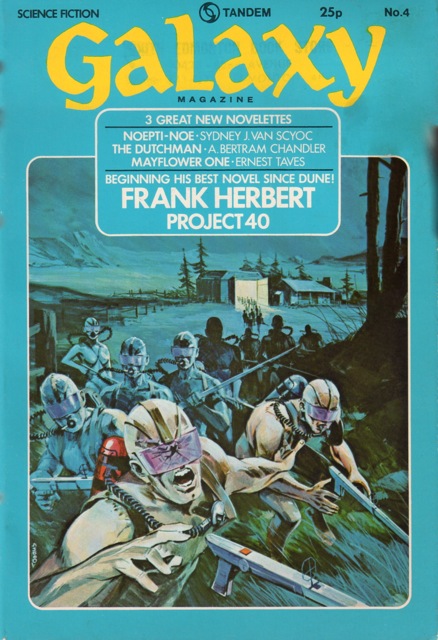


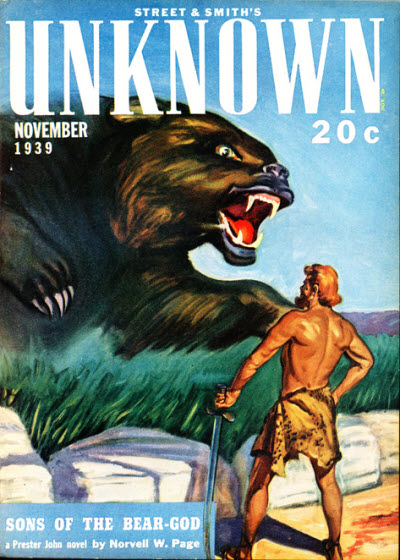


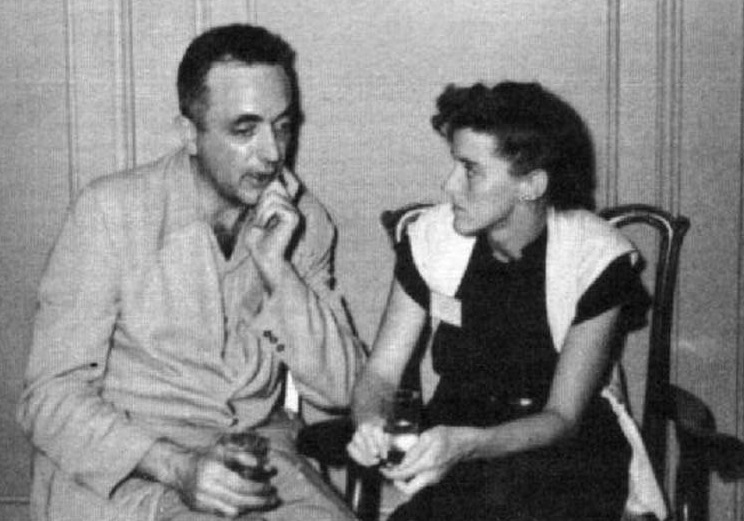



 Science Fiction & Fantasy Remembrance